
Sadr Says Armed Wing to Join Iraqi Gov’t

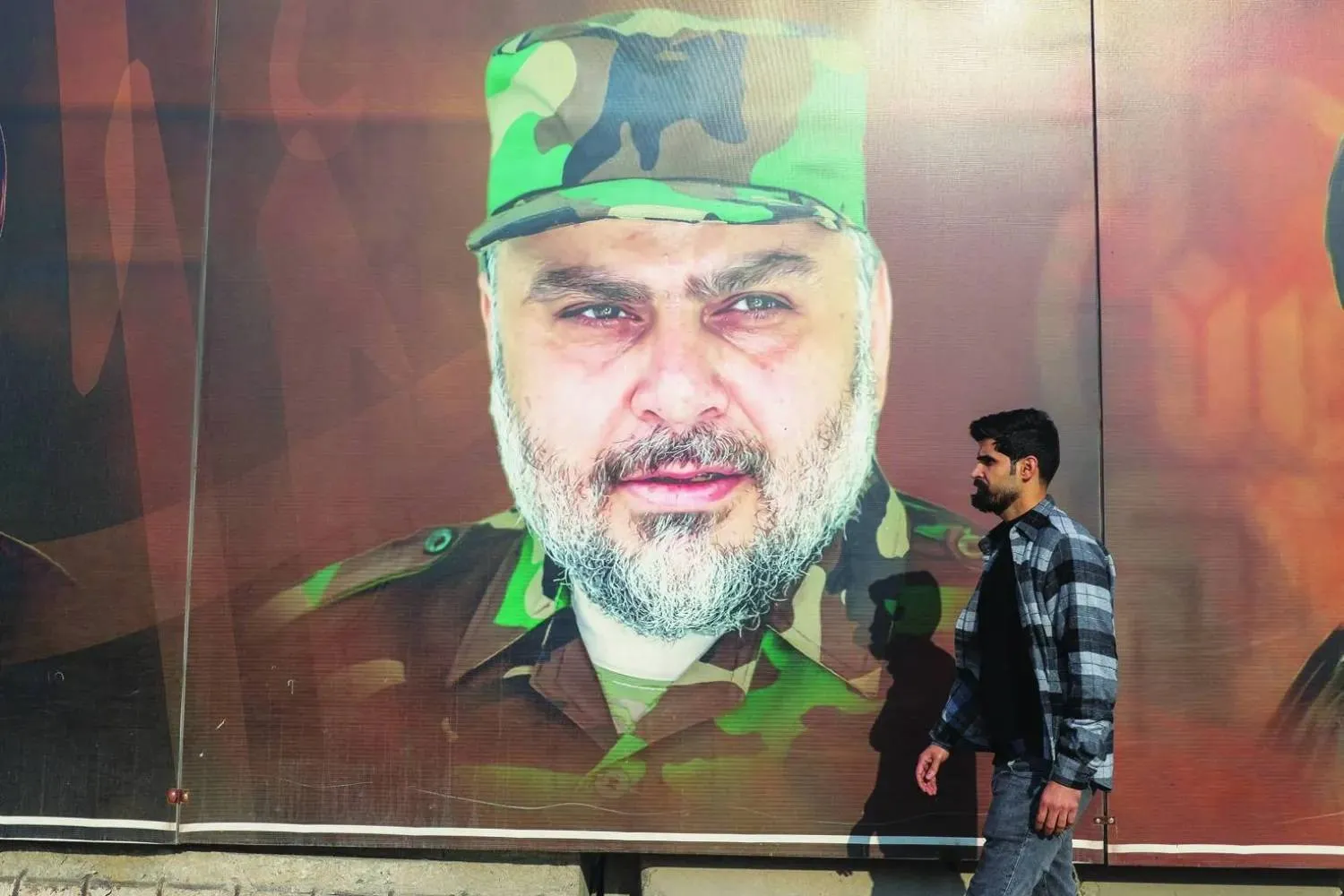
An Iraqi man walks past a poster of Moqtada al-Sadr wearing Saraya al-Salam military uniform on a street in Baghdad (AFP)
TT

Sadr Says Armed Wing to Join Iraqi Gov’t

An Iraqi man walks past a poster of Moqtada al-Sadr wearing Saraya al-Salam military uniform on a street in Baghdad (AFP)

Shiite cleric Moqtada al-Sadr, leader of the Sadrist movement, said on Wednesday he had decided to sever his movement’s ties with its armed wing, Saraya al-Salam, and place its members under the authority of the state, in a move that comes amid political and government efforts to restrict weapons to the state and regulate the work of armed factions in Iraq.

Sadr had previously announced that he was dissolving his armed wing, but his latest position coincides with the arrival of a government working under regional and international pressure to disarm armed factions.

Observers said Sadr’s latest decision carries weight because it hands his Saraya al-Salam fighters over to the authority of the new prime minister, Ali al-Zaidi.

“It has become necessary for us to announce the complete separation of Saraya al-Salam from the movement and their full integration into the state and the general authority responsible for military formations, provided that the civilian bodies attached to Saraya al-Salam are transformed into Al-Bunyan al-Marsous, with no offices, weapons, uniforms, titles or anything else,” Sadr said in a statement.

“In the end, I can only thank the military formations of Saraya al-Salam for all their jihad, and may God forgive them,” he added.

Saraya al-Salam is part of the Popular Mobilization Forces through brigades 313, 314, and 315. It carries out security duties across several areas, most notably in Samarra.

Sadr called on “the remaining factions in the Popular Mobilization Forces to separate themselves from partisan and sectarian orders” and urged them to hand over their weapons to the state, saying he had offered such advice years earlier.

Government welcomes move

In a swift response, Iraqi Prime Minister Ali al-Zaidi welcomed the move, describing it as “an important path toward strengthening internal stability and consolidating the principle of restricting weapons to the state.”

Zaidi said in a statement that the current phase “requires unifying efforts and placing the higher national interest first.” He called on all armed factions to work under the umbrella of the state and its official institutions, stressing that the state “is the only authority authorized to carry weapons and enforce the law.”

Sadr’s announcement comes as the Iraqi government seeks to implement a program to restrict weapons to the state, a pledge included in the current government’s ministerial program, alongside discussions within the Coordination Framework over mechanisms to regulate and hand over weapons.

Sources said some factions had shown relative “flexibility” on the issue compared with their previous, more hardline positions, while others still reject including what they call “resistance weapons” in any disarmament measures.

It is widely rumored that five armed factions have agreed to place their weapons under government institutions, without clear details on how the possible process would be carried out, while Harakat al-Nujaba and Kataib Hezbollah have refused to comply with disarmament requests.

Nazim al-Saidi, head of the executive council of Harakat al-Nujaba, said earlier this month that measures to restrict weapons target “uncontrolled” arms that cause “chaos,” not “resistance weapons.”

Former lawmaker Sajjad Salem questioned whether the decision could be implemented, saying Sadr had previously announced the separation of Saraya al-Salam from the movement, “but the decision was not carried out.”

Salem said armed factions rely on weapons to secure their political and financial influence, adding that the Sadrist movement “has an exceptional ability to organize and mobilize with almost no resources,” a reference to the difficulty other factions may face in giving up their weapons.

Former Prime Minister Mustafa al-Kadhimi also commented on the move, saying the decision “stems from a high level of concern for the supreme national interest, and from a deep awareness of the need to push toward strengthening the path of the state and its institutions.” He described it as “a position worthy of praise and welcome.”

The leader of Asaib Ahl al-Haq also paved the way for the handover of his weapons. On Wednesday, he stressed that his political project supports “the state, sovereignty and stability, not a project of chaos,” as he put it.

Qais al-Khazali said in press remarks that “the current phase requires moving toward consolidating state institutions and strengthening their role in confronting internal and external challenges.”

Disarmament plan

Asharq Al-Awsat reported on May 9, 2026, that an Iraqi committee, including Prime Minister-designate Ali al-Zaidi, outgoing Prime Minister Mohammed Shia al-Sudani, and Hadi al-Amiri was working to complete an “executive project” to disarm armed factions before presenting it to Washington, amid mounting US pressure to keep militias away from the new government and state institutions.

The committee had presented militia leaders with “ideas on how to disarm,” but some meetings “did not pass calmly,” according to people familiar with the matter.

The plan includes removing heavy and medium weapons and restructuring the Popular Mobilization Forces, in parallel with expected changes in sensitive security agencies, which could include the intelligence service.

But political sources questioned the government’s ability to implement the project, saying it may be intended to “buy time.” In contrast, prominent factions, including Kataib Hezbollah and Harakat al-Nujaba, have said they reject handing over their weapons “whatever the cost.”


EU Urges ‘Immediate, Unimpeded’ Flood Aid to Gaza

 Displaced Palestinians walk through a rain-soaked tent camp following heavy rainfall in Deir al-Balah, central Gaza Strip, Saturday, Nov. 7, 2026. (AP)
Displaced Palestinians walk through a rain-soaked tent camp following heavy rainfall in Deir al-Balah, central Gaza Strip, Saturday, Nov. 7, 2026. (AP)
TT

EU Urges ‘Immediate, Unimpeded’ Flood Aid to Gaza

 Displaced Palestinians walk through a rain-soaked tent camp following heavy rainfall in Deir al-Balah, central Gaza Strip, Saturday, Nov. 7, 2026. (AP)
Displaced Palestinians walk through a rain-soaked tent camp following heavy rainfall in Deir al-Balah, central Gaza Strip, Saturday, Nov. 7, 2026. (AP)

The European Union on Saturday demanded Israel grant urgent access for aid groups to Gaza to help the victims of devastating floods there.

"We urge Israel to allow immediate, unimpeded access and sustained distribution of humanitarian assistance and early recovery support at scale, and to reopen all Gaza border crossings," it said in a statement.


Israeli Drone Strike Kills 2 Palestinians in Gaza

 Palestinians walk through a tent camp housing displaced people amid buildings destroyed by Israeli strikes during the Israel-Hamas war in Gaza City, Sunday, Nov. 8, 2026. (AP)
Palestinians walk through a tent camp housing displaced people amid buildings destroyed by Israeli strikes during the Israel-Hamas war in Gaza City, Sunday, Nov. 8, 2026. (AP)
TT

Israeli Drone Strike Kills 2 Palestinians in Gaza

 Palestinians walk through a tent camp housing displaced people amid buildings destroyed by Israeli strikes during the Israel-Hamas war in Gaza City, Sunday, Nov. 8, 2026. (AP)
Palestinians walk through a tent camp housing displaced people amid buildings destroyed by Israeli strikes during the Israel-Hamas war in Gaza City, Sunday, Nov. 8, 2026. (AP)

An Israeli drone strike killed two Palestinians in the Gaza Strip on Saturday, hospital officials said.

The drone struck two Palestinians walking down a street in Jabaliya, on the northern edge of Gaza City, said Mohamed Abu Selmiya, director of Shifa Hospital in Gaza City, where the casualties were taken.

The American field hospital said several other people were wounded but did not provide a number.

Asked about the attack, the Israeli military said it had struck two Hamas fighters in the area.

Near-daily Israeli fire and airstrikes have continued in Gaza more than a year after Israel and Hamas reached a ceasefire deal.

At least 1,600 Palestinians have been killed since the ceasefire, according to Gaza’s Health Ministry. The ministry, part of the Hamas-run government, maintains detailed records and is seen as generally reliable by UN agencies and independent experts. It does not distinguish between civilians and combatants in its toll but says women and children make up around half the dead.


Thousands Mourn al-Alwani as Lebanese Probe Awaited

Relatives receive former MP Ahmed al-Alwani's coffin upon its arrival at Baghdad airport on Saturday. (X)
TT

Thousands Mourn al-Alwani as Lebanese Probe Awaited

Relatives receive former MP Ahmed al-Alwani's coffin upon its arrival at Baghdad airport on Saturday. (X)

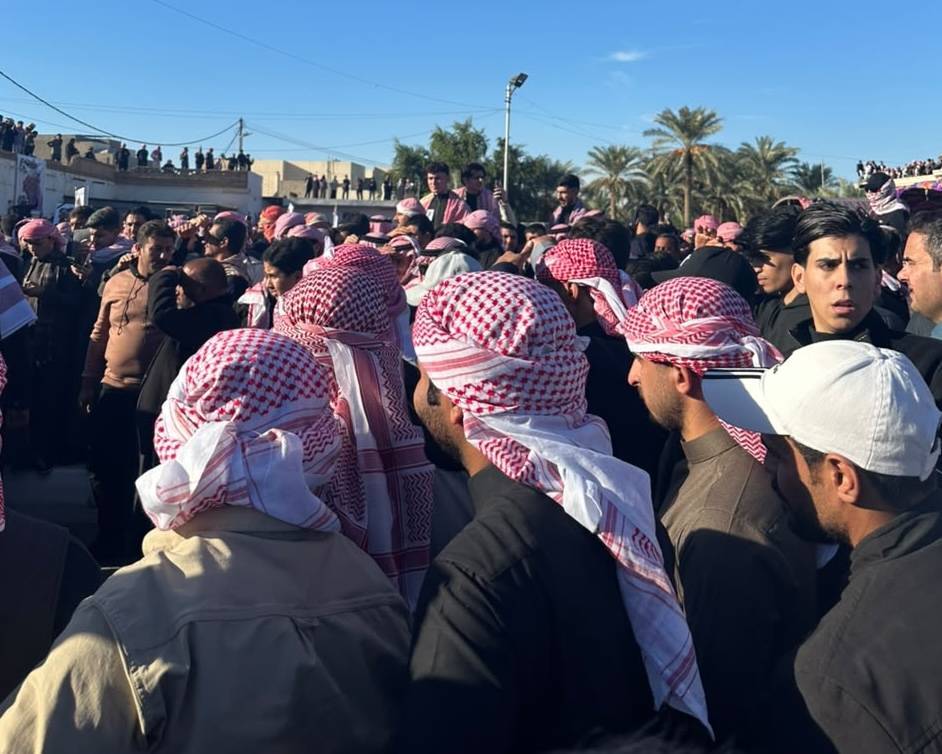
Thousands of Iraqis on Saturday escorted the body of former MP Ahmed al-Alwani from Baghdad Airport to Ramadi in Anbar Governorate, where tribespeople and residents from across the province awaited his arrival amid scenes of grief and anger.

Meanwhile, the circumstances surrounding his killing in Beirut remain under investigation, even as Lebanese authorities have made progress in identifying two suspects.

A private jet carrying al-Alwani's body from the Lebanese capital landed at Baghdad Airport in the morning, with large crowds of mourners gathering at the airport.

Local media reported that Iraqi politician Khamis al-Khanjar, head of the Sovereignty Alliance, covered the cost of transporting the body aboard the private aircraft.

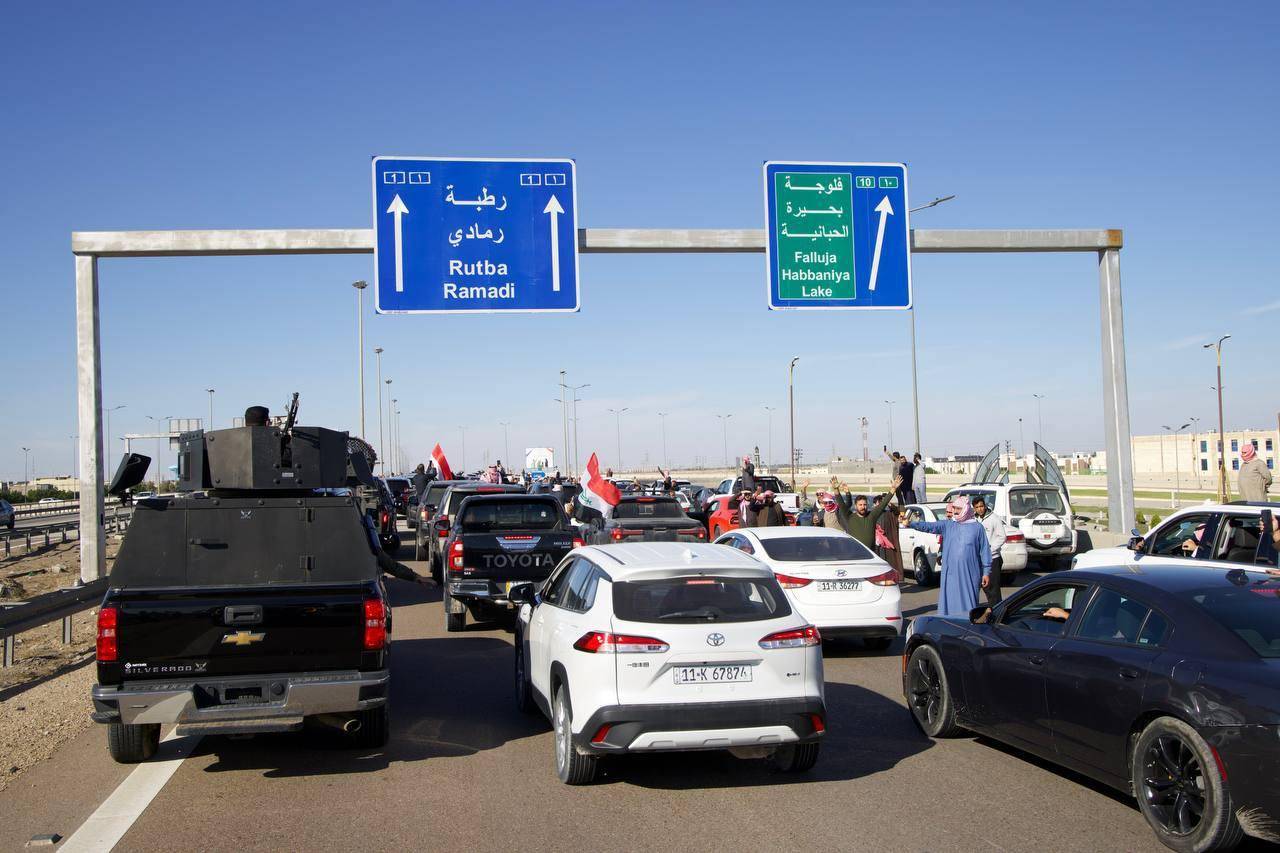
The funeral procession traveled toward Ramadi, located 110 kilometers from Baghdad, under heavy security and accompanied by military vehicles.

Mourners are seen at al-Alwani's funeral on Saturday. (Asharq Al-Awsat)

The Security Media Cell had urged the public to await the investigation's findings and refrain from reading broader motives into the case before it concludes, noting the ongoing coordination between the Iraqi Embassy in Beirut, Lebanese judicial and security authorities, and the Iraqi National Intelligence Service.

Al-Alwani's killing has sparked uproar across Iraq, particularly in his home province of Anbar. Discussion of the case has been accompanied by political debates and sectarian commentary on social media, amid demands to identify those responsible for his death.

Kamel al-Dulaimi, former head of the Iraqi Presidential Diwan, told Asharq Al-Awsat that the circumstances and motives behind the crime still require clear and transparent disclosure to the public, underscoring the Iraqi state's responsibility to uncover the truth.

The funeral procession traveled toward Ramadi, located 110 kilometers from Baghdad, under heavy security and accompanied by military vehicles. (Asharq Al-Awsat)

He added that the case requires security and judicial cooperation among Iraq, Lebanon, and Syria to track down the perpetrators and those behind them, particularly if the investigation calls for cross-border coordination.

He warned that the sectarian rhetoric surrounding the incident reflects a persistent tendency to view national issues through a narrow lens, emphasizing that the matter concerns the sanctity of Iraqi blood and must not be reduced to the affiliation of an individual or a governorate.

Legal researcher Saif al-Saadi, who hails from Anbar, said al-Alwani was not merely a former lawmaker, but a prominent tribal, social, and political figure in the province, adding that the funeral reflects the depth of grief and anger across Anbar's cities.

Al-Alwani, who rose to prominence during the late 2013 Anbar protests, was arrested in December of that year and sentenced to death in 2014 after being convicted of killing two soldiers during clashes accompanying his arrest.

He was released in April 2025 after spending more than 11 years in prison, following the withdrawal of a complaint by one of the victims' families and his inclusion under the General Amnesty Law.