

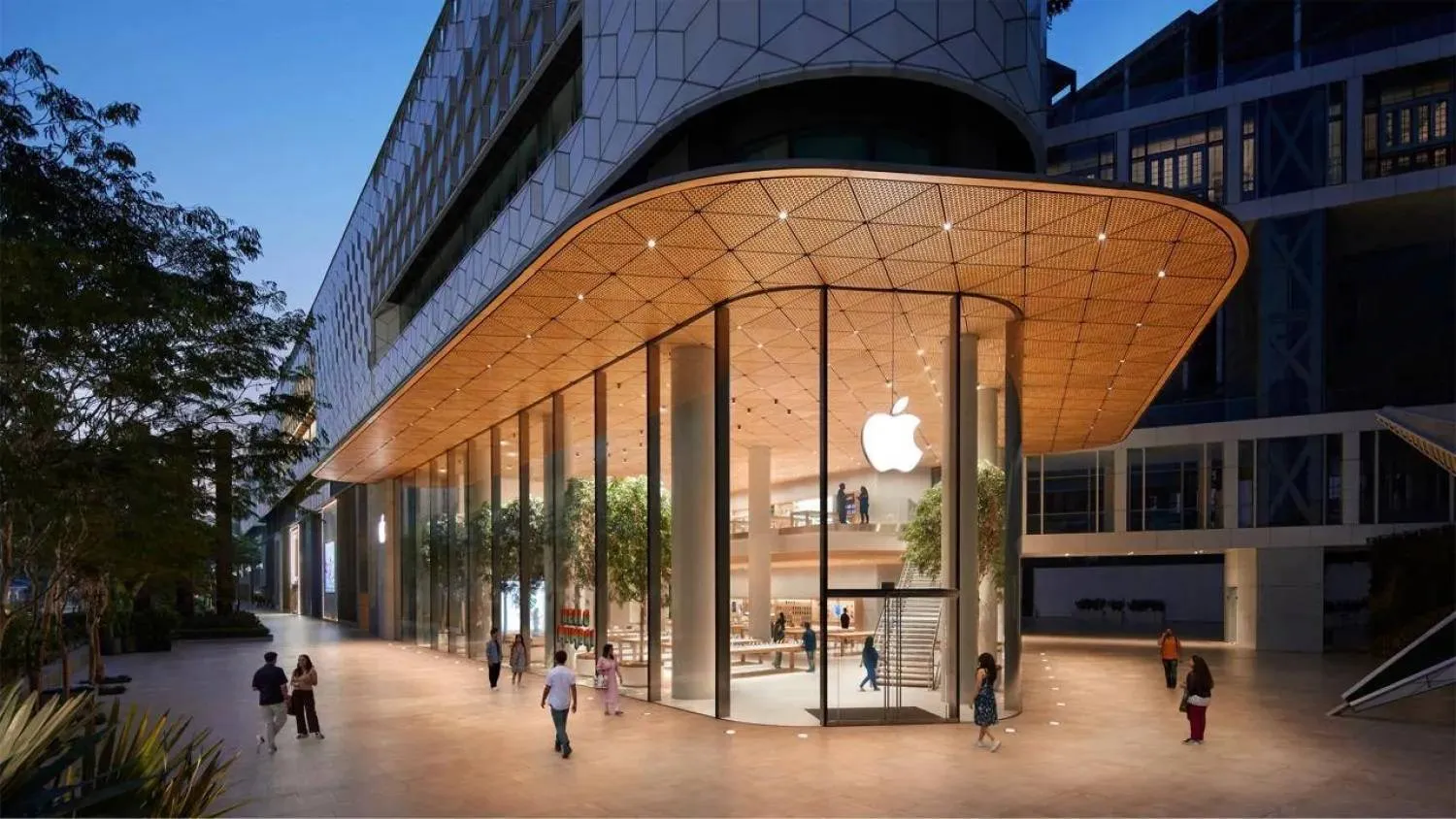

Apple Expands its Presence in Saudi Arabia with Launch of Arabic Online Store  

A concept image of the Apple Store. (Asharq Al-Awsat)
TT

Apple Expands its Presence in Saudi Arabia with Launch of Arabic Online Store  

A concept image of the Apple Store. (Asharq Al-Awsat)

Apple has officially launched its online store in Arabic for customers in Saudi Arabia, marking a significant step in the company’s expansion strategy for the region. The move also aligns with its plans to open a physical retail store in the Kingdom as part of a broader effort to deepen its regional presence.

According to Deirdre O’Brien, Senior Vice President of Retail and People at Apple, this step reflects the company’s growing commitment to Saudi Arabia and its rapidly expanding customer base.

The Arabic-language store is now accessible through Apple’s website and via the Apple Store app on smart devices.

In an interview with Asharq Al-Awsat, O’Brien expressed strong enthusiasm about bringing the Apple retail experience to Saudi Arabia. She emphasized the company’s longstanding presence in the Kingdom and noted that Saudi customers are deeply passionate about Apple products. This launch, she said, will help strengthen Apple’s direct relationship with communities across the country.

She also explained that both the online store and the upcoming physical location are part of Apple’s broader strategy in the Middle East. The company already operates several retail locations in the United Arab Emirates and continues to see strong demand for its products across the Gulf.

Investing in local economy

When asked about Apple’s investment in the Saudi economy, O’Brien pointed to initiatives such as the Apple Developer Academy, which is focused on nurturing and empowering local talent.

She described the company’s investment as one that aims to inspire individuals and support creativity. By combining Apple’s technology with passionate communities, she said, remarkable things can be achieved.

Apple has tailored the online store to meet the specific needs of Saudi customers. Features include live chat with Apple specialists in Arabic, customizable product options for devices like Mac and Apple Watch, and the ability to engrave AirPods and other accessories in Arabic or with emojis.

O’Brien highlighted the importance of making the full Apple experience accessible to customers in Saudi Arabia both online and in-store. She also noted that Apple offers device trade-in programs to accommodate users from different segments.

With e-commerce on the rise in Saudi Arabia, Apple is aiming to deliver a seamless shopping journey that blends both digital and physical experiences. O’Brien stated that Apple’s retail model has been designed to reflect modern shopping behavior, where customers move easily between online and in-store interactions. Whether a purchase begins online and ends in a store, or vice versa, Apple aims to provide consistent, high-quality support throughout.

Landmark store in Riyadh

Apple’s first physical store in Saudi Arabia is set to open in Diriyah, a UNESCO World Heritage site and a prominent cultural destination in Riyadh.

O’Brien described Diriyah as a unique and special location. She said Apple is committed to ensuring each of its stores reflects the local identity and culture, and that the new store in Saudi Arabia will be no exception.

She encouraged local customers to visit once the store opens, expressing confidence that the experience will be both unique and memorable.

Retail services

Apple is continuing to strengthen its presence in Saudi Arabia by focusing on innovation, engaging more closely with the local community, and delivering a retail experience designed to support and serve users throughout the Kingdom.

The new Arabic online store allows Saudi customers to browse and purchase Apple’s full product lineup. The experience is personalized, offering product recommendations based on the customer’s current devices. Customers can also compare models, access saved items, and track orders directly through the app.

For the first time, Apple is offering free consultations in Arabic and English through the Saudi store website. These sessions allow users to personalize products like AirPods, Apple Pencil, and AirTag with Arabic or English text and numbers, enhancing the individuality of each device.

Apple’s retail offering also includes pre-purchase support through chat and phone to help users find the best product for their needs. Post-purchase, the company provides services like personalized setup, secure data transfer for those switching to iOS, and eSIM activation.

As part of its long-term strategy, Apple has announced plans to open its first flagship retail store in Saudi Arabia by 2026. This store will be the first in a broader rollout of retail locations across the Kingdom.



Morocco’s Royal Air Maroc Scales Back Flights Due to Fuel Costs

 People board a Royal Air Maroc flight on July 15, 2020 at Bordeaux airport. (AFP)
People board a Royal Air Maroc flight on July 15, 2020 at Bordeaux airport. (AFP)
TT

Morocco’s Royal Air Maroc Scales Back Flights Due to Fuel Costs

 People board a Royal Air Maroc flight on July 15, 2020 at Bordeaux airport. (AFP)
People board a Royal Air Maroc flight on July 15, 2020 at Bordeaux airport. (AFP)

Morocco's state-owned carrier Royal Air Maroc (RAM) said on Saturday it would temporarily suspend several routes to African and European destinations due to ‌rising jet ‌fuel prices, ‌elevated ⁠operating costs and ⁠weak demand.

Tensions in the Middle East have driven a surge in global jet fuel ⁠prices, putting ‌pressure ‌on carriers and ‌prompting temporary route suspensions.

RAM ‌will pause flights linking Moroccan airports with several African cities ‌of Bangui, Brazzaville, Kinshasa, Douala, Yaounde and ⁠Libreville, ⁠the airline said in a statement.

It will also halt flights to the European destinations of Malaga, Barcelona, Lyon, Bordeaux, Marseille and Brussels.


Official: Iraq Has Not Yet Applied for an IMF Loan

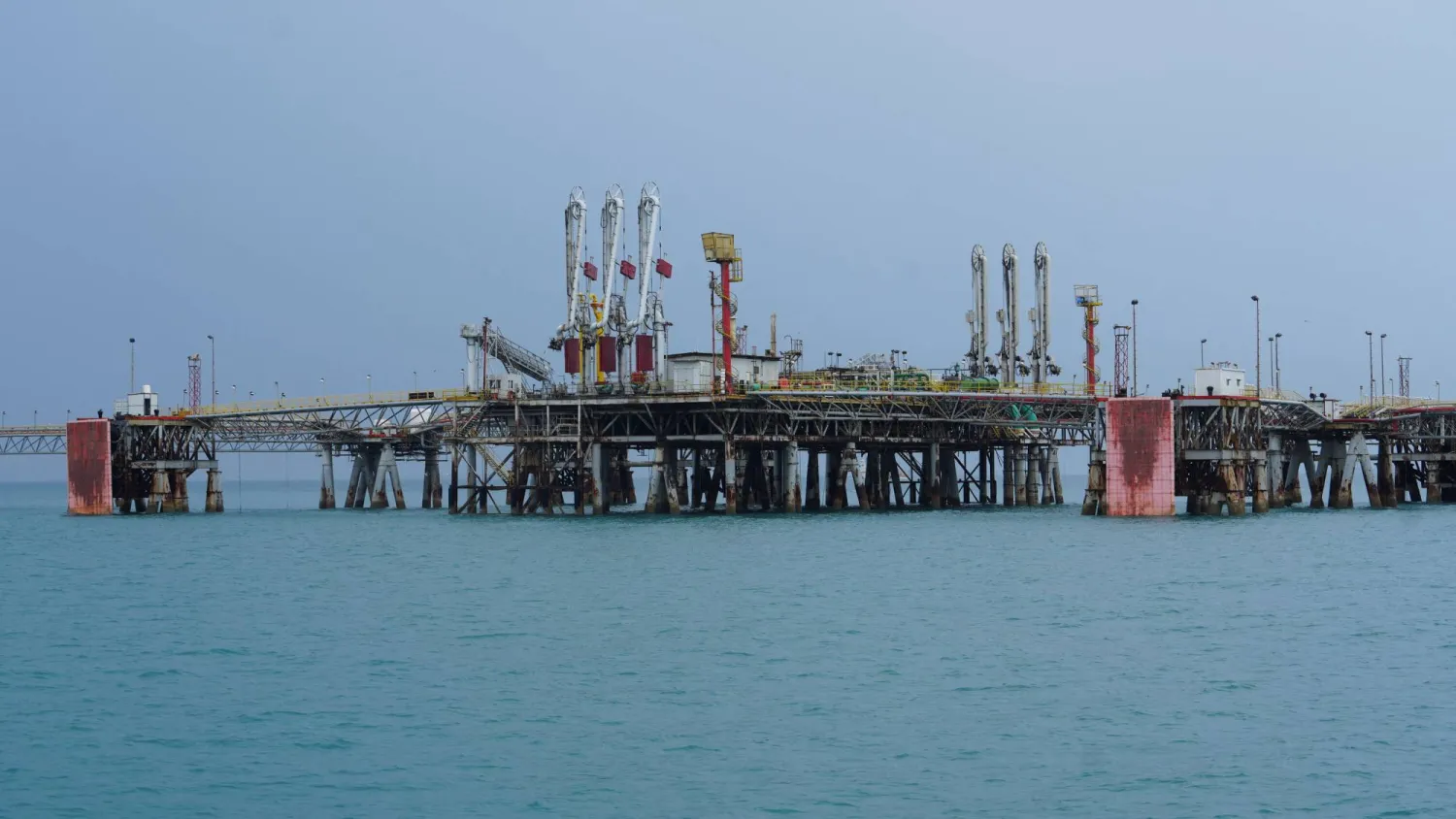
A floating oil export platform in Basra port, Iraq (Reuters)
TT

Official: Iraq Has Not Yet Applied for an IMF Loan

A floating oil export platform in Basra port, Iraq (Reuters)

Financial Advisor to the Iraqi Prime Minister Mazhar Mohammed Saleh revealed on Saturday that Iraq has not yet submitted a formal request for a loan from the International Monetary Fund (IMF).

The Iraqi News Agency quoted Saleh as saying that “Iraq enjoys close relations with the IMF, and since 2003, it has concluded more than five agreements, three of which were Stand-by Arrangements, while the other agreements related to emergency support.”

Iran's war has caused significant disruptions in supply chains, especially in the energy sector, which was severely affected by a near-complete closure of the Strait of Hormuz, through which about 20 percent of global oil supplies pass.

Saleh stated that “the Fund has played a significant role in supporting the Iraqi economy over the past 23 years, especially since Iraq is now considered one of the biggest victims of the ongoing war in the region, considering that 85 percent of its oil exports pass through the Strait of Hormuz. This has caused significant harm and international concern, given that Iraq is an important and active member in the stability of the region and world markets.”

He pointed out that there is an Iraqi government team in contact with the IMF, meeting with Fund officials for consultations twice a year.

He clarified that “Iraq signed an agreement with the IMF on July 7, 2016, for a Stand-by Arrangement by providing a significant loan, which played a major role in supporting the general budget,” noting that “signing an agreement with the Fund is a matter decided by the Iraqi government, and this does not prevent consultations between the two parties, as Iraq is a member of this institution responsible for global stability.”

Saleh mentioned that “Iraq will borrow from the International Monetary Fund if the need arises, but there is no formal request from the government yet, and the current need is for the war in the region to stop, and for its geopolitical impacts on oil exports to cease.”

He added that “technical assistance from the IMF is available now, unlike the issue of financing, which requires the approval of a program by the Iraqi government.”

He explained that “the loan itself represents a reform program to support the budget or to achieve social goals, such as supporting the health and education sectors, because it is a human investment that must be subject to conditions defining expenditure directions and commitment to a reform program agreed upon by the Iraqi state and the IMF.”


Mawani Adds CMA CGM’s Ocean Rise Express Service to Jeddah Port

Mawani Adds CMA CGM’s Ocean Rise Express Service to Jeddah Port
TT

Mawani Adds CMA CGM’s Ocean Rise Express Service to Jeddah Port

Mawani Adds CMA CGM’s Ocean Rise Express Service to Jeddah Port

The Saudi Ports Authority (Mawani) has added CMA CGM's Ocean Rise Express (OCR) shipping service to Jeddah Islamic Port, aiming to strengthen maritime connectivity between Saudi Arabia and global markets, support the smooth flow of supply chains, and increase the efficiency of port operations.

The OCR service will connect Jeddah to key international ports, including Kobe, Nagoya, and Yokohama in Japan; Xiamen, Yantian, and Nansha in China; Rotterdam in the Netherlands; Hamburg in Germany; and Southampton in the United Kingdom.

The route will utilize vessels with a capacity of up to 10,000 TEUs, according to SPA.

This addition aligns with Mawani’s efforts to enhance Jeddah Islamic Port’s global competitiveness and support international trade.

By enabling access to new markets, the initiative reinforces the Kingdom's position as a global logistics hub in line with the National Transport and Logistics Strategy and Saudi Vision 2030.