


World Bank Ready to Support Lebanon, Urges Quick Formation of New Cabinet

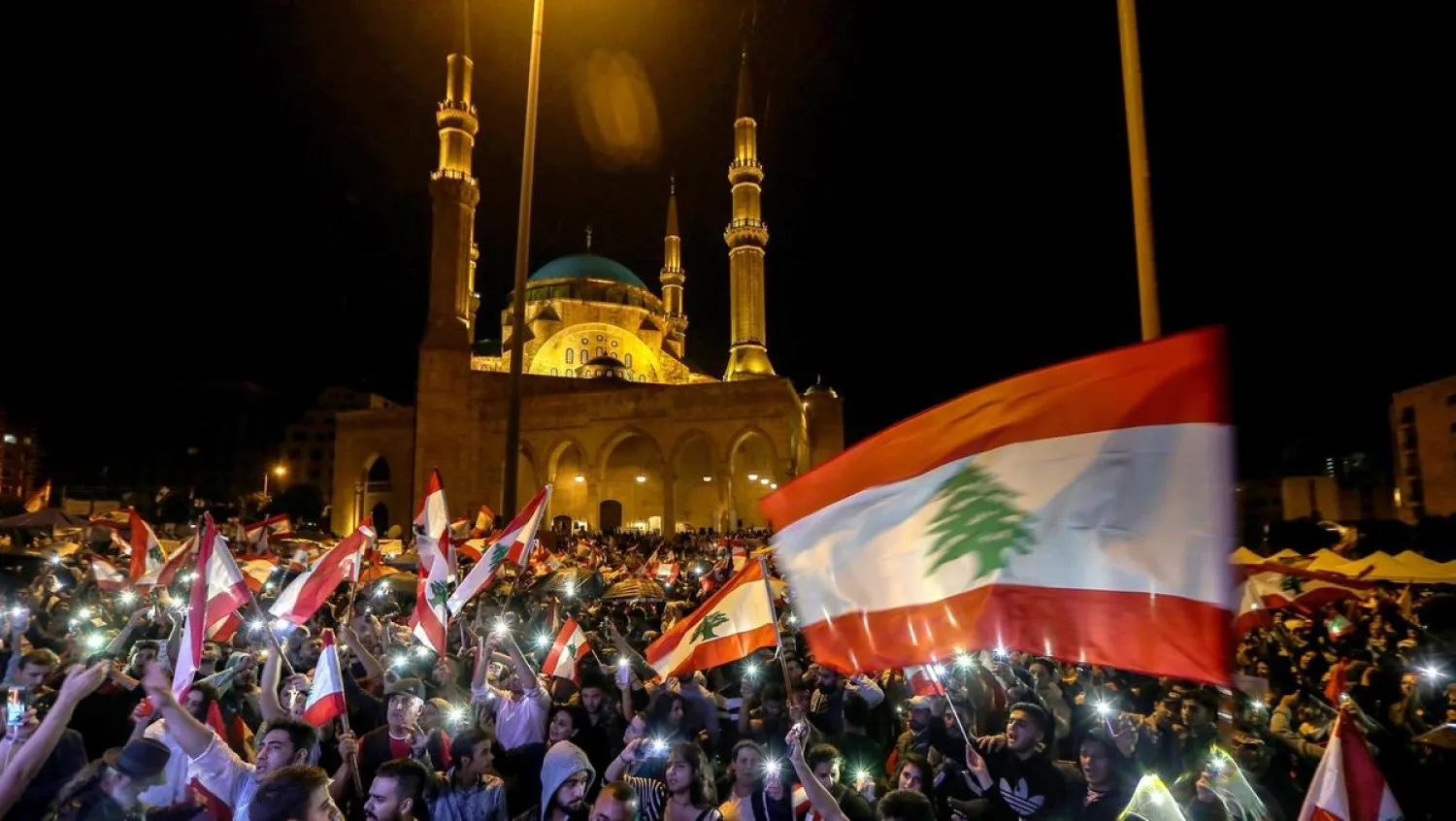
A protest in front of the al-Amine Mosque in central Beirut in the second week of demonstrations last month. (EPA)
TT

World Bank Ready to Support Lebanon, Urges Quick Formation of New Cabinet

A protest in front of the al-Amine Mosque in central Beirut in the second week of demonstrations last month. (EPA)

The World Bank said on Wednesday it stood ready to back a new Lebanese government, warning the country had no time to waste to tackle an emerging economic crisis worsening by the day.

The bank called for the rapid formation of a new cabinet and said it expected a recession in 2019 to be even more significant than an earlier projection of a 0.2% contraction in the economy.

A wave of massive protests across Lebanon against the ruling elite pushed Prime Minister Saad al-Hariri to resign last week, toppling his coalition cabinet. There has been no sign of progress toward agreeing a new government.

The turmoil comes as Lebanon grapples with the worst economic and financial strains since the 1975-90 civil war.

The World Bank is among foreign donors who pledged billions of dollars in badly needed aid last year, as long as Lebanon’s government enacts reforms it has long delayed. But with foreign allies not fully convinced, the money has yet to flow into the economy.

“Lebanon does not have the luxury of time to waste to redress issues that need immediate attention,” the World Bank said in a statement after its regional director, Saroj Kumar Jha, met Lebanese President Michel Aoun on Wednesday. “There is an urgent need to stop the emerging economic crisis.”

“We stand ready to extend all possible support to the new government that commits itself to good governance and creating opportunities for all Lebanese,” it added, according to Reuters.

The proportion of Lebanese living in poverty could rise to 50% if economic conditions worsen, from about a third in 2018, the World Bank said. Unemployment, which already runs at 37% for the under 35s, could rise sharply.

“With every passing day, the situation is becoming more acute and this would make recovery extremely challenging,” Jha added.

Aoun told the World Bank the next government would have competent ministers “of good reputation and far from suspicions of corruption”, the president’s office said after the meeting.

Public anger

Unrest erupted across Lebanon some three weeks ago amid a build-up of anger at rising costs of living, new tax plans and a ruling elite accused of rampant corruption.

Demonstrators blame the political class, many of them sectarian civil war leaders, for plunging the country toward collapse after milking the state for decades.

Hariri remains in office in a caretaker capacity until political parties agree a new government.

Aoun, an ally of the Iran-backed Hezbollah party, has yet to begin official talks with MPs to designate a prime minister who would form the next cabinet.

Crowds protested in front of ministries and state institutions on Wednesday in the capital Beirut, as well as parts of south and north Lebanon.

“We came to show that we’re in the protest squares no matter what the corrupt (authorities) do,” Rasha Hijazi, a public school teacher, said at a protest in the southern city of Sidon, where teachers and students went on strike.

“It is not important to lose our hours, our archaic curriculum...This is the real revolution that we are teaching.”

Lebanon has one of the world’s highest public debt burdens at 150% of GDP. Political disputes in Lebanon and regional conflict have hit economic growth.

With growth around zero percent, a slowdown in capital inflows has led to a scarcity of dollars and pressure on the pegged Lebanese pound.

Moody’s Investors Service downgraded Lebanon’s rating to Caa2 on Tuesday, at the lower end of the “junk” grade bracket, citing the increased likelihood of a debt rescheduling it would classify as a default.

Lebanon’s issuer rating, which was lowered from Caa1, remained under review for downgrade, Moody’s said. Moody’s classifies Caa ratings as very high credit risk.



Hezbollah Chief Says Hopes for Iran-US Deal and That It Includes Lebanon

A poster of Hezbollah leader Naim Qassem (L) is displayed near another of the group's late leader Hassan Nasrallah outside shelters at the Imam Ali Housing Compound, where displaced Lebanese and Syrian refugees take refuge by the city of Hermel in Lebanon's northeastern Bekaa valley on February 4, 2026. (AFP)
TT

Hezbollah Chief Says Hopes for Iran-US Deal and That It Includes Lebanon

A poster of Hezbollah leader Naim Qassem (L) is displayed near another of the group's late leader Hassan Nasrallah outside shelters at the Imam Ali Housing Compound, where displaced Lebanese and Syrian refugees take refuge by the city of Hermel in Lebanon's northeastern Bekaa valley on February 4, 2026. (AFP)

Hezbollah chief Naim Qassem expressed hope Sunday for an agreement between Iran and the United States and that Lebanon, where Israel and the Iran-backed group are at war, would be part of its terms.

Hezbollah and Israel have clashed since the group drew Lebanon into the Middle East war on March 2 by firing rockets at Israel in retaliation for the killing of Iran's supreme leader in US-Israeli strikes.

Iranian officials have said an understanding with Washington to halt the regional war will include Lebanon.

But Israeli Prime Minister Benjamin Netanyahu said on Sunday that US President Donald Trump had reaffirmed his support for Israel's right "to defend itself against threats on all fronts, including in Lebanon".

"God willing, this agreement will be finalized and there are signs of its completion, and accordingly that we too will be among those included in this agreement -- an agreement of a full cessation of hostilities," Qassem said in a televised address broadcast on Hezbollah's Al-Manar television channel.

The speech marked the anniversary of Israel's withdrawal from south Lebanon in 2000 after around two decades of occupation and following persistent pressure from Hezbollah.

Qassem said that Iran, which has provided Hezbollah with funding and weapons for decades, "is on top" and would emerge from the regional war "with its head high".

Expectations of a Middle East deal come as Lebanon prepares for a fourth round of direct talks with Israel in Washington on June 2 and 3, preceded by a meeting between military delegations at the Pentagon on May 29.

- 'Existential threat' -

Qassem again repeated his group's rejection of direct talks, charging that key Israel ally Washington "is not an honest broker".

"Direct negotiations are completely unacceptable and are a pure gain for Israel," he said, addressing Lebanese authorities who last year committed to disarming Hezbollah and then banned its military activities after the latest war erupted.

"Abandon the direct negotiations and do not give to America so that it gives to Israel... Return to the national understanding," he added.

"Don't be with them and stab us in the back. You won't gain anything, and it's better for you to stand with your country."

Despite heavy losses in 2023-2024 hostilities with Israel and the current war, Hezbollah refuses to disarm, arguing that its weapons are an internal Lebanese matter and not up for discussion in Washington.

"Disarmament means stripping Lebanon of its defensive capability and the capability of the resistance (Hezbollah) and this people, paving the way for annihilation," he said.

"Disarmament is annihilation and we cannot accept it."

A state monopoly on weapons demanded by Lebanese authorities "at this stage is aimed at targeting the resistance and is an Israeli project" whose objective is to "annihilate the resistance".

"All the facts prove that we and our people face an existential threat," Qassem said.

"We will not bow, even if the whole world turns against us."


Israeli Strikes Pound South, East Lebanon

 Plumes of smoke billow from southern Lebanon following Israeli strikes, as seen from Marjeyoun, Lebanon May 24, 2026. (Reuters)
Plumes of smoke billow from southern Lebanon following Israeli strikes, as seen from Marjeyoun, Lebanon May 24, 2026. (Reuters)
TT

Israeli Strikes Pound South, East Lebanon

 Plumes of smoke billow from southern Lebanon following Israeli strikes, as seen from Marjeyoun, Lebanon May 24, 2026. (Reuters)
Plumes of smoke billow from southern Lebanon following Israeli strikes, as seen from Marjeyoun, Lebanon May 24, 2026. (Reuters)

Israeli strikes hit south and east Lebanon on Sunday, state media reported, a day after 11 people were killed in a single raid on the south despite a ceasefire in the Israel-Hezbollah war.

Saturday's strike in Sir al-Gharbiyeh "resulted in a massacre whose final toll is 11 dead including a child and six women, and nine wounded including four children and a woman," Lebanon's health ministry said in a statement.

Israel's military has continued to strike what it says are Hezbollah targets in Lebanon despite a ceasefire that began on April 17 and that was recently extended for several weeks.

The Iran-backed group has also maintained attacks on Israeli targets in southern Lebanon and across the border, including firing rockets on Sunday at Israeli troops operating on Lebanese territory.

Lebanon's official National News Agency reported Israeli strikes on multiple locations in south and east Lebanon on Sunday, in some cases causing casualties.

Some of the raids came before the Israeli military issued two evacuation warnings covering more than a dozen villages in Lebanon's south and the eastern Bekaa valley.

An AFP correspondent saw large clouds of smoke rising after strikes on the south's Nabatieh and Zawtar al-Sharqiyah.

Lebanon's civil defense agency said early on Sunday that its regional facility in Nabatieh had been destroyed by an overnight Israeli strike.

An AFP photographer saw civil defense personnel recovering equipment and using a stretcher to remove oxygen bottles from the rubble.

The Israeli army did not immediately provide any comment on the strike in response to an inquiry from AFP's Jerusalem bureau.

- Iran -

Hezbollah lawmaker Hassan Fadlallah, whom the US sanctioned this week, said Sunday that "major transformations are taking place in the region", amid anticipation that a US-Iranian agreement to end the Middle East war was close.

Iran "has made its agreement with the United States conditional on stopping the war in Lebanon", he said, according to a statement.

On Saturday, Hezbollah said its chief Naim Qassem had received a message from Iran's Foreign Minister Abbas Araghchi, saying Iran's latest proposal through Pakistani mediators emphasized "the demand to include Lebanon" in the broader ceasefire.

Fadlallah said that "the war will not just stop in Iran, but across the whole region, particularly in Lebanon", urging Lebanese authorities to "take advantage of this regional umbrella... which will have repercussions on us".

Lebanese authorities recently began landmark direct talks with Israel under US auspices, and have insisted the discussions must be independent from the Iran-US negotiations.

Hezbollah drew Lebanon into the Middle East war on March 2 with rocket fire at Israel in retaliation for the killing of Iran's supreme leader in US-Israeli strikes.

Under the terms of the ceasefire published by Washington, Israel reserves the right to act against "planned, imminent or ongoing attacks".

Israeli troops who invaded Lebanon are also operating inside an Israeli-occupied "yellow line" running around 10 kilometers (six miles) deep along Lebanon's southern border.


Gaza Hospital Says Child among Three Killed in Israeli Strike

Residents inspect the rubble of a building that belongs to the Palestinian family of Abu Saif and was destroyed by an Israeli airstrike in Nuseirat, central Gaza Strip, Saturday, May 23, 2026. (AP Photo/Abdel Kareem Hana)
TT

Gaza Hospital Says Child among Three Killed in Israeli Strike

Residents inspect the rubble of a building that belongs to the Palestinian family of Abu Saif and was destroyed by an Israeli airstrike in Nuseirat, central Gaza Strip, Saturday, May 23, 2026. (AP Photo/Abdel Kareem Hana)

A pre-dawn Israeli airstrike killed three members of a Palestinian family, including a one-year-old child, in central Gaza on Sunday, a hospital said.

Gaza remains gripped with daily violence despite a formal ceasefire in place since October, with both the Israeli military and Hamas accusing one another of violating the truce, says AFP.

Al-Aqsa Martyrs hospital in Deir el-Balah said it had received the bodies of a couple and their infant after an Israeli strike hit a residential apartment in the Al-Nuseirat camp before dawn.

The hospital said around 10 people were wounded.

There was no immediate comment from the Israeli military about the three deaths, though it said it had struck three Hamas weapons storage facilities in central Gaza over the preceding 24 hours.

A ceasefire has been in place in Gaza since October, but Israel reserves the right to strike targets it deems a threat.

At least 890 Palestinians have been killed since the October 10 ceasefire, according to Gaza's health ministry, which operates under Hamas authority and whose figures are considered reliable by the UN.

The Israeli military says five of its soldiers have also been hit during the same period.

Media restrictions and limited access in Gaza have prevented AFP from independently verifying casualty figures or freely covering the fighting.