


Palestine’s Shtayyeh Says Israel Left Nothing of Oslo Accords

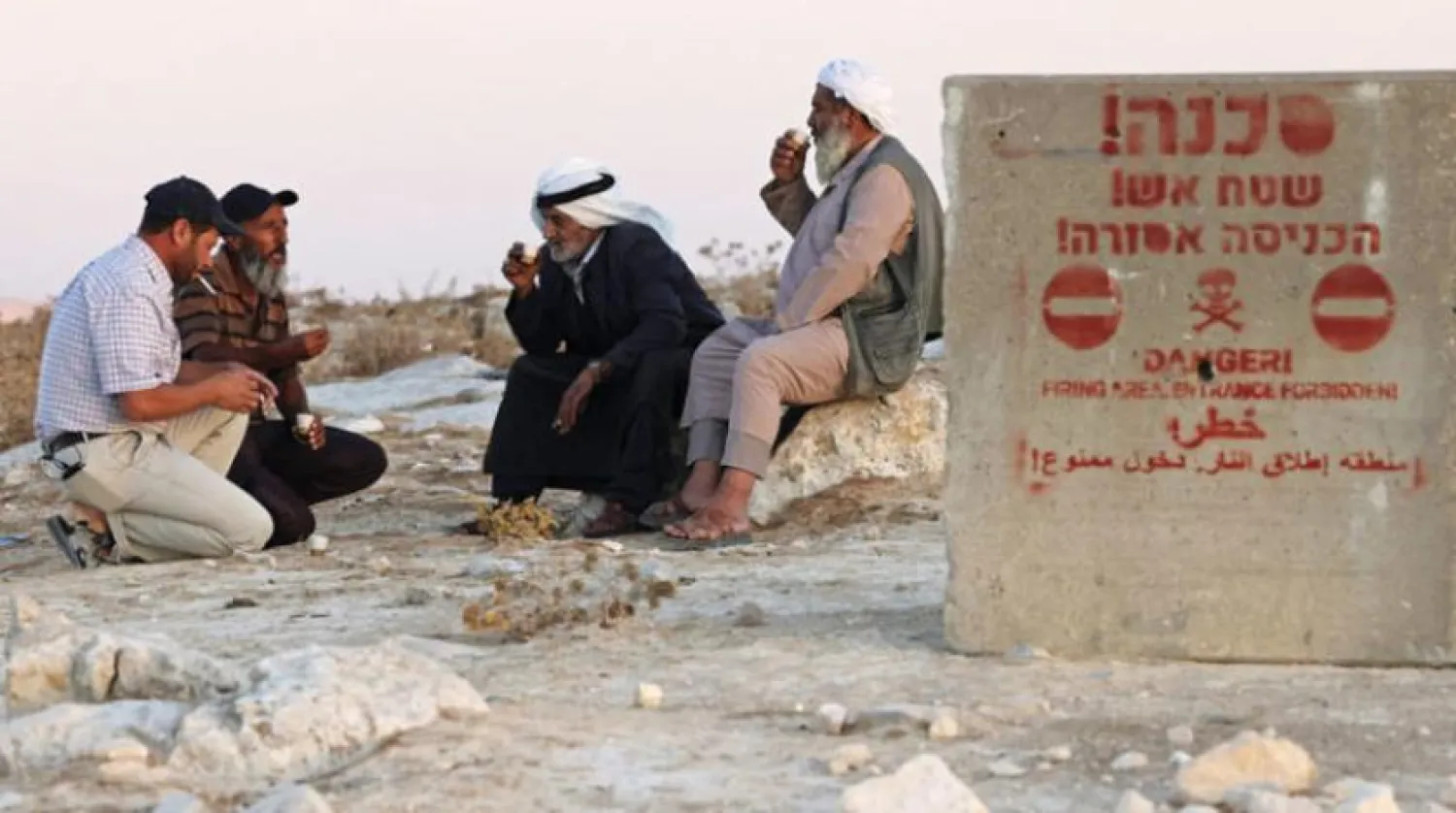
Palestinians sit near a sign displaying a warning in Hebrew, Arabic and English languages, indicating a shooting range in Masafer Yatta in the southern West Bank. (AFP)
TT

Palestine’s Shtayyeh Says Israel Left Nothing of Oslo Accords

Palestinians sit near a sign displaying a warning in Hebrew, Arabic and English languages, indicating a shooting range in Masafer Yatta in the southern West Bank. (AFP)

Palestinian Prime Minister Mohamed Shtayyeh accused Israel of undermining and “destroying” the Palestinian Authority and intentionally putting an end to the Oslo Accords.

On the 29th anniversary of signing the Oslo Accords agreement, Shtayyeh said Israel “left nothing of the agreement,” adding that it “canceled and disregarded most of its provisions.”

“Israel abolished its political, economic, and geographic parts, refrained from negotiating the final status issues, continued with its unilateral measures, such as the settlements and the financial deductions, and stopped the release of the fourth batch of prisoners, in violation of the agreement,” Shtayyeh said.

He urged the PA to freeze and review the agreement, given that Tel Aviv has already canceled most of its terms.

The Oslo Accords were signed on September 13, 1993 and were supposed to act as a temporary passage to the establishment of a Palestinian state five years later.

The PM further accused Israel of seeking to destroy the Palestinian Authority and undermine its institutions rather than boosting its position.

He affirmed during a cabinet session on Monday that the PA rejects the reinforcements suggested by Israel and wants to end the occupation instead.

“We want to attain our national rights. We want this occupation to end. We want international legitimacy to prevail, and international law to rule,” Shtayyeh stressed.

His remarks were in response to Israel’s accusation of the PA losing its control in the West Bank, which may lead to a third intifada (uprising) that cannot be avoided unless the PA’s position and role are enhanced.

Israel has recently underlined the PA’s weakness and its declining position and pressured it to take action against Palestinian armed men, a request to which the PA did not respond.

Speaking at a conference at the Reichman University in Herzliya, Sin Bet chief Ronen Bar warned about the increasing number of shootouts in the West Bank, as well as a wider loss of control by the Palestinian Authority.

Bar urged the Palestinian President, Mahmoud Abbas, to boost security mechanisms and address the continuous deterioration in the status of the PA’s agencies.

He considered the shooting incidents an indication of “the absence of governance.”

Israel says it wants to boost the PA’s position in the West Bank.

Deliberations and discussions have recently taken place to put the ideas into effect, but the extent of their impact is not certain.

Israel considers arming the PA, releasing prisoners, increasing the number of permits and workers, supporting projects, and allowing their implementation.

It also deliberates facilitating the movement of people and goods, settling pending issues, such as family reunions and granting the Palestinians “4G” services, and pumping economic aid to the PA from various sources.

However, none of these suggestions has been approved so far.

Israel believes that the West Bank is on the verge of a third intifada, in light of the unprecedented escalation driven by independent Palestinian youths who don’t belong to any faction and are considered popular heroes.

However, Palestinians say that Israel is stepping up its actions after canceling the political agreements for electoral purposes.

Shtayyeh stressed that Israel’s current escalation, including its programmed killing, systematic settler colonialism, incursions into Al-Aqsa Mosque and the Ibrahimi Mosque, confiscation of land, daily restrictions on people’s lives, raiding Palestinian cities, and repeated daily incitement are all part of electoral propaganda that will eventually become the government’s official policy towards Palestinians.

He warned that hiding behind the absence of a political horizon, the world's preoccupation with the war in Ukraine, and the upcoming elections in Israel cannot be a cover for the occupation’s crimes against Palestinians.

He called on the world to wake up and see Israel’s actions against the oppressed and occupied people.


UN Inquiry Finds Israeli Forces Shield Settlers during Attacks on Palestinians

Men attempt to extinguish a fire in a field in the Palestinian town of Huwara in the occupied West Bank on June 6, 2026, after a reported arson attack by Israeli settlers according to local officials. (Photo by JAAFAR ASHTIYEH / AFP)
TT

UN Inquiry Finds Israeli Forces Shield Settlers during Attacks on Palestinians

Men attempt to extinguish a fire in a field in the Palestinian town of Huwara in the occupied West Bank on June 6, 2026, after a reported arson attack by Israeli settlers according to local officials. (Photo by JAAFAR ASHTIYEH / AFP)

Israeli authorities are directly involved in settler attacks that have killed, injured and displaced Palestinians in the occupied West Bank, while Israeli security forces provide protection to settlers, a UN inquiry said on Tuesday.

The report by the Commission of Inquiry on the Occupied Palestinian Territory found that Israeli authorities have enabled settler attacks through financial and military support, in a climate of impunity fostered by judicial and law-enforcement bodies, Reuters said.

It said attacks on Palestinian villages and agricultural land have surged since 2023, rising by 130%, including incidents involving groups of masked assailants. Israeli security forces have routinely accompanied settlers and acted as a shield for the violence, the report said.

The Israeli Prime Minister Office and military did not immediately respond to a request for comment.

Israel rejects charges that its troops shield settlers during attacks on Palestinians in the West Bank, saying ‌such actions are rogue ‌incidents that violate military protocol and are investigated. Israeli and Palestinian rights groups say ‌such investigations ⁠rarely lead to ⁠punishment.

Hundreds of thousands of Israeli settlers live among millions of Palestinians on land Israel captured in a 1967 war, where Palestinians hope to build a state. Most countries and the UN's top court consider such settlements a violation of international law, which Israel disputes citing historical and biblical ties to the land.

At least seven Palestinians were killed and 832 injured last year, with violence continuing into 2026 in the form of near-daily attacks, according to the United Nations.

“The increasing participation of Israeli security forces in settler attacks amounts to a de facto collapse of the distinction between settlers and soldiers,” the report found.

It said such violence has been ⁠used to advance state policy, including the unlawful occupation, displacement of Palestinians and the annexation ‌of Palestinian territory.

The Commission documented cases of assaults, abductions and abuse of Palestinian ‌children by settlers. In one incident on April 19, 2025, a 12-year-old girl and her 3-year-old brother were abducted at knifepoint, dragged ‌to an olive grove and tied to a tree with plastic restraints until their family intervened. In July 2024, the ‌International Court of Justice issued a non-binding advisory opinion that Israel’s occupation of Palestinian territories and its settlements there are illegal and should be withdrawn as soon as possible, in its strongest findings to date on the conflict.

The Commission also said settlers committed or threatened sexual violence to instill fear and harassed Palestinian women.

“The relentless, daily assaults by Israeli settlers against Palestinians are intolerable — and must end,” said the commission's ‌head, S. Muralidhar, an Indian former senior judge. He urged the international community to pressure Israel to dismantle settlements and outposts and curb the violence.

Despite periodic condemnations and ⁠the dismantling of some unauthorized outposts, ⁠Israeli authorities have not taken sustained measures to stop the attacks, the report said.

HAMAS VIOLATIONS

The report said it was also gravely alarmed by serious abuses it documented in the Gaza Strip, another Palestinian territory, by the militant group Hamas which controls it.

Hamas did not immediately respond to a request for comment on the findings.

The commission found that Hamas-affiliated forces were involved in at least 60 of 249 documented cases of executions and severe physical violence in 2024 to 2025, including beatings with metal pipes and bone-breaking as punishment for alleged collaboration with Israel or looting aid.

In two instances, 11 men were publicly executed. The Commission said these acts amount to war crimes and violations of international law.

The Commission found that October 7, 2023 attacks on Israel by Hamas and other armed groups, which killed 1,200 people and involved hostage-taking and destruction of property, amounted to war crimes. The attacks precipitated an Israeli assault on Gaza which has killed tens of thousands of Palestinians and destroyed much of the territory.

A previous report by the Commission found that Israel had committed genocide during its military offensive in Gaza, and that senior Israeli officials, including Prime Minister Benjamin Netanyahu, had incited these acts. Israel rejected those allegations as "scandalous".


Pakistan, Lebanon Army Chiefs Meet as Middle East Mediation Drags On

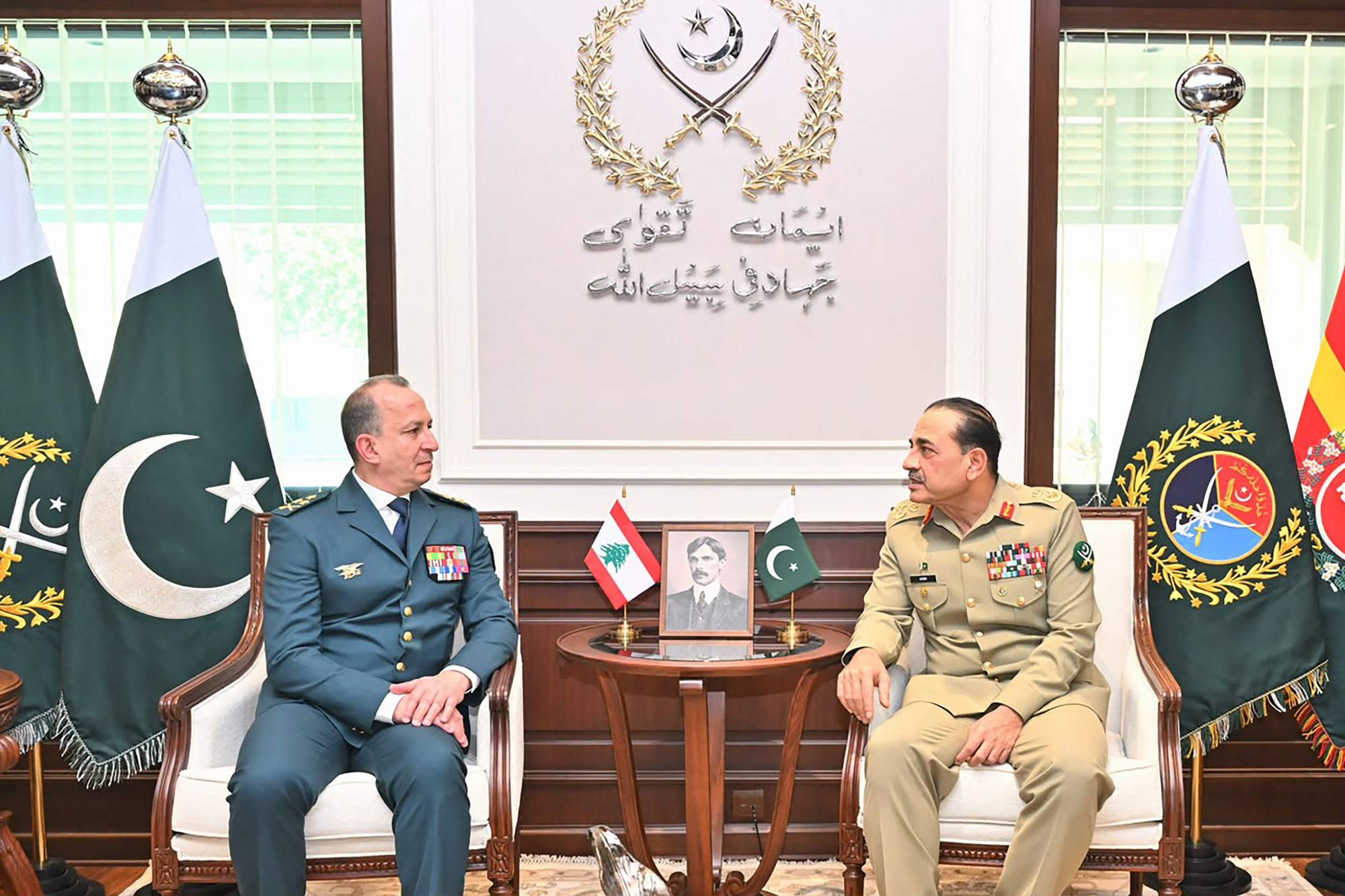
This handout photograph taken and released on June 9, 2026 by Pakistan's Inter-Services Public Relations (ISPR) shows Pakistan's Army Chief and Field Marshal Syed Asim Munir (R) speaking with General Rodolphe Haykal, Commander-in-Chief of the Lebanese Armed Forces during their meeting in Rawalpindi. (Photo by Handout / Pakistan's Inter-Services Public Relations (ISPR) / AFP)
TT

Pakistan, Lebanon Army Chiefs Meet as Middle East Mediation Drags On

This handout photograph taken and released on June 9, 2026 by Pakistan's Inter-Services Public Relations (ISPR) shows Pakistan's Army Chief and Field Marshal Syed Asim Munir (R) speaking with General Rodolphe Haykal, Commander-in-Chief of the Lebanese Armed Forces during their meeting in Rawalpindi. (Photo by Handout / Pakistan's Inter-Services Public Relations (ISPR) / AFP)

The heads of the Pakistani and Lebanese armed forces agreed to boost cooperation on Tuesday as they met in Pakistan with peace talks over the Middle East war dragging on.

Pakistan has been mediating between the United States and Iran to end the months-long conflict, with Tehran insisting that any deal should include Lebanon, where Israel has been fighting Iran-backed Hezbollah, reported AFP.

Lebanese army chief Rodolphe Haykal left on Saturday to meet his powerful Pakistani counterpart Asim Munir, with a Lebanon-based source telling AFP the visit was linked to the broader peace talks.

The two military commanders discussed "matters of mutual interest, (the) evolving regional security environment, defense cooperation and prospects for enhancing bilateral military relations", a statement from the media wing of the Pakistani military said on Tuesday.

Munir "underscored (the) Pakistan Army's commitment to expanding defense collaboration with the Lebanese Armed Forces," it said, after Haykal received a guard of honor ahead of the meeting in the city of Rawalpindi.

Conflict in Lebanon has become a centerpiece of weeks of stop-start efforts to bring a formal end to the war.

Armed hostilities flared further during Haykal's visit, though both Iran and Israel indicated on Monday that they had halted the fighting.

US President Donald Trump, who has expressed frustration at the slow progress of peace talks, said on Tuesday that negotiators were in the "final throes" of reaching a deal.

Lebanon was drawn into the war when Hezbollah militants fired rockets at Israel on March 2 to avenge the US-Israeli killing of Iran's supreme leader.

Israel responded with an extensive campaign of airstrikes and a ground invasion that have killed nearly 3,600 people. Exchanges of fire with Hezbollah have not stopped despite an ongoing truce.

Pakistan's Prime Minister Shehbaz Sharif has said a US-Iranian agreement to end the war was "about to be achieved" when fresh fighting between Iran and Israel erupted on Sunday.

Even after an April 17 ceasefire agreement began, the Israeli military announced a so-called Yellow Line inside Lebanese territory about a dozen kilometers from its northern border where its ground troops are fighting with Hezbollah, who have fired rockets at Israel.


Lebanon Caught between US, Iran in Reclaiming its Independent Decision-making

 Lebanese army soldiers carry the coffin of captain Elie Khoury, who was killed on Saturday in an Israeli airstrike, during his funeral procession in Kfar Jarra, southern Lebanon, Monday, June 8, 2026. (AP)
Lebanese army soldiers carry the coffin of captain Elie Khoury, who was killed on Saturday in an Israeli airstrike, during his funeral procession in Kfar Jarra, southern Lebanon, Monday, June 8, 2026. (AP)
TT

Lebanon Caught between US, Iran in Reclaiming its Independent Decision-making

 Lebanese army soldiers carry the coffin of captain Elie Khoury, who was killed on Saturday in an Israeli airstrike, during his funeral procession in Kfar Jarra, southern Lebanon, Monday, June 8, 2026. (AP)
Lebanese army soldiers carry the coffin of captain Elie Khoury, who was killed on Saturday in an Israeli airstrike, during his funeral procession in Kfar Jarra, southern Lebanon, Monday, June 8, 2026. (AP)

Iran’s attack on Israel in retaliation to Israeli strikes on Sunday on Beirut’s southern suburbs, a Hezbollah stronghold, carried several messages.

It was seen as an attempt to reinforce its claim over Lebanon as a bargaining chip in its confrontation with the United States and Israel that it can use in the ongoing negotiations in Pakistan.

It remains to be seen if Iran has succeeded in seizing the initiative in this file and tie Lebanon’s stability to its own negotiations with the US, or if the attack deepened the Lebanese state’s drive to separate the Lebanese file from the Islamabad talks and further pursue the US-sponsored negotiations with Israel.

Lebanese President Joseph Aoun openly slammed Iran last week for using Lebanon as a “bargaining chip” in its negotiations with the US and demanded that it cease interfering in its internal affairs. Hezbollah, which is backed by Iran, has been adamant that Lebanon be included in the Pakistan negotiations, putting it at odds with the Lebanese state.

Head of the Saydet El Jabal Gathering, former MP Fares Souaid noted that since 1969, Lebanon has witnessed several conflicts between foreign powers over usurping the country’s independent decision-making and holding negotiations on its behalf with or without consulting it.

The Palestinian Liberation Organization tried to do so decades ago, then it was followed by the Syrian regime, under Hafez al-Assad, that imposed hegemony over Lebanon for several years and now, the country finds itself in the Iranian sphere of influence, he told Asharq Al-Awsat.

“The Lebanese state, represented by President Joseph Aoun and Prime Minister Nawaf Salam, has now succeeded in reclaiming the initiative for the first time since 1969,” Souaid added.

This has been achieved with evident US support after Washington realized the importance of separating the Lebanese file from Iran and preventing Tehran from negotiating in its name, he went on to say.

“Iran has been trying to claim that the Lebanese negotiations with Israel are a farce and that Lebanon will be unable to achieve its demands, or impose an Israeli withdrawal without it. Iran has been claiming that it alone will be able to achieve this [for Lebanon], but it will fail,” stressed Souaid.

This handout photograph taken and released on June 9, 2026 by Pakistan's Inter-Services Public Relations (ISPR) shows Pakistan's Army Chief and Field Marshal Asim Munir (R) speaking with General Rodolphe Haykal, Commander-in-Chief of the Lebanese Armed Forces during their meeting in Rawalpindi. (Handout / Pakistan's Inter-Services Public Relations (ISPR) / AFP)

The Iranian embassy in Beirut posted on its social media an image of two clasped hands, with one covered with the Lebanese flag and the other the Iranian one, and the statement “always with you” in Lebanese dialect.

The post sparked hundreds of comments in support and criticism from users about Iranian and Lebanese interests.

Souaid noted the “sharp division in Lebanon between one camp that wants the country to be a mere bargaining chip for Iran, and another that wants to consolidate the authority of the Lebanese state and its independent decision-making.”

“The state is committed to its independent decision-making, while Iran is trying to usurp it through sparking a war in Lebanon and exploit the Israeli strike on Beirut’s southern suburbs as if to say that it alone holds the keys to the solution,” he added.

“Iran will not succeed in reclaiming Lebanon’s decision-making or again impose its authority over the country,” he stressed.

Army commander in Pakistan

Amid the developments, Lebanese army commander Rodolphe Haykal was in Islamabad at the invitation of his Pakistani counterpart Asim Munir .

The military has not revealed details about the visit.

An informed source confirmed to Asharq Al-Awsat that he was visiting at his counterpart’s invitation and that the trip was coordinated with President Aoun.

Pakistan has expressed its readiness to offer assistance to the Lebanese army in terms of its deployment in the South after the Israeli withdrawal, it said, noting that Islamabad enjoys the trust of the Americans, Iranians and the Israelis given its role in the mediation efforts between the US and Iran.
