


Moscow, Damascus Reject OPCW Accusations on Chemical Weapons Attacks

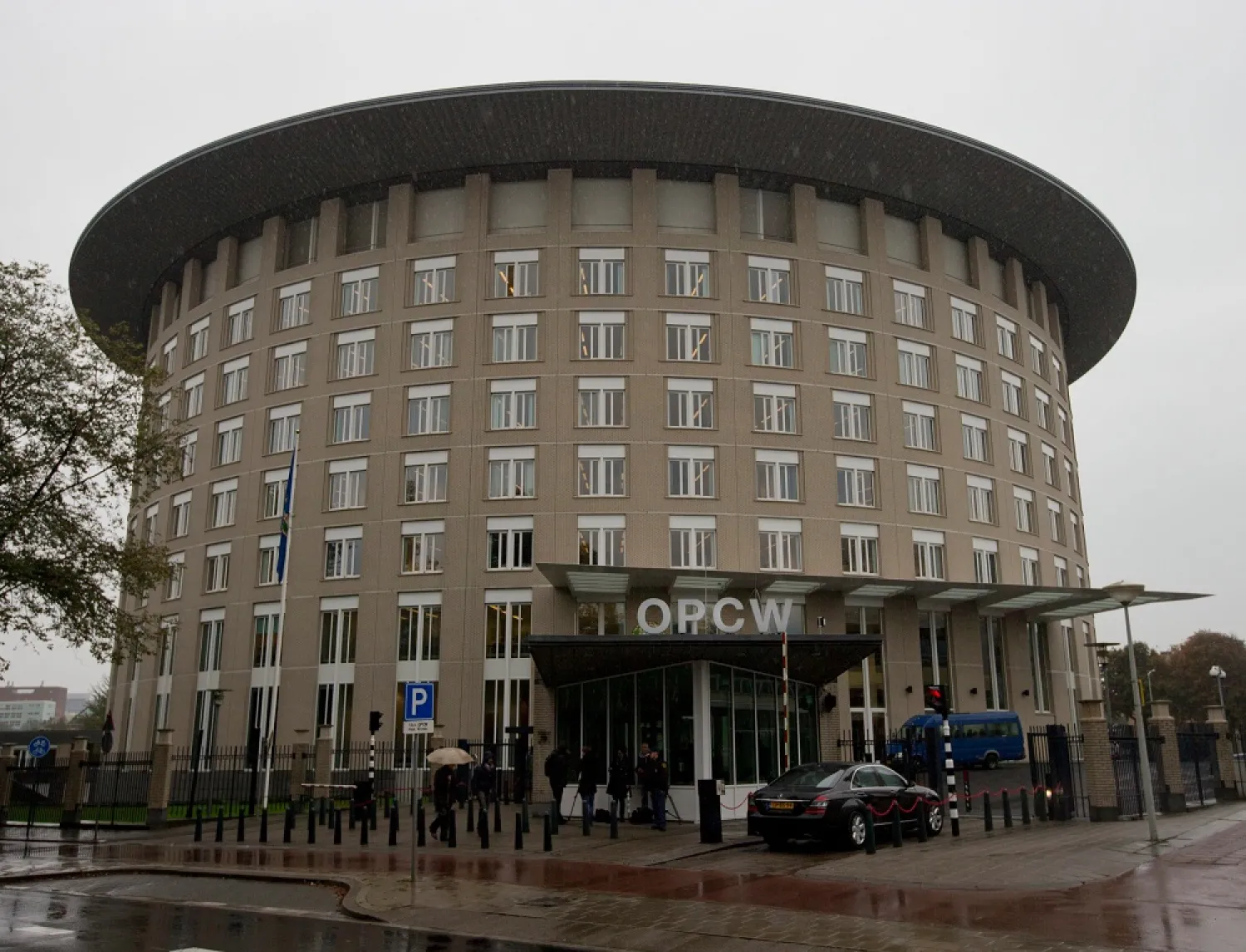
An exterior view of the headquarters of the world's chemical watchdog OPCW, in The Hague, Netherlands, Oct. 11, 2013. (AP)
TT

Moscow, Damascus Reject OPCW Accusations on Chemical Weapons Attacks

An exterior view of the headquarters of the world's chemical watchdog OPCW, in The Hague, Netherlands, Oct. 11, 2013. (AP)

Moscow and Damascus dismissed on Thursday accusations by the Organization for the Prohibition of Chemical Weapons (OPCW) that the Syrian air force was behind a series of attacks using sarin and chlorine on an opposition-held town in 2017.

The OPCW investigative team said in a 82-page report issued Wednesday that the Syrian air force dropped bombs containing either chlorine or sarin on a hospital and open farmland in the central town of Latamneh, injuring over 70 people and killing at least three, a surgeon and two other people. Livestock was also killed.

The attacks came amid intense fighting over the opposition-controlled town and parts of northern Hama, the central province where Latamneh is located. It was followed by a regime attack on Khan Sheikoun, a town further north, with suspected chemical agents that killed nearly 100 people.

The Khan Sheikoun attack is not part of the new report but it prompted US missile strikes in April 2017 that targeted Syrian air bases from where the attacks are believed to have been launched.

Moscow rejected the OPCW as politicized, saying it had ignored Russian warnings against releasing the report before comprehensively checking facts.

“The experts, who accused Syria of incidents that took place in 2017, have depended on judgments released by the Fact-Finding committee which included rough violations of the basic principle of the OPCW work that stipulates the need for a logic succession of events while collecting and keeping material evidence,” said Russia’s permanent mission at the OPCW.

It described the accusations as “untrustworthy,” adding that it relied on investigations that were carried out remotely and on statements from “terrorist” groups and the White Helmets volunteer group, which Damascus labels as “terrorists.”

Syria denounced Thursday the report as misleading.

“Syria condemns in the strongest terms what was stated in the report," an unnamed official with the Foreign Ministry said, according to a statement on state media. “At the same time, it categorically denies that it used toxic gases in the town of Latamneh or in any other Syrian city or village.”

The official charged the report relied on “fabricated allegations" from opposition areas, including by militant groups, dominated by al-Qaeda-linked fighters and the White Helmets.

The investigative team concluded that “there are reasonable grounds” to believe the perpetrators of the use of sarin as a chemical weapon in Latamneh in 2017, on March 24 and March 30, and that the use of chlorine as a chemical weapon on March 25, 2017, was part of the Syrian Arab Air Force, coordinator Santiago Oñate-Laborde said.

The investigation included interviews with witnesses, analysis of samples taken from the sites of the attacks, as well as review of symptoms reported by those affected and medical staff, along with examination of imagery, including satellite images.

Syrian authorities repeatedly refused to cooperate with the investigation, the report said.

The Syrian regime consistently rejects allegations it used chemical weapons during the country’s grinding civil war. The new report is likely to fan new calls for accountability for Bashar Assad’s regime.

The Syrian official also said such “false accusations will not deter Syria from continuing its war on terrorism.” Damascus considers all opposition groups terrorists and has kept up military operations against opposition-held areas, lately squeezing nearly 4 million civilians and tens of thousands of fighters in a shrinking enclave in northwestern Syria. A ceasefire went into effect there in March.

The OPCW team was established after Russia blocked the extension of a joint UN-OPCW investigation set up in 2015 that accused Syria of using chlorine in at least two attacks, in 2014 and 2015, and of unleashing the nerve agent sarin in Khan Sheikhoun.

Syria joined the OPCW in 2013 after it was blamed for a deadly poison gas attack in a Damascus suburb. Th regime then declared that some 1,300 tons of chemical weapons and precursor chemicals were subsequently destroyed in an unprecedented international operation.

However, the organization still has unanswered questions on whether Syria has fully disposed of its stockpile.


Former Syrian Regime Officer Arrested

Syrian Ministry of Interior in Damascus (Official Website)
TT

Former Syrian Regime Officer Arrested

Syrian Ministry of Interior in Damascus (Official Website)

Syria's Interior Ministry announced on Saturday the arrest of a former officer in Bashar al-Assad's regime holding the rank of major general and accused of committing crimes and violations.

In a statement, the ministry said that "based on precise monitoring and surveillance operations, Internal Security Forces carried out a special security operation that resulted in the arrest of criminal Mohammed Mohsen Nayouf."

"The criminal held the rank of major general under the former regime and occupied several prominent military and leadership positions, including service in the Third Corps, command of the 18th Tank Division, chief of staff of the 11th Division in 2020, and commander of the 105th Republican Guard Brigade in 2016."

According to the statement, the detainee was referred to the relevant authorities to complete investigations and take the necessary legal measures before being referred to the judiciary.

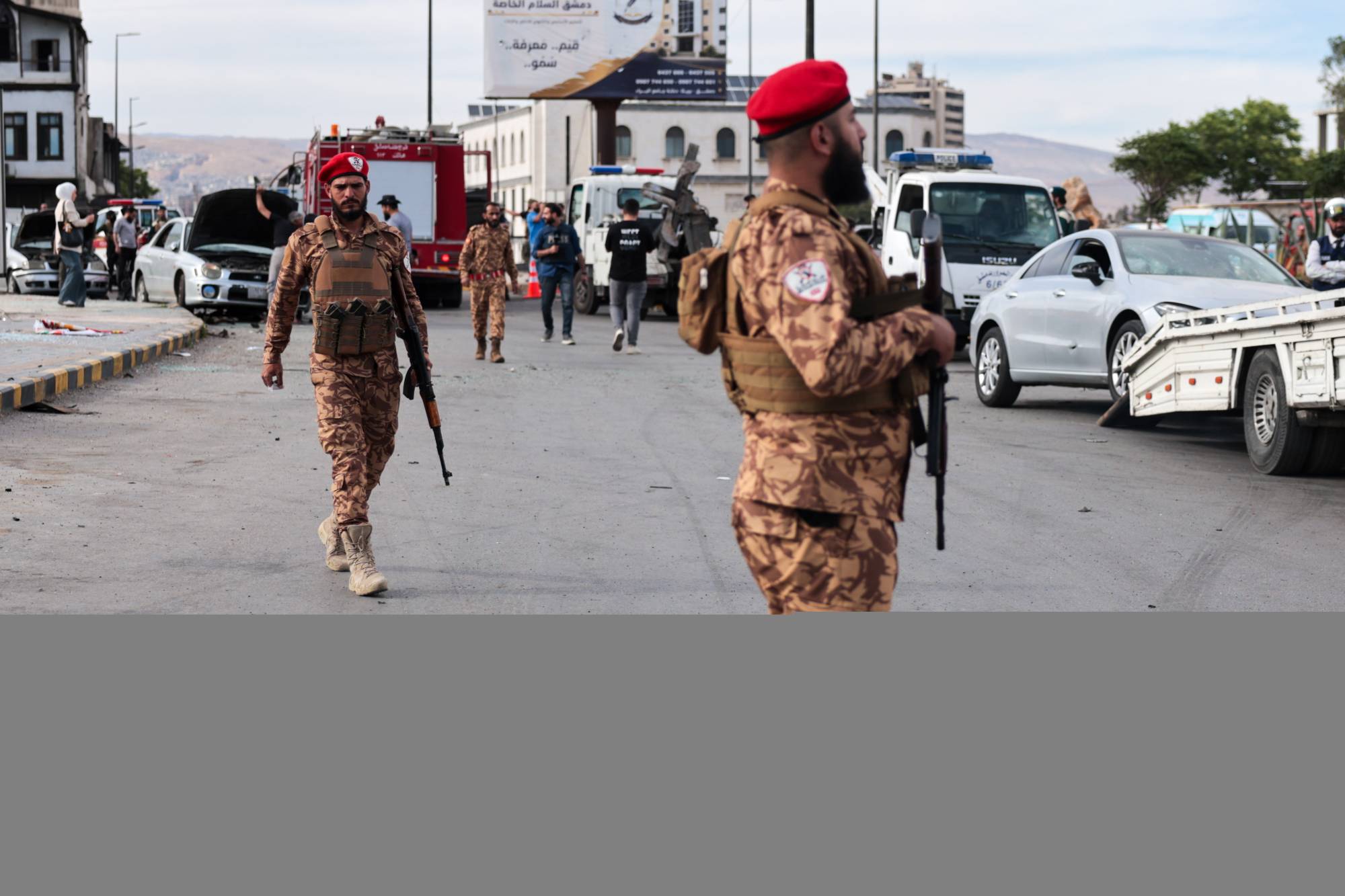
Syrian military police deployed near the explosion site in Bab Sharqi, near the headquarters of the Syrian Defense Ministry in Damascus, Syria, May 19, 2026. EPA/MOHAMMEDALRIFAI

The Syrian Arab News Agency (SANA) reported that the operation, carried out on Friday by the Salamiyah Security Directorate, which is affiliated with the Internal Security Command in Hama, comes "as part of the Interior Ministry's and relevant authorities' efforts to pursue and hold accountable those involved in crimes and violations committed against the Syrian people during the former regime, based on the principle of ending impunity, achieving transitional justice, and guaranteeing the rights of victims and their families."

Earlier on Friday, the Interior Ministry announced the arrest of Mohammed Imad Mahrez, one of the guards at Saydnaya prison during the former regime, making this the second such operation.


Hezbollah Says Message from Iran Shows it 'Will Not Give up' on Group

Displaced residents wave Hezbollah flags, including one bearing a picture of its leader, Naim Qassem, as they pass rubble of destroyed buildings in Dahiyeh, Beirut's southern suburbs, Lebanon, Friday, April 17, 2026, following a ceasefire between Israel and Hezbollah. (AP Photo/Bilal Hussein)
TT

Hezbollah Says Message from Iran Shows it 'Will Not Give up' on Group

Displaced residents wave Hezbollah flags, including one bearing a picture of its leader, Naim Qassem, as they pass rubble of destroyed buildings in Dahiyeh, Beirut's southern suburbs, Lebanon, Friday, April 17, 2026, following a ceasefire between Israel and Hezbollah. (AP Photo/Bilal Hussein)

Hezbollah said Saturday that a message from Tehran showed that Iran would not abandon the Lebanese militant group and that the Islamic republic's latest proposal to end the US-Iran war included a ceasefire in Lebanon.

Iran-backed Hezbollah said in a statement that its chief Naim Qassem had received a message from Tehran's Foreign Minister Abbas Araghchi, which indicated that Iran "will not give up its support for movements demanding justice and freedom, foremost among them Hezbollah".

In Iran's latest proposal through Pakistani mediators aimed at achieving "a permanent and stable end to the war, the demand to include Lebanon in the ceasefire was emphasised", the statement added.


South Lebanon Hospital Damaged in Israeli Strikes

Volunteers from the Lebanese Red Cross rescue a woman in the city of Nabatieh in South Lebanon (AFP)
TT

South Lebanon Hospital Damaged in Israeli Strikes

Volunteers from the Lebanese Red Cross rescue a woman in the city of Nabatieh in South Lebanon (AFP)

Israel kept up strikes on Lebanon on Saturday, hours after overnight raids on the country's south and east, including one that damaged a hospital, its chief executive told AFP.

Lebanon's state-run National News Agency (NNA) reported Israeli airstrikes on around a dozen locations in the south on Saturday including one targeting an agricultural area, "wounding several Syrian workers".

The NNA said an overnight strike in the southern city of Tyre that targeted a site near the hospital caused "severe damage" to the facility.

An AFP correspondent saw shattered glass, ceiling panels blown out and damaged medical equipment at the multi-storey Hiram hospital.

The Israeli military late on Friday night had issued evacuation warnings ahead of strikes on two locations in Tyre, saying it would target "Hezbollah facilities".

Accompanying maps advised people to leave areas within 500 metres (yards) of the target buildings, with the Hiram hospital shown within the advised evacuation area.

The hospital's CEO Dr Salman Aydibi told AFP that around 40 patients were in the facility when the warning was issued, including seven in intensive care.

"We took the patients to a safer location" elsewhere inside the hospital, he said, adding that none were harmed but some 30 staff sustained minor injuries.

He said an evaluation of the damage was ongoing and that the hospital has remained operational, though the emergency department briefly closed.

He said it was the third strike near the facility since the latest Israel-Hezbollah war erupted on March 2.

Israel's army said Saturday that it had targeted "Hezbollah infrastructure sites in Tyre" overnight where operatives from the Iran-backed group worked to "plan and execute attacks" against Israeli soldiers.

"Prior to the strike, steps were taken to mitigate harm to civilians, including the issuing of advance warnings, the use of precise munitions, and aerial surveillance," it added.

Another AFP correspondent saw heavy damage at both targeted sites in Tyre, with a man searching for his belongings among the debris at one location.

Israel's army also targeted east Lebanon overnight, saying it struck a "Hezbollah underground compound" used to manufacture weapons.

Lebanon's Hamas-aligned Islamist group Jamaa Islamiya and its armed wing the Al-Fajr Forces said Saturday in a statement that one of its members was killed in an Israeli strike in east Lebanon.

Under the terms of the ceasefire published by Washington, Israel reserves the right to act against "planned, imminent or ongoing attacks".
