Lebanese Minister: Israeli Strike Closes Off Road Used to Flee Lebanon to Syria

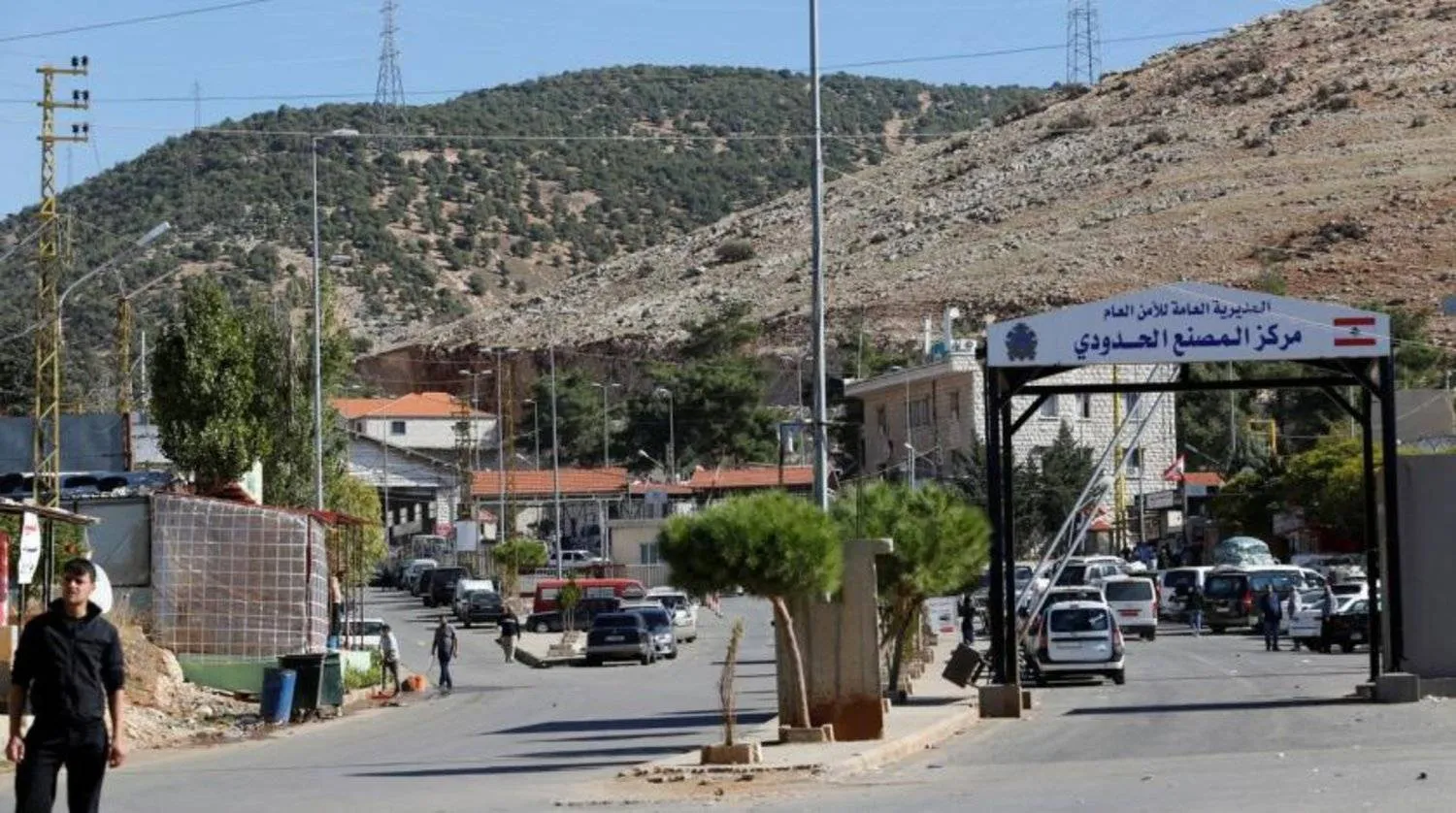
Masnaa border crossing between Lebanon and Syria, Lebanon November 1, 2018. Picture taken November 1, 2018. REUTERS/Jamal Saidi
TT

Lebanese Minister: Israeli Strike Closes Off Road Used to Flee Lebanon to Syria

Masnaa border crossing between Lebanon and Syria, Lebanon November 1, 2018. Picture taken November 1, 2018. REUTERS/Jamal Saidi

An Israeli strike on Friday morning near Lebanon's Masnaa border crossing with Syria cut off a road used by hundreds of thousands of people to flee Israeli bombardments in recent days, Lebanon Transport Minister Ali Hamieh told Reuters.
Hamieh said the strike hit inside Lebanese territory near the border crossing, creating a four-meter (12 feet) wide crater.
An Israeli military spokesman had accused Lebanese armed group Hezbollah on Thursday of using the crossing to transport military equipment into Lebanon.
Israel “will not allow the smuggling of these weapons and will not hesitate to act if forced to do so, as it has done throughout this war," Israeli army spokesman Avichay Adraee said on X.
Hamieh had said at a press conference on Thursday that the crossing was subject to the authority of the Lebanese state.
According to Lebanese government statistics, more than 300,000 people - a vast majority of them Syrian - had crossed from Lebanon into Syria over the last 10 days to escape escalating Israeli bombardment.


Jeddah Summit Highlights Saudi Push for Gulf Coordination

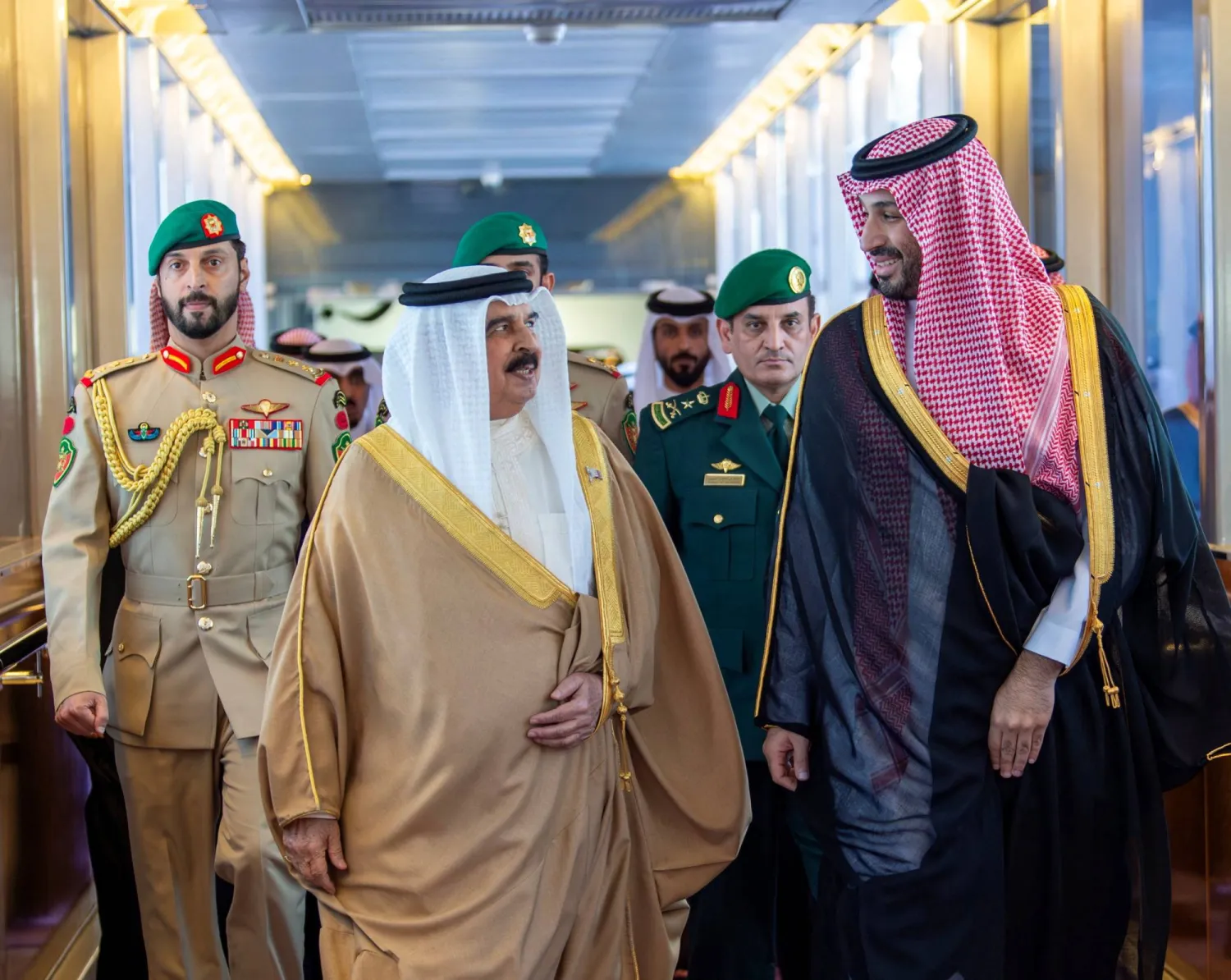
Prince Mohammed bin Salman, Saudi Crown Prince and Prime Minister, holds talks with Emir of Qatar Sheikh Tamim bin Hamad Al Thani in Jeddah on Tuesday. (SPA)
TT

Jeddah Summit Highlights Saudi Push for Gulf Coordination

Prince Mohammed bin Salman, Saudi Crown Prince and Prime Minister, holds talks with Emir of Qatar Sheikh Tamim bin Hamad Al Thani in Jeddah on Tuesday. (SPA)

Observers said Saudi Arabia’s hosting of a consultative meeting of the Gulf Cooperation Council (GCC) in Jeddah on Tuesday underscores a push by Prince Mohammed bin Salman, Saudi Crown Prince and Prime Minister, to bolster joint Gulf work, contain the fallout of the current security and economic crisis, and ensure that solutions to the conflict ensure the interests of the GCC.

Recent developments and their unprecedented repercussions have exposed a major shift in the regional security order, underscoring the need for stronger Gulf cooperation and a more integrated crisis-response strategy.

Containing fallout

Informed sources said Saudi Arabia, alongside fellow Gulf states, has led diplomatic efforts to avoid escalation in the region.

GCC countries have repeatedly stressed their territories will not be used to launch attacks against Iran, seeking to prevent a wider conflict and its economic and security consequences.

Despite this, Iran and allied militias have expanded the conflict through unjustified attacks on GCC states.

Political analyst Munif Al-Harbi told Asharq Al-Awsat that Saudi Arabia has condemned Iranian attacks targeting the Kingdom, GCC states, and several Arab and Islamic countries, warning of escalation, breaches of international law, and threats to regional stability.

He said Riyadh considers GCC security indivisible, with any attack on one member treated as an attack on all, underscoring the need to protect shared interests.

Al-Harbi said the crisis has reinforced the urgency of deeper Gulf integration and stronger defense coordination. He said GCC states have shown a strong ability to intercept most missile and drone attacks, reflecting the resilience of their defense systems.

He added that economic and logistical coordination has also intensified, with Saudi Arabia helping stabilize global markets by maintaining oil exports.

Fragile ceasefire

Political analyst Khaled Al-Habbas agreed, saying the summit came at a sensitive moment shaped by stalled negotiations and a fragile ceasefire.

He underscored the consistent GCC stance since the start of the war, including support for the Pakistani mediation and efforts to ensure a Gulf voice at the negotiating table, even without direct participation, given the damage Gulf states have sustained from the Iranian attacks, including the closure of the Strait of Hormuz.

Al-Habbas said the summit is expected to reaffirm Gulf unity, condemn Iranian attacks, and back ongoing mediation efforts.

He said it would likely stress reopening the Strait of Hormuz in line with international law, reject any unilateral Iranian arrangements, and highlight risks linked to Iran’s nuclear and missile programs and its regional proxies, as well as continued attacks on some Gulf states even after the ceasefire.

Both analysts said the summit will stress tighter coordination across defense, logistics, and supply chains, which they said has helped limit the war’s impact on GCC states.

The summit is also expected to back regional and international efforts toward a political settlement addressing all aspects of the conflict and Gulf concerns over Iran’s conduct.

Any deal reached must reflect those concerns and be backed by firm international guarantees.


Gulf Maritime Integration Needed to Protect Hormuz, Counter Strategic Blackmail

A satellite image shows small boats north of the Strait of Hormuz. (Reuters)
TT

Gulf Maritime Integration Needed to Protect Hormuz, Counter Strategic Blackmail

A satellite image shows small boats north of the Strait of Hormuz. (Reuters)

The Strait of Hormuz has shifted, amid the current crisis, from a vital shipping lane into a strategic bargaining chip, anchored in Iran’s ability to keep passage uncertain, legally open, yet militarily threatened, politically conditioned, and economically sensitive.

A report by the Gulf Research Center, published on Tuesday, said Gulf states are the most exposed to the fallout from using Hormuz as leverage.

It said the strait’s impact goes beyond energy exports, extending to port security, supply chains, insurance, investment, the reputation of the economic environment, and the continuity of trade flows.

The report, prepared by retired Naval Admiral Abdullah Jaber AlZaidi, senior adviser for defense and security studies at the center, said Gulf states must not only protect the waterway but also reduce their vulnerability to strategic blackmail.

That requires stronger maritime early warning, a more integrated maritime picture, higher readiness to protect ports and infrastructure, alternative supply chain plans, and closer coordination with international partners, without turning the region into an open arena for escalation.

Iran’s approach, the report said, rarely reaches full closure. Instead, it relies on selective restrictions or threats, particularly against ships it views as tied to logistical support for US bases or as subject to maritime pressure. This gives Tehran room to maneuver, allowing it to calibrate between escalation and de-escalation.

The United States, by contrast, is using naval and air deployments as deterrence and counter-pressure, seeking to make any disruption of Hormuz a high-cost option for Iran. The aim is to curb escalation and reassure allies and markets that freedom of navigation will not be held hostage by Iran.

The report warned that the crisis is governed by a fragile balance. Iran is betting on raising the cost of passage without exhausting the Hormuz card, while the United States is betting on stronger deterrence without tipping into open conflict. Gulf states remain the most affected, as Hormuz is no longer just a navigation issue, but a broad national security concern spanning energy, ports, insurance, investment, supply chains, and regional stability.

Maritime pressure and the shadow fleet

The report said Iran’s use of Hormuz cannot be separated from wider maritime and economic pressure imposed on it. This goes beyond direct restrictions on Iranian ports to targeting shipping networks, insurance, intermediaries, and tankers that help Tehran bypass sanctions and market oil and petroleum products outside official channels.

Recent US measures against shipping firms and tankers linked to Iranian oil are not just financial sanctions, the report said, but part of dismantling Iran’s ability to sustain unofficial maritime trade.

Strategic ambiguity

Iran’s shifting statements on the strait reflect a deliberate strategy of ambiguity, the report said. The messaging has moved from allowing commercial transit, to linking passage, to de-escalation, to tougher positions on monitoring or restricting some vessels.

This is not an inconsistency, but an effort to keep the strait in a gray zone.

At its core, the strait remains legally open, but militarily threatened and subject to political and security conditions. That alone is enough to unsettle shipping firms, insurers, and vessel owners, who base decisions on worst-case risks, not reassuring statements.

The report said Iran adds a more sensitive layer by claiming some transiting ships provide logistical support for US bases in the Gulf, shifting from the language of disruption to a claim of the right to monitor what it sees as threats to its sovereignty.

Iran’s strategy reflects an awareness of its limits in conventional naval operations, offset by effective tools of disruption, confusion, and gray-zone pressure, the report said. These include direct military tools, hybrid gray-zone and cyber tools, and psychological and information warfare.

The Strait of Hormuz is narrow, the report said, and any incident could escalate quickly, whether a ship refusing inspection or a mine hitting the wrong target. Such events could shift the dynamic from bargaining to confrontation, stripping Iran of control over escalation and turning leverage into liability.

Impact on Gulf security

Gulf states remain the most exposed to the fallout, the report said, as Hormuz affects not only energy exports but also ports, supply chains, insurance, investment, the business environment, and trade flows.

Iran’s use of the strait puts Gulf states in a delicate position, the report noted, adding that they need to protect freedom of navigation, but do not want the strait to become an open confrontation zone.

It also mentioned that Gulf states need international deterrence, but know that any broad escalation would hit them directly, economically, and in security terms.

The report said Gulf states must go beyond protecting the passage and work to reduce their vulnerability to strategic blackmail.

This requires stronger maritime early warning, better integration of maritime awareness, higher readiness to protect ports and infrastructure, alternative supply chain planning, and tighter coordination with international partners, without turning the region into an open theater of escalation.


UK Summons Iranian Ambassador Over Embassy’s ‘Unacceptable’ Comments on Social Media

Police officers stand guard outside the Iranian embassy as demonstrators continue protesting outside during a rally in support of nationwide protests in Iran, in London, Britain, January 13, 2026. (Reuters)
TT

UK Summons Iranian Ambassador Over Embassy’s ‘Unacceptable’ Comments on Social Media

Police officers stand guard outside the Iranian embassy as demonstrators continue protesting outside during a rally in support of nationwide protests in Iran, in London, Britain, January 13, 2026. (Reuters)

Britain said on Tuesday the Iranian ambassador to London had been summoned over what the government described as the Iranian embassy's "unacceptable and inflammatory" comments on social media.

Britain's minister for the Middle East, ‌Hamish Falconer, made ‌clear that the embassy "must ‌cease ⁠any form of communications ⁠that could be interpreted as encouraging violence in the UK or internationally", the Foreign Office said in a statement.

Iranian officials in Tehran could not be immediately reached for ⁠comment on Britain's move.

A ‌statement posted ‌by the Iranian embassy on its Telegram channel ‌earlier this month called on ‌Iranians in Britain to volunteer for a campaign to declare their willingness to sacrifice their lives in a war ‌in defense of their country.

The British government did not ⁠specify ⁠which of the embassy's social media comments it was referring to.

British lawmakers have warned of significant and wide-ranging threats posed by Iran to Britain.

The government also summoned the Iranian ambassador last month after an Iranian national and a British-Iranian dual national were charged on suspicion of helping Iran's intelligence services.