US Says Will Continue to Support a Civilian Government in Sudan

Sudanese army touring a Khartoum neighborhood (AFP)
TT

US Says Will Continue to Support a Civilian Government in Sudan

Sudanese army touring a Khartoum neighborhood (AFP)

The United States affirmed its support of the Sudanese people's demand for a civilian government and the resumption of Sudan's disrupted democratic transition.

Washington warned that the ongoing fighting between the Sudanese Armed Forces and Rapid Support Forces (RSF) threatened the people of Sudan with the prospect of a protracted conflict and widespread suffering.

The US Embassy in Khartoum issued a statement asserting that Washington will continue to hold the belligerent parties accountable for their unconscionable violence and blatant disregard for the will of the Sudanese people.

The statement added that every day hostilities continue, the parties hinder the delivery of humanitarian assistance to those who need it most, destroy key infrastructure, and deny the aspirations of the Sudanese people for freedom, peace, and justice.

Meanwhile, violent clashes erupted in Khartoum as people commemorated the fourth anniversary of the forceful dispersal of the sit-in on June 3, 2019, during which the army general command killed hundreds and injured thousands of others.

It marks the second day in a row of clashes with heavy weapons, after the collapse of the Jeddah cease-fire agreement signed by the two warring parties, with Saudi-US mediation, amid the deterioration of the humanitarian situation and the increasing number of displaced people.

Clashes renewed in the old Omdurman and south of Khartoum, and explosions were heard in the cities and around vital and strategic locations.


Residents of Khartoum reported that the army's warplanes had bombed areas in the south of Khartoum, and the RSF units responded using ground anti-aircraft missiles.


Meanwhile, the Sudanese Red Crescent announced the burial of 180 unidentified persons after the bodies piled up in the streets and people's inability to go out to bury them.



Israeli Strike on Lebanon Kills One

 31 August 2026, Lebanon, Arnoun: Smoke billows after an Israeli detonation on Arnoun, not far from the strategic Ali al-Taher Ridge. (dpa)
31 August 2026, Lebanon, Arnoun: Smoke billows after an Israeli detonation on Arnoun, not far from the strategic Ali al-Taher Ridge. (dpa)
TT

Israeli Strike on Lebanon Kills One

 31 August 2026, Lebanon, Arnoun: Smoke billows after an Israeli detonation on Arnoun, not far from the strategic Ali al-Taher Ridge. (dpa)
31 August 2026, Lebanon, Arnoun: Smoke billows after an Israeli detonation on Arnoun, not far from the strategic Ali al-Taher Ridge. (dpa)

An Israeli strike on south Lebanon killed one person on Wednesday, Lebanese official media said, while Israel said it targeted Hezbollah in retaliation for an attack targeting its soldiers in the south.

"One person was killed and another wounded in a strike launched by an enemy drone" in the city of Nabatieh, Lebanon's state-run National News Agency (NNA) said, also reporting other Israeli strikes on the area.

Israel's army said the Iran-backed Hezbollah group overnight "launched two explosive drones" towards Israeli soldiers in Ali al-Taher Ridge area, reporting no troop casualties.

In response, the Israeli military said it struck Hezbollah infrastructure in the Nabatieh area.

Israel has recently increased its attacks on south Lebanon, particularly in the Nabatieh area where the strategic Ali al-Taher Ridge is located.

Israel has previously said Hezbollah fighters are holed up in "underground terror infrastructure" there.

Hezbollah has not claimed any attacks on Israeli targets for weeks.

Last week, Israeli airstrikes killed a woman as Israel's military said it struck Hezbollah targets.

On August 15, Israeli strikes killed 11 people including several children. Israel's military said it killed two Hezbollah commanders in raids also launched in retaliation for an attack by the group.

Hezbollah drew Lebanon into the Middle East war in March by attacking Israel in support of its backer Iran, triggering massive Israeli airstrikes and a ground invasion that Lebanese authorities say have killed more than 4,300 people.

Israeli forces are operating inside a self-declared "security zone", which runs around 10 kilometers (six miles) deep inside Lebanese territory along the border.

Violence has dropped since a US-Iran memorandum of understanding on the broader conflict in June and a framework agreement between Israel and Lebanon later that month.

But Lebanon still reports Israeli strikes, artillery shelling and broad demolitions of civilian buildings in southern villages and towns.

Lebanon's health ministry says Israeli attacks have killed at least 8,920 people since hostilities initially erupted in October 2023, after Hezbollah launched rockets at Israel in support of its Palestinian ally Hamas over the Gaza conflict.


Xi Tells Egypt’s Sisi ‘External Interference’ in Middle East Should Be Opposed

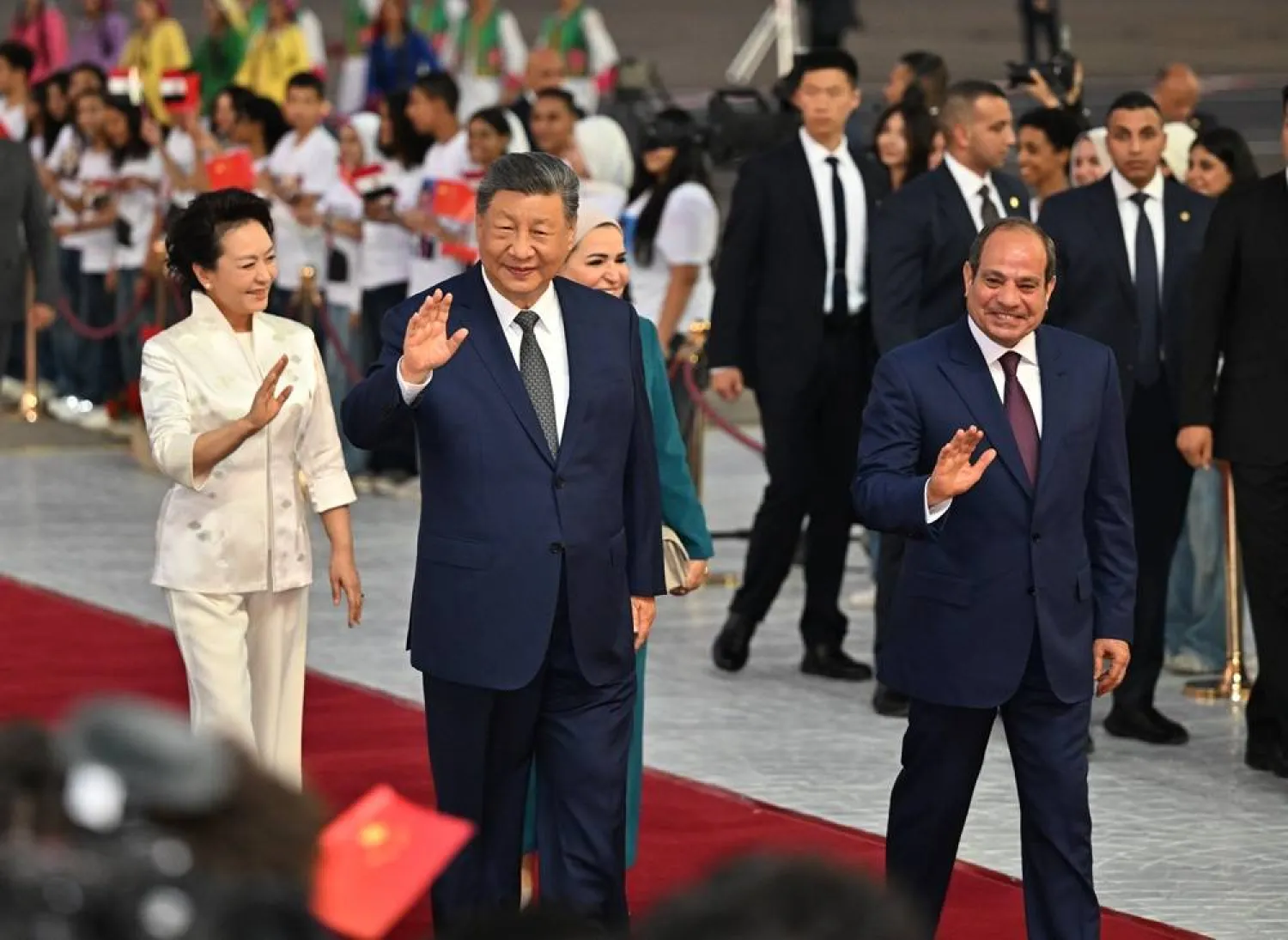
 In this photo released by Xinhua News Agency, Chinese President Xi Jinping, second left, and his wife Peng Liyuan, left, are welcomed by Egyptian President Abdel Fattah al-Sisi, right, and his wife Entissar Amerupon on their arrival at Cairo International Airport in Cairo, Tuesday, Sept. 1, 2026. (Yin Bogu/Xinhua via AP)
In this photo released by Xinhua News Agency, Chinese President Xi Jinping, second left, and his wife Peng Liyuan, left, are welcomed by Egyptian President Abdel Fattah al-Sisi, right, and his wife Entissar Amerupon on their arrival at Cairo International Airport in Cairo, Tuesday, Sept. 1, 2026. (Yin Bogu/Xinhua via AP)
TT

Xi Tells Egypt’s Sisi ‘External Interference’ in Middle East Should Be Opposed

 In this photo released by Xinhua News Agency, Chinese President Xi Jinping, second left, and his wife Peng Liyuan, left, are welcomed by Egyptian President Abdel Fattah al-Sisi, right, and his wife Entissar Amerupon on their arrival at Cairo International Airport in Cairo, Tuesday, Sept. 1, 2026. (Yin Bogu/Xinhua via AP)
In this photo released by Xinhua News Agency, Chinese President Xi Jinping, second left, and his wife Peng Liyuan, left, are welcomed by Egyptian President Abdel Fattah al-Sisi, right, and his wife Entissar Amerupon on their arrival at Cairo International Airport in Cairo, Tuesday, Sept. 1, 2026. (Yin Bogu/Xinhua via AP)

Chinese President Xi Jinping told his Egyptian counterpart on Wednesday that "external interference" in the Middle East should be opposed, Beijing's state media reported, following talks in Cairo between the two leaders. 

"We must uphold the principle that the people of the Middle East are the masters of their own affairs, oppose external interference (and) support regional countries in strengthening dialogue on peace and security," Xi told Egyptian President Abdel Fattah al-Sisi, according to Chinese state news agency Xinhua. 

Xi is on his first visit to Egypt in a decade as Beijing seeks a greater foothold in the region against the backdrop of the US-Iran war. 

Washington vowed last month to isolate Iran economically, threatening expanded sanctions that could also hit Chinese banks, among others. 

China, a major buyer of Iranian oil, has vowed to safeguard its interests. 

Xi also said during talks with Sisi that Beijing was willing to help protect maritime shipping from the energy-rich region, upended since US-Israeli strikes on Iran in late February triggered the war. 

"China stands ready to work with countries in the region to safeguard the security of international shipping lanes, advance development cooperation... and eliminate the breeding grounds for conflict," Xi said, according to Xinhua. 


Damascus Begins Establishing its Authority in Hasakeh after SDF Dissolution

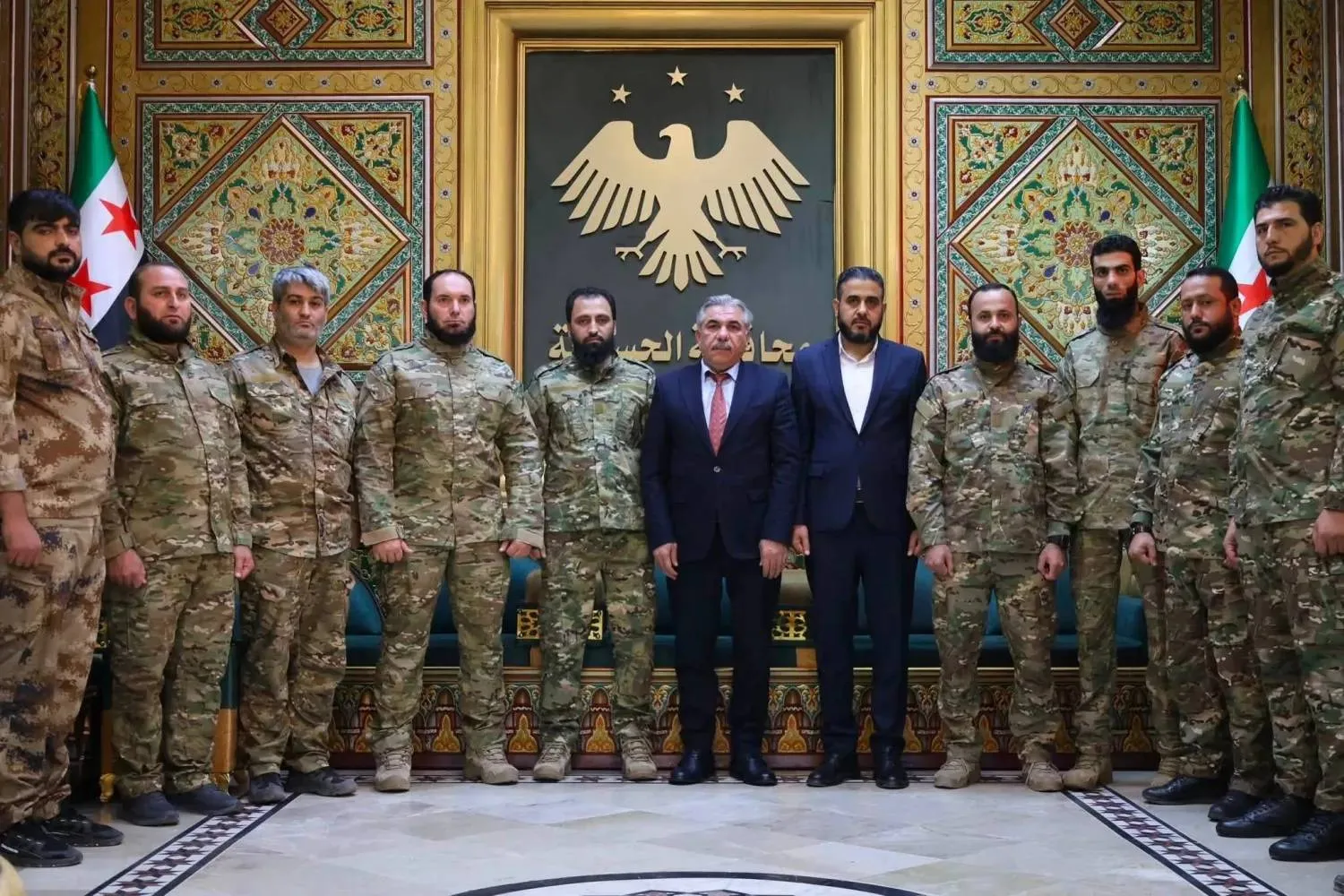
A Syrian Defense Ministry delegation in Hasakeh on Monday. (Hasakeh governorate media)
TT

Damascus Begins Establishing its Authority in Hasakeh after SDF Dissolution

A Syrian Defense Ministry delegation in Hasakeh on Monday. (Hasakeh governorate media)

The Special Task Forces of the Ministry of Interior took over a regiment on Tuesday from the disbanded Syrian Democratic Forces (SDF) in Hasakeh city as part of a plan to deploy Syrian security forces in the Hasakeh governorate in northeastern Syria.

The move is part of completing integration procedures and taking control of all security and military positions in the governorate, and hours after the arrival of a Ministry of Defense delegation to Hasakeh to discuss measures for completing the integration process.

Internal Security and Special Task forces are expected to deploy gradually across all areas of Hasakeh to extend state control, maintain security, and boost stability.

New appointments within the Syrian security apparatus are expected as part of an integration process.

Forces are also preparing to deploy to Hasakeh city center, Qamishli, Rumeilan, Al-Malikiyah, and border regions in the coming days.

A delegation from the Ministry of Defense arrived in Hasakeh on Monday and held a meeting at the governorate headquarters with local officials, including Governor Nour al-Din Ahmed, Military Security chief Thaer Obaid al-Bilal, and Military Police chief Imad Fawaz al-Ayesh.

The meeting addressed the procedures and steps required to finalize the integration of military and security institutions within the region, said a statement.

The meeting also addressed coordination mechanisms and the strengthening of cooperation between the relevant entities to unify efforts and ensure the smooth implementation of procedures related to the integration.

The executive bureau of the Hasakeh governorate also held its first meeting on Tuesday, chaired by the governor and attended by bureau members, to discuss mechanisms for boosting coordination across various sectors.

In a related development, displaced Arab families from Haskaeh city returned to their homes in the Al-Aziziyeh neighborhood after more than 10 years of displacement. A celebration was held in their honor attended by Internal Security Commander Marwan Al-Ali and Hasakeh Deputy Governor Ahmed Al-Hilali.