


Israel Imposes Closure on West Bank, Gaza as Jewish Holidays Approach

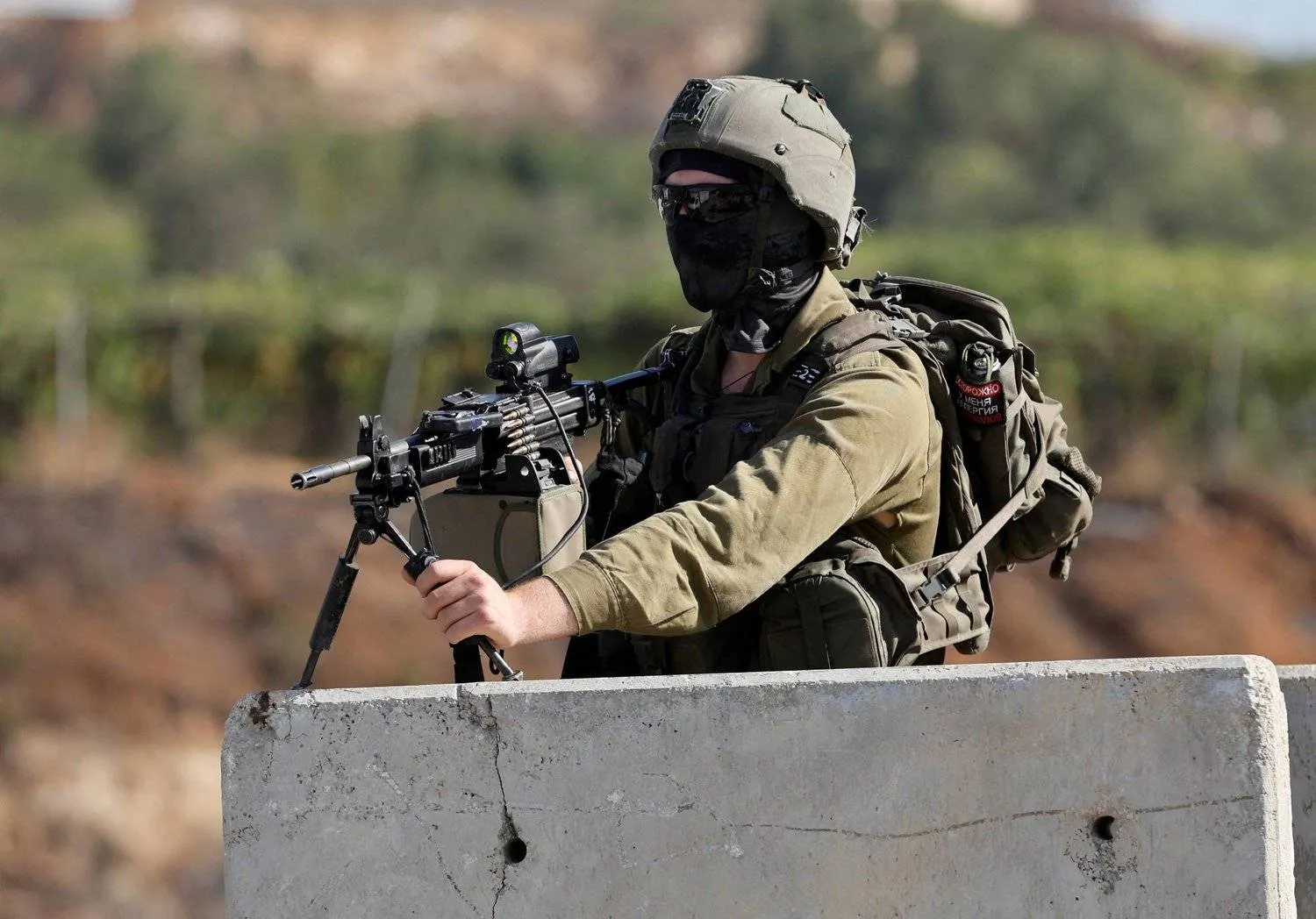
An Israeli soldier at a crossing in Hebron in the West Bank on August 22, 2023. (Reuters)
TT

Israel Imposes Closure on West Bank, Gaza as Jewish Holidays Approach

An Israeli soldier at a crossing in Hebron in the West Bank on August 22, 2023. (Reuters)

The Israeli military announced Thursday it will impose a three-day total closure on Palestinians in the West Bank and Gaza Strip during the upcoming Jewish New Year holiday, starting on Friday.

The closure, which follows "an instruction by the political echelon," will begin right after midnight Friday and will be lifted before midnight Sunday, according to a statement released by the military.

The observation of the new year highlights the beginning of a period of Jewish holidays this month and in October.

The occupation forces impose a full closure on the West Bank and the Gaza Strip on September 24 marking the Yom Kippur (Day of Atonement). Also, it closes all the crossings leading to the West Bank and the Gaza Strip on the Sukkot from September 29 until October 7.

This measure would prevent access to Israel and movements from and to the Gaza Strip. This closure would also include border crossings with Jordan and a change in their operating hours.

In this context, the General Administration of Crossings and Borders announced amending Al-Karama border crossing operating hours on Sunday.

The crossing border will operate both ways from 8:00 a.m. until 4:00 p.m. due to the Jewish holidays. On Saturday, the 23rd of September, it would be open from 8:00 a.m. until 12:30 noon, while it will be fully closed on Sunday the 24th of the same month until Tuesday.

The closure of the Al-Karama border crossing means that the Palestinians will be banned from traveling from and to Jordan.

Israel often imposes a closure on the West Bank on holidays and bans the Palestinians’ entry except for those who have permits. It also tightens restrictions on the exceptions.

Thousands of Palestinians work in the West Bank including doctors and businessmen. This closure includes all the crossings of Gaza and the halt of imports and exports to the Strip.

Israel says that it aims to avoid any Palestinian operations while the Israelis are celebrating their holidays.

The Palestinian Ministry of Foreign Affairs and Expatriates denounced the closures, considering them harmful to the Palestinian economy.

It described the closures in a statement as “a blatant use of religious events for colonial purposes in an effort to mislead world public opinion by blaming the victim while acquitting the executioner, not to mention the economic and social harm they cause to our people.”



Trump Says Netanyahu Could Use ‘Softer Touch’ in Lebanon

Israel's Prime Minister Benjamin Netanyahu gives a news conference in Jerusalem on June 15, 2026. (AFP)
TT

Trump Says Netanyahu Could Use ‘Softer Touch’ in Lebanon

Israel's Prime Minister Benjamin Netanyahu gives a news conference in Jerusalem on June 15, 2026. (AFP)

US President Donald Trump said on Wednesday that Israeli Prime Minister Benjamin Netanyahu could use a "softer touch" in Lebanon in comments ‌made at the ‌close of ‌a G7 ⁠summit in France.

Netanyahu ⁠and Trump have repeatedly clashed over Israel's refusal to constrain its pursuit of Iran-backed Hezbollah in Lebanon, where a cessation ⁠of hostilities is a ‌key ‌Iranian demand.

"Netanyahu happens to be a ‌good man, gets a ‌little excited sometimes," Trump told reporters on Wednesday.

"We have a little dispute over Lebanon. I ‌say you can do a little softer touch, ⁠Bibi. ⁠You don't have to knock down a building every time somebody walks into it that's from Hezbollah."

Trump added that he agreed with the description of Israel as being "the very small partner" of the United States.


Fresh Syria Protests Call for Accountability for Assad-Era Loyalists

 A large Syrian flag flutters above Tishreen Park in Damascus, June 4, 2025. (AFP)
A large Syrian flag flutters above Tishreen Park in Damascus, June 4, 2025. (AFP)
TT

Fresh Syria Protests Call for Accountability for Assad-Era Loyalists

 A large Syrian flag flutters above Tishreen Park in Damascus, June 4, 2025. (AFP)
A large Syrian flag flutters above Tishreen Park in Damascus, June 4, 2025. (AFP)

Dozens of Syrians protested in Damascus overnight into Wednesday demanding accountability for supporters of ousted ruler Bashar al-Assad, the latest such demonstrations in a country still recovering after years of civil war.

Syria's new authorities have repeatedly vowed to provide justice and accountability for Assad-era atrocities, and have regularly announced the arrest of former military and security figures, launching trials for some while warning against acts of "revenge".

Video footage posted on social media and confirmed by the Syrian Observatory for Human Rights monitor appeared to show dozens of people protesting in the capital's Mazzeh 86 neighborhood.

A protest also erupted in front of a nearby mosque before security forces restored order.

An AFP photographer saw a similar demonstration on Monday night on the outskirts of the capital.

"Assad's shabiha forced us to leave in green buses" for tented displacement camps in the country's north, said protester Abdel-Rahman al-Qadri, 38, a former opposition fighter.

He was referring to militiamen who helped crush dissent under Assad, and to evacuation deals imposed on some opposition-held areas during Syria's civil war, which erupted in 2011 and ended with the longtime ruler's 2024 ouster.

"We deserve the houses they live in, we deserve the positions and public sector jobs," said Qadri, who is unemployed.

Neighborhoods considered strongholds of the former authorities in the major cities of Aleppo and Idlib have seen similar protests in recent days, with participants calling for so-called "regime remnants" and "shabiha" to be put on trial.

Local residents there said some protests have involved vandalism of private property, raising tensions and fears of vigilante justice.

On Monday, interior ministry spokesperson Noureddine al-Baba said authorities were committed to bringing perpetrators of Assad-era crimes to justice through legal avenues, but "the state categorically rejects turning the demand for accountability into an act of revenge".

Last week, President Ahmed al-Sharaa warned that "it is important not to use transitional justice as a pretext for revenge".

Lawyer Aref al-Shaal said on social media that authorities were "caught between street pressure demanding accountability immediately, and efforts to control the issue and to fight the 'shabiha' through an established legal framework that prevents a slippage towards chaos".


Hezbollah Chief Says Lebanon-Israel Talks Should Be Limited to Mutual Security

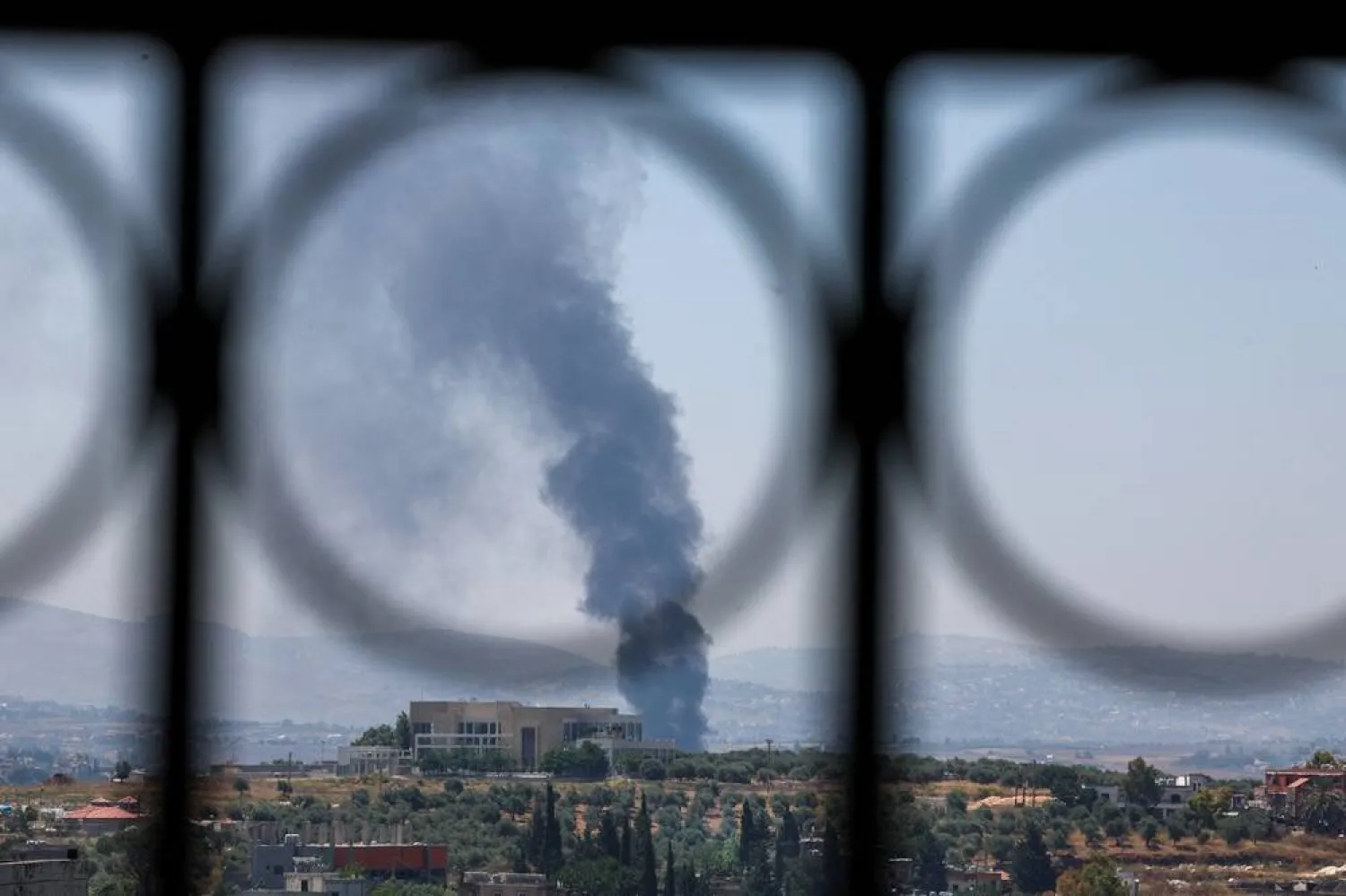
 Smoke billows from southern Lebanon, as seen from Nabatieh, following Israeli strikes reported by local residents, in Lebanon, June 17, 2026. (Reuters).
Smoke billows from southern Lebanon, as seen from Nabatieh, following Israeli strikes reported by local residents, in Lebanon, June 17, 2026. (Reuters).
TT

Hezbollah Chief Says Lebanon-Israel Talks Should Be Limited to Mutual Security

 Smoke billows from southern Lebanon, as seen from Nabatieh, following Israeli strikes reported by local residents, in Lebanon, June 17, 2026. (Reuters).
Smoke billows from southern Lebanon, as seen from Nabatieh, following Israeli strikes reported by local residents, in Lebanon, June 17, 2026. (Reuters).

Hezbollah chief Naim Qassem on Wednesday hailed an understanding reached between Tehran and Washington to end the regional war as a "great victory", calling it a "pivotal point" for Lebanon. 

Although the US-Iran deal to end the Middle East war has not been officially released, American and Iranian officials, as well as mediator Pakistan, have said it includes Lebanon. 

"We congratulate the Iranian people, the resistance and the countries and peoples of the region and the world who yearn for independence and freedom on this great victory," Qassem said in a televised address. 

He expressed thanks to Iran for "linking the Lebanese arena" to the deal and "forcing Israel to stop its aggression" on the country. 

Hezbollah drew Lebanon into the Middle East war on March 2 with rocket fire at Israel in support of its backer Tehran, sparking an Israeli military campaign including massive airstrikes and a ground invasion. 

While violence declined in Lebanon after the deal was announced on Monday, Israeli strikes on the south have killed at least five people since then. 

Under US pressure, Lebanon has been holding direct talks with Israel in Washington since April seeking to end the hostilities and separate the conflict from the wider regional war, but the Iran-US deal announcement has reshuffled the cards. 

Qassem urged Lebanon to take advantage of "this pivotal point following the agreement... to achieve the expulsion of Israel" from Lebanese territory. 

The leader of the Iran-backed group again urged Lebanese authorities to abandon direct negotiations, repeating the group's view that they simply amount to "concessions". 

A fifth round of talks is scheduled for next week. 

"The ceiling for the negotiations with the Israeli enemy is mutual security... and any proposal under the banner of disarmament will not pass, as this is an Israeli recipe for taking everything and wrecking the country," Qassem said. 

Hezbollah also rejects a Lebanese government decision to disarm the group, which was announced after a 2024 ceasefire that halted a previous round of hostilities between Israel and its fighters. 

Qassem urged Lebanese authorities not to "agree with Israel on its demands interfering in our internal affairs". 

"Everything linked to organizing our domestic situation, whether the issue of weapons or the economy, or the national security strategy or defense strategy... it all must be completely outside the negotiations. This we discuss internally," he said. 

"In any negotiation, the main demand must be Lebanon's sovereignty," he added.