


Lebanon Army Blames Israel for Journalist’s Killing; Reuters Urges Israeli Probe

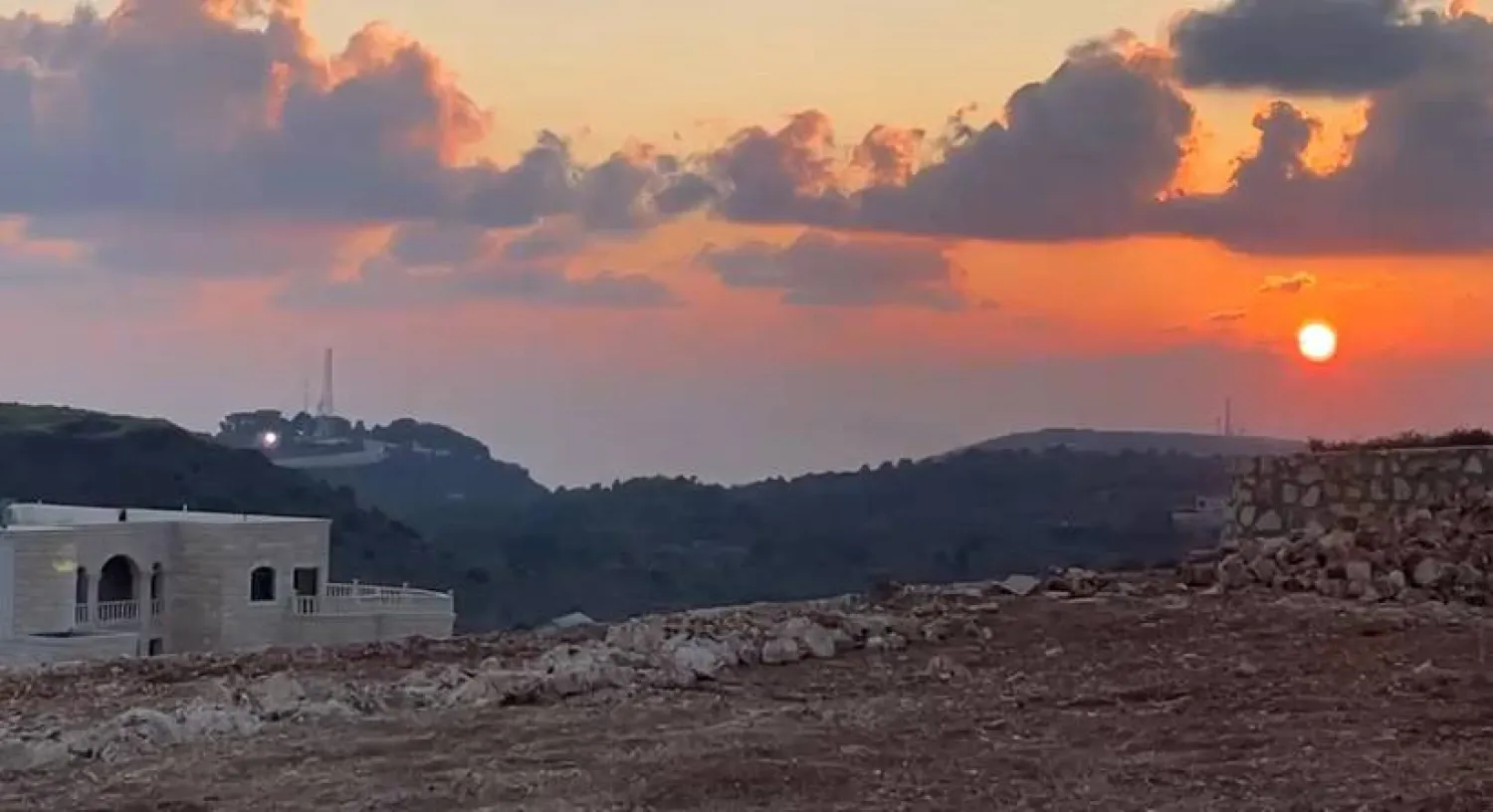
This grab taken from footage shot by AFP's videographer Dylan Collins on October 13, 2023 shows a flash of light (L) coming from an Israeli position the instant before impact with journalists standing at a position at the southern Lebanese village of Alma al-Shaab along the border with Israel. (AFP)
TT

Lebanon Army Blames Israel for Journalist’s Killing; Reuters Urges Israeli Probe

This grab taken from footage shot by AFP's videographer Dylan Collins on October 13, 2023 shows a flash of light (L) coming from an Israeli position the instant before impact with journalists standing at a position at the southern Lebanese village of Alma al-Shaab along the border with Israel. (AFP)

The Lebanese army said on Saturday that Israel had fired a missile that killed a Reuters journalist in southern Lebanon, with a Lebanese military source saying the country had conducted a technical on-the-ground assessment after the attack that supported its claim.

Israel's military said it used tank and artillery fire in the area to prevent an infiltration from Lebanon around the time of Issam Abdallah's death. It said its actions followed Hezbollah fire along the Israel-Lebanon border, and that the incident was under review.

The Lebanese military source said the army had concluded the shell that killed Abdallah was fired by Israel based on observation by Lebanese army patrols in the area at the time of the incident. The source was not authorized to speak to media and spoke to Reuters on condition of anonymity.

"The Israeli enemy launched a missile which hit a civilian car belonging to a media group which led to the martyrdom of the videographer Issam Abdallah," the Lebanese army high command said in a statement posted on its website.

Reuters, in a statement signed by President Paul Bascobert and Editor-in-Chief Alessandra Galloni, said: "We call on the IDF (Israel Defense Forces) to conduct a thorough, swift and transparent investigation. It is critically important for journalists to be able to report freely and safely."

Reuters video journalist Abdallah was killed while working with other journalists near the village of Alma al-Shaab, close to the Israeli border, where the Israeli military and Lebanese Hezbollah party have been trading fire.

Responding to a request for comment on Reuters' call for an investigation, Israel's military said Hezbollah had fired at a number of border locations, "including the firing of an anti-tank missile that hit the Israel security fence".

The military said it suspected an infiltration into Israeli territory immediately after the anti-tank missile launch, and that troops used tank and artillery fire to prevent the infiltration.

"A number of hours later, a report was received that during the incident, journalists were injured in the area. The incident is under review," the military added.

The Israeli military did not immediately respond to the claims made by Lebanon.

Israeli army spokesman Lt Col Richard Hecht earlier told a regular briefing that it was looking into the incident, adding: "We already have visuals. We're doing cross examination. It's a tragic thing."

A Reuters witness at the scene said Abdallah, a Lebanese national, was struck by missiles fired from the direction of Israel.

State media earlier reported that Lebanon would submit a formal complaint to the UN Security Council on "Israel's deliberate killing" of Abdallah.

Foreign Minister Abdallah Bou Habib later confirmed, without elaborating, that the complaint said Israel had targeted journalists with "direct bombardment", which had resulted in Issam Abdallah's death.

While other news outlets, including the Associated Press and Al Jazeera, said the shells were Israeli, Reuters has not established that the missiles had been fired by Israel or that Israel was intentionally targeting the journalists.

Countries regularly write to the 15-member Security Council to register complaints and it is unlikely the body will take any action.

Hundreds of mourners

Abdallah was buried on Saturday. His body, covered in a Lebanese flag, was carried in a procession attended by hundreds of mourners through his hometown of Khiyam in southern Lebanon. Journalists placed their cameras on the grave to honor his memory and prayers were said.

"They were sitting where there was no shelling, nothing. They were filming the shelling from afar. Why would they bomb them?" said Abdallah's mother, Fatima Kanso, at the funeral, blaming Israel for her son's death.

Abdallah was with two other Reuters journalists, Maher Nazeh and Thaer Al-Sudani, as well as journalists from media groups Al Jazeera and Agence France-Presse, when he was killed while providing a live video signal for broadcasters.

Nazeh and Sudani were both injured in the incident but were later released from the hospital. Agence France-Presse and Al Jazeera each said two of their journalists were wounded in the incident.

Nazeh said they were filming missile fire coming from the direction of Israel when one struck Abdallah as he was sitting on a low stone wall near the rest of the group. Seconds later, another missile hit a car being used by the group, setting it aflame, he said.

UNIFIL, the UN peacekeeping force in southern Lebanon, said it could not say with certainty at this stage how the group of journalists was hit. However, it said it knew that Israel had struck a position 2.5 km (1.5 miles) outside Alma al-Shaab at 5.20 p.m. (1320 GMT).

The Reuters statement said it had requested Israeli assurances that Reuters journalists and offices in the Gaza Strip would not be targeted in Israeli military operations there.

Israeli forces are massing tanks and troops on the border with the southern enclave in preparation for a possible ground invasion. They are fighting a war with Gaza's Hamas fighters who launched a deadly assault on Israeli civilians and soldiers a week ago.



UN Says It Risks Halting Somalia Aid Due to Funding Cuts 

A Somali trader marks watermelons for sale at an open-air grocery market as Muslims start the fasting month of Ramadan, the holiest month in the Islamic calendar, within Bakara market in Mogadishu, Somalia, February 18, 2026. (Reuters)
TT

UN Says It Risks Halting Somalia Aid Due to Funding Cuts 

A Somali trader marks watermelons for sale at an open-air grocery market as Muslims start the fasting month of Ramadan, the holiest month in the Islamic calendar, within Bakara market in Mogadishu, Somalia, February 18, 2026. (Reuters)

The UN's World Food Program (WFP) warned Friday it would have to stop humanitarian assistance in Somalia by April if it did not receive new funding.

The Rome-based agency said it had already been forced to reduce the number of people receiving emergency food assistance from 2.2 million in early 2025 to just over 600,000 today.

"Without immediate funding, WFP will be forced to halt humanitarian assistance by April," it said in a statement.

In early January, the United States suspended aid to Somalia over reports of theft and government interference, following the destruction of a US-funded WFP warehouse in the capital Mogadishu's port.

The US announced a resumption of WFP food distribution on January 29.

However, all UN agencies have warned of serious funding shortfalls since Washington began slashing aid across the world following President Donald Trump's return to the White House last year.

"The situation is deteriorating at an alarming rate," said Ross Smith, WFP Director of Emergency Preparedness and Response, in Friday's statement.

"Families have lost everything, and many are already being pushed to the brink. Without immediate emergency food support, conditions will worsen quickly.

"We are at the cusp of a decisive moment; without urgent action, we may be unable to reach the most vulnerable in time, most of them women and children."

Some 4.4 million people in Somalia are facing crisis-levels of food insecurity, according to the WFP, the largest humanitarian agency in the country.

The Horn of Africa country has been plagued by conflict and also suffered two consecutive failed rainy seasons.


Hamas Says Path for Gaza Must Begin with End to ‘Aggression’ 

Makeshift tents of displaced Palestinian families among the ruins of their homes at sunset during the holy month of Ramadan in Jabaliya northern Gaza Strip on, 19 February 2026. (EPA)
TT

Hamas Says Path for Gaza Must Begin with End to ‘Aggression’ 

Makeshift tents of displaced Palestinian families among the ruins of their homes at sunset during the holy month of Ramadan in Jabaliya northern Gaza Strip on, 19 February 2026. (EPA)

Discussions on Gaza's future must begin with a total halt to Israeli "aggression", the Palestinian movement Hamas said after US President Donald Trump's Board of Peace met for the first time.

"Any political process or any arrangement under discussion concerning the Gaza Strip and the future of our Palestinian people must start with the total halt of aggression, the lifting of the blockade, and the guarantee of our people's legitimate national rights, first and foremost their right to freedom and self-determination," Hamas said in a statement Thursday.

Trump's board met for its inaugural session in Washington on Thursday, with a number of countries pledging money and personnel to rebuild the Palestinian territory, more than four months into a fragile ceasefire between Israel and Hamas.

Israeli Prime Minister Benjamin Netanyahu has insisted however that Hamas must disarm before any reconstruction begins.

"We agreed with our ally the US that there will be no reconstruction of Gaza before the demilitarization of Gaza," Netanyahu said.

The Israeli leader did not attend the Washington meeting but was represented by his foreign minister Gideon Saar.

Trump said several countries had pledged more than seven billion dollars to rebuild the territory.

Muslim-majority Indonesia will take a deputy commander role in a nascent International Stabilization Force, the unit's American chief Major General Jasper Jeffers said.

Trump, whose plan for Gaza was endorsed by the UN Security Council in November, also said five countries had committed to providing troops, including Morocco, Kazakhstan, Kosovo and Albania.


Official Contacts Aim to Keep Lebanon out of War on Iran as Israel Raises Readiness on Northern Front 

This photograph shows a memorial for slain Lebanese Hezbollah longtime leader Hassan Nasrallah at the entrance of the southern village of Qannarit on February 16, 2026. (AFP)
TT

Official Contacts Aim to Keep Lebanon out of War on Iran as Israel Raises Readiness on Northern Front 

This photograph shows a memorial for slain Lebanese Hezbollah longtime leader Hassan Nasrallah at the entrance of the southern village of Qannarit on February 16, 2026. (AFP)

Israel has raised the alert level of its military along the border with Lebanon, raising questions that Lebanon’s south may again be involved in a regional confrontation should the US attack Iran.

Given the heightened tensions between the US and Iran, questions have been asked over whether Hezbollah will become involved in a new war. Its Secretary-General Sheikh Naim Qassem had recently announced that the party will not remain on the side if Iran is attacked.

On the ground, Israel blew up houses in southern Lebanon border towns and carried out air strikes in the south. Israeli military spokesman Avichay Adraee said the raids targeted “Hezbollah infrastructure,” including arms caches and rocket launchers.

Their presence in the south is a violation of current agreements, he added.

Amid the high regional tensions, Israel’s Maariv quoted a military source as saying that the army has come up with plans, including a preemptive strike against Hezbollah, which would drag the south and the whole of Lebanon into a new war.

Ministerial sources told Asharq Al-Awsat that the presidency has been carrying out internal and foreign contacts since Thursday morning to keep Lebanon out of any escalation.

Hezbollah had launched a “support front” war against Israel a day after Hamas’ October 7, 2023 attack. In 2024, the war spiraled into an all-out conflict, with Israel decimating the Hezbollah leadership and severely weakening the party.

Israel believes that Hezbollah has been rebuilding its capabilities since the ceasefire that was struck in November 2024.

Kassim Kassir, a political analyst who is close to Hezbollah, told Asharq Al-Awsat: “No one knows what Hezbollah will do because the situation is tied the extent of the attack, should it happen.”

He noted that Qassem was ambiguous when he said the party will decide what to do when the time is right, but at any rate, he stressed that the party will not remain on the sidelines or abandon Iran.

“No one knows what Hezbollah’s abilities are, so everything is possible,” Kassir said.

Riad Kahwaji, a security and defense affairs expert, said he does not rule out the possibility that Hezbollah would join the war should the US attack Iran.

Speaking to Asharq Al-Awsat, he stressed that Iran is now the United States’ main target, when previously it used to confront its proxies.

It has now taken the fight directly to the heart of the problem, which is the Iranian regime, he remarked.

The extent of the military mobilization in the region and the frequent American statements about regime change all indicate that a major military operation may be imminent, he added.

Israel’s military also favors preemptive operations, so it is watching Hezbollah, which remains Iran’s most powerful regional proxy despite the blows it received in 2024 war, Kahwaji said.

Hezbollah still possesses a rocket arsenal that can threaten Israel, he remarked.

Israel’s high level of alert on the border with Lebanon could be in readiness for any development. Should Tel Aviv receive word from Washington that it intends to attack Iran, then it could launch operations against Hezbollah as part of preemptive strikes aimed at preventing the party from launching attacks against it, Kahwaji said.

“As long as Hezbollah possesses heavy weapons, such as rockets, and drones, that it has not handed over to the army, then Lebanon will continue to be vulnerable to attacks in the next confrontation. It will be exposed to Israeli strikes as long as this issue remains unresolved,” he added.