Iraqi PM Rejects Resignation of 3 Taqaddum Party Ministers

Iraqi Prime Minister Mohammad Shia al-Sudani with Speaker Mohammad al-Halbousi (file photo: Iraqi Premiership)
TT

Iraqi PM Rejects Resignation of 3 Taqaddum Party Ministers

Iraqi Prime Minister Mohammad Shia al-Sudani with Speaker Mohammad al-Halbousi (file photo: Iraqi Premiership)

Iraqi Prime Minister Mohammad Shia al-Sudani rejected the resignations of three ministers who took the move in protest of a ruling by Iraq’s court to terminate the tenure of Speaker Mohammad al-Halbousi.
The Federal Supreme Court, the highest judicial body in Iraq, ruled to remove Halbousi, the influential Sunni Speaker, from his position after a complaint filed against him by a representative on charges of “forgery.”
In response, the Taqaddum Party, led by Halbousi, announced the resignation of its three ministers in the government.
Government spokesman Bassem al-Awadi said in a statement that the Prime Minister rejected the resignations submitted by the Ministers of Planning, Industry, and Culture, and accordingly, they will resume their executive duty.
The statement explained that the rejection comes from the government’s desire to ensure political representation for all components and political forces of the Iraqi people and in harmony with the government’s commitments to support and maintain political stability.
Iraq’s political process is based on power sharing between different sects, and it has become a tradition that the position of President goes to the Kurds, the Prime Minister is Shia, and the Speaker is Sunni.
Appointing officials to positions is an arduous issue in Iraq that lasts for months, often due to endless negotiations and political deals that go through many obstacles.
The parliament, with 329 representatives, is dominated by an alliance that includes Iran-affiliated Shiite parties, which named the current Prime Minister.
Halbousi rejected the ruling on November 14, removing him from his position and dropping his parliamentary membership, pledging to take necessary steps to “preserve constitutional rights.”
The Supreme Court issued its ruling after a complaint submitted by a lawmaker of the Taqaddum party, led by Halbousi. The party leader was accused of “forgery.”
The court confirmed the lawsuit, in which Halbousi was accused of forcing his party’s representatives to submit a signed, undated resignation letter. He later used the paper to terminate the lawmaker’s membership in January.


Iraqi PM Visits Syria as Neighbors Seek to Boost Economic Ties

Syrian President Ahmad al-Sharaa and Iraqi Prime Minister Ali al-Zaidi meet at Damascus airport on Wednesday. (INA)
TT

Iraqi PM Visits Syria as Neighbors Seek to Boost Economic Ties

Syrian President Ahmad al-Sharaa and Iraqi Prime Minister Ali al-Zaidi meet at Damascus airport on Wednesday. (INA)

Iraqi Prime Minister Ali al-Zaidi arrived in Damascus on Wednesday and was met by President Ahmad al-Sharaa, Syrian state media said, as the neighbors seek to bolster economic and energy cooperation.

It is the first visit by an Iraqi prime minister since the new authorities took power after toppling longtime Syrian ruler Bashar al-Assad in December 2024 following more than 13 years of civil war.

Baghdad had initially dealt cautiously with the new Syrian authorities, though senior Iraqi political, intelligence and judicial officials have visited Damascus since Assad's ouster.

Al-Sharaa received al-Zaidi and his accompanying delegation at Damascus international airport, Syrian state television reported.

Iraq is seeking to strengthen ties with a neighbor with whom it shares a 600-kilometer (370-mile) border, while Syria is working to become a transit hub for global trade, particularly as countries look for alternatives to the Strait of Hormuz.

Al-Sharaa and al-Zaidi also met last month in New York on the sidelines of the United Nations General Assembly.

In an interview broadcast on Tuesday by Iraqi television channel Dijlah, al-Sharaa welcomed al-Zaidi's visit and said that "in the past year and a half, something positive has been built in Syrian-Iraqi relations, particularly in economic matters".

He said his country sees ties with Iraq in terms of their "great historical and economic commonalities" rather than sectarian terms.

Iraq recently began exporting limited quantities of oil through Syria, after maritime traffic through the Strait of Hormuz was disrupted following the outbreak of the Middle East war earlier this year.

In July, Damascus and Baghdad signed a memorandum of understanding to revive a pipeline for transporting oil from Iraq to Syria's coast, linking Iraqi production to export markets in the Mediterranean and beyond.

In February, the United States transferred over 5,700 ISIS group detainees from more than 60 countries to Iraq, after they had been held for years at prisons in north and northeast Syria administered by Kurdish forces.

In Tuesday's interview, al-Sharaa said some of the around 3,000 Syrian detainees transferred to Iraq had "no connection" to ISIS, with efforts underway to categorize them, examine Syria's responsibility and possibilities for repatriation.


France Says Israel Vote Will Not Deter Push for Two-State Solution

 France's Foreign Affairs Minister Jean-Noel Barrot addresses the audience during a session of questions to the government at the National Assembly, France's lower house of parliament in Paris on October 27, 2026. (AFP)
France's Foreign Affairs Minister Jean-Noel Barrot addresses the audience during a session of questions to the government at the National Assembly, France's lower house of parliament in Paris on October 27, 2026. (AFP)
TT

France Says Israel Vote Will Not Deter Push for Two-State Solution

 France's Foreign Affairs Minister Jean-Noel Barrot addresses the audience during a session of questions to the government at the National Assembly, France's lower house of parliament in Paris on October 27, 2026. (AFP)
France's Foreign Affairs Minister Jean-Noel Barrot addresses the audience during a session of questions to the government at the National Assembly, France's lower house of parliament in Paris on October 27, 2026. (AFP)

France will continue to push for a two-state solution regardless of the outcome of Israel's election, Foreign Minister Jean-Noel Barrot said Wednesday.

"Our course will not change," whether the coalition led by outgoing Prime Minister Benjamin Netanyahu wins or the opposition bloc under Gadi Eisenkot claims victory, Barrot told France 2 television.

France and Israel have had a strained relationship, particularly since President Emmanuel Macron's recognition of a Palestinian state a year ago.

More recently, Macron announced that France would cease trade with illegal Israeli settlements located in the occupied West Bank.

Barrot declined to say, however, whether the relationship would be any smoother should the opposition bloc come to power.

"Our course is very clear, and our position remains unchanged," Barrot said.

"What we want is security for Israel, but also the prospect of two states living side-by-side -- recognized, respected in their rights, and at peace."

No clear majority had emerged as of early Wednesday -- following the counting of half the votes.

"We must let things take their course. We must accept the governments that the people choose," Barrot said.


Lebanon’s Aoun Says Israeli Attacks Obstruct Agreement, US Efforts Yield No Results

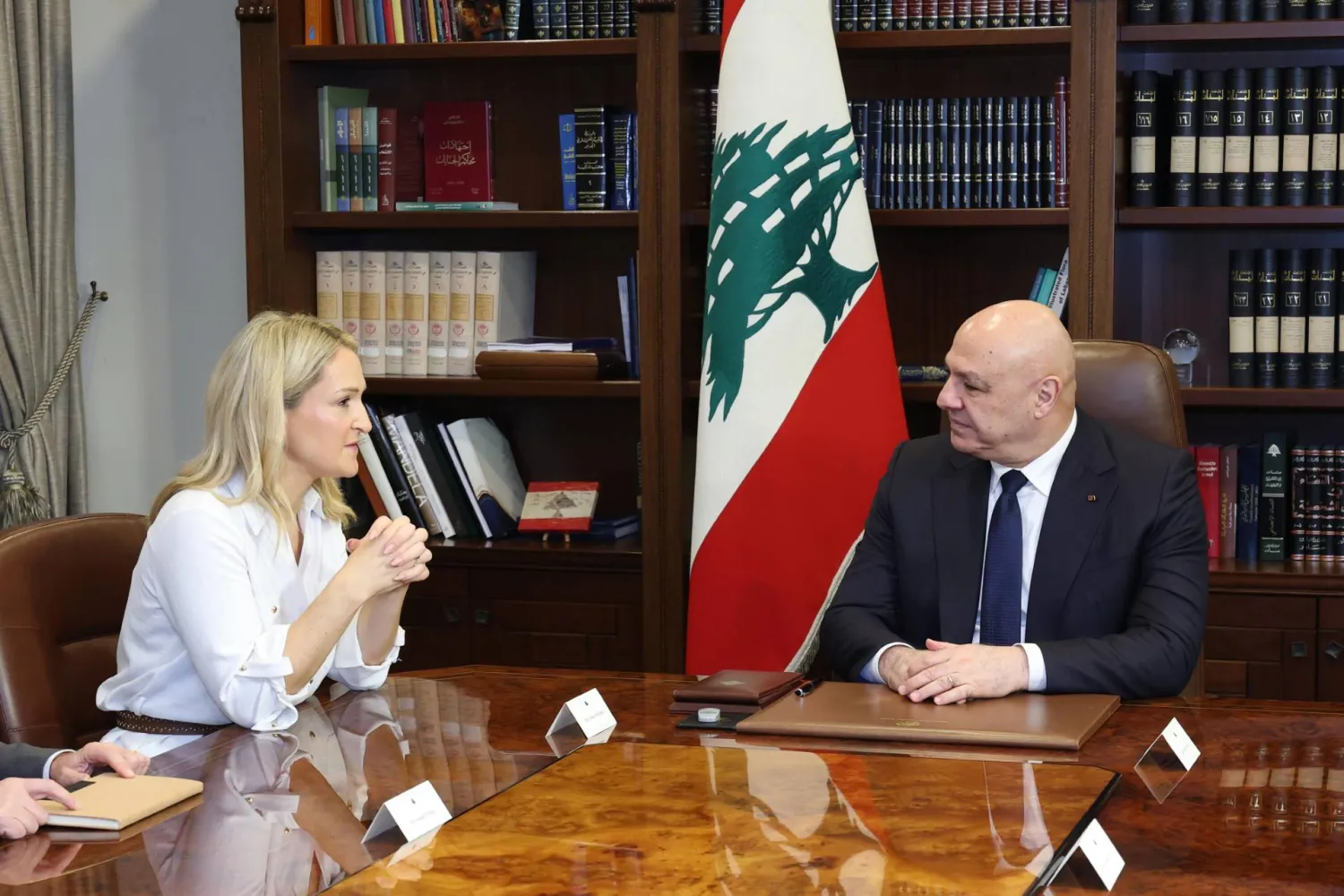
Lebanese President Joseph Aoun receives Irish Foreign Affairs and Defense Minister Helen McEntee (Lebanese Presidency)
TT

Lebanon’s Aoun Says Israeli Attacks Obstruct Agreement, US Efforts Yield No Results

Lebanese President Joseph Aoun receives Irish Foreign Affairs and Defense Minister Helen McEntee (Lebanese Presidency)

Lebanese President Joseph Aoun accused Israel of obstructing the implementation of a US-brokered agreement through continued attacks on southern Lebanon, saying Beirut’s contacts with Washington to halt the strikes have so far yielded no results.

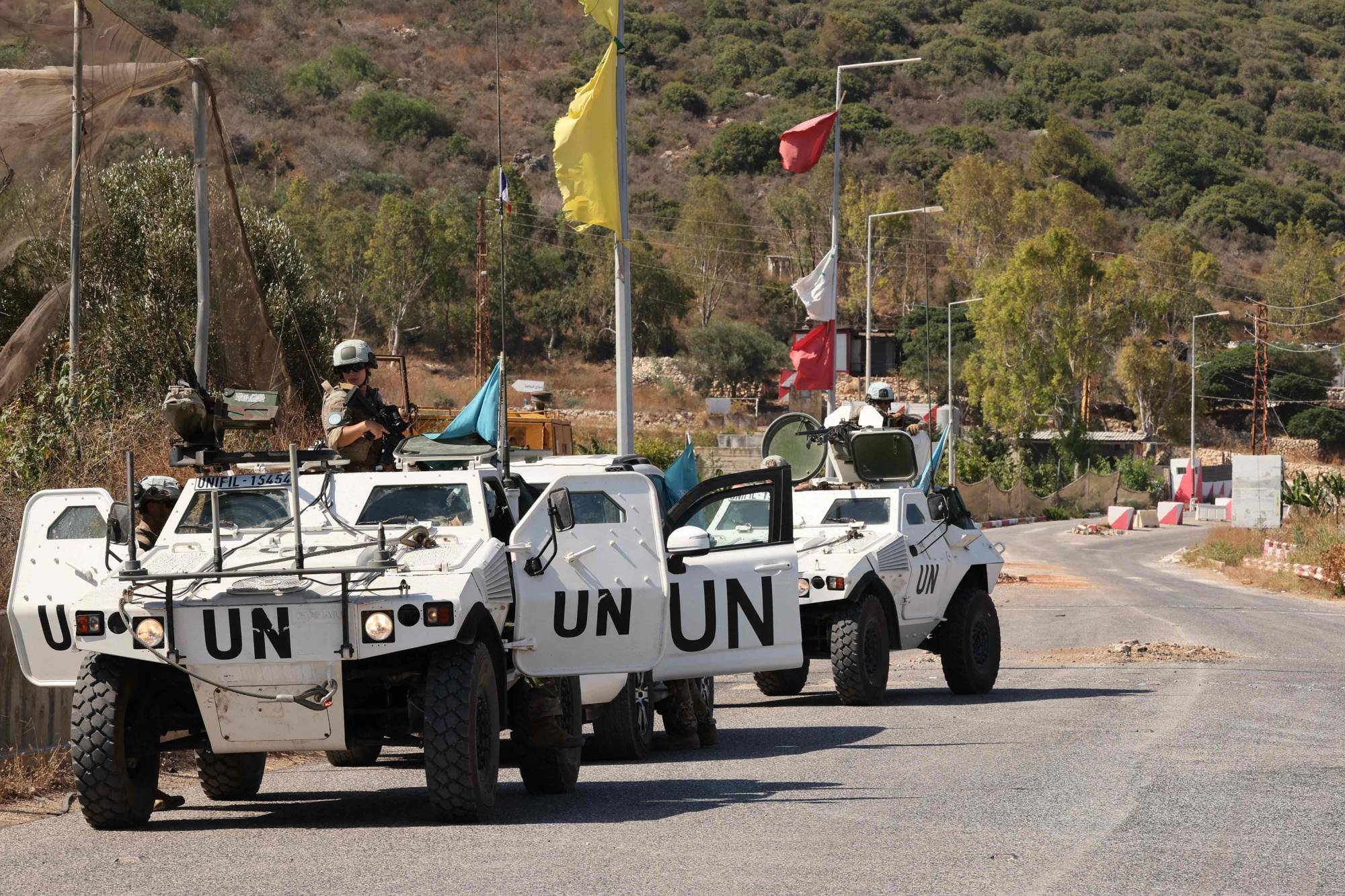
The president also reiterated Lebanon’s desire to extend the mandate of the United Nations Interim Force in Lebanon (UNIFIL) beyond this year, expressing openness to a European replacement force and warning that an international security vacuum in the south could threaten regional stability.


A photograph taken during a media tour organised by the French Catholic charity L'Oeuvre d'Orient shows peacekeepers with the United Nations Interim Force In Lebanon (UNIFIL) patrolling near the southern Lebanese village Biout es Sayed on July 20, 2026. (Photo by Anwar AMRO / AFP)

During a meeting with Irish Minister for Foreign Affairs and Trade and Minister for Defense Helen McEntee, Aoun accused Israel of failing to honor the agreement reached during negotiations in Washington.

He said Israeli forces continued to bombard southern villages and towns, destroy property and bulldoze homes.

Aoun stressed that Israel’s actions were preventing the Lebanese Army from extending state authority to the international border, ending the presence of armed groups and restoring stability.

He called on friendly countries, including Ireland, to press Israel to end its attacks, withdraw from South Lebanon and release Lebanese prisoners.

Such steps, he noted, would allow the Lebanese state to rebuild devastated communities and enable displaced residents to return home.

Warning Against Security Vacuum in South Lebanon

Turning to UNIFIL’s mandate, which expires at the end of the year, the president reaffirmed Lebanon’s wish for the peacekeeping force to continue its operations throughout 2027.

He emphasized its role in monitoring developments in South Lebanon and supporting the Lebanese Army as it deploys to the international border following an Israeli withdrawal.

UNIFIL also provides humanitarian, social and healthcare assistance to residents of southern villages, he underlined.

If an extension proves impossible, Beirut would welcome the participation of a European force under arrangements agreed with the European Union or individual European countries, in cooperation with the United Nations.

The Lebanese head of state warned that UNIFIL’s departure without a replacement could leave a security vacuum in the south, with potentially damaging consequences for regional stability.

He added that logistical and technical assistance from an alternative force could facilitate the army’s mission and improve living conditions for southern communities.


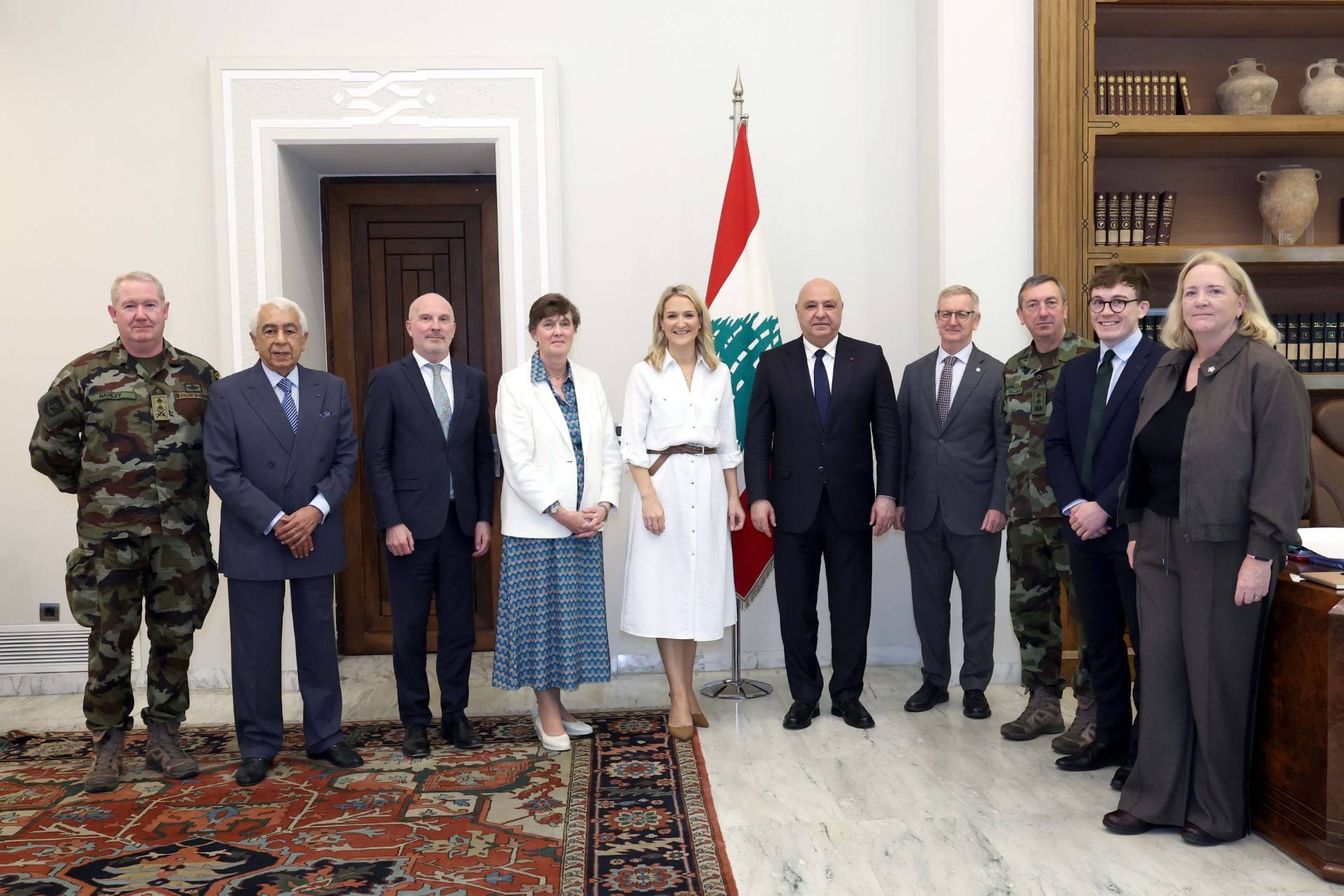
Aoun receiving Irish Foreign Affairs and Defense Minister and the accompanying delegation (Lebanese Presidency)

Government Presses Ahead With Reforms

On domestic affairs, Aoun affirmed that the government was pursuing economic and financial reforms in cooperation with parliament despite the difficult circumstances facing Lebanon.

He welcomed potential Irish assistance in the humanitarian, social, military and educational sectors.

The president also thanked Ireland for its contribution to international peacekeeping operations in South Lebanon since 1978 and paid tribute to Irish soldiers killed while serving there.

McEntee welcomed the opportunity to visit Lebanon, assess conditions firsthand and meet Irish troops deployed in the south.

She reaffirmed Ireland’s commitment to participating in peacekeeping operations, supporting the Lebanese Army and civil society, and working with public institutions to deliver needed assistance.

The Irish minister stressed that her country would continue supporting Lebanon despite the difficult circumstances facing the region.