


Israel Strikes Kill at Least 11 in Gaza, Tanks Push Further into Rafah

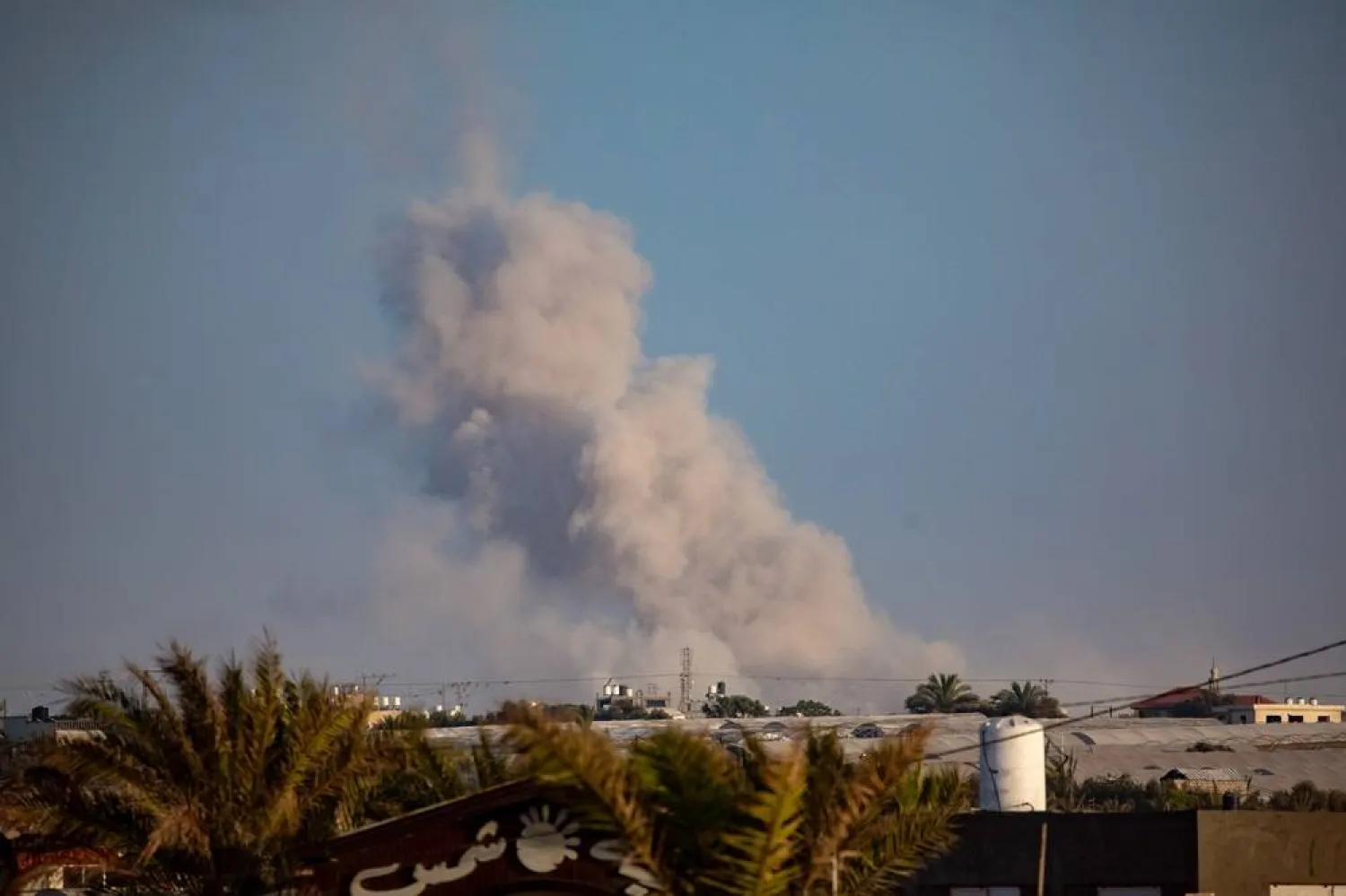
Smoke rises after an Israeli air strike on Rafah, southern Gaza Strip, 23 June 2024. (EPA)
TT

Israel Strikes Kill at Least 11 in Gaza, Tanks Push Further into Rafah

Smoke rises after an Israeli air strike on Rafah, southern Gaza Strip, 23 June 2024. (EPA)

Two Israeli air strikes targeting aid supplies killed at least 11 Palestinians in Gaza on Monday, medics said, as Israeli tanks pushed deeper into Rafah in the south and fought their way back into areas in the north they had already subdued months ago.

One strike at a food distribution center in Gaza City, near the Shati historic refugee camp, killed three people. Another, near Bani Suhaila town in the southern Gaza Strip, killed at least eight, including guards who accompany aid trucks, the medics said.

There was no immediate comment from Israel, which denies attacking aid efforts and accuses militants of causing harm to civilians by operating among them.

Overnight, an Israeli air strike at a medical clinic in Gaza City killed the director of Gaza's Ambulance and Emergency Department, the enclave's health ministry said. Israel's military said that strike had killed a senior Hamas armed commander.

The health ministry said the killing of Hani al-Jaafarawi brought the number of medical staff killed by Israeli fire since Oct. 7 to 500. At least 300 others have so far been detained.

In a statement, the Israeli military said the strike targeted Mohammad Salah, who it said was responsible for developing Hamas weaponry.

NO CEASEFIRE ACCORD

More than eight months into the fighting, international mediation backed by the United States has so far failed to bring a ceasefire agreement. Hamas says any agreement must bring an end to the war, while Israel says it will agree only temporary pauses in fighting until Hamas is eradicated.

In Rafah, near the border with Egypt, Israeli forces which took control of the eastern, southern, and central parts of the city pursued their raid into the western and northern areas, said residents, describing heavy fighting.

On Sunday, residents had said Israeli tanks had advanced to the edge of the Mawasi displaced persons' camp in the northwest of Rafah, forcing many families to leave northward to Khan Younis and to Deir Al-Balah in central Gaza, the only city in the enclave where tanks have not yet invaded.

"The situation in Tel Al-Sultan, in western Rafah, remains very dangerous. Drones and Israeli snipers are hunting people who try to check on their houses, and tanks continue to take over areas overseeing Al-Mawasi further west," Bassam, a resident of Rafah, told Reuters via a chat app.

The Israeli military said forces continued "intelligence-based targeted operations" in Rafah, locating weapons and rocket launchers and killing fighters "who posed threats to them."

In the north of the enclave, where Israel had said its forces completed operations months ago, residents said tanks had pushed back into Gaza City's Zeitoun suburb and were pounding several areas there.

In Deir al-Balah, now the last refuge for many thousands of Gazans following the assault on Rafah, medics at a clinic were trying to treat malnutrition in children and measure the extent of hunger stalking the Strip.

"With the displacement, communities are settling in new locations that do not have access to clean water, or there is not adequate access to food," said Muaamar Said, a doctor with aid group International Medical Corps. "We fear there are more cases being missed."

NETANYAHU SAYS INTENSE FIGHTING COULD END SOON

Israel's ground and air campaign in Gaza was triggered when Hamas-led fighters stormed into southern Israel on Oct. 7, killing around 1,200 people and seizing more than 250 hostages, according to Israeli tallies.

The Israeli offensive in retaliation has killed almost 37,600 people, according to Palestinian health authorities, and has left Gaza in ruins.

Since early May, fighting has focused on Rafah, on Gaza's southern edge where around half of the enclave's 2.3 million people had been sheltering after fleeing other areas.

Netanyahu said the phase of intense fighting against Hamas would end "very soon".

In an interview with Israel's channel 14, he said forces based in Gaza would be freed to move to the north, where Israel has warned of a potential full-blown war against Lebanon's Hezbollah movement, which has struck the border region in what it says is solidarity with the Palestinians.

"After the intense phase is finished, we will have the possibility to move part of the forces north. And we will do this," Netanyahu said.

The interview was Netanyahu's first since the start of the war in a television format he has favored in election campaigns.

He said he would support only a temporary ceasefire, before troops would return to fighting. Hamas said this was evidence that he was reneging on a truce offer touted by the White House and backed by the United Nations.

The remarks showed that Netanyahu was using ceasefire negotiations only as a stalling tactic while combat continues, Ezzat El-Reshiq, a senior Hamas political official who lives in exile, said in a statement.



Lebanon Says Two Killed in Israeli Strike on Palestinian Refugee Camp

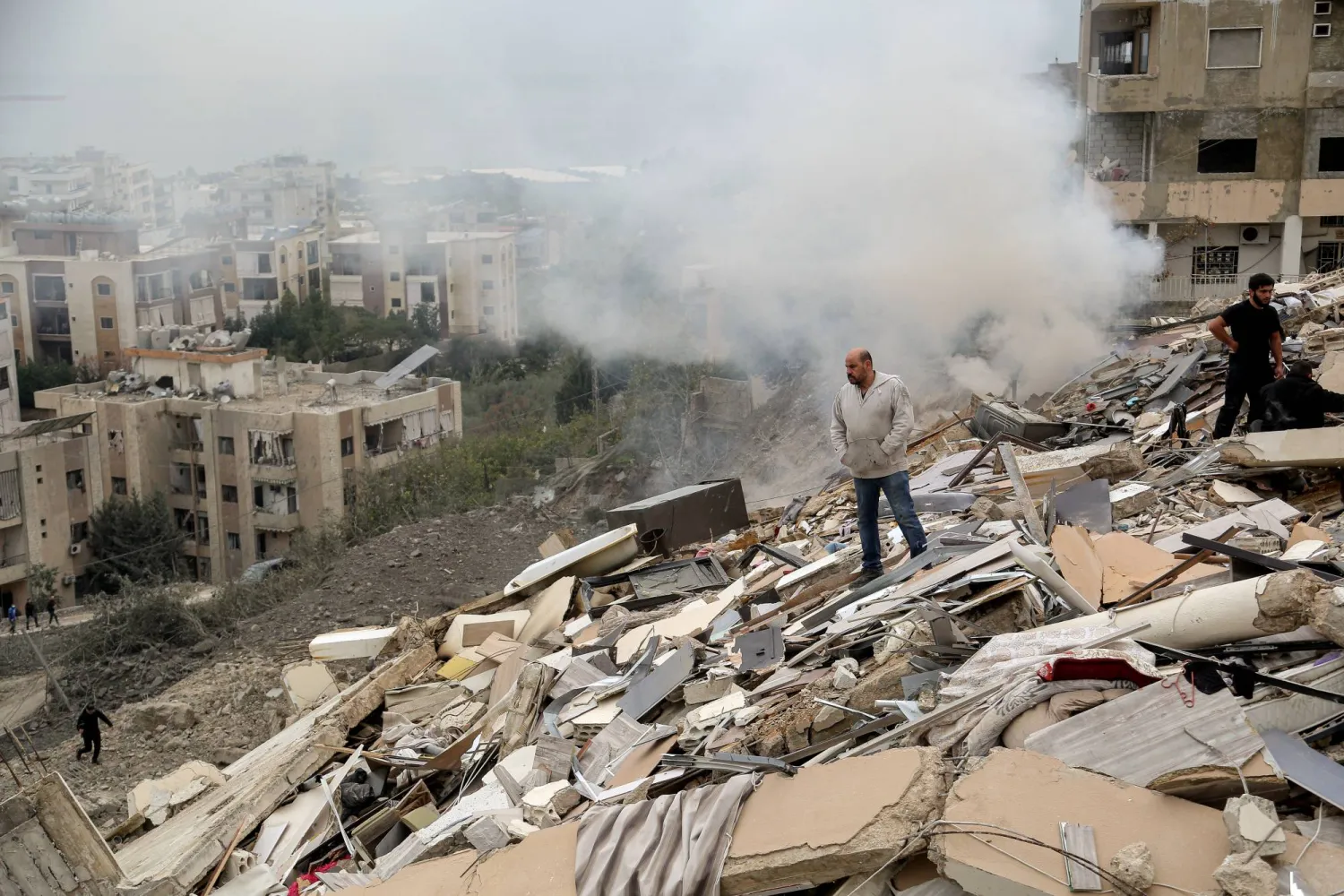
22 January 2026, Lebanon, Qnarit: People inspect the damage of a building that was destroyed by an Israeli air raid on the southern Lebanese village of Qnarit. (dpa)
TT

Lebanon Says Two Killed in Israeli Strike on Palestinian Refugee Camp

22 January 2026, Lebanon, Qnarit: People inspect the damage of a building that was destroyed by an Israeli air raid on the southern Lebanese village of Qnarit. (dpa)

Lebanon said an Israeli strike on the country's largest Palestinian refugee camp killed two people on Friday, with Israel's army saying it had targeted the Palestinian group Hamas. 

The official National News Agency said "an Israeli drone" targeted a neighborhood of the Ain al-Hilweh camp, which is located on the outskirts of the southern city of Sidon. 

Lebanon's health ministry said two people were killed in the raid. The NNA had earlier reported one dead and an unspecified number of wounded. 

An AFP correspondent saw smoke rising from a building in the densely populated camp as ambulances headed to the scene. 

The Israeli army said in a statement that its forces "struck a Hamas command center from which terrorists operated", calling activity there "a violation of the ceasefire understandings between Israel and Lebanon" and a threat to Israel. 

The Israeli military "is operating against the entrenchment" of the Palestinian group in Lebanon and will "continue to act decisively against Hamas terrorists wherever they operate", it added. 

Israel has kept up regular strikes on Lebanon despite a November 2024 ceasefire that sought to halt more than a year of hostilities with Hezbollah. 

Israel has also struck targets belonging to Hezbollah's Palestinian ally Hamas, including in a raid on Ain al-Hilweh last November that killed 13 people. 

The UN rights office had said 11 children were killed in that strike, which Israel said targeted a Hamas training compound, though the group denied it had military installations in Palestinian camps in Lebanon. 

In October 2023, Hezbollah began launching rockets at Israel in support of Hamas at the outset of the Gaza war, triggering hostilities that culminated in two months of all-out war between Israel and the Iran-backed Lebanese group. 

On Sunday, Lebanon said an Israeli strike near the Syrian border in the country's east killed four people, as Israel said it targeted operatives from Palestinian group Islamic Jihad. 


UN Says It Risks Halting Somalia Aid Due to Funding Cuts 

A Somali trader marks watermelons for sale at an open-air grocery market as Muslims start the fasting month of Ramadan, the holiest month in the Islamic calendar, within Bakara market in Mogadishu, Somalia, February 18, 2026. (Reuters)
TT

UN Says It Risks Halting Somalia Aid Due to Funding Cuts 

A Somali trader marks watermelons for sale at an open-air grocery market as Muslims start the fasting month of Ramadan, the holiest month in the Islamic calendar, within Bakara market in Mogadishu, Somalia, February 18, 2026. (Reuters)

The UN's World Food Program (WFP) warned Friday it would have to stop humanitarian assistance in Somalia by April if it did not receive new funding.

The Rome-based agency said it had already been forced to reduce the number of people receiving emergency food assistance from 2.2 million in early 2025 to just over 600,000 today.

"Without immediate funding, WFP will be forced to halt humanitarian assistance by April," it said in a statement.

In early January, the United States suspended aid to Somalia over reports of theft and government interference, following the destruction of a US-funded WFP warehouse in the capital Mogadishu's port.

The US announced a resumption of WFP food distribution on January 29.

However, all UN agencies have warned of serious funding shortfalls since Washington began slashing aid across the world following President Donald Trump's return to the White House last year.

"The situation is deteriorating at an alarming rate," said Ross Smith, WFP Director of Emergency Preparedness and Response, in Friday's statement.

"Families have lost everything, and many are already being pushed to the brink. Without immediate emergency food support, conditions will worsen quickly.

"We are at the cusp of a decisive moment; without urgent action, we may be unable to reach the most vulnerable in time, most of them women and children."

Some 4.4 million people in Somalia are facing crisis-levels of food insecurity, according to the WFP, the largest humanitarian agency in the country.

The Horn of Africa country has been plagued by conflict and also suffered two consecutive failed rainy seasons.


Hamas Says Path for Gaza Must Begin with End to ‘Aggression’ 

Makeshift tents of displaced Palestinian families among the ruins of their homes at sunset during the holy month of Ramadan in Jabaliya northern Gaza Strip on, 19 February 2026. (EPA)
TT

Hamas Says Path for Gaza Must Begin with End to ‘Aggression’ 

Makeshift tents of displaced Palestinian families among the ruins of their homes at sunset during the holy month of Ramadan in Jabaliya northern Gaza Strip on, 19 February 2026. (EPA)

Discussions on Gaza's future must begin with a total halt to Israeli "aggression", the Palestinian movement Hamas said after US President Donald Trump's Board of Peace met for the first time.

"Any political process or any arrangement under discussion concerning the Gaza Strip and the future of our Palestinian people must start with the total halt of aggression, the lifting of the blockade, and the guarantee of our people's legitimate national rights, first and foremost their right to freedom and self-determination," Hamas said in a statement Thursday.

Trump's board met for its inaugural session in Washington on Thursday, with a number of countries pledging money and personnel to rebuild the Palestinian territory, more than four months into a fragile ceasefire between Israel and Hamas.

Israeli Prime Minister Benjamin Netanyahu has insisted however that Hamas must disarm before any reconstruction begins.

"We agreed with our ally the US that there will be no reconstruction of Gaza before the demilitarization of Gaza," Netanyahu said.

The Israeli leader did not attend the Washington meeting but was represented by his foreign minister Gideon Saar.

Trump said several countries had pledged more than seven billion dollars to rebuild the territory.

Muslim-majority Indonesia will take a deputy commander role in a nascent International Stabilization Force, the unit's American chief Major General Jasper Jeffers said.

Trump, whose plan for Gaza was endorsed by the UN Security Council in November, also said five countries had committed to providing troops, including Morocco, Kazakhstan, Kosovo and Albania.