


Israel Kills at Least 21 in Strike on Christian Town in North Lebanon

Rescuers work at a site damaged by an Israeli air strike in the Christian-majority region of Aitou in north Lebanon, the Lebanese health ministry said, October 14, 2024. (Reuters)
TT

Israel Kills at Least 21 in Strike on Christian Town in North Lebanon

Rescuers work at a site damaged by an Israeli air strike in the Christian-majority region of Aitou in north Lebanon, the Lebanese health ministry said, October 14, 2024. (Reuters)

Israel expanded its targets in its war with Hezbollah fighters in Lebanon on Monday, killing at least 21 people in an airstrike in the north, health officials said, while millions of Israelis took shelter from projectiles fired back across the border.

So far the main focus of Israel's military operations in Lebanon has been in the south, the Bekaa Valley in the east and the suburbs of Beirut.

The strike in the Christian-majority town of Aitou hit a house that had been rented to displaced families, the town's mayor Joseph Trad told Reuters. In addition to the deaths, eight people were injured, the Lebanese health ministry said.

Local television aired footage of the aftermath of the attack in Aitou, showing rescue workers searching through piles of rubble and medics lifting a victim, wrapped in white shroud, into an ambulance. Burned vehicles and trees were strewn across the site of the strike, and thick smoke rose into the air.

Israel ordered residents of 25 villages in southern Lebanon to evacuate to areas north of the Awali River, which flows some 60 km (35 miles) north of the Israeli frontier.

Prime Minister Benjamin Netanyahu, visiting the military base in central Israel where four soldiers were killed on Sunday by a Hezbollah drone strike, said Israel would continue to attack the Iran-backed movement "without mercy, everywhere in Lebanon – including Beirut".

At the Masnaa border crossing with Syria, Jalal Ferhat, his wife and five children were among those offloading belongings from buses, hoping to leave Lebanon.

"There are strikes in our neighborhood and destruction, and they (Israeli forces) hit near my house," said Ferhat, 40, from Baalbek, a Hezbollah stronghold in eastern Lebanon. "I have children, you can't just stay where you are. We tried going to another place...we had to leave again."

In central Israel, residents rushed to shelters as sirens sounded. The military said three projectiles that had crossed from Lebanon had been intercepted. No injuries were reported.

The conflict between Israel and Hezbollah resumed a year ago when the armed group began firing rockets at Israel in support of Palestinian militants Hamas at the start of the Gaza war, and has escalated sharply in recent weeks.

Israeli strikes have killed at least 2,309 people in Lebanon over the last year, the Lebanese government said in its daily update. The majority have been killed since late September when Israel expanded its military campaign. The toll does not distinguish between civilians and combatants.

Israel says its operations in Lebanon are aimed at securing the return of tens of thousands of people displaced from their homes in northern Israel.

ISRAEL AT ODDS WITH UN PEACEKEEPERS

The Israeli military said it had killed Muhammad Kamel Naim, commander of the anti-tank missile unit of Hezbollah's elite Radwan Force, in a strike in the Nabatieh area of south Lebanon.

Hezbollah did not immediately comment.

The operations come amid tensions between Israel and the UN peacekeeping force UNIFIL in south Lebanon, as Israel keeps pushing forces through the area in an attempt to wipe out Hezbollah and its military infrastructure while it also battles Hamas in Gaza.

The UN said Israeli tanks had burst into its base on Sunday, the latest allegations of Israeli violations against peacekeeping forces.

Israel disputed the UN account and Netanyahu said UNIFIL were providing "human shields" for Hezbollah, an allegation Hezbollah denies.

Meanwhile, the entire Middle East remains on high alert for Israel to retaliate against Iran for an Oct. 1 barrage of missiles launched in response to Israel's assaults on Lebanon.

The Pentagon said on Sunday it would send US troops to Israel along with an advanced US anti-missile system.

On Monday, the US embassy in Lebanon strongly encouraged its citizens to leave "now", warning that additional flights laid on by the government to help US citizens leave since Sept. 27 would not continue indefinitely.

The Israeli military took foreign journalists into southern Lebanon on Sunday and showed them a Hezbollah tunnel shaft that was less than 200 meters away (650 feet) from a UNIFIL position, as well as weapon stashes that the troops found.

"We are actually standing in a military base of Hezbollah very close to the UN," Brigadier General Yiftach Norkin said, pointing to the shaft's trapdoor in an area covered by undergrowth and overlooked by a UN observation post.

Since announcing its ground operation near the border, the Israeli military says that it has destroyed dozens of Hezbollah tunnel shafts, rocket launchers and command posts.

UNIFIL has said previous Israeli attacks limited its monitoring abilities and UN sources say they fear any violations of international law in the conflict will be impossible to monitor.

European Union foreign policy chief Josep Borrell said EU member states had taken too long to condemn Israel's attacks on UNIFIL soldiers, describing them as "completely unacceptable".

Spanish Prime Minister Pedro Sanchez urged EU members to respond to a request by Madrid and Ireland to suspend the bloc's free trade agreement with Israel over its attacks in Lebanon and Gaza.

EU countries, led by Italy, France and Spain, have thousands of troops in the 10,000-strong peacekeeping mission.


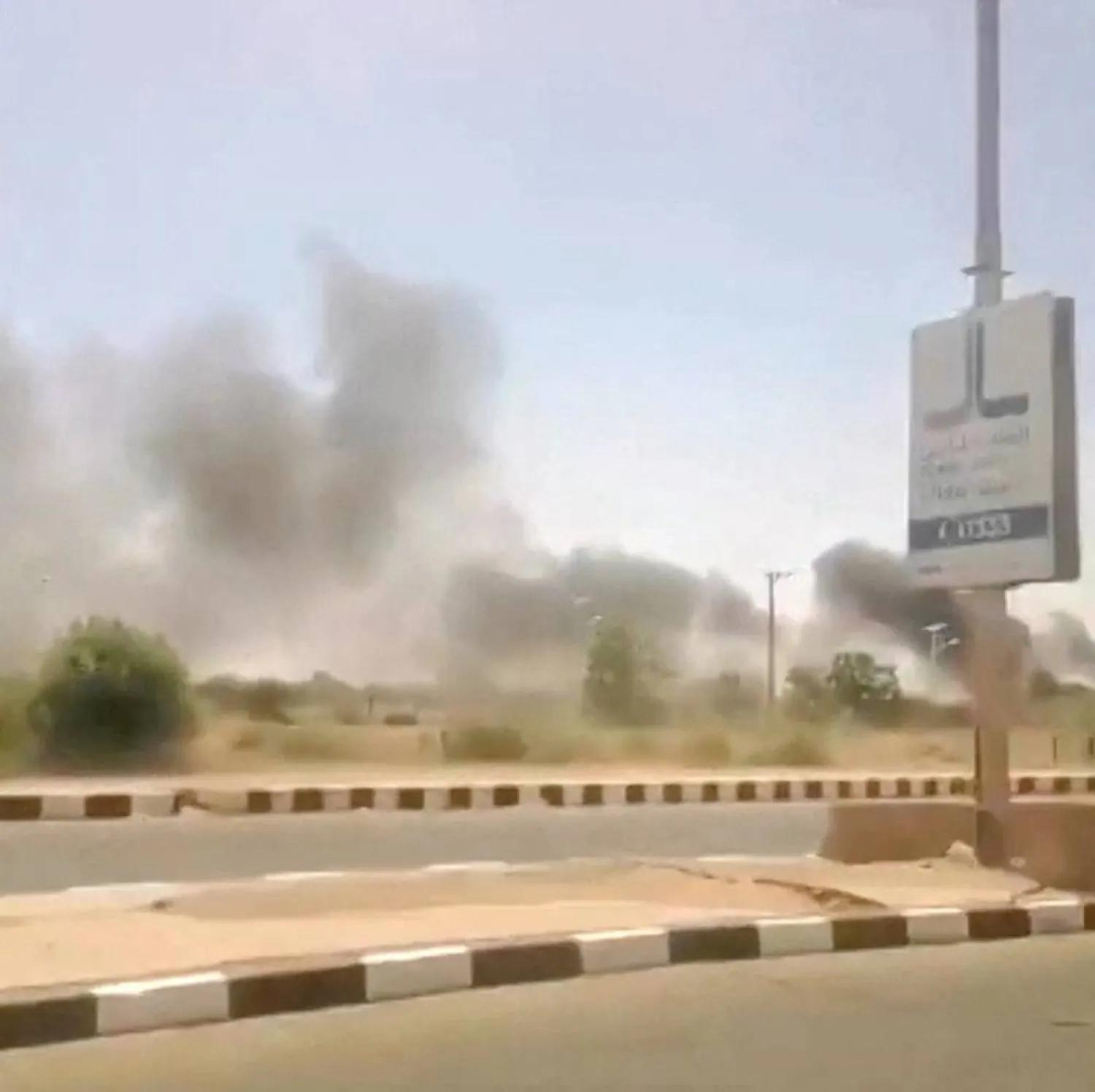

US Calls on Sudan Parties to Immediately Accept Humanitarian Truce

US Senior Advisor for Arab and African Affairs Massad Boulos addresses the UN Security Council. (US Senior Advisor for Arab and African Affairs Massad Boulos on X)
TT

US Calls on Sudan Parties to Immediately Accept Humanitarian Truce

US Senior Advisor for Arab and African Affairs Massad Boulos addresses the UN Security Council. (US Senior Advisor for Arab and African Affairs Massad Boulos on X)

US Senior Advisor for Arab and African Affairs Massad Boulos revealed on Friday that the US had called on all Sudanese parties to immediately and unconditionally accept a humanitarian truce backed by the United Nations mechanism.

Boulos took part in several diplomatic meetings on the sidelines of a UN Security Council meeting on Sudan.

The US calls on all parties to accept the truce so that lifesaving aid can be delivered to civilians and so that dialogue can kick off, he stressed.

He said the US continues to work with its partners towards achieving fair and permanent peace in Sudan. He underlined their commitment to holding those responsible for genocide in Sudan to account.

They also back the trusted transition towards civilian rule, he added.

The Sudanese people deserve to live in security, dignity and without fear, Boulos said.

He joined other world leaders at the Security Council “to address the dire crisis in Sudan and the urgent need to end more than 1,000 days of needless conflict,” he wrote on X.

“The Council delivered a clear and unified message: there is no military solution to this conflict, and the time to end the fighting is now,” he added.

“The suffering of the Sudanese people has been devastating — with widespread displacement, food insecurity, and atrocities that demand both global attention and action. I reaffirmed that achieving durable peace in Sudan remains a priority for US President Donald Trump and underscored America’s commitment to helping bring this war to an end,” Boulos stated.

He outlined “five key pillars for international alignment: an immediate humanitarian truce; sustained humanitarian access and protection of civilians; a permanent ceasefire and credible security arrangements; an inclusive, civilian-led political transition; and a long-term path toward recovery and reconstruction that restores stability and opportunity for the Sudanese people.”

“The United States will continue working closely with allies and partners, including our Quad partners, the UK, and others to press for a humanitarian truce and expand life-saving assistance,” he vowed.

“We will also continue holding accountable those responsible for atrocities, even as we push urgently for the peace the Sudanese people deserve,” he declared.


Somalia Moves to Contain Public Criticism Over Türkiye Ties

Turkish President and his Somali counterpart Hassan Sheikh Mohamud (Somali National News Agency)
TT

Somalia Moves to Contain Public Criticism Over Türkiye Ties

Turkish President and his Somali counterpart Hassan Sheikh Mohamud (Somali National News Agency)

Growing cooperation between Mogadishu and Ankara has drawn domestic criticism in Somalia over what some describe as a “one-sided benefit” for Türkiye, prompting Somali authorities to stress that the country’s sovereignty and the rights of its people remain unaffected.

The official denial issued on Friday comes amid tensions between the government and the opposition ahead of pivotal elections later this year.

A Somali affairs expert told Asharq Al-Awsat the move was aimed at containing any potential crisis with Türkiye, which he described as a strategic ally that Mogadishu needs.

He said Ankara was likely to understand the situation and continue its presence in Somalia, given its strategic interests in the Horn of Africa.

Cooperation between Mogadishu and Ankara has appeared more active against the backdrop of the Somali government’s internal disputes with the opposition and following Israel’s recognition of the breakaway region of Somaliland in December.

Somali denial

The Somali National News Agency reported on Friday, citing official sources, that “some social media accounts circulated claims alleging that the Turkish government is unilaterally benefiting from Somalia’s natural and energy resources, particularly the oil sector.”

It added that “these allegations are baseless and fall within disinformation campaigns aimed at distorting facts and undermining the existing cooperation between the two countries.”

Official Somali sources clarified that the joint agreement signed between Turkish Petroleum Corporation (TPAO) and the Somali Petroleum Authority explicitly stipulates that natural resources belong to the Somali people, and that exploration and production operations are conducted in accordance with national legal frameworks and in a manner that safeguards the state’s sovereign interests.

Officials from both the Somali and Turkish sides also stressed that the energy partnership is based on transparency, mutual respect and the preservation of Somalia’s sovereignty.

The remarks come amid a political crisis between the government and the opposition ahead of direct elections this year, a key point of contention.

Less than a week ago, the vessel “Cagri Bey” departed from Türkiye for Somalia, where it will begin offshore oil exploration as part of the implementation of economic and defense cooperation agreements signed by the two governments, the agency reported on Feb. 15.

Somali political analyst Abdulweli Beri said criticism portraying the trajectory of relations between Mogadishu and Ankara as “one-sided” is “not entirely new, but has intensified now for several political and economic reasons.”

He noted that agreements related to oil, gas and minerals are always highly sensitive in any developing country because they concern sovereignty and future wealth. “In the Somali case, any perception that an external party may obtain a large share or long-term privileges automatically raises concerns among elites and the opposition,” he said.

Political polarization

The current debate, Beri said, comes amid political polarization ahead of the elections. “The opposition tends to scrutinize any strategic agreements concluded by the government, which remains more vulnerable to criticism. In the absence of full clarity on some details, this information gap is often filled by political narratives or public concerns.”

He said the official Somali clarifications were intended to contain the accusations and prevent them from affecting cooperation projects, given the need for a strategic alliance with Türkiye.

The statements come amid growing bilateral ties between Somalia and Türkiye, spanning infrastructure, social services, security and investment, within a framework of partnership between two independent states linked by close friendship and cooperation, the Somali National News Agency reported on Friday.

Expanding partnership

Turkish-Somali cooperation is not limited to the energy sector. On Feb. 18, Interior Security Minister Gen. Abdullahi Sheikh Ismail received military equipment for the national police from the Turkish ambassador to Somalia, according to the agency.

On Feb. 10, the Somali Communications Authority signed a memorandum of understanding with Türkiye’s Information and Communication Technologies Authority to enhance cooperation in the field of electronic communications, the same source said.

On Jan. 28, Somalia and Türkiye marked the 60th anniversary of diplomatic relations at a ceremony organized by the Embassy of the Federal Republic of Somalia in Ankara, the Turkish capital.

Beri said Somalia would remain keen to preserve and continue this cooperation and to provide ongoing clarifications, though they should be more detailed to dispel the accusations. He added that Ankara was likely to understand this and maintain its presence in Somalia, viewing it as strategic to its interests in the Horn of Africa.


Board of Peace Pledges on Gaza Face Test of Implementation on the Ground

Palestinians gather between destroyed houses to break their fast together during the holy month of Ramadan in the northern Gaza Strip, 20 February 2026. (EPA)
TT

Board of Peace Pledges on Gaza Face Test of Implementation on the Ground

Palestinians gather between destroyed houses to break their fast together during the holy month of Ramadan in the northern Gaza Strip, 20 February 2026. (EPA)

The first meeting of the Board of Peace, chaired by US President Donald Trump and attended by Arab and Israeli representatives in the absence of the Palestinian Authority, set out ambitious goals but left key issues unresolved.

Washington distilled its priorities into two tracks: funding the reconstruction of Gaza and disarming Hamas. Arab participants, however, tied their demands to full implementation of the Gaza ceasefire, deployment of an international stabilization force, and enabling the technocrats’ committee to operate across the enclave without obstruction from Tel Aviv.

The meeting, which drew representatives from more than 40 countries and observers from 12 others, may struggle to translate pledges into practice, experts told Asharq Al-Awsat.

They pointed to formidable hurdles, foremost Israel’s continued deployment in Gaza and the absence of clear understandings on Hamas disarmament, warning that these issues could stall or even freeze the agreement.

Concerns

Indonesian President Prabowo Subianto urged caution against efforts that could derail the peace process in Gaza, Germany’s dpa news agency reported, citing Indonesia’s Antara News on Friday.

Trump announced that the United States would contribute $10 billion to the board, saying Saudi Arabia, Kazakhstan, Azerbaijan, the United Arab Emirates, Morocco, Bahrain, Qatar, Uzbekistan, and Kuwait had pledged more than $7 billion to the Gaza relief package.

He pressed hard on Hamas disarmament, saying the group would hand over its weapons as promised and warning of a harsh response if it did not.

Israel’s Foreign Minister Gideon Saar struck the same note in his address to the board, voicing support for disarming Hamas and other factions. Prime Minister Benjamin Netanyahu had already set the tone ahead of the meeting, declaring that there would be no reconstruction before Gaza is disarmed.

General Jasper Jeffers, commander of the newly formed International Stabilization Force, said Indonesia, Morocco, Kazakhstan, Kosovo, and Albania had pledged troops. Egypt and Jordan, which border Gaza, agreed to train police and security forces.

Egypt, in remarks delivered by Prime Minister Mostafa Madbouly, underscored the need to preserve the link between the West Bank and Gaza to allow the Palestinian Authority to resume its responsibilities in the enclave.

He called for empowering Palestinians to manage their own affairs and for the technocrats’ committee to begin work from inside Gaza and across all its areas.

Qatar’s Prime Minister and Foreign Minister Sheikh Mohammed bin Abdulrahman Al Thani pledged $1 billion from Doha to back the board’s push for a final settlement, saying the Board of Peace under Trump’s leadership would drive full implementation of the 20-point plan without delay.

Saeed Okasha, an Israeli affairs analyst at the Al-Ahram Center for Political and Strategic Studies, said the proposals unveiled by the Board of Peace lack operational clarity and risk creating confusion in implementation, potentially leading to paralysis.

Trump, he said, rushed to launch the board without first resolving core obstacles or forging solid understandings.

Palestinian political analyst Nizar Nazzal shared that view, arguing that the board’s pledges could falter because they emphasize economic measures, such as reconstruction funding, without a clear roadmap, and security measures, such as disarming Hamas, without addressing Israeli withdrawal or the group’s future.

“This sidestepping of political commitments will collide with security complexities and delay implementation of contentious provisions such as deploying stabilization forces, Israeli withdrawal, or empowering the technocrats’ committee,” he said.

Hamas

Hamas, for its part, has avoided direct confrontation with Trump’s recent calls for its disarmament. In a statement on Thursday, it said any arrangements in Gaza must begin with a “complete halt to the Israeli aggression.”

In another statement later that evening, the group said any political track or arrangements discussed regarding the Gaza Strip and the future of our Palestinian people must start with a complete cessation of the aggression, lifting the siege, and guaranteeing our people’s legitimate national rights, foremost among them the right to freedom and self-determination.

US mediator Bishara Bahbah said on Thursday that Hamas disarmament hinges on guarantees and protection for its members.

Okasha said an end to the offensive in Gaza, as Hamas demands, is unlikely so long as disarmament remains unresolved, pointing to US and Israeli statements.

The course Hamas appears to be charting, he said, suggests it wants to remain in place, a stance that could block implementation of the agreement and even pave the way for a return to war, especially as Washington has yet to clarify the mandate and timeline for deploying the stabilization force.

Nazzal said negotiating with Hamas over ending its existence is unrealistic. Its future must be addressed through serious, genuine understandings rather than a continuation of transactional trade-offs, he said.