


Arab League Urges UN Security Council to Stop Israeli Assault against Palestinian People

A man prepares meals to be distributed to displaced Palestinians in front of a leveled building in Gaza City on November 2, 2024, amid the ongoing war between Israel and Hamas. (AFP)
TT

Arab League Urges UN Security Council to Stop Israeli Assault against Palestinian People

A man prepares meals to be distributed to displaced Palestinians in front of a leveled building in Gaza City on November 2, 2024, amid the ongoing war between Israel and Hamas. (AFP)

The Arab League urged on Saturday the UN Security Council and the international community to assume their responsibilities and exert pressure on Israel to stop its assaut against the Palestinian people and to ensure that it provides all humanitarian assistance needed by the people in Gaza Strip.

In a statement marking the 107th anniversary of the Balfour Declaration, the Arab League urged Britain and all the other countries that did not recognize the Palestinian state to take this step in support of peace in line with the two-state solution.

It emphasized that the only way to achieve just, comprehensive and lasting peace is to end the Israeli occupation of all Palestinian and Arab territories occupied since 1967, and to establish an independent Palestinian state with East Jerusalem as its capital according to international resolutions and the Arab Peace Initiative.

"The Balfour Declaration continues to be a profound wound in the human conscience due to the Nakba that the Palestinian people have experienced and the ongoing deprivation of their legitimate and inalienable rights to freedom and independence. This refers to the Israeli occupation's violations and practices, settlement and Judaization, annexation and siege, the destruction of the Palestinian people's livelihoods, and the desecration of their religious shrines," the Arab League statement said.

It stressed that Israel's continued crimes and violations are a reflection of the international community's inability to fulfil its obligations and assume its responsibilities in resisting aggression and occupation, protecting the Palestinian people.

It must ask Israel to comply with the principles of international law and relevant resolutions in a manner that ends the occupation and allows the Palestinian people to exercise their right to self-determination in an independent state with East Jerusalem as its capital.

The Arab League stressed that Israel continues to insist on expanding the area of its hostilities to include Lebanon and the occupied Syrian Golan Heights despite the imminent danger of a regional war.

Moreover, the Israeli Knesset's decision to ban UNRWA's work in the occupied Palestinian territories is an additional flagrant violation of the UN Charter, of the international will, and of all human values.

The aim of this step is to destroy generations of Palestinians for whom the UN agency represents a lifeline in catastrophic humanitarian conditions. It is imperative that Israel stop these crimes and protect the agency's work in accordance with its UN mandate.



Syrian Security Forces Enter Hasakeh City under Deal with Kurds

Syrian Interior Ministry security forces vehicles travel to enter the city of Hasakah in northeastern Syria, following an agreement between Damascus and the Syrian Democratic Forces reached on January 30, in Al-hasakah, Syria, February 2, 2026. REUTERS/Khalil Ashawi
TT

Syrian Security Forces Enter Hasakeh City under Deal with Kurds

Syrian Interior Ministry security forces vehicles travel to enter the city of Hasakah in northeastern Syria, following an agreement between Damascus and the Syrian Democratic Forces reached on January 30, in Al-hasakah, Syria, February 2, 2026. REUTERS/Khalil Ashawi

Syrian government security personnel on Monday entered Hasakeh city, a stronghold of Kurdish forces, under an integration deal agreed with the Kurds last week, an AFP team reported.

The two sides reached a comprehensive agreement on Friday to gradually integrate the Kurds' military and civilian institutions into the state, after Kurdish forces ceded territory to advancing government troops in recent weeks after months of tensions and sporadic clashes.

AFP correspondents saw a convoy of government vehicles cross a Kurdish forces checkpoint on its way into Hakaseh in the northeast, as armed Kurdish personnel stood at the roadside.

Some residents gathered along the road to welcome the government forces, waving Syrian flags as women ululated.

Marwan al-Ali, the government's recently appointed head of internal security in Hasakeh province, urged the state forces to carry out their tasks "according to the established plans and fully comply with laws and regulations".

AFP correspondents saw Kurdish security forces deployed inside Hasakeh as government forces entered, though streets were empty and shops closed due to a curfew in force until 6:00 pm (1500 GMT).

Mazloum Abdi, head of the Kurdish-led Syrian Democratic Forces (SDF), had previously said the deal would be implemented on the ground from Monday, with both sides to pull forces back from frontline positions in parts of the northeast, and from the town of Kobane in the north.

He said a "limited internal security force" would enter parts of Hasakeh and Qamishli, but that "no military forces will enter any Kurdish city or town".

A curfew is set to be put in place for the city of Qamishli on Tuesday.

Friday's deal "seeks to unify Syrian territory", including Kurdish areas, while also maintaining an ongoing ceasefire and introducing the "gradual integration" of Kurdish forces and administrative institutions.

It also appeared to include some Kurdish demands, such as establishing brigades of fighters from the SDF.

The head of internal security in Aleppo province met with Kurdish forces in Kobane on Sunday, discussing security arrangements and plans for government personnel to enter the town.

Hemmed in by the Turkish border and Syrian government forces, Kobane is located more than 200 kilometres (125 miles) from Hasakeh, and has long been seen as a symbol of Kurdish fighters' victory against IS jihadists.

The United States, which led a military coalition that backed the Kurds' campaign against ISIS, has drawn close to Syria's new authorities, recently saying the purpose of its alliance with the Kurdish forces was largely over.

Information Minister Hamza Mustafa has said the integration deal also includes the handover of oil fields, the Qamishli airport and border crossings to the government within 10 days.

As state forces deploy to Kurdish-held areas, only Druze-majority Sweida will effectively remain outside government control.


Israel Issues Evacuation Warnings for Buildings in South Lebanon ahead of Strikes

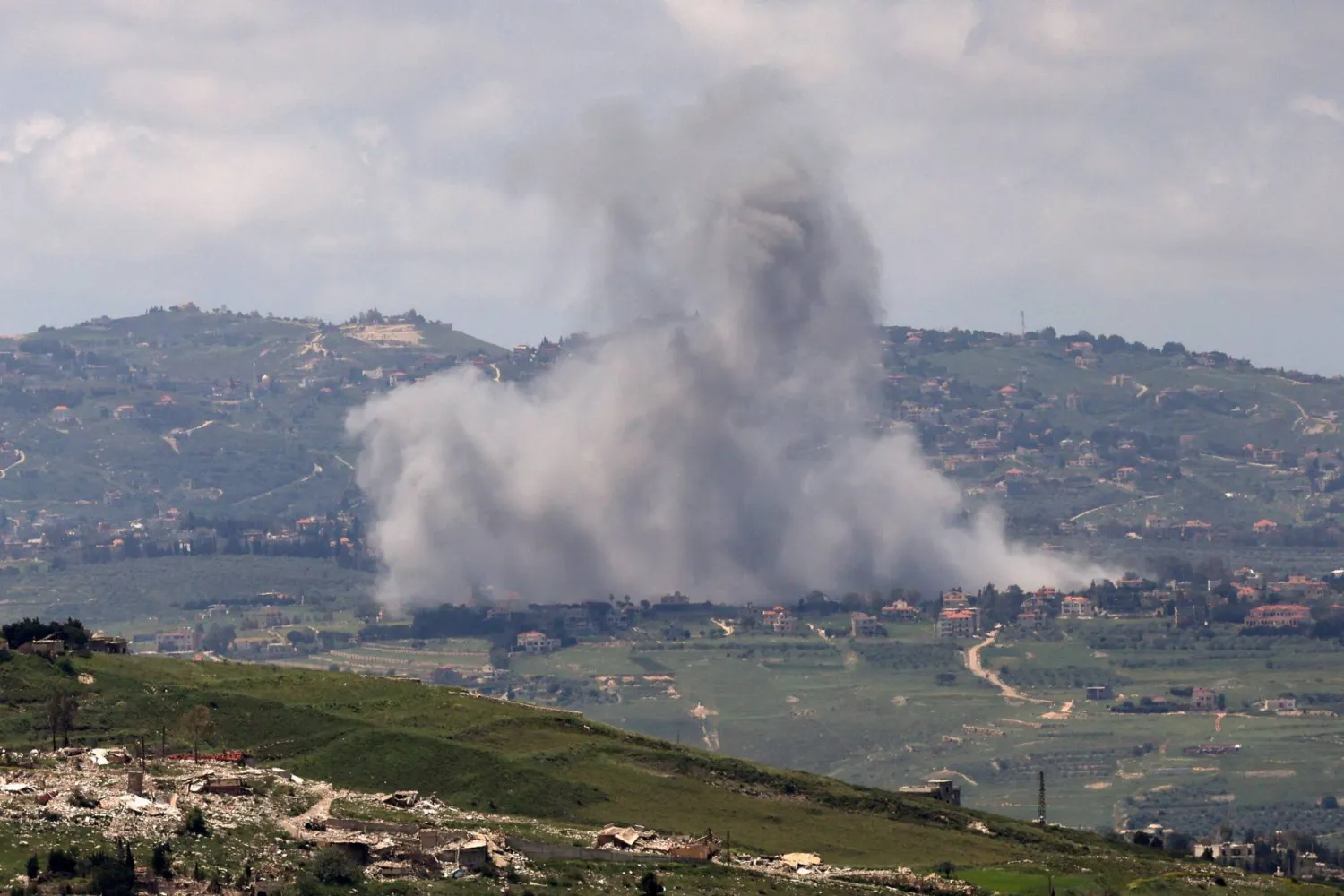
A person inspects a site a day after a series of Israeli airstrikes targeted a large industrial machine in the village of Marwaniyah, southern Lebanon, last January 31 (EPA)
TT

Israel Issues Evacuation Warnings for Buildings in South Lebanon ahead of Strikes

A person inspects a site a day after a series of Israeli airstrikes targeted a large industrial machine in the village of Marwaniyah, southern Lebanon, last January 31 (EPA)

Israel's military warned on Monday it would soon strike Hezbollah targets in southern Lebanon, issuing evacuation warnings for buildings in two villages.

The army "will, in the near future, strike military infrastructure belonging to the Hezbollah terrorist organization, in response to its prohibited attempts to rebuild its activities in the area," its Arabic-language spokesman Avichay Adraee wrote on X, telling residents of certain buildings in Kfar Tibnit and Ain Qana "to evacuate them immediately".


Gaza’s Rafah Border Crossing with Egypt Reopens for Limited Traffic in Key Step for Ceasefire

01 February 2026, Palestinian Territories, Khan Younis: Trucks carrying humanitarian aid arrive in Khan Yunis in the southern Gaza Strip, after passing through the Rafah border crossing from Egypt. Photo: Abed Rahim Khatib/dpa
TT

Gaza’s Rafah Border Crossing with Egypt Reopens for Limited Traffic in Key Step for Ceasefire

01 February 2026, Palestinian Territories, Khan Younis: Trucks carrying humanitarian aid arrive in Khan Yunis in the southern Gaza Strip, after passing through the Rafah border crossing from Egypt. Photo: Abed Rahim Khatib/dpa

Gaza’s Rafah border crossing with Egypt reopened on Monday for limited traffic, a key step as the Israeli-Hamas ceasefire moves ahead, according to Egyptian and Israeli security officials.

An Egyptian official said 50 Palestinians would cross in each direction in the first day of the crossing’s operation. The official, involved in talks related the implementation of the ceasefire deal, spoke to The Associated Press on condition of anonymity to discuss the issue.

State-run Egyptian media and an Israeli security official also confirmed the reopening, which for now at least, is largely symbolic. Few people will be allowed to travel in either direction, and no goods will be allowed to enter.

About 20,000 Palestinian children and adults needing medical care hope to leave devastated Gaza via the crossing, according to Gaza health officials. Thousands of other Palestinians outside the territory hope to enter and return home.

Israeli Prime Minister Benjamin Netanyahu has also said that Israel will allow 50 patients a day to leave. An official involved in the discussions, speaking on condition of anonymity to discuss the diplomatic talks, said each patient would be allowed to travel with two relatives, while some 50 people who left Gaza during the war would be allowed to return each day.

The Egyptian health ministry said in a statement on Monday that 150 hospitals across the country have been prepared to receive Palestinian patients and wounded who will be evacuated from Gaza through the Rafah crossing.

Israel has said it and Egypt will vet people for exit and entry through the crossing, which will be supervised by European Union border patrol agents with a small Palestinian presence. The numbers of travelers are expected to increase over time, if the system is successful.

Israeli troops seized the Rafah crossing in May 2024, calling it part of efforts to combat arms-smuggling for the Hamas group. The crossing was briefly opened for the evacuation of medical patients during a ceasefire in early 2025. Israel had resisted reopening the Rafah crossing, but the recovery of the remains of the last hostage in Gaza last week cleared the way to move forward.

The reopening is a key step as last year’s US-brokered ceasefire agreement that took effect on Oct. 10 moves into its second phase.

Before the war, Rafah was the main crossing for people moving in and out of Gaza. The territory’s handful of other crossings are all shared with Israel. Under the ceasefire terms, Israel’s military controls the area between the Rafah crossing and the zone where most Palestinians live.

Fearing that Israel could use the crossing to push Palestinians out of the enclave, Egypt has repeatedly said it must be open for them to enter and exit Gaza.

The current ceasefire halted more than two years of war between Israel and Hamas that began with the Hamas-led attack on southern Israel on Oct. 7, 2023. The truce’s first phase called for the exchange of all hostages held in Gaza for hundreds of Palestinians held by Israel, an increase in badly needed humanitarian aid and a partial pullback of Israeli troops.

The second phase of the ceasefire deal is more complicated. It calls for installing the new Palestinian committee to govern Gaza, deploying an international security force, disarming Hamas and taking steps to begin rebuilding.