


Hezbollah Provocations Spark Condemnation in Lebanon, Refusal to Be Drawn to Strife

Residents of the southern Lebanese village of Kfar Kila parade with Hezbollah flags on the Burj al-Muoluk road on the outskirts of their village on January 27, 2025. (AFP)
TT

Hezbollah Provocations Spark Condemnation in Lebanon, Refusal to Be Drawn to Strife

Residents of the southern Lebanese village of Kfar Kila parade with Hezbollah flags on the Burj al-Muoluk road on the outskirts of their village on January 27, 2025. (AFP)

Hezbollah supporters have resorted to provocative rallies in several areas in Beirut, Mount Lebanon and the South to "deliver messages" to President Joseph Aoun and Prime Minister-designate Nawaf Salam.

Supporters of the Iran-backed party have since Sunday mobilized motorcycle convoys, with riders raising Hezbollah flags and chanting sectarian slogans, in areas that are opposed to the party.

Hezbollah had constantly employed such methods to deliver security messages whenever Lebanon was in the process of meeting political deadlines, such as the formation of a government as is the case at the moment.

The first fallout from the provocations was United Arab Emirates businessman Khalaf Ahmad Al Habtoor, the head of Dubai conglomerate Al Habtoor Group, announcing on Tuesday that he had cancelled all planned investments in Lebanon due to continuing instability, and would sell all his properties and investments in the country.

Al Habtoor said in a statement that the unrest and instability in Lebanon by "factions loyal to armed militias in the country paint a grim picture."

"The continued dominance of armed militias (the Shiite militias) and the failure to establish rule of law make it impossible for any investor to proceed with confidence in such an environment," he said.

Last week, Al Habtoor had expressed an intention to invest in Lebanon once a new government was formed.

Provocative convoys

The motorcycle convoys had departed from Beirut’s southern suburbs, known as Dahieh, a Hezbollah stronghold. They headed to several neighborhoods in the capital that are known for their opposition to the party.

The same scenes took place in the Christian town of Maghdouche in the South, leading to a scuffle between the motorists and locals.

On Monday, the locals awoke to Hezbollah slogans spraypainted over their town’s entrance sign.

Similar provocations took place in Christian-majority regions in Mount Lebanon, drawing condemnation from Christian parties and their supporters.

The Lebanese army had announced the arrest of several of the motorists.

In statement, it said that it carried out the arrests after "some citizens, riding on motorcycles, rode around several Lebanese regions while carrying party flags, firing gunshots and chanting provocative slogans."

It added that it deployed patrols to "prevent the undermining of security and stability", calling on the people to "act responsibly to protect national unity and coexistence."

Amal warns against provocations

The Amal movement – a close Hezbollah ally – notably warned its supporters against joining the Hezbollah convoys.

In a statement, it warned them against taking part in "any provocative act that goes against the orders of the movement command, which calls for respecting all Lebanese people regardless of their sect."

It specifically cautioned against "joining motorcycle convoys or carrying out any provocative act and chanting sectarian slogans that violate the movement’s treaty and vision."

Any violators will risk being expelled from the movement, it added.

The provocations were discussed by parliament Speaker and Amal movement leader Nabih Berri and deputy Speaker Elias Bou Saab at Ain el-Tineh.

Bou Saab said these convoys "only serve the enemy (Israel). I hope they can be stopped because everyone in Lebanon took in the residents of the South and Dahieh" during Israel’s war on Hezbollah.

He described the convoys as "unacceptable", stressing the need for unity with residents of the South who bore the brunt of the Israeli war.

Unity cannot be achieved through such provocations, he remarked.

No to strife

Hezbollah’s opponents are in agreement in rejecting the rallies, declaring that they will not be dragged to strife and saying that the army will maintain calm.

Lebanese Forces sources said the convoys are clearly aimed at sending messages to the president and PM-designate.

"The state may have opened a new chapter, but one team is still acting arrogantly and refuses to acknowledge these changes. So, it has resorted to delivering messages that say that it represents de facto powers, and it will continue to act this way," they told Asharq Al-Awsat.

Another message aims to impose conditions on the formation of the new government and drafting of its ministerial statement to include the "army, people and resistance (Hezbollah)" term, it went on to say.

Regardless of the provocations, the sources stressed that the LF will not be lured to strife and it will continue to turn to the army to maintain stability, noting its statement and arrest of some of the motorists.

Kataeb Party MP Salim al-Sayegh condemned the convoys, saying: "We will not play Hezbollah’s game no matter the cost."

"We will not be dragged towards terrorist methods they are using against the residents of Beirut and Mount Lebanon," he said in televised remarks. "We are adhering to the state and laws and banking on the army."

"Confronting Israel does not take place in Beirut and Mount Lebanon. They cannot make up for their heavy losses (in the war) by striking ‘victories’ against their fellow countrymen," he added.

MP Michel Mouawad condemned Hezbollah, stressing: "We will always choose partnership while respecting the state, its sovereignty and constitution."

"No matter what, we will not yield to those who believe they can break the will of the Lebanese people through extortion, domineering methods and accusations of treason," he said on the X platform.

Head of the Free Patriotic Movement MP Gebran Bassil – a former Hezbollah ally – condemned the provocations. The residents of the South were "heroic" as they returned to their homes on Sunday, while "sectarian provocations that night only served to tarnish this heroism," he said in a post on the X on Monday.

He added that the sectarian provocations only serve to "deepen the divisions and advocates of this division. Extremism only leads to extremism and Lebanon will be the loser in the end."



Hezbollah Rejects Latest Ceasefire Agreement as Israeli Strikes Kill 4 in Lebanon

Destroyed buildings resulting from Israeli shelling on Beirut's Southern Suburb, where a Hezbollah flag is raised (EPA)
TT

Hezbollah Rejects Latest Ceasefire Agreement as Israeli Strikes Kill 4 in Lebanon

Destroyed buildings resulting from Israeli shelling on Beirut's Southern Suburb, where a Hezbollah flag is raised (EPA)

Hezbollah on Thursday rejected the latest ceasefire agreement reached between Israel and the Lebanese government, and the militant group demanded a complete Israeli withdrawal from Lebanon as continued fighting there hampered moves to end the Iran war.

The Hezbollah announcement came as Israeli strikes killed at least four people, according to local authorities, and a UN peacekeeper was killed in the crossfire.

Hezbollah leader Naim Kassem, in a written statement read on TV, called the negotiations “absurd, humiliating, and insulting.” He said the agreement’s demand that Hezbollah fighters leave southern Lebanon under fire would mean “surrender, defeat and achieving the enemy’s goals.”

“What we are concerned about is an end to the aggression, ceasefire and Israel’s withdrawal,” he said, underscoring that Hezbollah had not made any commitment to stop fighting. “So long as our villages are not safe and are being bombed and destroyed and our people are killed," he said, northern Israel “will not be safe.”

The fighting in Lebanon, where Israeli forces have seized large swaths of the south, threatens efforts to end the Iran war and reopen the Strait of Hormuz, a key transit point for oil and gas. Its closure has jolted the world economy.

Iran has demanded that any lasting truce extend to Lebanon. Israeli Prime Minister Benjamin Netanyahu, who faces elections later this year, wants to press ahead with Israel’s offensive until Hezbollah no longer poses a threat.

US President Donald Trump, who faced a rare rebuke from Congress on Wednesday, has sought to downplay the diplomatic deadlock and the failure of declared ceasefires to end the fighting. He told reporters that in the Middle East, "a ceasefire is when you’re shooting in a more moderate manner.”

Peacekeeper killed in crossfire A Serbian peacekeeper was killed and two others were wounded when a mortar struck their location near Marjayoun, a Christian-majority town that has seen intense fighting, according to the UN mission, known as UNIFIL, and Serbia's Defense Ministry.

Israel later blamed Hezbollah for the firing that killed the UN peacekeeper, without offering evidence. Hezbollah and the UN did not immediately comment on who launched the shells, according to The AP news.

Lebanon’s state-run National News Agency said a drone strike killed a motorcyclist and wounded four people in the village of Maaroub. It said airstrikes on the village of Sohmor in the Bekaa Valley, in eastern Lebanon, killed three people and wounded others. It also reported airstrikes elsewhere in the south.

There was no immediate comment from the Israeli military, which has warned people not to go into parts of southern Lebanon where it says it is striking Hezbollah facilities.

Fighting has raged despite declared ceasefires Hezbollah resumed rocket fire days after Israel and the United States launched their surprise Feb. 28 attack on Iran, which backs Hezbollah. Before then, Israel had regularly carried out strikes in Lebanon against what it said were militant targets, often killing civilians, despite an earlier truce reached in 2024.

Lt. Gen. Eyal Zamir, the Israeli military’s chief of staff, acknowledged Thursday that the ongoing war was straining northern Israeli towns living under the threat of Hezbollah fire. He said Israel's operations in Iran and Lebanon had “created a new security reality,” by weaking Iran and Hezbollah “to an unprecedented degree.”

After Hezbollah's rocket and drone attacks resumed, Israeli troops seized around a fifth of Lebanon, pushing further into the country's south than at any time since the end of Israel’s 1982-2000 occupation.

In the southern city of Sidon, residents reacted to Wednesday's ceasefire announcement with skepticism, saying previous agreements had failed to stop the violence.

“Every few days a ceasefire is announced, but people keep getting killed,” said Mayada Hijazi.

“It’s all talk and no action,” said Salah Nassab. “We keep going back to our homes, and then we get displaced again, back and forth. We’re very tired."

More than 3,500 people have been killed in Lebanon, and over 1.2 million have been displaced. The fighting has killed 27 Israeli soldiers and three civilians.

The ceasefire came from ongoing Israeli-Lebanese talks The latest declared ceasefire came about through US-brokered talks between Israel and Lebanon's government, which accuses Hezbollah of dragging the country into war and had made efforts to disarm it before the latest hostilities.

The ceasefire agreement calls for Lebanon's armed forces to take control of security zones in Lebanon from which the militants would be banned.

Lebanese President Joseph Aoun on Thursday called the new agreement "the last chance to enter a final and comprehensive ceasefire.” He said Lebanon was ready to implement Wednesday's deal once he receives responses from relevant factions in Lebanon, including Hezbollah. The United States — and Trump himself — would determine how and when the deal is implemented, Aoun told journalists on Thursday.

The agreement terms Hezbollah “an enemy" of Israel, the US and Lebanon and calls for dismantling it. The government has promised to do so in the past but does not have the capabilities to disarm Hezbollah by force.

The latest agreement did not say when Israel would withdraw from southern Lebanon but said the US would support the Lebanese army as it works to assert control in areas where Hezbollah has long wielded power.


Israel Plans Major Settlement Push Across Occupied West Bank

A photograph taken from a land corridor that Israel plans to use for its controversial E1 settlement project, near the Arab town of al-Tur in Israel-annexed east Jerusalem, shows camels belonging to Bedouins gathered on a hill overlooking the Israeli settlement of Maale Adumim (background) on May 31, 2026. (Photo by AHMAD GHARABLI / AFP)
TT

Israel Plans Major Settlement Push Across Occupied West Bank

A photograph taken from a land corridor that Israel plans to use for its controversial E1 settlement project, near the Arab town of al-Tur in Israel-annexed east Jerusalem, shows camels belonging to Bedouins gathered on a hill overlooking the Israeli settlement of Maale Adumim (background) on May 31, 2026. (Photo by AHMAD GHARABLI / AFP)

Israel's hardline finance minister announced on Wednesday a major expansion by more than 2,000 homes of three Jewish settlements in the occupied West Bank that Palestinians hope will be part of a future independent state.

Most nations consider Israeli settlements there to be illegal under international law and a major obstacle to a two-state solution for long-term peace.

Bezalel Smotrich, who holds authority over parts of Israel's civilian administration in the West Bank, said a planning committee approved the construction of 2,162 new Jewish homes.

They include 1,006 units in a new settlement near Jerusalem, 922 near the Palestinian city of Nablus and 234 near ⁠Hebron.

"We are continuing ⁠to build the Land of Israel in practice," said Smotrich, an ultranationalist sanctioned by Britain, France and others who accuse him of inciting violence against Palestinians.

Smotrich has denounced the sanctions against him, saying the measures would not change Israeli policy.

The new homes would "strengthen our hold on the land, reinforce Israel's security, and establish clear facts on the ground that prevent the creation of an Arab terror state ⁠in the heart of the country," Smotrich said in a statement, without specifying when construction would begin.

Since becoming a minister three years ago, Smotrich has sought to tighten Israel's control and presence in the West Bank while advocating against the idea of a Palestinian state.

Prime Minister Benjamin Netanyahu's right-wing government has overseen the significant expansion of Jewish settlements in the West Bank and the establishment of new settlements.

Palestinians want the West Bank as part of a future independent state that includes East Jerusalem and Gaza. Around half a million Israelis live in the West Bank among about 3 million Palestinians.

US President Donald Trump's administration has been ⁠far less critical of ⁠the fast-expanding Israeli settlements.

However, Trump did say last September that he would not allow Israel to annex the West Bank, angering some right-wing Israeli lawmakers.

Condemning Wednesday's announcement, Palestinian President Mahmoud Abbas' office warned that Israel's "provocative" policies were pushing the region towards more rounds of violence and called on the US to stop the Israeli "madness.”

Smotrich on May 19 said he would wage "war" on the Palestinian Authority, which exercises limited civic rule in the West Bank, after he said he was told the International Criminal Court (ICC) prosecutor had sought a confidential arrest warrant against him. The ICC has not confirmed that.


UNIFIL Peacekeeper Killed in South Lebanon

A United Nations Interim Force in Lebanon (UNIFIL) convoy maneuvers within southern Lebanon, as seen from the Israeli side of the border in the Upper Galilee, northern Israel, 02 June 2026, amid a ceasefire between Israel and Hezbollah. EPA/ATEF SAFADI
TT

UNIFIL Peacekeeper Killed in South Lebanon

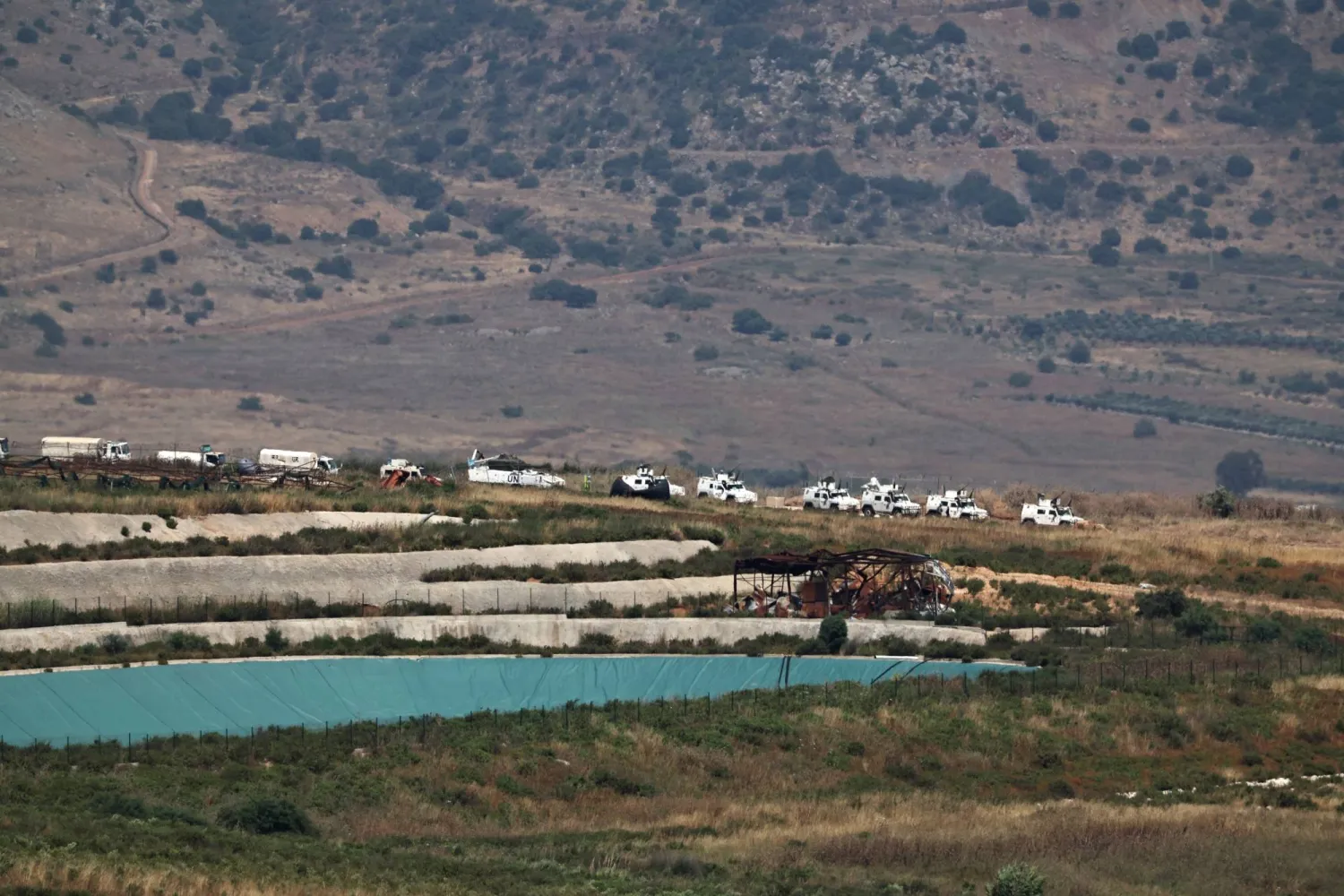
A United Nations Interim Force in Lebanon (UNIFIL) convoy maneuvers within southern Lebanon, as seen from the Israeli side of the border in the Upper Galilee, northern Israel, 02 June 2026, amid a ceasefire between Israel and Hezbollah. EPA/ATEF SAFADI

The United Nations Interim Force in Lebanon said Thursday that a peacekeeper was killed and two others wounded when shelling hit their base in the country's south the previous night.

"A UNIFIL peacekeeper died early this morning from critical injuries sustained when mortar shells struck his position," a statement from the force said, adding that an investigation had been launched.

The peacekeeper was Serbian, the country's defense ministry confirmed on Thursday, specifying that he died from injuries caused by a missile strike on the UN base.

"Senior Sergeant Milovan Jovanovic was given emergency medical care at a hospital inside the base after being wounded and then transported by helicopter to the University Medical Center in Beirut, where he died," the statement said.