


Al-Tassan to Asharq Al-Awsat: Major Int’l Companies Are Interested in Entering Tadawul

Saud Al-Tassan, CEO of EFG Hermes Saudi Arabia (Asharq Al-Awsat)
TT

Al-Tassan to Asharq Al-Awsat: Major Int’l Companies Are Interested in Entering Tadawul

Saud Al-Tassan, CEO of EFG Hermes Saudi Arabia (Asharq Al-Awsat)

Saud Al-Tassan, CEO of EFG Hermes Saudi Arabia, revealed that major international companies, including BlackRock and Franklin Templeton, are showing great interest in entering the Saudi financial market (Tadawul).

He stressed that the Public Investment Fund (PIF), through its acquisition of local companies, plays “a major positive role in raising the quality in all sectors, which made investors aspire to a larger stock market.”

Al-Tassan was speaking in an interview with Asharq Al-Awsat, on the sidelines of the EFG Hermes Saudi Forum, which was held on Monday and Tuesday in London, under the theme, “Looking for Sustainable Growth.”

The event was attended by 370 participants, including investors, businessmen and representatives of more than 50 Saudi joint stock companies, in addition to the Chairman of the Board of Directors of the Saudi Capital Market Authority, Mohammed bin Abdullah Al-Kuwaiz, and the Executive Director of the Saudi Tadawul, Mohammed Al-Rumaih.

Al-Tassan said that the outcome of the forum was “very positive,” pointing to the great cooperation between Tadawul and Saudi Hermes, which managed the IPOs of major companies, including Aramco, ACWA Power and Americana in the Saudi market.

Asked about the challenges facing foreign investors in the Saudi financial market, the CEO of EFG Hermes Saudi Arabia pointed to the percentage allocated to foreigners, which is approximately 15 percent, noting that in some markets in the world, foreign investors’ share exceeded 50 percent.

“The reason for this is the strong internal demand for the Saudi financial market. This is very important, but with time we hope to see an increase in the permitted percentages of foreign investments,” he told Asharq Al-Awsat.

Al-Tassan stressed that this matter would not prevent the achievement of the Saudi financial market’s ambition to become one of the five largest global markets, saying that Tadawul was now among the 10 largest markets in the world.

“[Tadawul] was very far from this rank when Vision 2030 was announced in 2016; therefore we are optimistic that it will become among the top 5 markets by 2030, and may surpass this rank,” he remarked.

Regarding the sectors that will constitute the engine of this growth, he said: “We expect all sectors to achieve growth, especially since we, in Saudi Arabia, have all the ingredients to become one of the largest competitors at the global level.”

Al-Tassan continued: “We are here [in London] not because of oil. Oil has been in Saudi Arabia for a long time. What has changed now, under the guidance of the wise leadership, is that the focus has become on non-oil sectors. Oil helped us reach this stage, but we are optimistic about other sectors that have had a significant impact on the Saudi market.”


Syria Sets 2026 Budget at Around $10.5 Billion

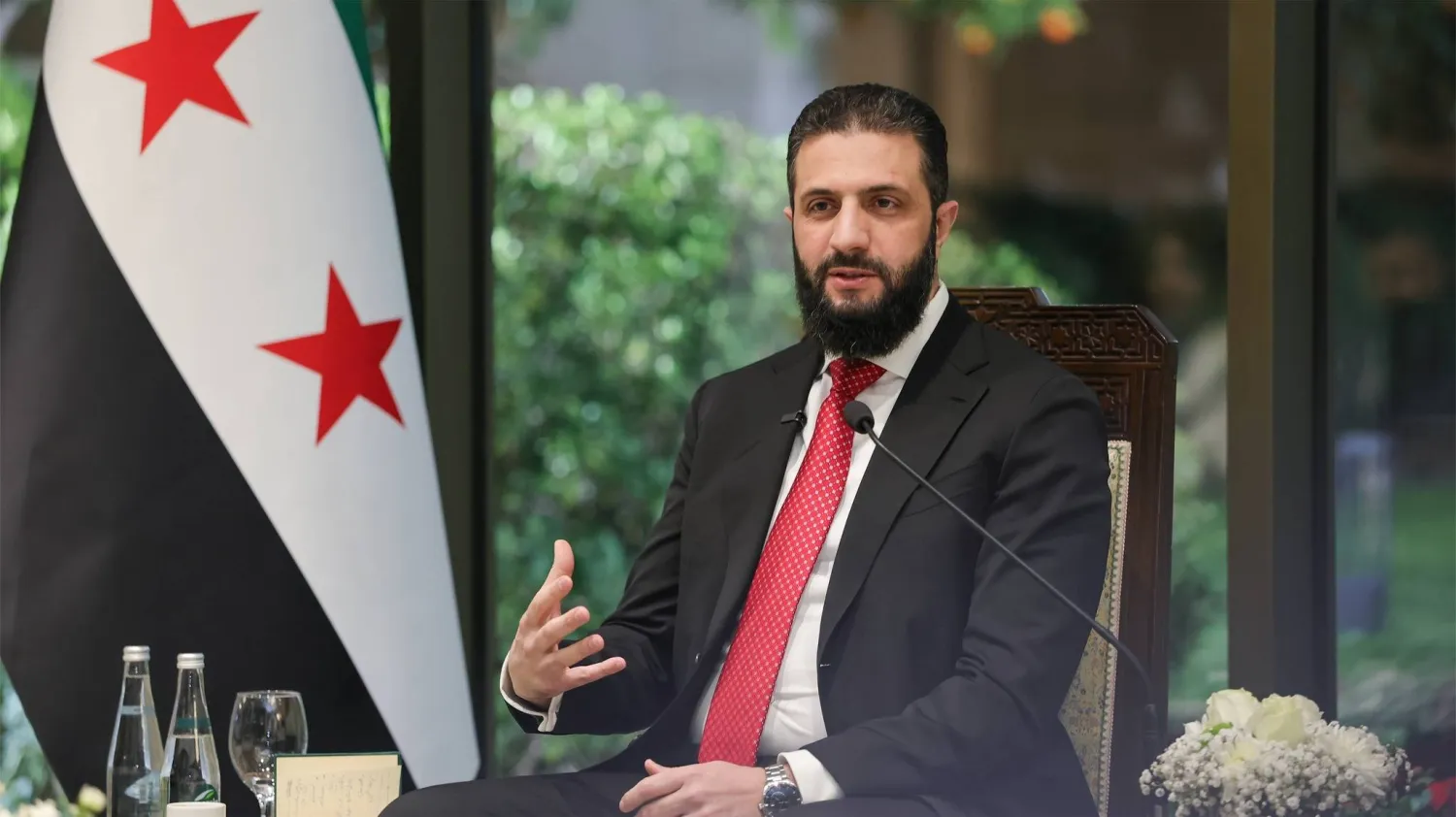
10 March 2026, Syria, Damascus: Syrian President Ahmed al-Sharaa meets with representatives of youth from various initiatives and sectors at the People's Palace in Damascus. Photo: -/APA Images via ZUMA Press Wire/dpa
TT

Syria Sets 2026 Budget at Around $10.5 Billion

10 March 2026, Syria, Damascus: Syrian President Ahmed al-Sharaa meets with representatives of youth from various initiatives and sectors at the People's Palace in Damascus. Photo: -/APA Images via ZUMA Press Wire/dpa

Syria's President Ahmed al-Sharaa said on Friday the 2026 budget was set at around $10.5 billion, nearly triple last year's level, state TV reported.

He said GDP is estimated to reach $60 billion-$65 billion this year, adding the economy could return to 2010 levels and improve services.

Speaking after Eid al-Fitr prayers in Damascus, Sharaa said the government will prioritize ending displacement camps and enabling returns, with funds ⁠allocated to rebuilding infrastructure ⁠in hard-hit areas including Idlib and Aleppo, where rival armed factions have clashed in recent months.

He said government spending rose to about $3.5 billion in 2025, while GDP reached around $32 billion after growth of 30% to 35%, with the ⁠budget recording a surplus for the first time.

He added that a dedicated infrastructure fund of at least $3 billion would be financed from government spending.

According to Reuters, Sharaa said additional funds would go to eastern regions such as Deir Ezzor, Hasaka and Raqqa - areas heavily damaged during the war against ISIS - focusing on services, while about 40% of the 2026 budget will be spent on health ⁠and education.

He ⁠said territory retaken by the government had returned key resources to state control, supporting the economy, but acknowledged rebuilding will take time.

He also said Syria is seeking stability and balanced ties abroad after years of conflict.

The country has attracted growing foreign investment as it rebuilds, with Gulf states among key backers, including Saudi Arabia's involvement in major infrastructure projects worth billions of dollars, and the UAE's DP World signing an $800 million ports deal.


Energean Suspends Israel 2026 Outlook as Mideast War Halts Production

FILE PHOTO: London-based Energean's drill ship begins drilling at the Karish natural gas field offshore Israel in the east Mediterranean May 9, 2022. REUTERS/Ari Rabinovitch/File Photo
TT

Energean Suspends Israel 2026 Outlook as Mideast War Halts Production

FILE PHOTO: London-based Energean's drill ship begins drilling at the Karish natural gas field offshore Israel in the east Mediterranean May 9, 2022. REUTERS/Ari Rabinovitch/File Photo

Eastern Mediterranean-focused gas producer Energean on Thursday suspended its 2026 outlook for Israel, citing the ongoing Middle East conflict that has forced the shutdown of its production vessel serving multiple Israeli fields.

Growing regional tensions have triggered precautionary shutdowns of key oil and gas facilities across the Middle East, including Qatar's LNG operations, Israeli offshore fields and production sites in Iraqi Kurdistan.

Energean said ⁠it would assess the impact on its 2026 production forecast once the duration and full effect of the shutdown are clear, adding that it started 2026 on a strong note.

Its Israeli gas fields and the production vessel serving them have been shut down twice over the past year.

The company, which operates natural gas and oil assets across Israel, Greece, the UK and other Mediterranean regions, has been increasing investments and exploring deals to lift production and expand operations amid geopolitical disruptions.

Its shares fell as much as 3.5%, but recouped ⁠losses to trade up 0.3% at 8:48 GMT.

Israel Shutdowns Cloud 2026 Forecast

The Israeli Energy Ministry ordered partial, temporary closures in February of the country's gas reservoirs, in line with security assessments.

“We are in close and continuous communication with the authorities to ensure that operations can be safely restarted as soon ⁠as conditions allow,” CEO Mathios Rigas said in a statement.

Average working-interest production at the end of February stood at 155 thousand barrels of oil equivalent per day (Kboed), Energean said on Thursday, including 118 ⁠Kboed from Israel and in line with the 145 to 155 Kboed guidance for 2026 issued in January.

The company also reported adjusted core profit of $1.12 billion for the 12 ⁠months ended December 31, down from $1.16 billion a year earlier.

Its production from Israel averaged 113 Kboed for 2025, up 1% year-on-year, while total production stood at 154 Kboed.


Iran Attacks Wipe Out 17% of Qatar’s LNG Capacity for Up to Five Years

QatarEnergy's CEO and state minister for energy affairs, Saad al-Kaabi (File/Reuters) 
TT

Iran Attacks Wipe Out 17% of Qatar’s LNG Capacity for Up to Five Years

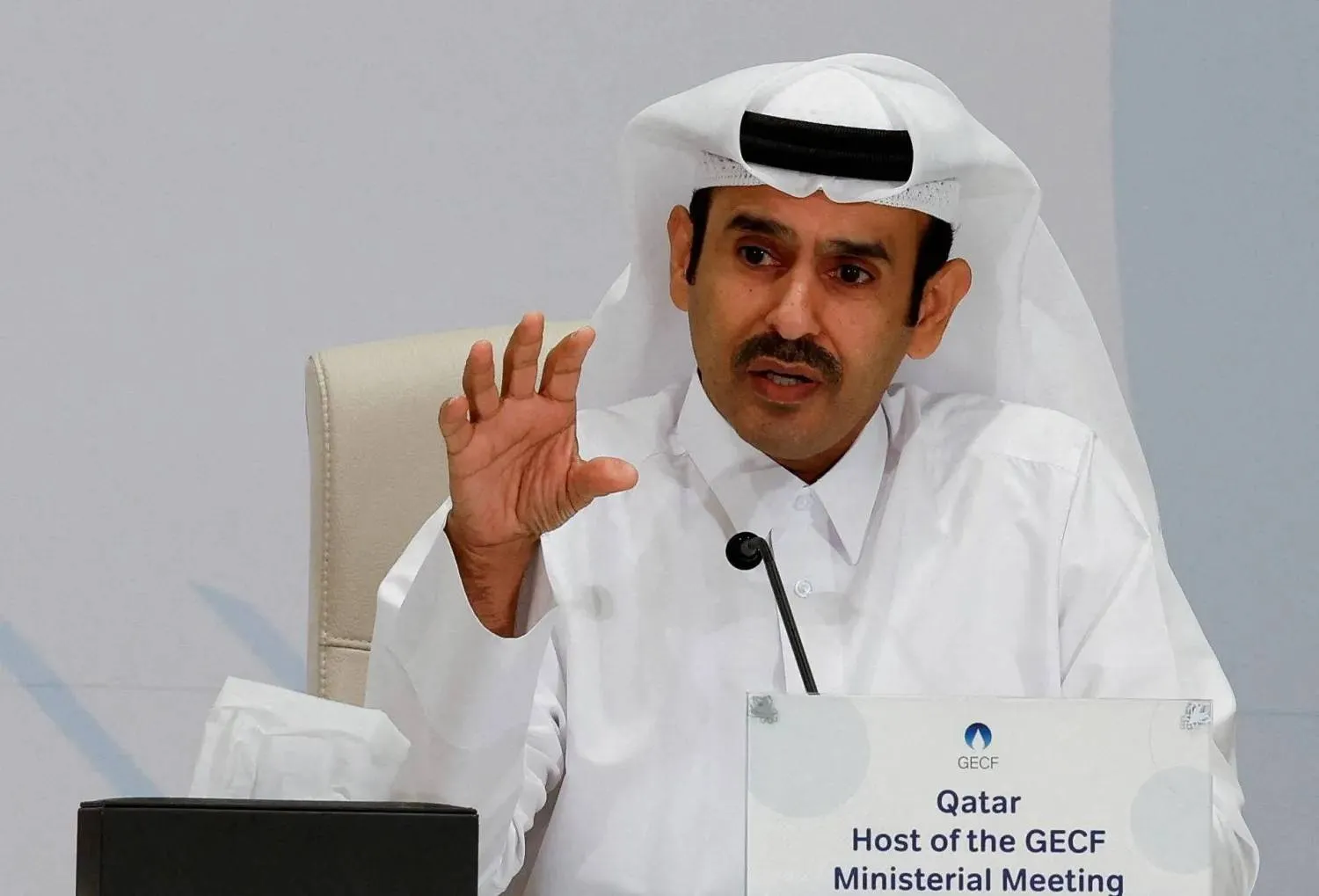
QatarEnergy's CEO and state minister for energy affairs, Saad al-Kaabi (File/Reuters) 

Iranian attacks ‌have knocked out 17% of Qatar's liquefied natural gas (LNG) export capacity, causing an estimated $20 billion in lost annual revenue and threatening supplies to Europe and Asia, QatarEnergy's CEO and state minister for energy affairs told Reuters on Thursday.

Saad al-Kaabi said two of Qatar's 14 LNG trains and one of its two gas-to-liquids (GTL) facilities were damaged in the unprecedented strikes. The repairs will sideline 12.8 million tons per year of LNG for three to five years, he said in an interview.

“I never in my wildest dreams would have thought that Qatar would be - Qatar and the region - ⁠in such an attack, especially from a brotherly Muslim country in the month of Ramadan, attacking us in this way,” Kaabi said.

Hours earlier Iran had aimed a series of attacks at Gulf oil and gas facilities after Israeli attacks on its own gas infrastructure.

State-owned QatarEnergy will have to declare force majeure on long-term contracts for up to five years for LNG supplies bound for Italy, Belgium, South Korea, and China due to the two damaged trains, Kaabi said.

“I mean, these are long-term contracts that we have to declare force majeure. We already declared, but that was a shorter term. Now it's whatever the period is,” he said.

ExxonMobil Impact and Byproducts

QatarEnergy had declared force majeure on its entire output of LNG, after earlier attacks on its Ras Laffan production hub, which came under fire again on Wednesday.

“For production to restart, first we need hostilities to cease,” he said.

US oil major ExxonMobil is a partner in ‌the damaged ⁠LNG facilities, while Shell is a partner in the damaged GTL facility, which will take up to a year to repair.

Texas-based ExxonMobil holds a 34% stake in LNG train S4 and a 30% stake in train S6, Kaabi said.

Train S4 impacts supplies to Italy's Edison and EDFT in Belgium, while Train S6 impacts South Korea's KOGAS, EDFT and Shell in China.

The scale of the damage from the attacks has set the region back 10 to 20 years, he said.

“And of course, this is a safe ⁠haven for a lot of people, to have a safe place to stay and so on. And that image, I think, has been shaken.”

The fallout extends well beyond LNG. Qatar's exports of condensate will drop by around 24%, while liquefied petroleum gas (LPG) will fall 13%. Helium output will fall 14%, and naphtha and sulphur will both drop ⁠by 6%.

Those losses have implications ranging from LPG used in restaurants in India to South Korea's chipmakers which use helium.

The damaged units cost approximately $26 billion to build, Kaabi said.

No work is currently taking place on Qatar's massive North Field expansion project, which could be delayed for more than a year, he ⁠said.

“If Israel attacked Iran, it's between Iran and Israel. It has nothing to do with us and the region,” he said.

“And so now, in addition to that, I'm saying that everybody in the world, whether it's Israel, whether it's the US, whether it's any other country, everybody should stay away from oil and gas facilities.”

The Ras Laffan Industrial City covers an area of 295 sq. km, roughly one-third the size of New York City.

In addition to LNG processing, it also houses other gas-related facilities, including a gas-to-liquids plant, LNG storage facilities, condensate splitting units, and an oil refinery.

In 2025, the Ras Laffan LNG facility accounted for approximately 19% of global LNG exports, according to ship-tracking data compiled by Bloomberg.

Its shipments also represented more than a fifth of total gas consumption in India, Taiwan, and Pakistan, according to Energy Institute data.