


Saudi Venture Capital Announces $30 Million Investment in IMPACT46's Fund III

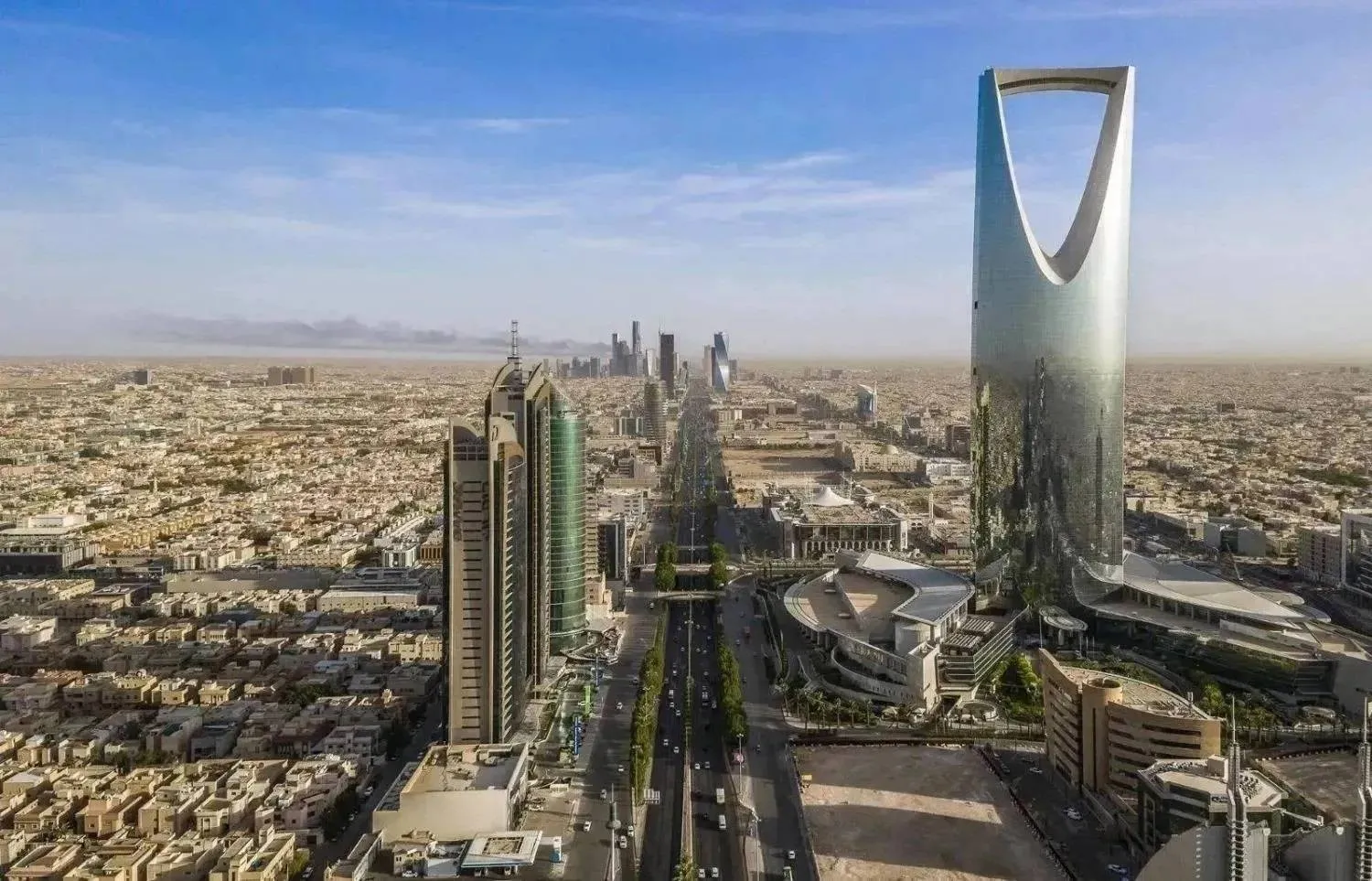
Riyadh Skyscrapers tower over a highway in the main financial hub, Riyadh, Saudi Arabia, Dec. 16, 2020. (AFP)
TT

Saudi Venture Capital Announces $30 Million Investment in IMPACT46's Fund III

Riyadh Skyscrapers tower over a highway in the main financial hub, Riyadh, Saudi Arabia, Dec. 16, 2020. (AFP)

Saudi Venture Capital (SVC) announced its investment of $30 million in Fund III managed by IMPACT46, a prominent asset management and advisory firm, which was among the first to receive authorization from the Capital Market Authority (CMA), reported the Saudi Press Agency on Monday.

Fund III will invest in Saudi growth-stage companies and up to pre-IPO stage businesses, with an allocation to seed-stage startups and promising startups from the broader Middle East region.

The subscription agreement was signed by CEO and Board Member at SVC Dr. Nabeel Koshak and Founder and CEO of IMPACT46 Abdulaziz Alomran. The signing ceremony was also attended by Chief Investment Officer Nora Alsarhan and Chief Legal Officer at SVC Haifa Bahaian as well as Managing Partner and Head of Asset Management at IMPACT46 Basmah Alsinaidi.

Dr. Koshak commented: "The investment in IMPACT46's Fund III is part of SVC's Investment in Funds Program to support the development of the venture capital (VC) ecosystem in Saudi Arabia for all sectors and stages. This investment also comes to foster the growth witnessed recently by the VC sector in Saudi Arabia, which made it at the forefront of the VC scene in MENA during the first half of 2023, in terms of the amount of VC funding."

Last July, reports revealed that Saudi Arabia was the most funded country in the MENA region in terms of the amount of Venture Capital funding in H1 2023, which witnessed a total VC deployment of $446M (SAR 1.67 billion).

"We are delighted that SVC and IMPACT46 are once again joining forces, this time with our Fund III, which aims to support the growth of the tech startup ecosystem in Saudi Arabia. This partnership demonstrates our commitment to achieving our shared vision for driving a sustainable economic impact," stated Founder and CEO of IMPACT46 Abdulaziz Alomran.

"This investment not only signifies the growing maturity of the VC activity in Saudi Arabia but also highlights the Kingdom's potential to emerge as a frontrunner in this sector."

SVC is a government investment company established in 2018 and is a subsidiary of the SME Bank, one of the developmental banks affiliated with the National Development Fund. SVC aims to stimulate and sustain financing for startups and SMEs from pre-Seed to pre-IPO by investing $2 billion through investment in funds and co-investment in startups. SVC invested in 43 funds that have invested in 700+ companies.



New US Tariffs Come in at Lower 10% Rate 

Shipping containers at the port of Oakland following the Supreme Court's ruling that Trump had exceeded his authority when he imposed tariffs, in Oakland, California, US, February 23, 2026. (Reuters)
TT

New US Tariffs Come in at Lower 10% Rate 

Shipping containers at the port of Oakland following the Supreme Court's ruling that Trump had exceeded his authority when he imposed tariffs, in Oakland, California, US, February 23, 2026. (Reuters)

The ‌United States imposed an additional tariff from Tuesday of 10% on all goods not covered by exemptions, a notice issued by US Customs and Border Protection said, the rate initially announced by President Donald Trump on Friday rather than the 15% he promised a day later.

Reacting to the Supreme Court ruling that threw out his tariffs that had been justified on grounds of an emergency, Trump initially announced a new temporary global tariff of 10%. He said on Saturday he would increase it to ‌15%.

In a ‌notice described as intended to "provide guidance regarding the ‌February ⁠20, 2026 Presidential ⁠Proclamation," CBP said that, aside from products specified as subject to exemptions, imports would "be subject to an additional ad valorem rate of 10%".

The move added to confusion surrounding US trade policy, with no explanation offered for why the lower rate had been used. The Financial Times quoted a White House official saying the ⁠increase up to 15% would come later. ‌Reuters could not immediately confirm this.

Collection ‌of the new tariffs began at midnight, while the collection of ‌the tariffs annulled by the Supreme Court was halted. They ‌had ranged from 10% to as much as 50%.

The Section 122 law allows the president to impose the new duties for up to 150 days on any and all countries to address "large and ‌serious" balance-of-payments deficits and "fundamental international payments problems."

Trump's tariff order argued that a serious balance ⁠of payments deficit ⁠existed in the form of a $1.2 trillion annual US goods trade deficit and a current account deficit of 4% of GDP and a reversal of the US primary income surplus.

On Monday Trump Warned countries against backing away from recently negotiated trade deals with the US, saying that if they did, he would hit them with much higher duties under different trade laws.

Japan said on Tuesday it had Asked the United States to ensure its treatment under a new tariff regime would be as favorable as in an existing agreement. Both the European Union and Britain have indicated they want to stick to deals already agreed.


Saudi Arabia’s 2025 Budget: Record Non-Oil Revenues, Sustained Investment in Well-Being

The Saudi capital, Riyadh (SPA) 
TT

Saudi Arabia’s 2025 Budget: Record Non-Oil Revenues, Sustained Investment in Well-Being

The Saudi capital, Riyadh (SPA) 

Saudi Arabia closed the 2025 fiscal year with a strong economic performance underscoring the momentum of its national transformation drive and the resilience of its economy.

Official results pointed to what authorities described as a strategic balance between expansionary spending and maintaining fiscal discipline.

The year marked a significant milestone in the implementation of Vision 2030, with fiscal indicators translating into major projects and enhanced public services that directly affect citizens’ quality of life.

The results also reinforced international confidence in the Kingdom’s economic stability and long-term prospects.

Total government revenues for 2025 reached approximately SAR 1.111 trillion (USD 296.5 billion). Non-oil revenues rose to a historic SAR 505.3 billion (USD 134.7 billion), underscoring the effectiveness of reforms aimed at reducing reliance on oil and building more stable and diversified revenue streams capable of sustaining growth under varying global conditions.

Government expenditure in 2025 totaled SAR 1.388 trillion (USD 370.2 billion). Spending was primarily directed toward sectors central to quality of life. Health and social development accounted for the largest allocation at SAR 278.9 billion (USD 74.4 billion), followed by education at SAR 212.5 billion (USD 56.6 billion).

The allocations highlight the leadership’s emphasis on strengthening healthcare systems, expanding social protection and improving educational outcomes, with human capital development remaining a cornerstone of long-term economic transformation.

As capital spending accelerated and major projects advanced, the 2025 budget recorded a deficit of SAR 276.6 billion (USD 73.8 billion), including SAR 94.8 billion (USD 25.3 billion) in the fourth quarter.

Authorities said the deficit was fully financed through debt issuances and capital market instruments, without drawing on government reserves. Official reserves remained stable at SAR 399.1 billion (USD 106.4 billion).

By financing the annual deficit entirely through debt markets rather than reserve withdrawals, the government demonstrated confidence in its access to capital and its ability to manage liquidity and financial obligations effectively.

Officials say the strong fiscal position sends a positive signal to domestic and international investors, reinforcing private-sector confidence and supporting continued investment momentum.


Four Years into War, Russia’s Energy Revenues Drop but Oil Keeps Flowing 

Flags fly over graves, including those of Russian soldiers killed during the conflict against Ukraine, on the eve of the fourth anniversary of the start of Russia’s military campaign, at Lemeshovo cemetery in the Moscow region, Russia, February 23, 2026. (Reuters)
TT

Four Years into War, Russia’s Energy Revenues Drop but Oil Keeps Flowing 

Flags fly over graves, including those of Russian soldiers killed during the conflict against Ukraine, on the eve of the fourth anniversary of the start of Russia’s military campaign, at Lemeshovo cemetery in the Moscow region, Russia, February 23, 2026. (Reuters)

The money ‌Russia earned from exporting oil and gas dropped over the last 12 months, even as the country's oil exports increased in volume, according to data released on Tuesday, the fourth anniversary of Moscow's full-scale invasion of Ukraine.

Russia relies heavily on energy revenues to support its war in Ukraine - a link that has led Western countries to impose increasingly strict sanctions on Russian fuel, seeking to weaken the country's military effort.

An analysis published by the non-profit Centre for Research on Energy ‌and Clean Air ‌found that Russia's revenues from oil, gas, ‌coal ⁠and refined product ⁠exports totaled 193 billion euros in the 12-month period ended February 24, 2026, down by 27% from the comparable period pre-invasion.

While Russia's gas exports have collapsed since 2022, sanctions have so far not dented Russia's oil export volumes - but, rather, forced Moscow to sell oil at lower prices.

Russia's ⁠revenues from crude exports in the last 12 ‌months decreased by 18%, year-on-year, ‌CREA said. At the same time, crude export volumes remained 6% above ‌pre-invasion levels, at 215 million tons.

In response to Western ‌sanctions, Moscow has redirected most of its seaborne crude to China, India and Türkiye, often relying on a “shadow fleet” of ageing, uninsured tankers to circumvent Western sanctions.

But tougher restrictions could hit Russian fuel exports harder ‌this year.

US President Donald Trump has made diversification away from Russian crude a condition of ⁠a trade ⁠deal with India.

The European Union is discussing a sweeping ban on any business that supports Russia's seaborne crude exports, going far beyond previous sanctions. The bloc failed to pass those sanctions on Monday, as Hungary vetoed them owing to a dispute over a damaged Ukrainian oil pipeline.

Russia exports over a third of its oil in Western tankers with the help of Western shipping services. The planned EU ban would end that practice, which mostly supplies India and China, and render obsolete a price cap on Russian oil purchases that G7 countries have tried to enforce.