UN Tourism and WTTC Laud Saudi Arabia for Receiving over 100 Million Tourists in 2023

The Kingdom has achieved this milestone seven years ahead of the initial goal, the Saudi Ministry of Tourism said
TT

UN Tourism and WTTC Laud Saudi Arabia for Receiving over 100 Million Tourists in 2023

The Kingdom has achieved this milestone seven years ahead of the initial goal, the Saudi Ministry of Tourism said

Saudi Arabia has received international recognition and praise from UN Tourism and the World Travel & Tourism Council for the "remarkable achievement" of receiving over 100 million tourists in 2023, according to a statement issued today by the Saudi Ministry of Tourism.
This accomplishment, the statement said, significantly surpassed the target set for 2030, positioning Saudi Arabia as "an emerging global tourism powerhouse.”
According to the ministry, the Kingdom has achieved this milestone seven years ahead of the initial goal, according to the latest data. Motivated by this success, the Kingdom has now set a new ambitious target of welcoming 150 million tourists by 2030.
Tourism has proved to be a significant contributor to the nation’s economy, with domestic and international tourists spending over SAR250 billion in 2023. This expenditure represents over 4% of GDP and 7% of the non-oil GDP, and reflects the crucial role played by tourism in diversifying Saudi Arabia's economy.
Tourism Minister Ahmed Al Khateeb said that this announcement demonstrates the scale of the Kingdom's transformation since the National Tourism Strategy was launched five years ago.
"Tourism is a key pillar in the nation’s economic transformation under Vision 2030, creating jobs and revenue for the Kingdom," he said. "We thank both UN Tourism and WTTC as valued partners in our journey for their shared commitment to a sustainable and prosperous tourism sector.”
Al Khateeb said the tourism sector operates in line with the national tourism strategy, developing diverse tourist destinations. The aim, he said, is to enrich the tourists’ experience, diversify options for both local and international visitors, and improve hospitality facilities along with other services provided.
"We are committed to aligning with top-tier international experiences and practices. This approach contributes to shaping a prosperous future for our tourism industry, improving the quality of life, and bolstering the Kingdom's position on the global tourism map," said the minister.
According to the statement, the tourism sector in the Kingdom has made significant leaps, with the total number of tourists, both domestic and international, reaching 106.2 million in 2023. This represents a remarkable 56% increase over 2019 and a substantial 12% surge over 2022.
International tourists numbered 27.4 million, a substantial 56% increase over 2019 and an impressive 65% rise compared to 2022.



Four Years into War, Russia’s Energy Revenues Drop but Oil Keeps Flowing 

Flags fly over graves, including those of Russian soldiers killed during the conflict against Ukraine, on the eve of the fourth anniversary of the start of Russia’s military campaign, at Lemeshovo cemetery in the Moscow region, Russia, February 23, 2026. (Reuters)
TT

Four Years into War, Russia’s Energy Revenues Drop but Oil Keeps Flowing 

Flags fly over graves, including those of Russian soldiers killed during the conflict against Ukraine, on the eve of the fourth anniversary of the start of Russia’s military campaign, at Lemeshovo cemetery in the Moscow region, Russia, February 23, 2026. (Reuters)

The money ‌Russia earned from exporting oil and gas dropped over the last 12 months, even as the country's oil exports increased in volume, according to data released on Tuesday, the fourth anniversary of Moscow's full-scale invasion of Ukraine.

Russia relies heavily on energy revenues to support its war in Ukraine - a link that has led Western countries to impose increasingly strict sanctions on Russian fuel, seeking to weaken the country's military effort.

An analysis published by the non-profit Centre for Research on Energy ‌and Clean Air ‌found that Russia's revenues from oil, gas, ‌coal ⁠and refined product ⁠exports totaled 193 billion euros in the 12-month period ended February 24, 2026, down by 27% from the comparable period pre-invasion.

While Russia's gas exports have collapsed since 2022, sanctions have so far not dented Russia's oil export volumes - but, rather, forced Moscow to sell oil at lower prices.

Russia's ⁠revenues from crude exports in the last 12 ‌months decreased by 18%, year-on-year, ‌CREA said. At the same time, crude export volumes remained 6% above ‌pre-invasion levels, at 215 million tons.

In response to Western ‌sanctions, Moscow has redirected most of its seaborne crude to China, India and Türkiye, often relying on a “shadow fleet” of ageing, uninsured tankers to circumvent Western sanctions.

But tougher restrictions could hit Russian fuel exports harder ‌this year.

US President Donald Trump has made diversification away from Russian crude a condition of ⁠a trade ⁠deal with India.

The European Union is discussing a sweeping ban on any business that supports Russia's seaborne crude exports, going far beyond previous sanctions. The bloc failed to pass those sanctions on Monday, as Hungary vetoed them owing to a dispute over a damaged Ukrainian oil pipeline.

Russia exports over a third of its oil in Western tankers with the help of Western shipping services. The planned EU ban would end that practice, which mostly supplies India and China, and render obsolete a price cap on Russian oil purchases that G7 countries have tried to enforce.


Oil Rises to Near Seven-month Highs on US-Iran Tensions

FILE PHOTO: A view of West Qurna oilfield is seen in Basra, southeast of Baghdad, March 29, 2014. REUTERS/Essam Al-Sudani/File Photo
TT

Oil Rises to Near Seven-month Highs on US-Iran Tensions

FILE PHOTO: A view of West Qurna oilfield is seen in Basra, southeast of Baghdad, March 29, 2014. REUTERS/Essam Al-Sudani/File Photo

Oil prices rose on Tuesday, nearing seven-month highs, with traders assessing risks to supply from any military escalation as another round of US-Iran nuclear talks loomed.

Brent crude futures rose 48 cents, or 0.7%, to $71.97 a barrel by 0658 GMT, while US crude futures climbed 45 cents, or 0.7%, to $66.76 a barrel.

Brent is trading at its highest since July 31, while WTI is at its firmest since August 1.

"At this stage, geopolitics is clearly doing most of ‌the heavy lifting for ‌oil prices, with the current firmness largely driven by ‌anticipation ⁠rather than actual ⁠supply loss," said Phillip Nova senior market analyst Priyanka Sachdeva.

"The risk of possible military escalation in the Middle East is gaining traction, and thus, traders appear to hedge against worst-case scenarios."

Iran and the US will hold a third round of nuclear talks on Thursday in Geneva, Oman's Foreign Minister Badr Albusaidi said on Sunday.

The United States wants Iran to give up its nuclear program, but ⁠Iran has adamantly refused, and denied it is trying to ‌develop an atomic weapon.

The State Department is ‌pulling out non-essential government personnel and their families from the US embassy in ‌Beirut, a senior State Department official said on Monday, amid growing concerns about ‌the risk of a military conflict with Iran.

US President Donald Trump said in a social media post on Monday that it will be a "very bad day" for Iran if it does not make a deal.

"In the near-term, geopolitical factors related to ‌the US-Iran conflict are likely to be the primary driver for oil prices," said OANDA senior market analyst Kelvin ⁠Wong.

"For now, WTI ⁠crude oil is evolving in a short-term bullish dynamic, holding above its 20-day moving average, acting as a key short-term support at $63.90/barrel."

On the trade policy front, Trump on Monday warned countries against backing away from recently negotiated trade deals with the US after the Supreme Court struck down his emergency tariffs, saying that he would hit them with much higher duties under different trade laws.

"US President Donald Trump created uncertainty for global growth and fuel demand with a new round of tariff hikes," UOB Bank analysts said in a client note.

Trump said on Saturday he would raise a temporary tariff to 15% from 10% on US imports from all countries, the maximum level allowed under the law.


FedEx Sues US for Refund on Trump's Emergency Tariffs

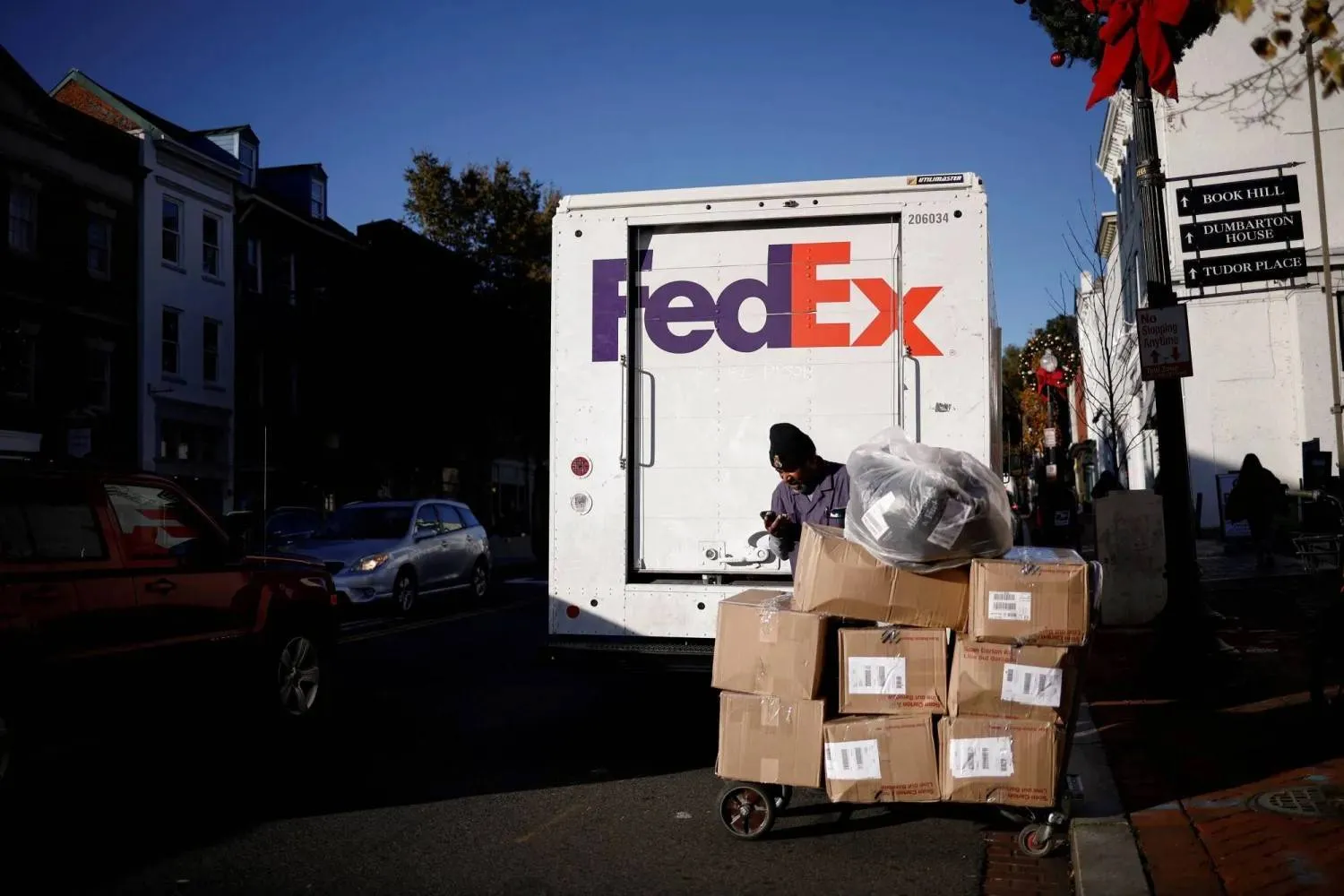
A driver of FedEx stands with packages near a delivery truck during Black Friday preparations in the Georgetown neighborhood of Washington, US, November 26, 2024. REUTERS/Benoit Tessier/File Photo 
TT

FedEx Sues US for Refund on Trump's Emergency Tariffs

A driver of FedEx stands with packages near a delivery truck during Black Friday preparations in the Georgetown neighborhood of Washington, US, November 26, 2024. REUTERS/Benoit Tessier/File Photo 

Global transportation company FedEx on Monday filed a lawsuit in the US Court of International Trade seeking a refund for President Donald Trump's emergency tariffs, one of the highest profile moves to recover funds since the US Supreme Court last week deemed the tariffs illegal.

A flood of lawsuits to recover billions of dollars is expected by trade attorneys after the blockbuster ruling. The recovery process still has to be worked out by a lower court, though, complicating the matter, according to Reuters.

More than $175 billion in US tariff collections are subject to potential refunds after the US Supreme Court on Friday ruled 6-3 that Trump overstepped his authority by using the International Emergency Economic Powers Act, a sanctions law, to impose tariffs on imported goods, Penn-Wharton Budget Model economists said.

“Plaintiffs seek for themselves a full refund from Defendants of all IEEPA duties Plaintiffs have paid to the United States,” FedEx said in the lawsuit, referring to tariffs Trump imposed.

FedEx and its logistics arm served as importer of record on goods subject to IEEPA tariffs. The Memphis-based company did not provide the dollar value of the refund it is seeking.

FedEx in its lawsuit named US Customs and Border Protection, the agency's commissioner Rodney Scott and the United States of America as defendants. CBP and the White House did not immediately respond to requests for comment.

Washington, DC-based Crowell & Moring is representing FedEx in the lawsuit and referred Reuters to the company, which did not immediately comment.