


Saudi Real Estate Activities Record Deals Worth $170Bn Since Beginning of 2024

The Al-Qasr project, one of the projects of Dar Al Arkan Real Estate Development Company in Riyadh (Reuters)
TT

Saudi Real Estate Activities Record Deals Worth $170Bn Since Beginning of 2024

The Al-Qasr project, one of the projects of Dar Al Arkan Real Estate Development Company in Riyadh (Reuters)

Real estate activities in Saudi Arabia continued to grow since the beginning of 2024, recording more than 280,000 transactions worth more than $170 billion (SAR 636 billion), and extending over a total area of more than two billion square meters.

The sector’s contribution to the Saudi GDP reached 5.9 percent in the fourth quarter of 2023.

During the last week ending June 22, the real estate stock exchange witnessed 518 deals, with a transaction value exceeding SAR 331.7 million, and a trading area of about 900,000 square meters. The highest recorded price per square meter reached about SAR 15,000, while the average price was SAR 371 riyals.

Al-Wisam area in Jeddah topped the list of the most traded neighborhoods in Saudi Arabia on the real estate stock exchange during a week, with a value of transactions exceeding SAR 89.3 million, followed by the Arid district in Riyadh, with a value reached SAR 6.35 million.

The list included Al-Rimal neighborhood in Riyadh, with a value of SAR 5.59 million, followed by Jawharat Al-Arous in Jeddah, with a value of SAR 3.98 million, and the northwestern Al-Bukayriyah district, with transactions reaching SAR 700,000.

In remarks to Asharq Al-Awsat, real estate expert Eng. Ahmed Al-Faqih said the sector is seen as the safest option in light of the changes and fluctuations of the stock and gold markets and their impact on rising interest rates.

He added that the real estate market has shown stable and steady growth in all its sectors, thanks to the investors’ confidence in the government’s policies and the injection of large capital by launching huge real estate projects such as Qiddiya, NEOM, the Red Sea, and others.

In addition, the market has witnessed in recent years a package of legislation and regulations that have increased confidence and further attracted capital and real estate investments, he underlined.

He added that since the third quarter of 2023, the Saudi market has seen a remarkable increase in the number and value of real estate deals compared to the previous quarter, which indicates a change in the general mood of investors and their shift from a state of anticipation to seizing real estate opportunities.

Another real estate expert, Saqr Al-Zahrani, told Asharq Al-Awsat that the performance of the Saudi market reflected the remarkable growth and sustainability of demand for real estate, adding that the numbers and sizes of transactions registered through the real estate stock exchange highlighted the confidence of investors, thanks to government efforts and the economic reforms implemented within Vision 2030.

Al-Zahrani stressed that the real estate sector represents one of the basic pillars of the Saudi economy and contributes significantly to supporting the gross domestic product through huge investments and large development projects.

He also noted that government initiatives to regulate and promote investments in the real estate sector have revitalized the economy and created broad job opportunities for citizens and a variety of new skills in the real estate sector, thus reducing unemployment rates and achieving sustainable development.

He identified several reasons that supported the continued growth and sustainability of the Saudi real estate sector, including economic reforms and policies for investment, in addition to the government’s efforts to improve the business environment by facilitating procedures.

Al-Zahrani pointed to the mega projects taking place in the Kingdom and their role in attracting investments, as well as the increasing demand for housing and associated services as a result of urbanization.

In addition, political and economic stability played a vital role in enhancing investor confidence and encouraging long-term investment in real estate, he stated.


Saudi Arabia, Switzerland Sign Agreement on Reciprocal Protection of Investments

The agreement aims to strengthen and stabilize the investment environment, protect investors’ rights, and support the flow of mutual investments between the two countries. SPA
TT

Saudi Arabia, Switzerland Sign Agreement on Reciprocal Protection of Investments

The agreement aims to strengthen and stabilize the investment environment, protect investors’ rights, and support the flow of mutual investments between the two countries. SPA

Saudi Minister of Foreign Affairs Prince Faisal bin Farhan bin Abdullah and Minister of Investment Fahad Al-Saif have participated in the Saudi-Swiss Investment Roundtable Meeting in Jeddah, which was followed by the signing of an investment agreement between the two countries.

The meeting took place in the presence of Swiss President Guy Parmelin, with the participation of State Secretary for Economic Affairs Helene Budliger Artieda, along with a large number of officials and business leaders from both sides.

During the meeting, the conferees reviewed joint investment opportunities, discussed ways to strengthen economic cooperation between the two countries, and explored the development of partnerships in priority sectors in a manner that supports economic growth and enhances relations.

The meeting was held on the sidelines of the Swiss President’s official visit to the Kingdom, as the two countries mark 70 years of diplomatic relations that have, from the outset, helped lay the foundations of cooperation and build a partnership based on mutual respect and the development of shared interests between the two states.

After the meeting, an agreement was signed between the Saudi government and the Swiss Federal Council on the promotion and reciprocal protection of investments.

It was signed on the Saudi side by Al-Saif, and on the Swiss side by Parmelin.

The agreement aims to strengthen and stabilize the investment environment, protect investors’ rights, and support the flow of mutual investments between the two countries.

The meeting was attended by Saudi Ambassador to Switzerland and the Principality of Liechtenstein Abdulrahman Aldawood.


US Stocks Dip on Mixed Earnings as Markets Monitor Iran

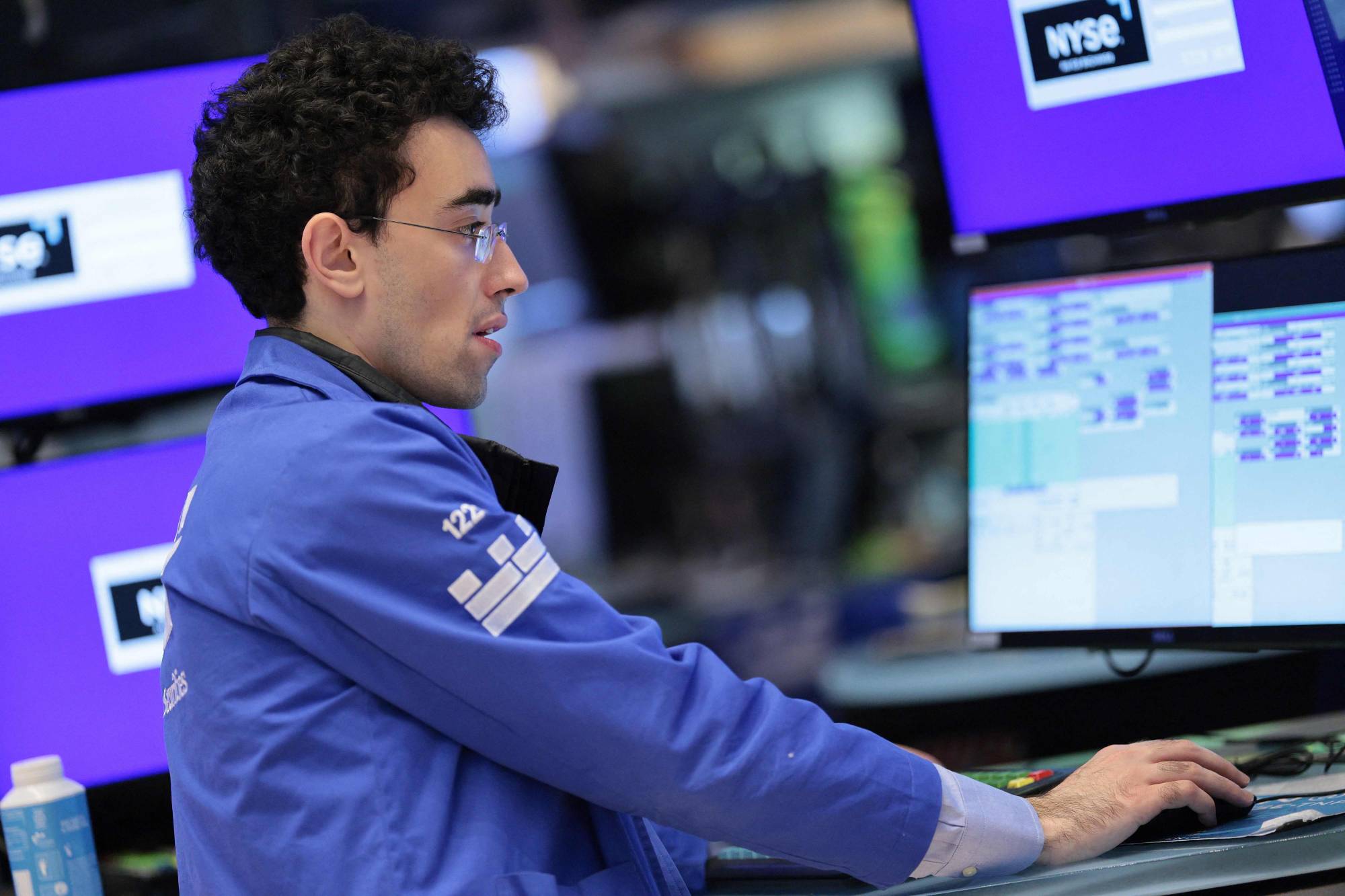
A trader works on the floor of the New York Stock Exchange (NYSE) at the opening bell in New York on March 24, 2026.  (Photo by ANGELA WEISS / AFP)
A trader works on the floor of the New York Stock Exchange (NYSE) at the opening bell in New York on March 24, 2026. (Photo by ANGELA WEISS / AFP)
TT

US Stocks Dip on Mixed Earnings as Markets Monitor Iran

A trader works on the floor of the New York Stock Exchange (NYSE) at the opening bell in New York on March 24, 2026.  (Photo by ANGELA WEISS / AFP)
A trader works on the floor of the New York Stock Exchange (NYSE) at the opening bell in New York on March 24, 2026. (Photo by ANGELA WEISS / AFP)

Wall Street stocks retreated from records early Thursday as markets digested a trove of mixed earnings reports and monitored the latest dynamics between the United States and Iran.

Analysts cited profit-taking after both the S&P 500 and Nasdaq shrugged off a jump in oil prices to finish at records on Wednesday.

About 10 minutes into trading, the Dow Jones Industrial Average was down 0.4 percent at 49,311.39, AFP reported.

The broad-based S&P 500 dipped 0.2 percent to 7,126.19, while the tech-rich Nasdaq Composite Index declined 0.3 percent to 24,588.07.

David Morrison, senior market analyst at FCA, called Thursday's early trading action "a mild bout of profit-taking triggered by some worrying reports of hostile action between the US and Iran," according to a note.

The US Defense Department said its forces boarded a vessel in the Indian Ocean that was transporting oil from Iran, while President Donald Trump announced on social media that he ordered the Navy to "shoot and kill" boats placing mines in the Strait of Hormuz.

Iran vowed it would keep the strait closed to all but a trickle of approved vessels for as long as the United States blockaded its ports.

Among companies reporting results, Tesla fell 1.7 percent and Lockheed Martin dropped 3.7 percent, while American Airlines jumped 4.9 percent.


What Does the Inclusion of Saudi Bonds in the J.P. Morgan Index Mean?

Saudi woman walks at the Saudi stock market in Riyadh - Reuters
TT

What Does the Inclusion of Saudi Bonds in the J.P. Morgan Index Mean?

Saudi woman walks at the Saudi stock market in Riyadh - Reuters

Saudi Arabia’s debt market is set for a strategic shift in early 2027, following J.P. Morgan’s announcement that local-currency bonds will be included in its global emerging markets bond index. The move represents a vote of confidence in the Kingdom’s structural reforms and is expected to open the door to substantial capital inflows that will help finance major economic transformation projects.

In a note, J.P. Morgan said the move follows a series of reforms to improve foreign investor access and enhance local market capabilities.

The bank added that Saudi sukuk, Shariah-compliant debt instruments that function similarly to bonds, with a remaining maturity of up to 15 years, will be eligible for inclusion in the Government Bond Index-Emerging Markets (GBI-EM), the most widely tracked benchmark of its kind, with $233 billion in assets tracking it.

J.P. Morgan said eight sukuk issues would be eligible for inclusion, with a total value of $69 billion.

The Kingdom’s inclusion in the index is expected to boost liquidity and demand for sovereign debt, contributing to lower borrowing costs.

In September, J.P. Morgan had placed Saudi Arabia on “Positive Index Watch,” paving the way for its eventual inclusion in the GBI-EM.

Commenting on the decision, Saudi Finance Minister Mohammed Al-Jadaan told Bloomberg that the move reflects continued confidence in the Kingdom’s economic transformation trajectory. He said the inclusion marks a new milestone in Saudi Arabia’s integration into global financial markets, adding that its immediate impact will be seen in broadening and diversifying the investor base and supporting long-term capital inflows into the domestic debt market, thereby strengthening the resilience and stability of the national economy.

The Significance of the Index

The importance of J.P. Morgan’s index lies in its role as a benchmark guiding major global fund allocations, particularly passive funds that track indices automatically. With an expected weighting of around 2.52 percent, Saudi bonds will become a core component of international investor portfolios, increasing government bond liquidity and reducing borrowing costs over the long term, a critical factor for the Kingdom’s economy.

Passive funds play a key role in ensuring steady inflows. Trillions of dollars globally are managed through such funds. Once Saudi Arabia is included in the index, these funds will purchase Saudi bonds to remain aligned with it. Unlike active investors, they do not rapidly buy or sell based on daily news or market sentiment, but continue to hold bonds as long as they remain in the index, providing significant stability to the Saudi debt market. Their participation also ensures a constant base of large-scale buyers, facilitating bond trading at any time.

Reforms That Paved the Way

This inclusion is the result of a series of regulatory reforms highlighted by the bank in its note. Saudi Arabia has improved international investor access by linking to the global Euroclear system, expanding its network of primary dealers to include international banks, and facilitating cross-border settlement and trading. These measures have enhanced legal certainty and transparency, making the Saudi debt market an attractive and secure destination for foreign capital.

Financial Stability Amid Regional Challenges

Beyond its economic dimensions, the move carries strategic significance amid ongoing geopolitical tensions in the region. Increased inflows into local bonds are expected to strengthen the government’s ability to manage any economic fallout from regional instability. It underscores the resilience and attractiveness of the Saudi economy, demonstrating its capacity to attract quality investment and secure the financing needed for its development plans regardless of external challenges.
