


Saudi Arabia Takes Part in Conference of Ministers of Culture in Islamic World in Qatar

Saudi Assistant Minister of Culture Rakan bin Ibrahim Al-Touq speaks at the event. (SPA)
TT

Saudi Arabia Takes Part in Conference of Ministers of Culture in Islamic World in Qatar

Saudi Assistant Minister of Culture Rakan bin Ibrahim Al-Touq speaks at the event. (SPA)

Saudi Assistant Minister of Culture Rakan bin Ibrahim Al-Touq participated in the 12th Conference of Ministers of Culture in the Islamic World, which was held by the Islamic World Educational, Scientific and Cultural Organization (ICESCO) in Qatar between September 25 and 26.

The event, organized by the Qatari Ministry of Culture under the theme "Renewing Cultural Work in the Islamic World", brought together ministers of culture, members of the organization from Islamic countries, and representatives of regional and international organizations concerned with cultural affairs.

Al-Touq, who was attending on behalf of Minister of Culture Prince Badr bin Abdullah bin Farhan Al Saud, said Saudi Arabia has mobilized all its potential to boost the Islamic cultural sector and maintain its place on the world's cultural map.

It has sought to deepen the debate on the main characteristics of the Islamic world, which are not limited to its culture and enlightening values, its history and civilization, and its contribution to the heritage of humanity, but include academic and economic features, he remarked.

He stressed that the initiatives and programs announced by Saudi Arabia emphasize the keenness of the government of Custodian of the Two Holy Mosques King Salman bin Abdulaziz and Prince Mohammed bin Salman bin Abdulaziz, Crown Prince and Prime Minister, to lend support to all efforts that serve the Islamic world and help preserve its culture.

Speaking at the conference, Al-Touq revealed the launch of the Culture Index in the Islamic World project, in cooperation with ICESCO, which will activate a memorandum of understanding signed by the Ministry of Culture and ICESCO on the sidelines of the 23rd session of the Conference of Arab Culture Ministers.

He said through the project, the Ministry of Culture seeks to monitor the transformation and evolution of the cultural scene and document its achievements. It will enrich it through cultural indicators: culture for economic development, culture for environment, climate and resilience, culture for social development, and culture for openness and diversity.

Al-Touq also unveiled the Paths of Hajj program that will focus on building files and databases to identify and classify mosques, and heritage and historical sites on Hajj routes, help efforts aimed at preserving and protecting them, and support all sectors associated with the performance of the holy pilgrimage.

Prince Mohammed bin Salman Project Restores Historical Al-Saidan Mosque in Al-Jouf Region

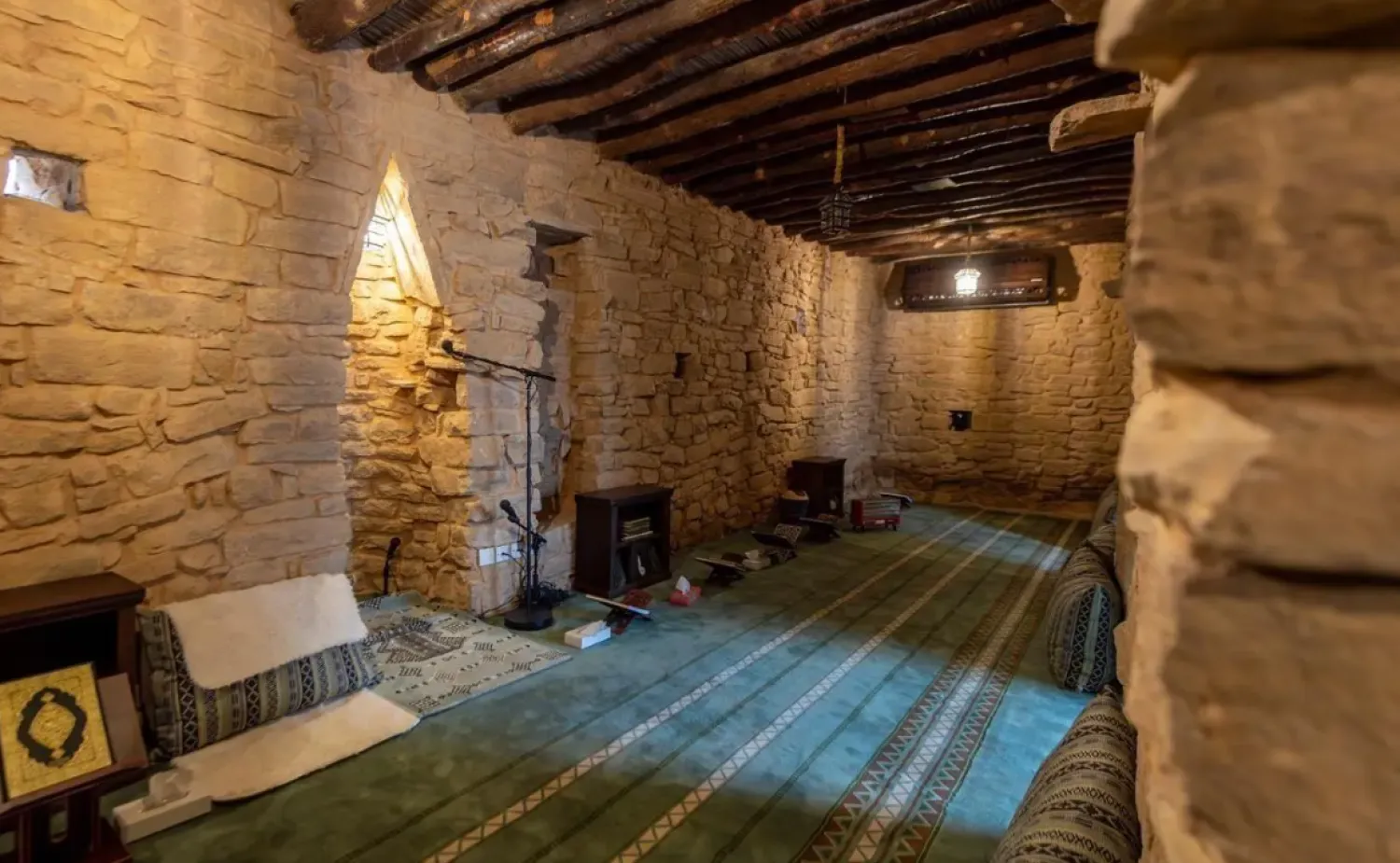
The renovation uses traditional Al-Jouf mud-brick techniques and natural materials - SPA
TT

Prince Mohammed bin Salman Project Restores Historical Al-Saidan Mosque in Al-Jouf Region

The renovation uses traditional Al-Jouf mud-brick techniques and natural materials - SPA

The Prince Mohammed bin Salman Project for the Development of Historical Mosques has commenced the restoration of Al-Saidan Mosque in Dumat Al-Jandal, Al-Jouf Region. Dating back to 620 AH (1223 CE), it is the city's second oldest mosque and formerly served as a judicial court and a prominent educational center for Quranic studies.

As part of the project's second phase, the mosque's area will increase from 179 to 202.39 square meters, restoring its capacity to 68 worshippers after prayers were previously suspended, SPA reported.

The renovation uses traditional Al-Jouf mud-brick techniques and natural materials to preserve the site's authentic desert architecture.

Notable features being preserved include a historical well and an ancient underground stone water channel used for wudu.

By rehabilitating this landmark, the project fulfills its strategic goals of restoring architectural authenticity and highlighting the Kingdom’s civilizational heritage in line with Vision 2030.


Rome’s Colosseum Gets a Fresh Look That Recreates the Footprints of Long-Gone Columns

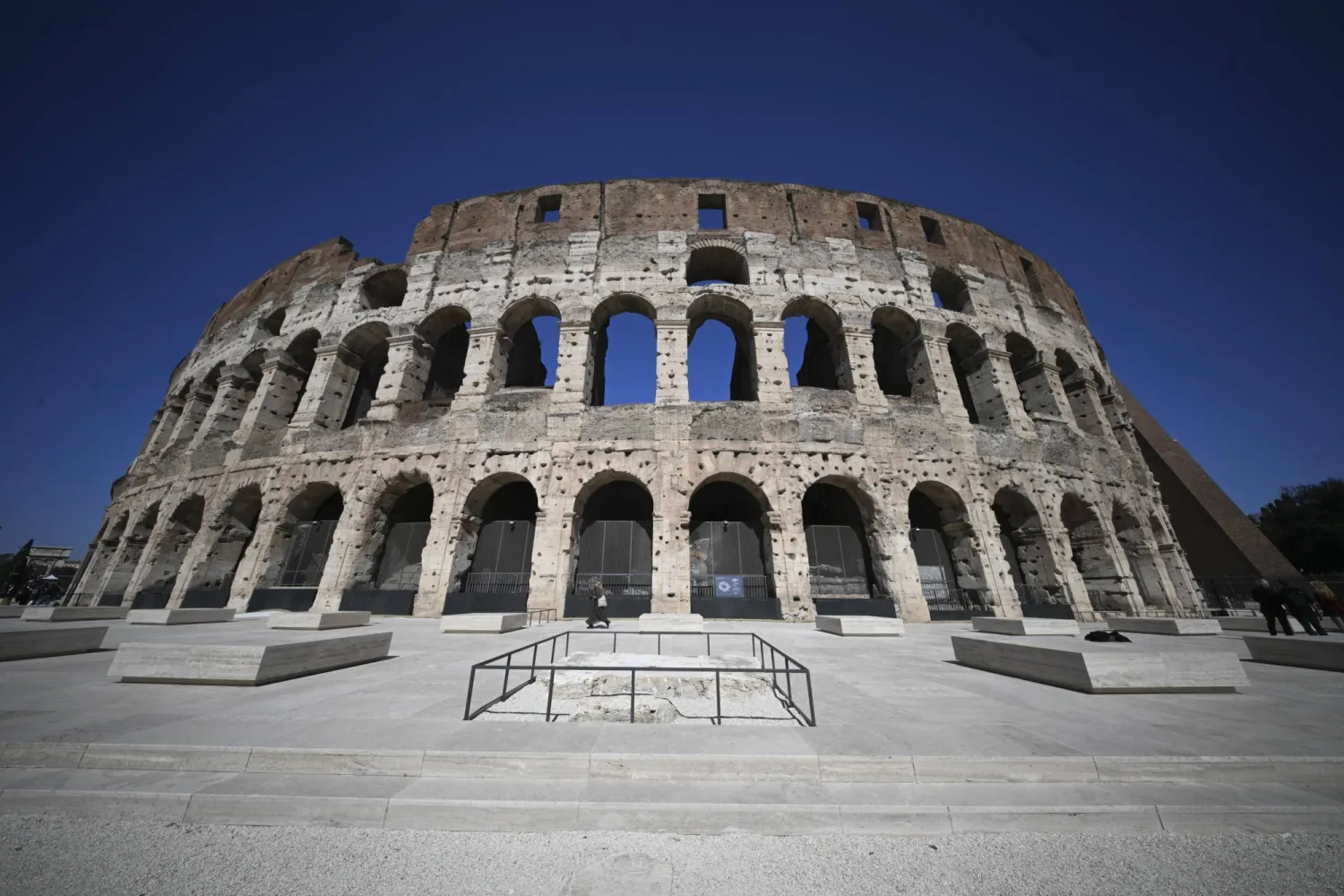
The inauguration of the new layout and archaeological area of the southern ambulacra of the Colosseum in Rome, Italy, 17 March 2026. (EPA)
TT

Rome’s Colosseum Gets a Fresh Look That Recreates the Footprints of Long-Gone Columns

The inauguration of the new layout and archaeological area of the southern ambulacra of the Colosseum in Rome, Italy, 17 March 2026. (EPA)

The Colosseum has a bright new look following a restoration using the same travertine marble of ancient Rome to recreate parts of columns from 2,000 years ago.

Thousands of Romans once flocked to this arena to watch gladiators battle each other and wild animals. The structure still captures the public's imagination; it is Italy’s most popular tourist destination, with 9 million visitors in 2025 alone.

The project focused on a semicircular piazza outside the arena, where Roman spectators crowded under two arcades comprised of marble columns stretching up to 50 meters (164 feet) high. People stood in these arcades as they waited to pass through the entrances and take their seats.

Those arches are long gone, collapsing over the centuries from earthquakes and unstable ground. But now, tourists will be able to sit on large travertine marble slabs where their columns once stood and read reproductions of the Roman numerals that indicated seat sections.

“These blocks of travertine marble are placed, located exactly where the pillars, the original pillars were based,” said Italian architect Stefano Boeri, who designed the piazza. “The idea we had was to give back to the public the perception of the proportion of the arcades and the proportion of the vaults of the arches that were used to enter in the center of the Colosseum.”

Over time, the outside area became filled with detritus, including pieces of ruins, and overgrown with weeds.

Restorers began by digging a meter (yard) to where the travertine paving stones once covered the entrance area. They discovered coins, statues, animal bones and a gold ring. Deeper down is the secret underground passageway where Emperor Commodus used to enter the Colosseum while avoiding the hoi-polloi, and which was opened to the public last year.

Restorers sourced the new slabs of travertine from the same quarries where the ancient Romans retrieved theirs — and that today are used build a new generation of religious buildings, banks, museums, government buildings and private homes.

“From the beginning we understood only one thing and that was that we wanted to be involved,” Fabrizio Mariotti, head of the Mariotti Carlo stonecutting firm that has been carving travertine to order for four generations in Tivoli, said Tuesday while sitting on a slab of the stone.

“For a family like ours that has been working with travertine for four generations, working at the Colosseum, which is the symbol not only of Rome but also of this material, is so important.”

Earlier this year, the city of Rome opened two new subway stations, one deep beneath the Colosseum completing a multi-billion euro metro project. The restoration of the Colosseum’s perimeter was done using compensatory funds from the metro, project officials said.


Northern Arabia Archaeological Site Reveals 13,500-Year-Old Human Settlement

The study documented human settlement at the site dating back about 13,500 years. (Saudi Ministry of Culture)
TT

Northern Arabia Archaeological Site Reveals 13,500-Year-Old Human Settlement

The study documented human settlement at the site dating back about 13,500 years. (Saudi Ministry of Culture)

The Saudi Heritage Commission, one of 11 sector-specific commissions under the Ministry of Culture, announced findings documenting archaeological evidence of early human settlement in northern Arabia. The scientific study presenting the evidence has been published in the journal Nature.

The findings, presented in the scientific study titled “The Natufian Epipalaeolithic and Pre-Pottery Neolithic in the desert of northern Arabia,” are based on advanced excavation and scientific analysis conducted at the Sahout site, an archaeological site located on the southern edge of the Nefud Desert between the Arnan and Al-Misma mountains.

The site occupies a strategic geographic position linking internal desert environments with settlement networks connected to the Levant, making it a key location for understanding early human movement and dispersal in the region during the late Ice Age and the beginning of the Holocene.

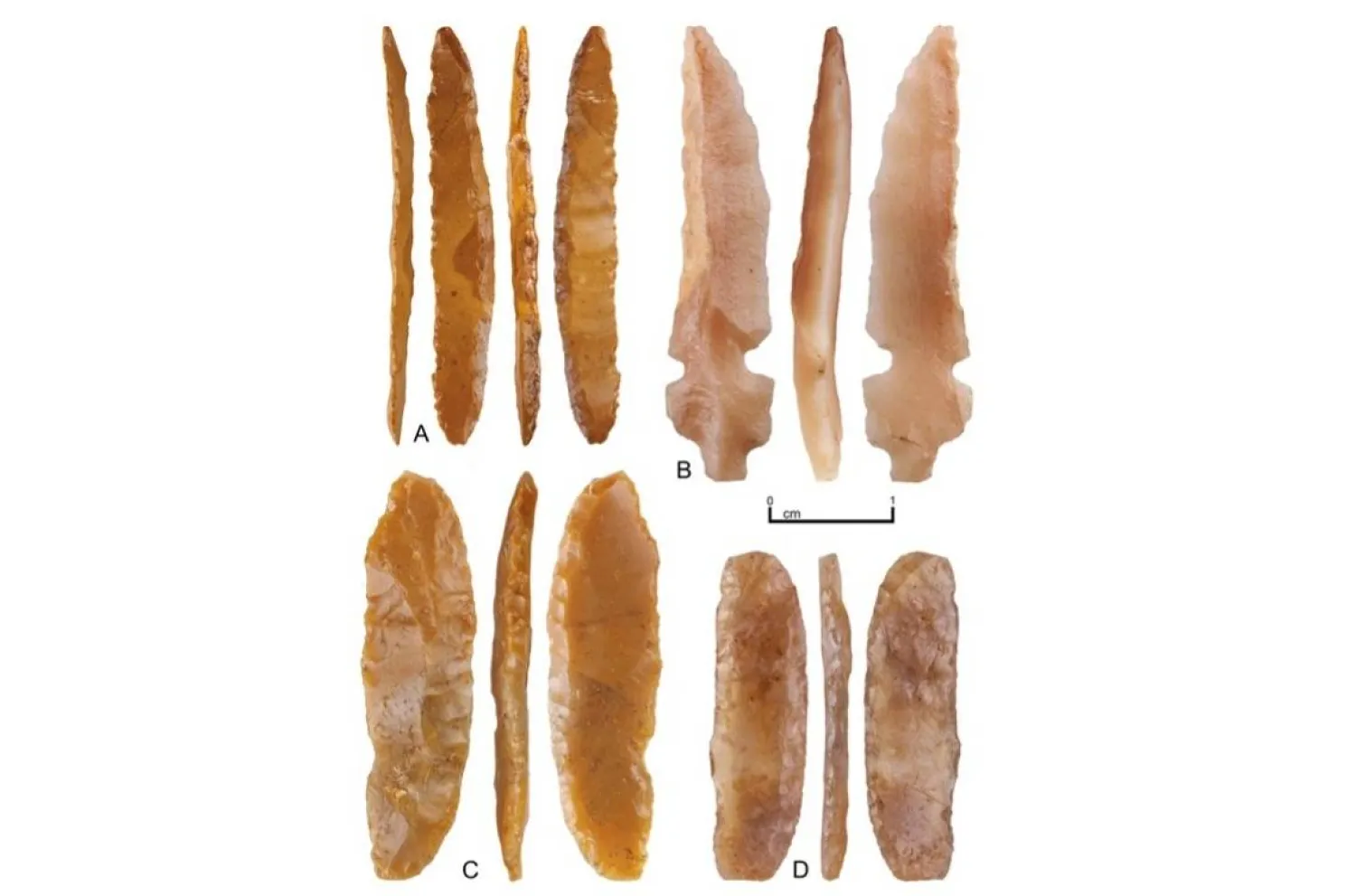
The study documented human settlement at the site dating back about 13,500 years. Stratified excavations uncovered distinctive stone tools, most notably Helwan bladelets - small, finely crafted stone implements used as arrowheads or as components of hunting tools.

These artifacts are important archaeological indicators associated with the Natufian culture. Their discovery at the Sahout site confirms the presence of human communities possessing advanced technical skills and the ability to adapt to desert environments. It also reflects the connection of the Arabian Peninsula to broader cultural networks extending to the Fertile Crescent during this early period.

The discovery also revealed a later settlement phase dating between approximately 10,300 and 8,700 years ago, characterized by greater settlement density and technological development in stone industries. Archaeologists discovered Abu Salem points, a type of finely crafted arrowhead used in hunting.

These findings provide important evidence of advanced human societies with sophisticated technological skills, reflecting a high level of organization and environmental knowledge during the Pre-Pottery Neolithic period and confirming the presence of developed human settlement in northern Arabia during that time.

Geochemical analyses of the obsidian used to manufacture the stone tools showed that the material originated from Jabal Al-Abyad in the Khaybar region, about 190 km south of the site. This indicates the existence of extensive communication and exchange networks, demonstrating that early communities were capable of traveling long distances to obtain resources from distant areas and highlighting advanced levels of cultural and technological interaction among populations in the region.

The study documented a direct link between human settlement and rock art at the site. Carving tools were found within dated archaeological layers alongside artistic elements depicting life-size camels and human figures.

These discoveries provide a precise chronological framework for the development of artistic expression in northern Arabia, confirming that artistic production was an integral part of the cultural life of the communities inhabiting the area during these early periods.

The findings reaffirm the Kingdom’s commitment to cultural preservation, historical understanding, and knowledge development.