Saudi Arabia: Farasan Islands Host 20th Hareed Festival in Celebration of Culture

This vibrant annual event celebrates the arrival of parrotfish in the islands' shallow waters. SPA
TT

Saudi Arabia: Farasan Islands Host 20th Hareed Festival in Celebration of Culture

This vibrant annual event celebrates the arrival of parrotfish in the islands' shallow waters. SPA

The Farasan Islands, a string of coral islands nestled 40 kilometers off the coast of Jizan in the Red Sea, are abuzz with activity as they host the 20th edition of the Hareed (parrotfish) Festival, the Saudi Press Agency reported Sunday.
This vibrant annual event, held in late April and early May, celebrates the arrival of parrotfish in the islands' shallow waters, SPA said.
For generations, the Farasan people have cherished this natural phenomenon, transforming it into a social gathering that goes beyond the fish. The festival showcases the islands' unique customs, traditions, folk games, and handicrafts. It also throws a spotlight on Farasan's remarkable tourism potential and historical sites.
Festival visitors may have a glimpse at the islands' rich cultural heritage. One of the highlights is "Al-Dana", a captivating form of vocal art that is one of Farasan's oldest folk traditions. It is a poignant expression of longing that arose from the hardships endured by sailors on extended pearl-diving expeditions. The challenges faced by these brave men fueled this art form, which is deeply rooted in Farasan's cultural identity, SPA said.
The festival also provides a platform for Farasan residents to showcase their traditional handicrafts. Visitors get to see the production of fishing traps and nets, the intricate weaving of palm fronds, the creation of bags and rugs, and the art of hat knitting.
A dedicated area at the Hareed fishing site caters to families and children; there, participants can experience the thrill of catching parrotfish using a traditional method that involves setting up barriers to prevent the fish from escaping. This competition, a centuries-old tradition, allows families to connect with the island's fishing heritage.
Just five kilometers from Farasan Grand Island lies Al-Qassar Village, a captivating destination that draws many visitors. This heritage village, built with stone and palm leaves, boasts the largest palm oasis in the archipelago. Al-Qassar served as a summer retreat for Farasan residents, who would travel by camel to spend a three-month getaway during the season of Al-Asef, the northwestern summer wind that comes after the Hareed fishing season.
Famous for its abundance of fresh groundwater, Al-Qassar Village comprises around 400 houses. These unique dwellings with stone walls and roofs made of palm tree planks, leaves, Doum palm, or Anisotes trisulcus branches topped with algae and mud, show traditional building techniques designed to withstand the elements.



Prince Mohammed bin Salman Project Renovates Historic Al-Qibli Mosque in Riyadh

Al-Qibli Mosque is named for its location west of Manfuha and near the Principality Palace - SPA
TT

Prince Mohammed bin Salman Project Renovates Historic Al-Qibli Mosque in Riyadh

Al-Qibli Mosque is named for its location west of Manfuha and near the Principality Palace - SPA

The Prince Mohammed bin Salman Project for the Development of Historical Mosques continues efforts to preserve the Kingdom’s authentic architectural identity.

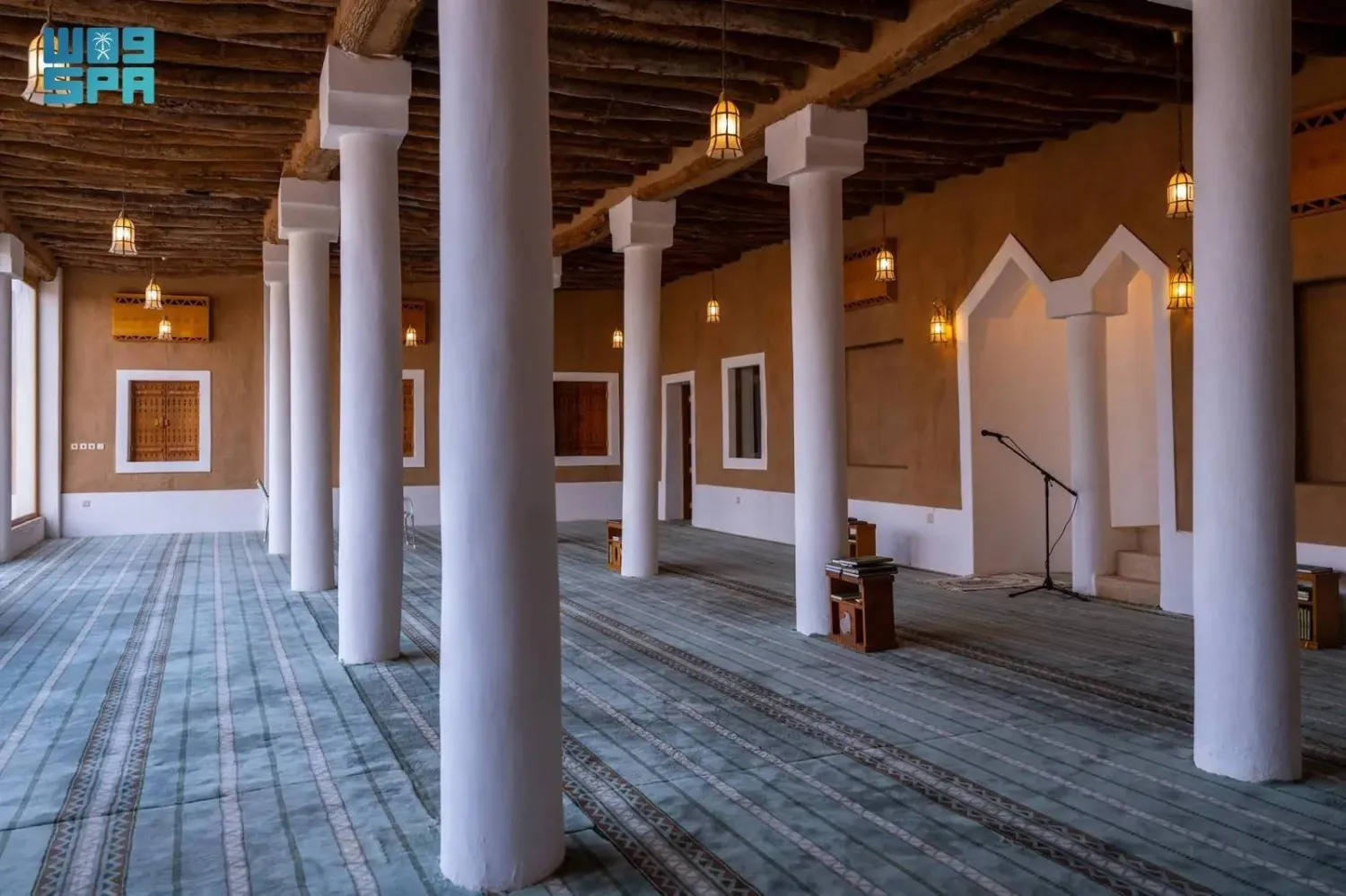
One of its recent projects is the comprehensive renovation of Al-Qibli Mosque in the old neighborhood of Manfuha in Riyadh. The restoration reflects traditional Najdi architecture and highlights the mosque’s connection to the town’s administrative and social history, SPA reported.

Al-Qibli Mosque is named for its location west of Manfuha and near the Principality Palace. It was historically the closest mosque to the town’s seat of government and was frequented by princes and prominent figures. The mosque spans approximately 500 square meters. It includes an outer courtyard, an inner prayer hall, and a lower prayer room of equal size that dates back to the original construction. Square, plaster-lined windows on the north and south sides provide natural ventilation.

These were added during the mosque’s second reconstruction around 1364 AH (1945 AD).

The covered inner prayer hall measures 15 by 8 meters and rests on 33 columns arranged in three rows. It was built by architect Abdullah bin Masoud upon the order of King Abdulaziz bin Abdulrahman. The roof is constructed using tamarisk and palm trunks, and a minaret stands at the center of the northern façade. Following earlier renovations in 1414 AH (1993 AD), the mosque remains the last mud-brick mosque in old Manfuha.

According to SPA, its design creates a visual connection between the courtyard and the inner hall, alongside a secluded lower prayer room. The site also includes the historic water fountain of Faris bin Abdullah bin Shaalan, who died in 1175 AH (1762 AD), and an old ablution area.

The current renovation uses the same local materials as the original construction, including mud, plaster, tamarisk wood, and palm fronds. Specialized Saudi heritage companies and engineers are overseeing the work to ensure preservation of historical authenticity while meeting modern sustainability standards.

The restoration aligns with the project’s four objectives: preparing historical mosques for worship, restoring architectural authenticity, highlighting the Kingdom’s cultural dimension, and enhancing religious significance. The project supports the cultural and civilizational goals of Saudi Vision 2030 and contributes to preserving the Kingdom’s architectural heritage for future generations.


Qassim Region Principality Illuminated in Green in Celebration of Founding Day

The Qassim Region Principality illuminated in green marking Founding Day - SPA
TT

Qassim Region Principality Illuminated in Green in Celebration of Founding Day

The Qassim Region Principality illuminated in green marking Founding Day - SPA

The Qassim Region Principality building was illuminated in green in celebration of Founding Day.

The scene reflected pride in the historical roots of the Saudi state and embodied feelings of belonging on this cherished national occasion, SPA reported.

The illumination affirms the deep historical significance of Founding Day, marking 299 years since the establishment of the First Saudi State by Imam Mohammed bin Saud.

It also reflects the enduring principles upon which it was founded, including unity, stability, and state-building. These foundations culminate in the security, stability, and prosperity that the Kingdom of Saudi Arabia enjoys today under its wise leadership.


Prince Mohammed bin Salman Project Restores Century-Old Uqlat Al-Suqur Mosque in Qassim

The renovation utilized traditional mud, stone, and wood to preserve the mosque's authentic Najdi architectural style. (SPA)
TT

Prince Mohammed bin Salman Project Restores Century-Old Uqlat Al-Suqur Mosque in Qassim

The renovation utilized traditional mud, stone, and wood to preserve the mosque's authentic Najdi architectural style. (SPA)

The Prince Mohammed bin Salman Project for the Development of Historical Mosques has completed the restoration of the Uqlat Al-Suqur Mosque in Qassim Region, revitalizing a heritage landmark dating back to 1922, reported the Saudi Press Agency on Saturday.

Originally the only mosque in the area, it served as a vital religious and social hub for education and community governance.

The renovation, executed by specialized Saudi firms, utilized traditional mud, stone, and wood to preserve its authentic Najdi architectural style.

The project increased the mosque's area to 544 square meters, expanding its capacity to 250 worshippers while maintaining its historical identity.

The initiative aligns with Vision 2030 to preserve the Kingdom's urban heritage and boost the cultural and religious significance of its historical mosques for future generations.