


Danish Butter King’s Coin Collection for Sale 100 Years After His Death 

Helle Horsnes, senior researcher at the National Museum of Denmark, looks at seven rare coins that the museum bought earlier this year from the collection of butter magnate Lars Emil Bruun, in Copenhagen, Denmark, September 11, 2024. (Reuters)
TT

Danish Butter King’s Coin Collection for Sale 100 Years After His Death 

Helle Horsnes, senior researcher at the National Museum of Denmark, looks at seven rare coins that the museum bought earlier this year from the collection of butter magnate Lars Emil Bruun, in Copenhagen, Denmark, September 11, 2024. (Reuters)

The 20,000-piece coin collection of Danish butter magnate Lars Emil Bruun, worth an estimated $74 million, is set to go under the hammer on Saturday in Copenhagen, a century after his passing.

The collection, kept by Bruun's relatives in line with his will, includes rare coins and medals from Denmark, Norway, Sweden and England dating back to the Viking age. It is expected to attract bids from some of the world's wealthiest people.

Bruun, born into poverty in 1852, amassed a fortune through his butter export business. He developed a passion for coin collecting in his childhood, resulting in what is expected to be the most valuable non-US coin collection ever sold.

"The collection is unique in many ways, partly because it's so valuable, but also because it's been kept safe as a sleeping beauty for 100 years without nobody having access to the coins," said Michael Fornitz, a professional numismatic appointed by auction house Stack's Bowers to oversee the sale.

After World War One, Bruun, fearing another war or bombing of Copenhagen, decided his historic collection should be kept in reserve for the Royal Coin and Medal Collection in Copenhagen for a century.

The auction will commence on Saturday with the sale of the first 286 coins, starting with a coin minted in 1496 for Denmark's King Hans. The coin has an estimated price of up to 600,000 euros ($663,900).

"It has probably been struck for King Hans' personal use when he traveled through Europe and he needed to show that Denmark was not just an insignificant province in the North of Europe but actually a power to be reckoned with," said Fornitz, holding the coin in his hand.

The collection has been showcased to potential buyers in Hong Kong, Europe, and the United States. According to Brian Kendrella, Stack's Bowers president, the coins are expected to sell for amounts ranging from less than $100 to more than $1 million each.

"Buyers might be some of the wealthiest people who are making Forbes lists and things like that. But there's also regular people that have deep interest in history and interest in coin collecting," he said.

Proceeds from the auctions, expected to continue for several years, will go to Bruun's direct relatives, as stipulated in his will. A representative for his relatives did not reply to a request for comment.
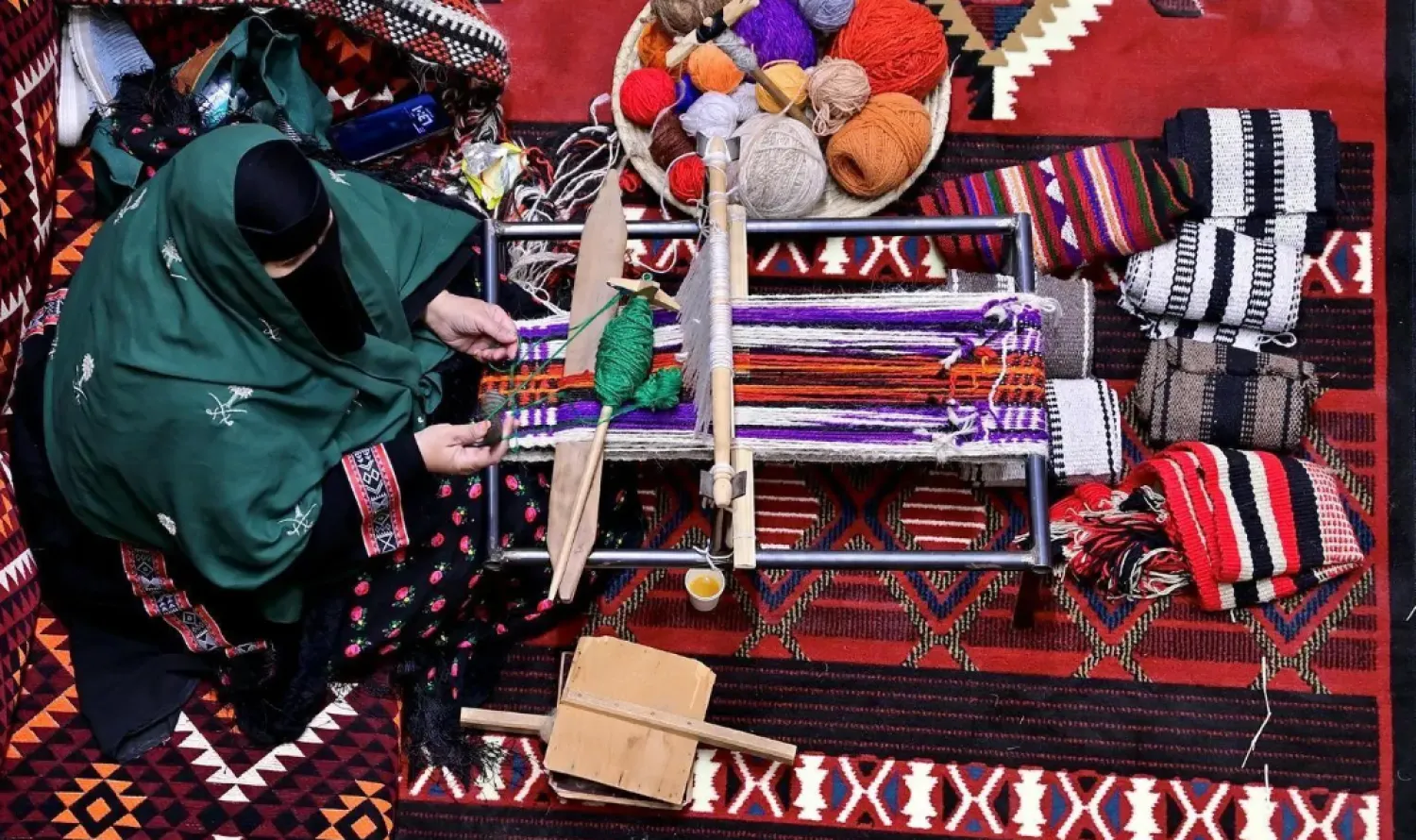



Riyadh Cultural House Marks Founding Day with Creative Heritage Programs

The celebration underscored the role of cultural houses in strengthening national identity - SPA
TT

Riyadh Cultural House Marks Founding Day with Creative Heritage Programs

The celebration underscored the role of cultural houses in strengthening national identity - SPA

The Riyadh Cultural House celebrated the Kingdom’s Founding Day with a range of cultural programs that highlighted national values and showcased the nation’s heritage in a modern, creative spirit.

The events included poetry evenings, dialogue sessions, cultural performances, and interactive workshops, all emphasizing the history and principles on which the Saudi state was founded, SPA reported.

The celebration underscored the role of cultural houses in strengthening national identity, fostering pride in the Kingdom’s history, and preserving its cultural legacy for future generations.


Riyadh Cultural House Marks Founding Day with Creative Heritage Programs

The events included poetry evenings, dialogue sessions, cultural performances, and interactive workshops. SPA
TT

Riyadh Cultural House Marks Founding Day with Creative Heritage Programs

The events included poetry evenings, dialogue sessions, cultural performances, and interactive workshops. SPA

The Riyadh Cultural House celebrated the Kingdom’s Founding Day with a range of cultural programs that highlighted national values and showcased the nation’s heritage in a modern, creative spirit.

The events included poetry evenings, dialogue sessions, cultural performances, and interactive workshops, all emphasizing the history and principles on which the Saudi state was founded.

The celebration underscored the role of cultural houses in strengthening national identity, fostering pride in the Kingdom’s history, and preserving its cultural legacy for future generations.


Prince Mohammed bin Salman Project Renovates Historic Al-Qibli Mosque in Riyadh

Al-Qibli Mosque is named for its location west of Manfuha and near the Principality Palace - SPA
TT

Prince Mohammed bin Salman Project Renovates Historic Al-Qibli Mosque in Riyadh

Al-Qibli Mosque is named for its location west of Manfuha and near the Principality Palace - SPA

The Prince Mohammed bin Salman Project for the Development of Historical Mosques continues efforts to preserve the Kingdom’s authentic architectural identity.

One of its recent projects is the comprehensive renovation of Al-Qibli Mosque in the old neighborhood of Manfuha in Riyadh. The restoration reflects traditional Najdi architecture and highlights the mosque’s connection to the town’s administrative and social history, SPA reported.

Al-Qibli Mosque is named for its location west of Manfuha and near the Principality Palace. It was historically the closest mosque to the town’s seat of government and was frequented by princes and prominent figures. The mosque spans approximately 500 square meters. It includes an outer courtyard, an inner prayer hall, and a lower prayer room of equal size that dates back to the original construction. Square, plaster-lined windows on the north and south sides provide natural ventilation.

These were added during the mosque’s second reconstruction around 1364 AH (1945 AD).

The covered inner prayer hall measures 15 by 8 meters and rests on 33 columns arranged in three rows. It was built by architect Abdullah bin Masoud upon the order of King Abdulaziz bin Abdulrahman. The roof is constructed using tamarisk and palm trunks, and a minaret stands at the center of the northern façade. Following earlier renovations in 1414 AH (1993 AD), the mosque remains the last mud-brick mosque in old Manfuha.

According to SPA, its design creates a visual connection between the courtyard and the inner hall, alongside a secluded lower prayer room. The site also includes the historic water fountain of Faris bin Abdullah bin Shaalan, who died in 1175 AH (1762 AD), and an old ablution area.

The current renovation uses the same local materials as the original construction, including mud, plaster, tamarisk wood, and palm fronds. Specialized Saudi heritage companies and engineers are overseeing the work to ensure preservation of historical authenticity while meeting modern sustainability standards.

The restoration aligns with the project’s four objectives: preparing historical mosques for worship, restoring architectural authenticity, highlighting the Kingdom’s cultural dimension, and enhancing religious significance. The project supports the cultural and civilizational goals of Saudi Vision 2030 and contributes to preserving the Kingdom’s architectural heritage for future generations.