


Historic Fantasy ‘Assassin’s Creed’ Sparks Bitter Battles 

Ubisoft, maker of the "Assassin's Creed" series of video games, mixes historical accuracy with artistic license in its latest offering, "Shadows". (AFP)
TT

Historic Fantasy ‘Assassin’s Creed’ Sparks Bitter Battles 

Ubisoft, maker of the "Assassin's Creed" series of video games, mixes historical accuracy with artistic license in its latest offering, "Shadows". (AFP)

The "Assassin's Creed" series of video games is adored for painstaking historic accuracy, but also sparks controversy with heavy use of artistic license -- most recently with a black samurai in the latest instalment, "Shadows".

Released on Thursday, "Shadows" takes place in 16th-century feudal Japan, replete with imposing fortified cities and tranquil temples crafted by developers.

"They've done a really fantastic job with very accurate recreations," said Pierre-Francois Souyri, a historian among a dozen French and Japanese experts consulted for the game in a bid to weed out cliches and anachronisms.

Since being tapped in late 2021, Souyri says he has answered "a hundred or more questions" from the development team, ranging from how salt was produced to how puppet shows were staged.

Souyri adds that within the carefully crafted setting, "it's not too hard to come up with characters who find themselves having adventures" in "a very eventful period" marked by intense conflicts.

- Black samurai -

But one foundational choice by the creative team has provoked fierce debate online and beyond: casting a black samurai, Yasuke, as one of the two playable protagonists. The other is a young female ninja, Fujibayashi Naoe.

Irritation that an African character was depicted with the rank of samurai prompted a Japanese petition against the move, receiving more than 100,000 signatures.

The text blasted "lack of historical accuracy and cultural respect" by game developers.

Souyri was unimpressed by the criticism.

"It's the game's conceit to call him a samurai, it's not a doctoral thesis," he said.

Like other historians who have weighed in, he pointed out that Yasuke "is a person who really existed" -- although the historic evidence on his status "can be difficult to interpret".

Yuichi Gozai, assistant professor at the National Center for Japanese Studies in Kyoto, disagreed.

"Nothing proves that Yasuke had such qualifications" making him a samurai, medieval history specialist Gozai said.

In surviving documents, "Yasuke stood out above all for the color of his skin and his physical strength".

His patron, warlord Oda Nobunaga, likely "kept Yasuke by his side to show him off", Gozai believes.

Erupting even before "Shadows" had been released, the controversy over the black character's inclusion has been the fiercest surrounding any "Assassin's Creed" game.

The series has been attacked in the past, including by hard-left French politician Jean-Luc Melenchon for how firebrand Robespierre was depicted in "Assassin's Creed Unity", set during the French Revolution.

- Culture war battleground -

In a February report, the European Video Game Observatory noted that Ubisoft's announcement of Yasuke immediately "sparked a heated controversy amplified by social media".

The outfit blamed most of the uproar on "an American conservative moral crusade" waged by a hard core of "at least 728 interconnected accounts".

That group made up "only 0.8 percent of speakers on the topic of 'Assassin's Creed Shadows' in the US (but) account for 22.1 percent of all related coverage", the Observatory added.

The researchers said the behavior "suggests an astroturfing campaign" that piggybacked on the broader culture-war battles going on during the US presidential election campaign.

"Our use of Yasuke has been instrumentalized by certain people to get their own message across... but that's not the message of the game," said Marc-Alexis Cote, executive producer of the "Assassin's Creed" franchise.

Nevertheless, within Japan depictions of the country's history remain a sensitive issue -- as shown by reactions to images showing a "Shadows" player damaging the interior of a temple.

"I understand France's secularist principles, but it's important to acknowledge that ill-considered insults about religion can spark strong reactions," Gozai said.

"This risk should have been foreseen."

Ubisoft itself had resisted for some time fans' demands to see an "Assassin's Creed" game set in Japan.

But recent successful games set in the feudal period, such as 2019's "Sekiro" or 2020's "Ghost of Tsushima", may have helped overcome the publisher's reticence.

"There's a combined effect of exoticism and familiarity which fascinates Westerners," historian Souyri said.

Many young people, especially in Western countries, such as France and the United States, devour Japanese mangas and anime series.

But Gozai argues that "these depictions become counterproductive if they reinforce discrimination and prejudice towards Japan".

He calls "Shadows" a "clear example of these concerns being realized".
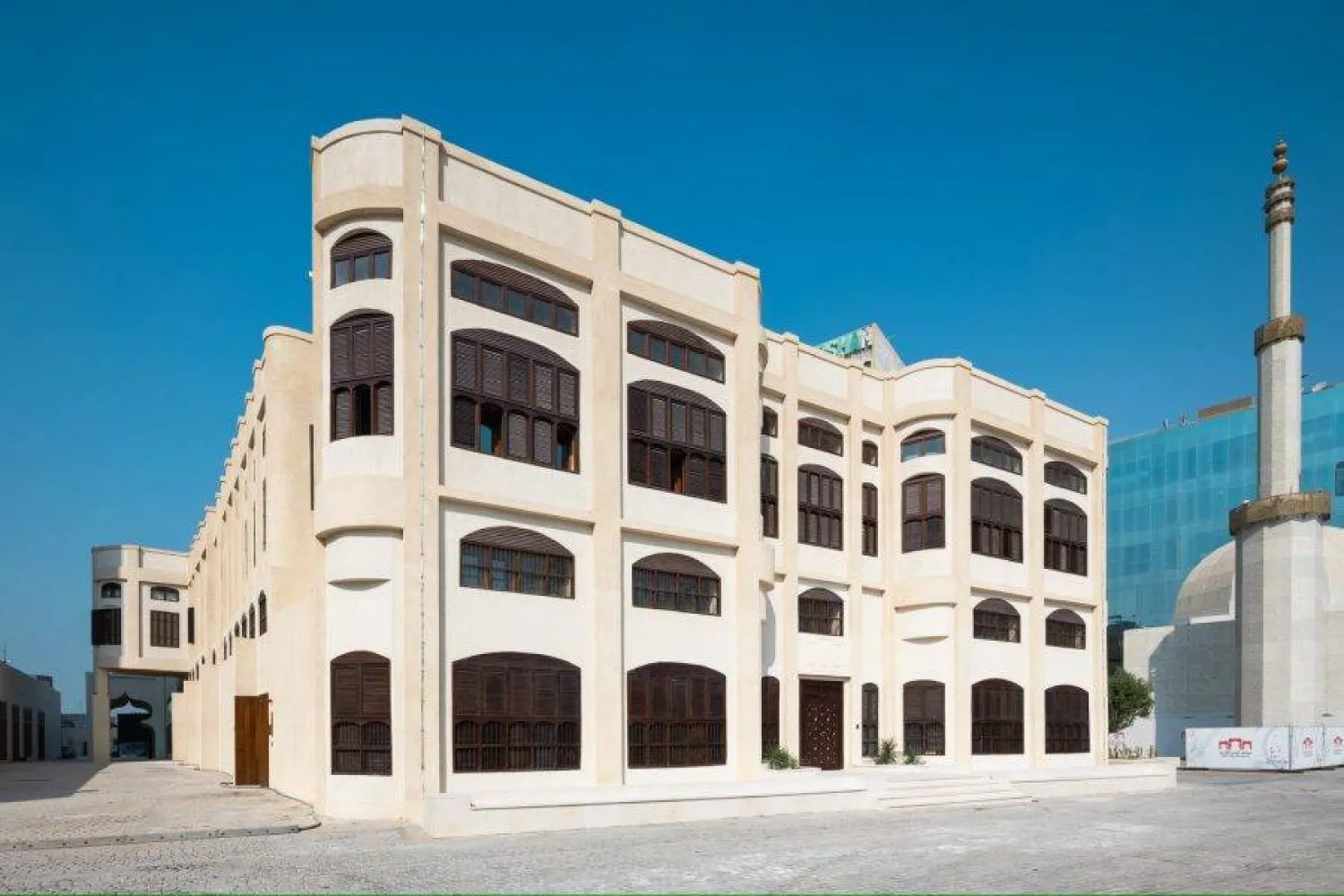


Jeddah's Red Sea Museum Announces Ramadan Program 

The Red Sea Museum. (Red Sea Museum)
TT

Jeddah's Red Sea Museum Announces Ramadan Program 

The Red Sea Museum. (Red Sea Museum)

Jeddah's Red Sea Museum announced on Thursday a curated program of creative and cultural activities for the holy month of Ramadan, running from February 22 to March 14.

Led by local artists, artisans, and cultural practitioners, the museum's Ramadan program includes contemplative workshops, storytelling sessions, outdoor community gatherings, and musical performances that honor the spirit of reflection, creativity, and connection.

The series of engaging sessions creates space for visitors to explore traditional crafts, contemporary storytelling, and cultural heritage through hands-on experiences blending creativity and reflection.

Curated for families, artists, and visitors of all backgrounds, the program runs alongside "Sunken Treasures: The Maritime Heritage of the Red Sea," the museum's major temporary exhibition opening on February 25, which explores how archaeological discoveries reveal centuries of trade, navigation, and human connection across the Red Sea.

In celebration of Founding Day on February 22, the "Inspirational Threads: Makkah & Madinah" contemplative embroidery workshop invites participants to engage with archival black-and-white photographs of the Red Sea, Makkah, and Madinah. Through basic embroidery techniques, participants can embellish these images with Islamic geometric and symbolic motifs, adding layers of color, texture, and meaning while reflecting on devotion, memory, and connection.

The "Radiance in Pieces: Mosaic Lantern" hands-on workshop on February 24 explores the tradition of Islamic mosaic art through the creation of illuminated lanterns inspired by Red Sea heritage. Children and families will learn how small, colorful pieces come together to form meaningful geometric designs, blending creativity, cultural heritage, and reflection.

The opening evening of "Sunken Treasures: The Maritime Heritage of the Red Sea" on February 25 features a panel discussion with archaeologists, scientists, and historians exploring the maritime heritage of the Red Sea.

The "One Big Table - Ramadan Gathering" on March 5 brings everyone together in a shared space where families, friends, and neighbors celebrate the spirit of Ramadan.

On March 7, the "From Sand to Porcelain" painting workshop invites participants to paint calligraphy on fine porcelain using natural sand collected from Jeddah to add subtle texture and depth. While learning basic porcelain painting techniques, participants will engage in a reflective, hands-on experience that encourages mindful creation, resulting in a personal keepsake that embodies devotion, place, and the spirit of Ramadan.

In the spirit of International Women's Day on March 8, the "Ramadan Spirit: Thread & Needle" hands-on punch needling workshop explores Ramadan iconography through traditional symbols, including the crescent, star, and lantern. Participants will create textured textile pieces while learning basic punch needle techniques, celebrating both the holy month and the creative contributions of women to traditional textile arts.

On March 14, the "Spirit of Ramadan and the Tale of Jabir Al-Khawatir" storytelling session for children and families explores Ramadan as a season of compassion and healing, reminding people that the spirit of the holy month lives in small acts of care and human connection.


Saudi Arabia: Ship of Tolerance Initiative Promotes Cultural Dialogue in Jeddah

The Royal Institute of Traditional Arts (Wrth) will offer traditional craft workshops throughout Ramadan. SPA
TT

Saudi Arabia: Ship of Tolerance Initiative Promotes Cultural Dialogue in Jeddah

The Royal Institute of Traditional Arts (Wrth) will offer traditional craft workshops throughout Ramadan. SPA

The Saudi Ministry of Culture, in collaboration with the "Lenobadir" volunteer and community partnership program and the Athr Foundation, has launched the Ship of Tolerance initiative in Historic Jeddah during Ramadan.

The initiative aims to enhance shared human values through arts, and promote tolerance and coexistence among children and families. It provides an educational and cultural experience aligned with the area’s unique character as a UNESCO World Heritage site.

As part of this global art project, children will create artworks that represent acceptance and dialogue.

The Royal Institute of Traditional Arts (Wrth) will offer traditional craft workshops throughout Ramadan, linking the initiative's values with local heritage and enriching visitors' connection to the region's identity.

This effort supports cultural programs with educational and social dimensions in Historic Jeddah, activating local sites for experiences that combine art, crafts, and community participation. It aligns with the National Strategy for Culture under Saudi Vision 2030, focusing on heritage preservation and expanding culture's impact on daily life.


Oscar Contender ‘Hamnet’ Boosts Tourism at Shakespeare Heritage Sites 

A view of Shakespeare’s Birthplace, William Shakespeare's childhood home, in Stratford-upon-Avon, Britain, February 9, 2026. (Reuters)
TT

Oscar Contender ‘Hamnet’ Boosts Tourism at Shakespeare Heritage Sites 

A view of Shakespeare’s Birthplace, William Shakespeare's childhood home, in Stratford-upon-Avon, Britain, February 9, 2026. (Reuters)

On a cloudy winter's day, visitors stream into what was once William Shakespeare's childhood home in Stratford-upon-Avon and the nearby Anne Hathaway's cottage, family residence of the bard's wife.

Hathaway's cottage is one of the settings for the BAFTA and Oscar best film contender "Hamnet", and the movie's success is drawing a new wave of tourists to Shakespeare sites in the town in central England.

Shakespeare's Birthplace is the house the young William once lived in and where his father worked as a glove maker, while Hathaway's cottage is where he would have visited his future wife early in their relationship.

Typically, around 250,000 visitors, from the UK, Europe, the United States, China and elsewhere, walk through the locations each year, according to the Shakespeare Birthplace Trust. ‌The charity looks after ‌Shakespeare heritage sites, which also include Shakespeare's New Place, the site of ‌the ⁠Stratford home where the ⁠bard died in 1616.

Visitors are flocking in this year thanks to "Hamnet", the film based on Maggie O'Farrell's 2020 novel, which gives a fictional account of the relationship between Shakespeare and Hathaway, also known as Agnes, and the death of their 11-year-old son Hamnet in 1596.

"Visitor numbers have increased by about 15 to 20% across all sites since the film was released back in January. I think that will only continue as we go throughout the year," Richard Patterson, chief operating officer for the Shakespeare Birthplace Trust, said.

"They particularly want ⁠to look (at) Anne Hathaway's cottage and the specifics around how the family ‌engaged in the spaces and the landscape in and around ‌the cottage... you can see why he would have been inspired."

NEW ACCESS TO SHAKESPEARE

"Hamnet" has 11 nominations at ‌Sunday's British BAFTA awards, including best film and leading actress for Jessie Buckley, who plays Agnes. It ‌also has eight Oscar nominations, with Buckley seen as the frontrunner to win best actress.

"Hamnet" is set in Stratford-upon-Avon and London although it was not filmed in Stratford.

It sees Paul Mescal's young Shakespeare fall for Agnes while teaching Latin to pay off his father's debts. The drama, seen mainly through Agnes' eyes, focuses on their ‌life together and grief over Hamnet's death, leading Shakespeare to write "Hamlet".

"Shakespeare... is notoriously enigmatic. He writes about humanity, about feeling, about emotion, about conflict, ⁠but where do we understand ⁠who he is in that story?" said Charlotte Scott, a professor of Shakespeare studies and interim director of collections, learning and research at the Shakespeare Birthplace Trust.

"And that's driven people creative and otherwise for hundreds and hundreds of years. Where is Shakespeare's heart? And this is what the film I think has so beautifully opened up."

Little is known about how the couple met. Shakespeare was 18 and Hathaway 26 when they married in 1582. Daughter Susanna arrived in 1583 and twins Judith and Hamnet in 1585.

The film acknowledges the names Hamnet and Hamlet were interchangeable back then. While grief is a dominant theme, audiences also see Shakespeare in love and as a father.

"A lot of people will see this film not necessarily having... had any kind of relationship with Shakespeare," Scott said.

"So people will come to this film, I hope, and find a new way of accessing Shakespeare that is about creativity, that is about understanding storytelling as a constant process of regeneration, but also crucially, looking at it from that kind of emotive angle."
