


Movie Review: Bring Your Global Entry Card — ‘Beetlejuice’ Sequel’s a Soul Train Ride to Comedy Joy 

US actor Michael Keaton arrives for the UK premiere of "Beetlejuice Beetlejuice" at the Cineworld Leicester Square in London, Britain, 29 August 2024. (EPA)
TT

Movie Review: Bring Your Global Entry Card — ‘Beetlejuice’ Sequel’s a Soul Train Ride to Comedy Joy 

US actor Michael Keaton arrives for the UK premiere of "Beetlejuice Beetlejuice" at the Cineworld Leicester Square in London, Britain, 29 August 2024. (EPA)

“I have global entry!”

Now, does that sound like a funny line? Of course it doesn’t. Whatever in the history of mankind and airport lines could be funny about global entry?

But put it in the mouth of comedy goddess Catherine O’Hara, and place it in the singularly inventive world of Tim Burton and that wacky afterlife waiting room from “Beetlejuice,” and it may become the one blessed time in your life you'll ever guffaw about global entry.

It likely won't be the only thing you'll guffaw about. Burton is back — and, more significantly, he is BACK — with “Beetlejuice Beetlejuice,” 36 years after the original. And for once, the question “Why a sequel?” is moot.

Not because we know the answer. (Do we?) But, who cares? It’s funny. It may even make you feel better about, well, death, though not “death death.” And Michael Keaton somehow looks exactly the same as he did in 1988 (to be fair, it helps that his character was already dead.)

Returning to his tale of Keaton's ghostly, fiendish “bio-exorcist,” director Burton brings back much of the team behind the original, including, alongside O’Hara and Keaton, the still-lovely Winona Ryder as Lydia the Goth Girl (also, Bob the shrunken-head guy).

And we've gained Justin Theroux, Monica Bellucci, Willem Dafoe, and for the younger generation, Jenna Ortega, who, as a relatively normal figure, serves as an appealing anchor, her story moving the plot along.

Speaking of plot: if you didn’t see the original, not to worry. It all gets explained (as much as it should be) in time. We begin in Winter River, Connecticut, still home to Lydia Deetz (Ryder), who came as a teenager with batty stepmom Delia and dad Charles, only to learn her new house was haunted by the recently deceased Adam and Barbara (Alec Baldwin and Geena Davis, alas not back).

Lydia looks much the same — dressed all in black, with spiky bangs and pale skin — but is now a widowed mother, a psychic mediator, and host of a cheesy reality show, “Ghost House,” in which she sees ghosts and asks, “Can the living and the dead co-exist?”

But one day she sees something in the audience that scares her: visions of Beetlejuice, who wrought havoc when she was a teen and who, when we last left him, was wasting away in the afterlife waiting room (apparently, HE did not have global entry.)

Waiting just off set to comfort Lydia after this terrifying vision is her manager and boyfriend, Rory (Theroux), who has a little ponytail almost as smarmy as himself.

Lydia then gets a concerning message from Delia (O’Hara), an artist of questionable talent and unquestionable ego, who’s mounting a gallery show in which she herself is the canvas. There, Delia tells Lydia that she’s lost Charles. “Is he divorcing you?” gasps Lydia. “What a horrible thought!” replies Delia. “No, he’s dead.” (Such lines are catnip for O’Hara, a genius of comic timing).

Lydia calls her daughter, Astrid (Ortega), at boarding school. Astrid lists Lydia in her contacts as “Alleged Mom,” which tells you much of what you need to know about their fraught relationship.

But let’s pause this account of the living, because we also have to catch you up on the dead. Down where Beetlejuice is stuck, where the dead live — but not the “dead dead” —- Delores, Beetlejuice’s ex-wife, has escaped from the crates (emphasis on plural) in which her body has resided. Watching the glamorous Bellucci literally staple herself together is just one of the glorious creative moments Burton and crew give us here. Alas, Delores doesn't have much else to do, but this is rather spectacular.

We're approaching spoiler territory, so let’s just say that things really get complicated when Astrid goes home to Winter River for her father’s funeral. There, she watches as Mom accepts a marriage proposal from smarmy Rory. Racing off to escape, Astrid runs into a cute young guy reading Dostoyevsky.

A relationship begins, one that will lead to unexpected mayhem. Let’s just say Lydia will need to call upon — gasp! — Beetlejuice, who will exact a fearsome price for his services, as he is wont to do.

And he appears none too soon. Keaton, in his white caked makeup and blackened eyes and hair that looks like he is perpetually sticking his hand into a plug in the wall, slips remarkably smoothly into his old role. “The juice is loose,” as he likes to say.

But you know who’s also got the juice flowing? Burton. It’s his inimitable energy that infuses this movie — a joyously rendered sequel that sometimes makes sense, and sometimes doesn’t, but just keeps rollicking. Among the ridiculous delights along the way: A “soul train” in the afterlife, which is not only literally a train of souls, but a replica of the variety show “Soul Train,” with people in Afros dancing their way to wherever they are going.

And if we don't have the lip-synced “Day-O (The Banana Boat Song)” from the original, we do have a lip-synced “MacArthur Park,” the Donna Summer version. “Someone left the cake out in the rain,” go the ridiculous words of the disco classic. “I don’t think that I can take it, ’cause it took so long to bake it, and I’ll never have that recipe again.”

In the Burtonian spirit, let's just say it took a long time to bake it, yes, but the director has recovered the recipe — at least enough to make us smile, chortle, even guffaw, for 104 minutes. And we can be happy with that.

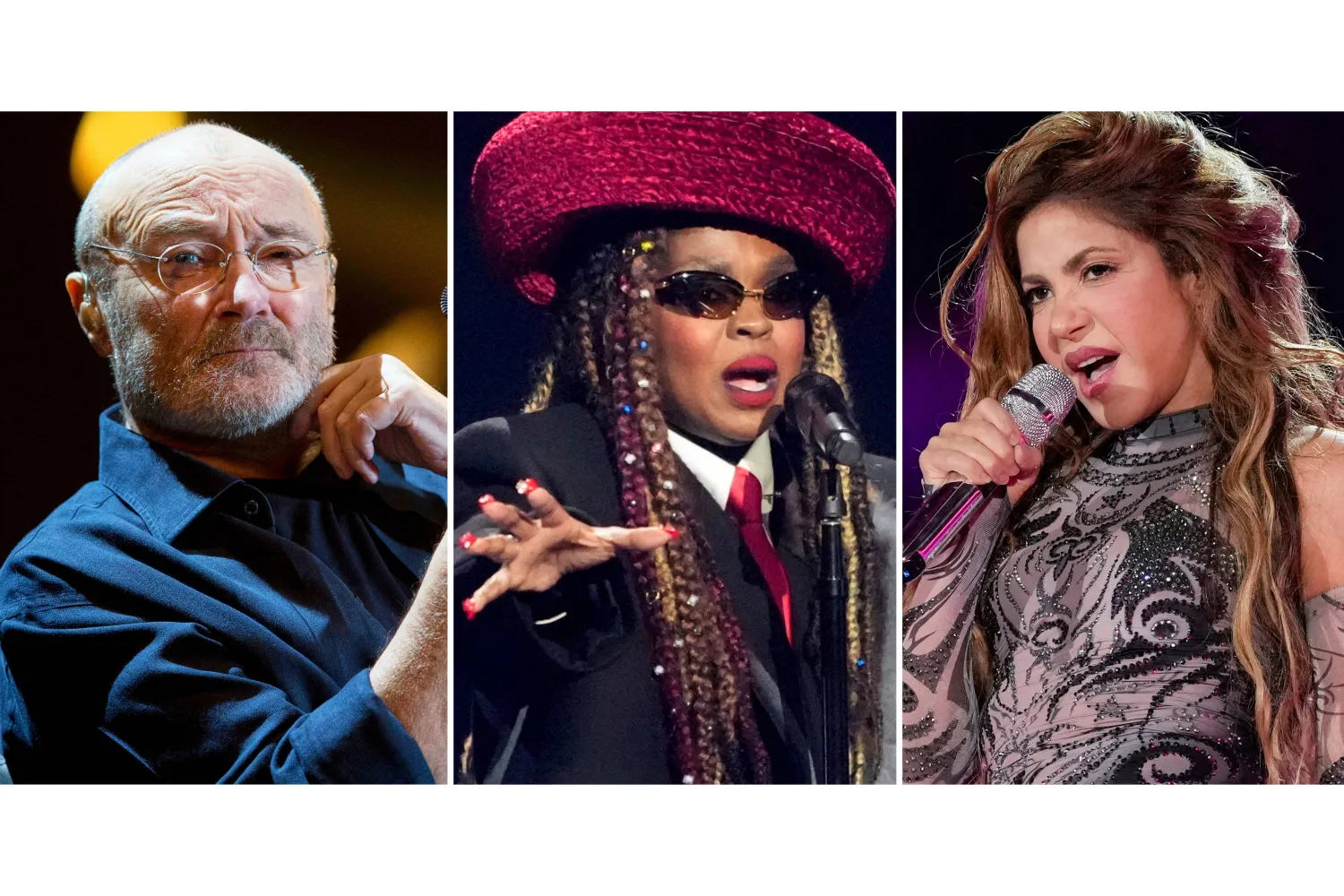

Phil Collins, Lauryn Hill, INXS, Iron Maiden, Luther Vandross and Shakira Get Rock Hall Nominations

Phil Collins performs at Palacio de los Deportes in Mexico City on March 9, 2018, left, Lauryn Hill performs during the draw for the 2026 soccer World Cup in Washington on Dec. 5, 2025, center, and Shakira performs during the Global Citizen Festival in New York on Sept. 27, 2025. (AP Photo)
TT

Phil Collins, Lauryn Hill, INXS, Iron Maiden, Luther Vandross and Shakira Get Rock Hall Nominations

Phil Collins performs at Palacio de los Deportes in Mexico City on March 9, 2018, left, Lauryn Hill performs during the draw for the 2026 soccer World Cup in Washington on Dec. 5, 2025, center, and Shakira performs during the Global Citizen Festival in New York on Sept. 27, 2025. (AP Photo)

Phil Collins, Mariah Carey, Lauryn Hill, INXS, Iron Maiden, Luther Vandross and Shakira are some of the 2026 nominees for induction into the Rock & Roll Hall of Fame, a wide net that includes rap, metal, R&B, hip-hop, Britpop, blues rock and pop.

The hall revealed the list of 17 performer nominees Wednesday, a list that also includes Melissa Etheridge, Jeff Buckley, Pink, New Edition, Sade and the Wu-Tang Clan, The Associated Press reported.

Billy Idol, Joy Division/New Order return to the nominations after missing induction last year. The list this time also repeats two sets of musical brothers who have had public feuds and recent reunions — The Black Crowes and Oasis.

Collins, with such hits as “In the Air Tonight” and “One More Night,” has earned eight Grammys, including album of the year in 1985 for “No Jacket Required.” Hill's “The Miseducation of Lauryn Hill” made history as the first hip-hop album to win the Grammy for album of the year in 1999.

Carey, nominated in 2024 and 2025, has had 19 No. 1 hits on the Billboard Hot 100, while soul-jazz vocalist Sade, also nominated in 2024, had such soft rock hits as “Smooth Operator” and “The Sweetest Taboo.” The Wu-Tang Clan have been hailed as rap innovators since their game-changing 1993 debut album “Enter the Wu-Tang.”

INXS ruled the late 1980s charts with hits like “Need You Tonight,” “Devil Inside” and “New Sensation.” Two-time Grammy winner Etheridge is best known for her songs “Come to My Window” and “I’m the Only One.” Iron Maiden helped power the new wave of British heavy metal with iconic albums like “The Number of the Beast.”

New Edition had the hits “Cool It Now” and “Candy Girl,” while Shakira has been lauded for her ability to bridge Latin music with rock and pop. Pink has had four No. 1 songs and three No. 1 albums, including “The Truth About Love.”

Ten of the 17 nominees are on the ballot for the first time: Buckley, Collins, Etheridge, Hill, INXS, New Edition, Pink, Shakira, Vandross and Wu-Tang Clan.

Vandross, who sold more than 25 million albums and had the hits “Here and Now” and “Any Love,” died in 2005. Buckley, whose 1994 debut album “Grace” is widely acclaimed, died in 1997.

“This diverse list of talented nominees recognizes the ever-evolving faces and sounds of Rock & Roll and its continued impact on youth culture,” John Sykes, chairman of the Rock & Roll Hall of Fame Foundation, said in a statement.

The 2026 inductees will be revealed in April, along with inductees entering the hall under three special committee categories: Musical influence, musical excellence and the Ahmet Ertegun Non-Performer Award.

Artists must have released their first commercial recording at least 25 years before they’re eligible for induction. Nominees will be voted on by more than 1,200 artists, historians and music industry professionals.

Last year, Cyndi Lauper, Outkast, Bad Company, Chubby Checker, Soundgarden, Joe Cocker, Salt-N-Pepa, The White Stripes, Carol Kaye, Nicky Hopkins, Lenny Waronker, Thom Bell and Warren Zevon all were inducted.


Movie Review: ‘Man on the Run’ Chronicles Paul McCartney’s Post-Beatles Long and Winding Road 

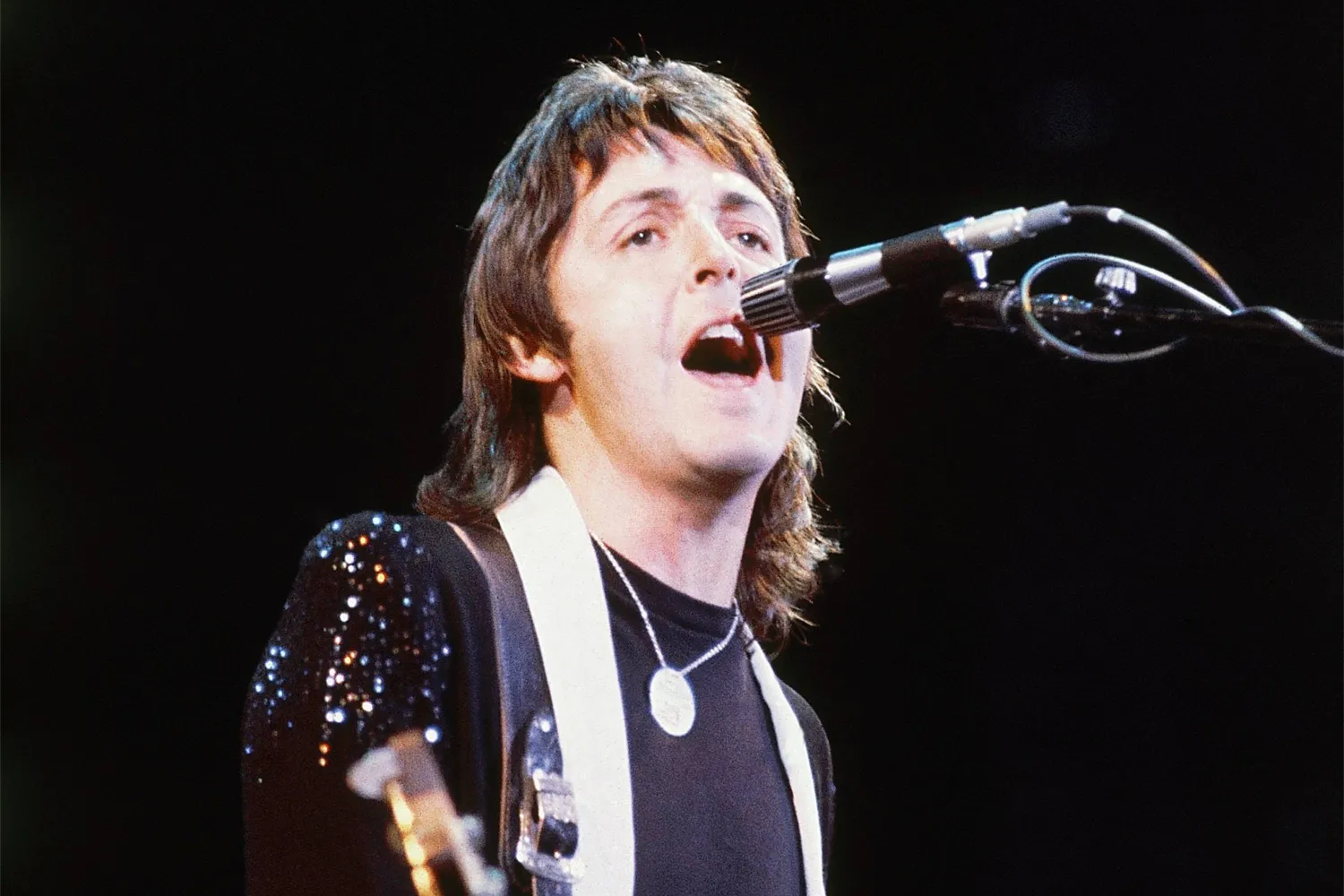
Paul McCartney, of Paul McCartney and Wings, performs at the Nassau Coliseum in Uniondale, NY on May 21, 1976. (AP)
TT

Movie Review: ‘Man on the Run’ Chronicles Paul McCartney’s Post-Beatles Long and Winding Road 

Paul McCartney, of Paul McCartney and Wings, performs at the Nassau Coliseum in Uniondale, NY on May 21, 1976. (AP)

If Peter Jackson’s “The Beatles: Get Back” was the supreme document of the Beatles’ final moments together and of their dissolution, Morgan Neville’s “Man on the Run” is a kind of sequel.

It begins in late 1969, just months after Savile Row rooftop concert. The Beatles have broken up. Paul McCartney has seemingly disappeared. There are even rumors that he’s dead. On a remote farm in Scotland, a confused and distraught McCartney wonders whether he’ll write “another note, ever.”

But the most surprising thing about revisiting this tumultuous, tabloid-ready period of McCartney’s life is a simple fact. When the Beatles broke up, McCartney was 27 years old. To say he had lived a lifetime by then would be an understatement. By just the sheer enormity of their production and colossal cultural impact, you might easily mistakenly put McCartney in middle age by then.

“Man on the Run,” premiering Friday on Prime Video, is the story of everything that came after. McCartney, an executive producer, is never seen sitting for an interview, but his off-camera musings mark the movie, a chronicle of self-renewal. For McCartney, kept boyish by the Beatles, the band's end meant a sudden coming of age.

“I had to look inside myself and find something that wasn’t the Beatles,” McCartney says in the film.

How you feel about McCartney’s post-Beatles career might inform how you feel about “Man on the Run.” For Neville, the celebrated documentary filmmaker of “Won’t You Be My Neighbor,” “Piece by Piece” and “20 Feet From Stardom,” it’s a period that offers no neat narrative, but — quite unlike the mythic Beatles years — something more like the ups and down of life, with regrets and triumphs along the way.

It didn’t get off to a good start. McCartney, blamed for the Beatles breakup, was guilt-ridden. His first records were a disappointment. Singing with Linda McCartney, his wife, wasn’t greeted well. A 1973 TV special that included a rendition of “Mary Had a Little Lamb” was, to put it a mildly, a misjudgment. A curious feature of McCartney’s largely sunny disposition is a nagging self-loathing.

“If I hear someone damning Paul McCartney, I tend to believe them,” he says, referencing the Beatles split.

“Get Back” offered a revelatory window into the group’s dynamics that put many of the old views of McCartney to bed. Comparisons are tough — “Get Back” is one of the greatest docs of the century — but Jackson’s film, drawn largely from footage shot by Michael Lindsay-Hogg, was also incredibly intimate. It captured not only the band’s individual relationships but the songwriting process in real time. (The emergence of “Get Back” from McCartney’s strumming and humming stands as one of the great sequences in documentary film.)

“Man on the Run” lacks that sense of closeness. By keeping the film in archival — the documentary is full of family photos and home movies — and without present-day talking heads, Neville lets us experience McCartney’s post-Beatles years as he did. It comes as a sacrifice, though, to a nearness to McCartney — and to the creation of his solo songs — that might have deepened the film.

The real arc of “Man on the Run” is building toward the creation of McCartney's first post-Beatles band, Wings. It’s in some ways an unlikely centerpiece. In the revolving makeup of the band, Denny Laine was the only permanent member outside Paul and Linda. On the other hand, Wings’ “Band on the Run” is the best album McCartney produced after the Beatles, and the clear culmination of years of struggle. If you needed one, this is your cue to go play “Jet” loud.

It turns out, to no one’s surprise, it’s hard to move on after being in the Beatles — especially for someone like McCartney who believed so sincerely in the band. Like its subject, “Man on the Run” inevitably pales next to films of the Beatles heyday. But it’s a meaningful companion piece about the end of an era and the start of a long and winding road.


Robert Carradine, ‘Revenge of the Nerds’ and ‘Lizzie McGuire’ Star, Dies at 71

Robert Carradine appears at the 24th Annual "A Night at Sardi's" in Beverly Hills, Calif., on March 9, 2016. (AP)
TT

Robert Carradine, ‘Revenge of the Nerds’ and ‘Lizzie McGuire’ Star, Dies at 71

Robert Carradine appears at the 24th Annual "A Night at Sardi's" in Beverly Hills, Calif., on March 9, 2016. (AP)

Robert Carradine, the youngest of his prolific Hollywood family and whose biggest hit was the 1984 comedy “Revenge of the Nerds,” has died at 71.

In a Tuesday statement to news outlets, his family said he lived with bipolar disorder for two decades and died by suicide.

“We want people to know it, and there is no shame in it,” his brother Keith Carradine told Deadline. “It is an illness that got the best of him, and I want to celebrate him for his struggle with it, and celebrate his beautiful soul. He was profoundly gifted, and we will miss him every day.”

Known for both his film and television work, Robert Carradine worked steadily in the industry for over 40 years. Though he collaborated with some of the most respected directors of the day, he never gained the worldwide recognition of his more famous siblings Keith Carradine (also the father of Martha Plimpton) and half-brother David Carradine, who died in 2009.

Robert Carradine, a Los Angeles native and son to character actor John Carradine, was introduced to audiences with roles on the television series “Bonanza” in 1971 and in the John Wayne Western “The Cowboys” in 1972.

Despite his family background, acting wasn't his first calling, though.

“I always had a passion to be a race car driver, and that’s what I thought I was going to do, and at some penultimate moment ... I think I was sitting with my brother David when ‘The Cowboys’ was being cast, and they were interested in David as the bad guy, and he didn’t want to be the guy that shot John Wayne in the back,” Carradine recalled in a 2013 interview with Popdose. “But he said, ‘You know, it is called The Cowboys, and they’re meeting all these young guys. Why don’t you go in?’”

In addition to starring in a short-lived television spinoff of “The Cowboys,” and appearing alongside David Carradine in his popular ABC series “Kung Fu,” he would go on to nab roles in Martin Scorsese’s “Mean Streets,” Hal Ashby’s Vietnam drama “Coming Home,” and Samuel Fuller’s World War II film “The Big Red One.”

The heights of his brother David's success eluded Robert Carradine, but the two could often be seen in the same projects, including in Walter Hill’s “The Long Riders” and Paul Bartel’s “Cannonball.”

Robert Carradine’s biggest hit would come in 1984 with the off-color comedy “Revenge of the Nerds,” in which where he played head nerd Lewis Skolnick, with his abrupt, infectious and guttural laugh. He reprised the role for the big-screen sequel and two made-for-television follow-ups, and continued to pay homage to the beloved character with a guest role on the series “Robot Chicken” and as a co-host (with “Revenge of the Nerds” co-star Curtis Armstrong) of the pop culture competition show “King of the Nerds,” which aired for three seasons.

In the 2000s, Carradine gained small-screen success in The Disney Channel’s “Lizzie McGuire” as the eponymous character’s father.

“It’s really hard to face this reality about an old friend,” Hilary Duff, who played Lizzie McGuire, wrote on Instagram. “There was so much warmth in the McGuire family and I always felt so cared for by my on-screen parents. I’ll be forever grateful for that. I’m deeply sad to learn Bobby was suffering.”

Work remained consistent even if the projects diminished in prestige and quality. Then Quentin Tarantino, ever the champion of fading character actors, cast Carradine in “Django Unchained” as one of the trackers in the 2012 film after seeing a “very furry” photograph, as Carradine told Popdose.

In 2015, Carradine was cited for a Colorado crash that injured him and his wife, Edith. They later divorced, after more than 25 years of marriage.

Carradine's survivors include his three children, actor Ever Carradine, Marika Reed Carradine and Ian Alexander Carradine.

“Whenever anyone asks me how I turned out so normal, I always tell them it’s because of my dad. I knew my dad loved me, I knew it deep in my bones, and I always knew he had my back,” Ever Carradine wrote on Instagram. “I think it’s partly because we basically grew up together. Twenty years age difference really isn’t that much, and while I never ever thought of him as a sibling, I did always think of him as my partner. We were in it together.”