


Saudi Arabia, Pakistan Sign Financing Agreements on Oil Derivatives, Water Supply 

Officials are seen at the signing ceremony. (SPA)
TT

Saudi Arabia, Pakistan Sign Financing Agreements on Oil Derivatives, Water Supply 

Officials are seen at the signing ceremony. (SPA)

Saudi Fund for Development (SFD) Chief Executive Sultan Al-Marshad and Pakistani Secretary for Ministry of Economic Affairs Dr. Kazim Niaz signed in Islamabad a US$1.2 billion financing agreement for the import of oil derivatives.

Pakistani Prime Minister Muhammad Shehbaz Sharif and Saudi Ambassador to Pakistan Nawaf bin Said Al-Malki witnessed the signing of the agreement.

The funding is part of Saudi Arabia's ongoing support to Pakistan through the SFD, which has totaled around US$6.7 billion for oil derivatives since 2019.

The Kingdom's support is aimed at boosting Pakistan’s economy, addressing its economic challenges, and bolstering vital sectors, reported the Saudi Press Agency on Monday.

Additionally, both parties signed a development soft loan agreement worth US$41 million to finance a project that will supply drinking water to the Pakistani city of Mansehra.

The initiative will involve supplying about 400 kilometers of pipes for water networks, benefiting over 150,000 people. It also includes the establishment of a water treatment plant with a capacity of about 21,000 cubic meters per day, helping in reducing waterborne diseases and epidemics in Pakistan.

The two agreements reflect the SFD's commitment to addressing challenges in various countries and underscore the importance of international cooperation and solidarity for achieving sustainable development in beneficiary nations.

During the signing ceremony, the Pakistani prime minister and the SFD chief discussed ways to bolster cooperation between their countries, focusing on financing vital sectors across Pakistan.

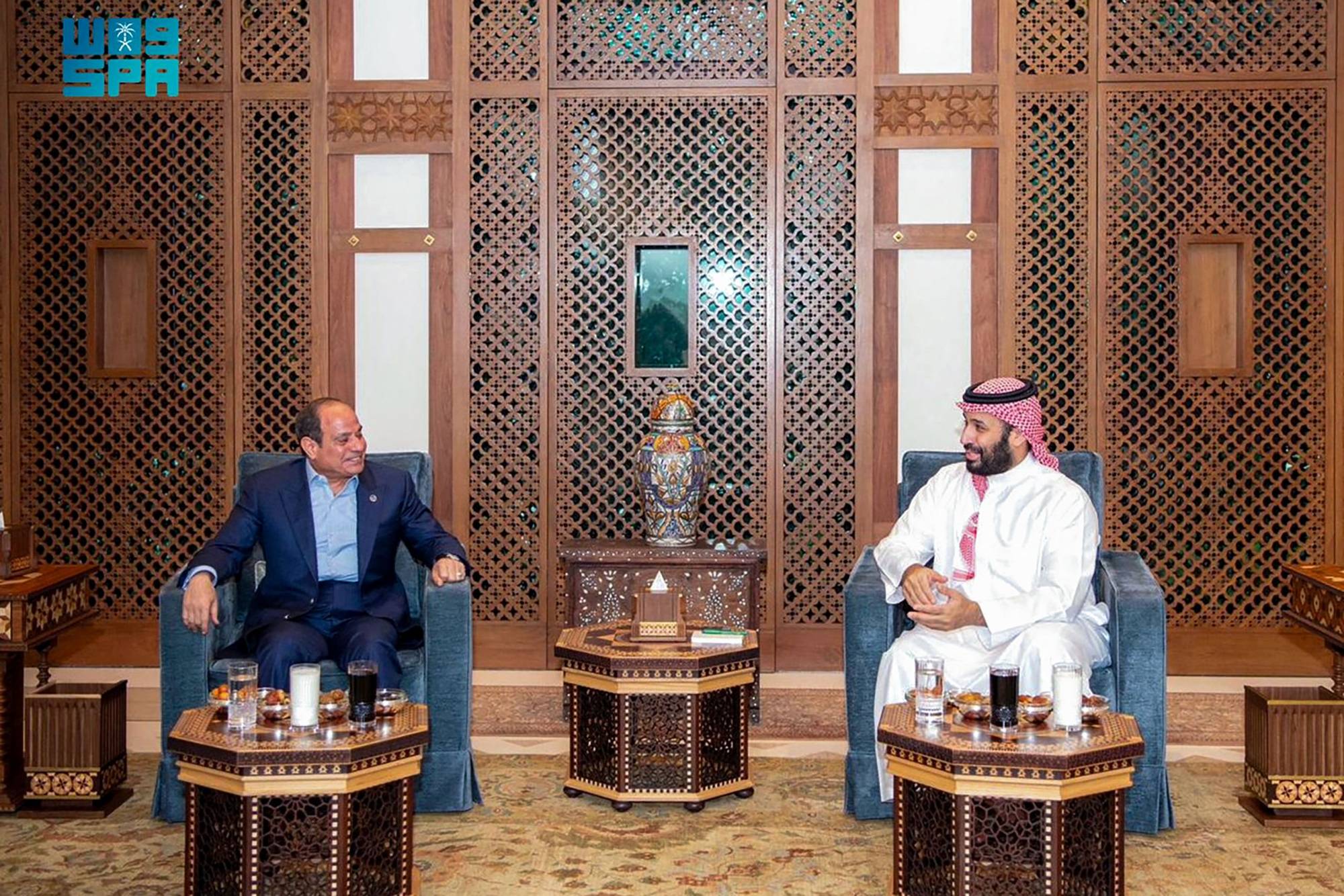

Mohammed bin Salman Welcomes Egypt’s Sisi in Jeddah

Prince Mohammed bin Salman, Crown Prince and Prime Minister, welcomes Egyptian President Abdel Fattah al-Sisi in Jeddah on Monday. (SPA)
TT

Mohammed bin Salman Welcomes Egypt’s Sisi in Jeddah

Prince Mohammed bin Salman, Crown Prince and Prime Minister, welcomes Egyptian President Abdel Fattah al-Sisi in Jeddah on Monday. (SPA)

Prince Mohammed bin Salman, Crown Prince and Prime Minister, welcomed Egyptian President Abdel Fattah al-Sisi in Jeddah on Monday.

Sisi kicked off a “fraternal” visit to Saudi Arabia as part of the two countries’ “keenness on bolstering the historic brotherly relations that bind them.”

Prince Mohammed bin Salman, Crown Prince and Prime Minister, and Egyptian President Abdel Fattah al-Sisi meet in Jeddah on Monday. (SPA)

The visit aims to continue consultations and coordination over various regional and international issues of interest, said the Egyptian presidency.

Crown Prince Mohammed also held an iftar banquet in Sisi’s honor.


GCC Secretary-General Meets Lebanese Ambassador to Saudi Arabia

Secretary General of the Gulf Cooperation Council Jasem Mohamed Albudaiwi. GCC
TT

GCC Secretary-General Meets Lebanese Ambassador to Saudi Arabia

Secretary General of the Gulf Cooperation Council Jasem Mohamed Albudaiwi. GCC

Gulf Cooperation Council (GCC) Secretary-General Jasem Albudaiwi met Lebanon's Ambassador to the Kingdom of Saudi Arabia Ali Karanouh in Riyadh on Monday.

The two sides discussed several topics, reviewing relations between the GCC and Lebanon and ways to develop them to achieve mutual interests, SPA reported.

They also addressed the latest regional and international developments and conditions.

Albudaiwi noted that the GCC has accepted an invitation to attend the International Conference in Support of the Lebanese Army and Security Forces, scheduled to take place next month in Paris, the capital of France.

He added that this participation reaffirms the GCC’s steadfast support for the brotherly Lebanese Republic and its commitment to Lebanon’s sovereignty, security, and stability.


Saudi Arabia Stresses importance of Iraq Respecting Kuwait’s Sovereignty, Territorial Integrity 

Saudi Arabia Stresses importance of Iraq Respecting Kuwait’s Sovereignty, Territorial Integrity 
TT

Saudi Arabia Stresses importance of Iraq Respecting Kuwait’s Sovereignty, Territorial Integrity 

Saudi Arabia Stresses importance of Iraq Respecting Kuwait’s Sovereignty, Territorial Integrity 

Saudi Arabia reiterated on Monday its “categorical rejections of any claims of rights by any other party in the divided submerged area within its designated boundaries with Kuwait.”

It underscored “the importance of Iraq respecting Kuwait’s sovereignty and territorial integrity and honoring bilateral and international agreements,” said a Saudi Foreign Ministry statement.

It added that Saudi Arabia was monitoring with “deep concern the coordinate lists and a map filed by Iraq with the United Nations.”

“The submissions include encroachments that extend to large parts of the divided submerged area adjacent to the Saudi-Kuwaiti divided zone.,” it noted.

“The Kingdom shares with Kuwait ownership of natural resources in that area under agreements concluded and in force between them. Those agreements are based on the provisions of the 1982 United Nations Convention on the Law of the Sea,” stressed the statement.

“The coordinates also violate the sovereignty of Kuwait over its maritime areas and its maritime elevations, including Fasht Al-Qaid and Fasht Al-Aij,” it remarked.

Kuwait’s foreign ministry said Iraq's claim infringes on Kuwait’s sovereignty by placing Kuwaiti areas, including the Fasht al-Qaid and Fasht al-Aij shoals, in Iraqi territory.

Saudi Arabia called on Iraq to comply with all relevant United Nations resolutions, especially United Nations Security Council Resolution 833. The resolution demarcated the land and maritime boundary between Kuwait and Iraq.

The ministry called for “reason, wisdom and dialogue to prevail in resolving differences,” urging “serious and responsible engagement in line with the rules and principles of international law and good neighborliness.”

Qatar, the United Emirates and Oman have issued statements in solidarity with Kuwait.
