


Bahrain: Our Security and Stability Disputes with Doha Extend throughout History

A traditional wooden fishing Dhow is seen in port near modern glass and steel buildings on the Doha skyline, Qatar. (Reuters)
TT

Bahrain: Our Security and Stability Disputes with Doha Extend throughout History

A traditional wooden fishing Dhow is seen in port near modern glass and steel buildings on the Doha skyline, Qatar. (Reuters)

Bahrain announced Saturday the details of the Bahraini-Qatari dispute.

It issued a statement that started from historical differences on the borders to the Qatari support for groups targeting the security and stability of Bahrain. This culminated in the events of 2011 through the financial and media support provided to terrorist groups targeting the regime of the Kingdom of Bahrain.

Bahrain announced on October 30 that it will not attend any Gulf Cooperation Council (GCC) summit or meeting if Qatar is attending unless Doha corrects its approach, recovers its senses and responds to the demands of the countries that long suffered from its policies.

On November 1, Bahrain announced that it would impose entry visas on all Qatari nationals and residents in what it called a security measure.

In this context, and in the statement issued by Bahrain on Saturday through its official news agency, BNA, the Manama stressed that after the Kuwaiti mediation stalled and after Qatar continued to fail in its 2013 and 2014 commitments, brought in foreign forces to empower itself and opened its doors wide to terrorist groups, “Bahrain has taken new measures in addition to the previous ones taken by the boycotting countries in order to protect its security and stability.”

“Respect for the legitimacy between states is the safety valve in international relations, and it is one of the constants that we strongly uphold regardless of how profound our differences are in the Arab world or within the GCC,” the statement stressed.

“Within this spirit, Bahrain, as can be testified by living witnesses, has endured the intolerable and conceded many of its internationally documented historic rights in order to distance the GCC from bilateral differences,” BNA quoted the statement.

Assault on legitimacy, was one of the main sources of dispute between Bahrain and Qatar since Bahrain lost part of its sovereign entity when Doha cut its land borders.

“These borders are well-documented in contemporary history and were known by every single one in the early 1900s,” the statement read.

Later, and in the 1950s, “Bahrain lost another part of its sovereign existence when the northern territory was forcibly cut off by a foreign support force that set the new border according to the new oil border.”

The border expanded at the expense of the legitimate rights of Bahrain to the north and from Umm al-Shubram, 20 kilometers south of Doha to the area of "Salwa" in the south.

The island of "Halul" was included. The borders of the new Qatar were drawn according to the required oil border, which was defined in the agreements as the new concessions to the British Petroleum Company, the statement explained.

According to the statement, Manama having every right to claim what was cut off forcibly from its land and to dispute the legitimacy of the Qatari rule on the northern territory, chose not to do so. However, when the brothers from the Gulf States met to establish an entity that would bring them together, everybody agreed to postpone all discussions regarding border issues to avoid controversial cases and instead moved ahead with strengthening the new Council.

“Bahrain honored the request by the brothers, agreed to postpone the claim of its rights, accepted the losses and gave up what it is rightfully hers in order to ensure the unity of the Gulf.”

On the other part of the statement, Manama mentioned Doha’s support for terrorism.

“Qatar has not only usurped Bahrain’s legitimate rights but has also worked for years on undermining the security of the Kingdom, offering support to every saboteur and terrorist for two decades.”

Qatar also supported terrorist groups during the unrest in Bahrain in 2011 that attempted to overthrow the legitimacy in the kingdom, and it did the same thing in all the countries that slid into chaos and saw their regimes fall in what was called “Arab Spring,” the statement added.

It included forms of Doha’s targeting of counter-terrorism states, including Bahrain, as it gave more than 59 terrorists wanted by affected countries its citizenship, thus preventing their extradition.

On the part related to Qatar’s relations with countries that support terrorism, the statement said that Qatar has announced the strengthening of the Iranian-Qatari alliance, which poses a direct threat to regional security and territorial integrity and jeopardizes international attempts to stop the arming of Iranian-backed groups, such as the Houthis, al-Qaeda, Saraya al-Ashtar and other groups on terrorist lists.

Finally, the statement was concluded with confirming that the history bears witness that Bahrain has always been a peace-loving nation that has never infringed on anyone or gone beyond its limits.

“It has confined itself to defending the safety and security of its citizens. Its martyrs have sacrificed their lives for the sake of their nation while they confronted the terrorist groups trained by Iran and backed by Qatar.”

It stressed that these are not gratuitous charges, but they are well documented accusations supported by irrefutable evidence, backed by undeniable proof and confirmed by telephone recordings.

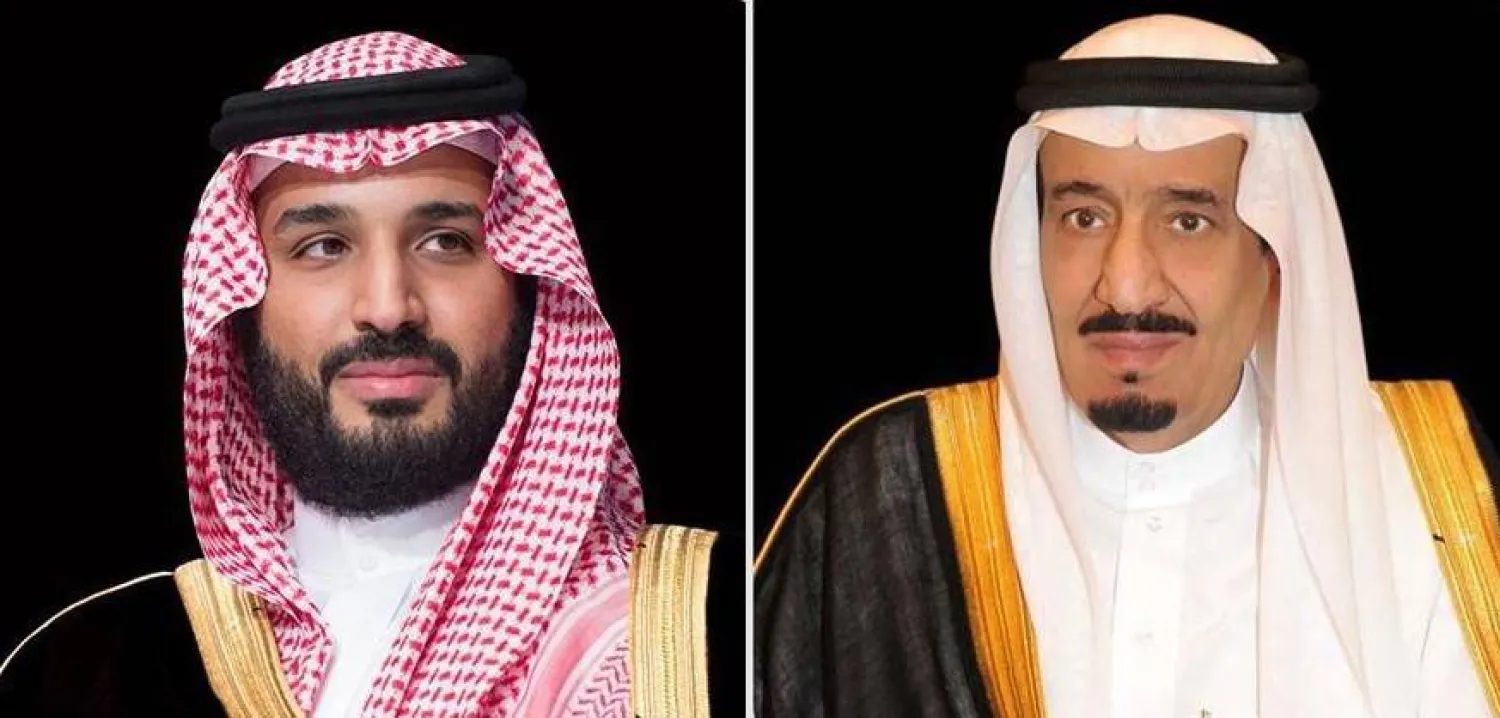


Saudi Govt Rejects Any Attempts to Undermine Somalia’s Sovereignty

Custodian of the Two Holy Mosques King Salman bin Abdulaziz Al Saud chairs the Cabinet meeting in Riyadh. (SPA)
TT

Saudi Govt Rejects Any Attempts to Undermine Somalia’s Sovereignty

Custodian of the Two Holy Mosques King Salman bin Abdulaziz Al Saud chairs the Cabinet meeting in Riyadh. (SPA)

The Saudi government stressed on Tuesday the Kingdom’s rejection of any attempts “to create parallel entities that undermine Somalia's unity, territorial integrity, or national sovereignty.”

Custodian of the Two Holy Mosques King Salman bin Abdulaziz Al Saud chaired the Cabinet meeting that was held in Riyadh.

The Cabinet welcomed the outcomes of the Organization of Islamic Cooperation's extraordinary meeting on Somalia in Jeddah that stressed the Kingdom’s stance on Somalia.

The Cabinet reviewed recent high-level discussions between the Kingdom and various countries, focusing on regional developments, ongoing efforts to anchor security and peace, and the Kingdom's commitment to multilateral initiatives that drive global stability and foster collective responses to shared challenges.

The Cabinet reiterated the centrality of the Palestinian cause, stressing the Kingdom's unwavering support for a ceasefire in the Gaza Strip. These efforts aim to enable the Palestinian people to exercise their right to self-determination and to establish an independent state within the 1967 borders, with East Jerusalem as its capital.

The Cabinet commended the successful conclusion of the Gulf Shield 2026 joint military exercise, hosted by Saudi Arabia. Featuring the air and air defense forces of the Gulf Cooperation Council (GCC) and the GCC Unified Military Command, the exercise underscored the commitment to boosting regional defense cooperation and strengthening collective military readiness.

The Cabinet reviewed several high-profile economic events hosted by the Kingdom, specifically highlighting the Saudi-Japan Ministerial Investment Forum and the Saudi-Canadian Business and Investment Forum. The summits resulted in numerous memoranda of understanding across strategic sectors, including space, cybersecurity, ICT, manufacturing, education, finance, water, and agriculture.


Hadhramaut Figures: Saudi Arabia's Historic Stance Paves Way for New Phase of Stability

Sheikh Essam Al-Kathiri, Secretary-General of the Hadhramaut National Council. (Asharq Al-Awsat)
TT

Hadhramaut Figures: Saudi Arabia's Historic Stance Paves Way for New Phase of Stability

Sheikh Essam Al-Kathiri, Secretary-General of the Hadhramaut National Council. (Asharq Al-Awsat)

Several prominent figures from Yemen's Hadhramaut praised on Monday's Saudi Arabia's stance on the governorate that prevented it from sliding towards deeper unrest and instability.

The figures told Asharq Al-Awsat that the Kingdom's position was not limited to tackling the current crisis, but paves the way for a new phase of stability and development as parties prepare for a Riyadh conference on the southern issue.

The conference will mark a turning point in "rearranging" the political scene in the South, they remarked.

Hadhramaut is at a pivotal moment that demands united ranks that will come up with a unified vision that preserves the governorate's interests and allows it to play an effective role in any future political process, they added

Sheikh Essam Al-Kathiri, Secretary-General of the Hadhramaut National Council, told Asharq Al-Awsat that the Saudi Arabia's "historic" stance and determination over the December 3 developments prevented the governorate from slipping into chaos.

Hadhramaut may have escaped the crisis, but it has embarked on a new path towards progress and development, he stated.

The call for intra-south dialogue is a sign that a secure and stable future is on the horizon, he noted.

"We are already seeing these signs with Saudi Arabia's brotherly support," he remarked.

Another member of the council, Al-Hakam Abdullah al-Nahdi, told Asharq Al-Awsat that the support offered by Saudi Arabia, led by Custodian of the Two Holy Mosques King Salman bin Abdulaziz, Prince Mohammed bin Salman, Crown Prince and Prime Minister, and Defense Minister Prince Khalid bin Salman, will be "etched in Hadhramaut's memory and relayed to generations to come."

"Hadhramaut represents a natural strategic depth to the Kingdom and its security is indivisible from Saudi Arabia's," he added.

"Were it not for Saudi Arabia's stance, we would have been mired in chaos," he went on to say.

He said he was optimistic about the future as long as Saudi Arabia was by Hadhramaut's side, calling on the people to "seize this opportunity by rallying together and shunning division."


Somalia Cancels All UAE Deals

A meeting of the Somali government. (Somali National News Agency)
TT

Somalia Cancels All UAE Deals

A meeting of the Somali government. (Somali National News Agency)

Somalia's government said on Monday that it was annulling all agreements with the United Arab Emirates, including port deals and defense and ‌security cooperation, ‌citing ‌evidence ⁠the UAE had ‌undermined its national sovereignty. 

"The Council of Ministers has annulled all agreements concluded with the United Arab Emirates, ⁠including those involving federal governmental ‌institutions, affiliated entities, and ‍regional administrations ‍operating within the territory ‍of the Federal Republic of Somalia," a statement from Somalia's Council of Ministers said. 

"This decision applies to all agreements ⁠and partnerships relating to the ports of Berbera, Bosaso, and Kismayo ... (and) bilateral security and defense cooperation agreements," the statement added.