


Fifa Trial Leaves Questions over 2022 Qatar World Cup

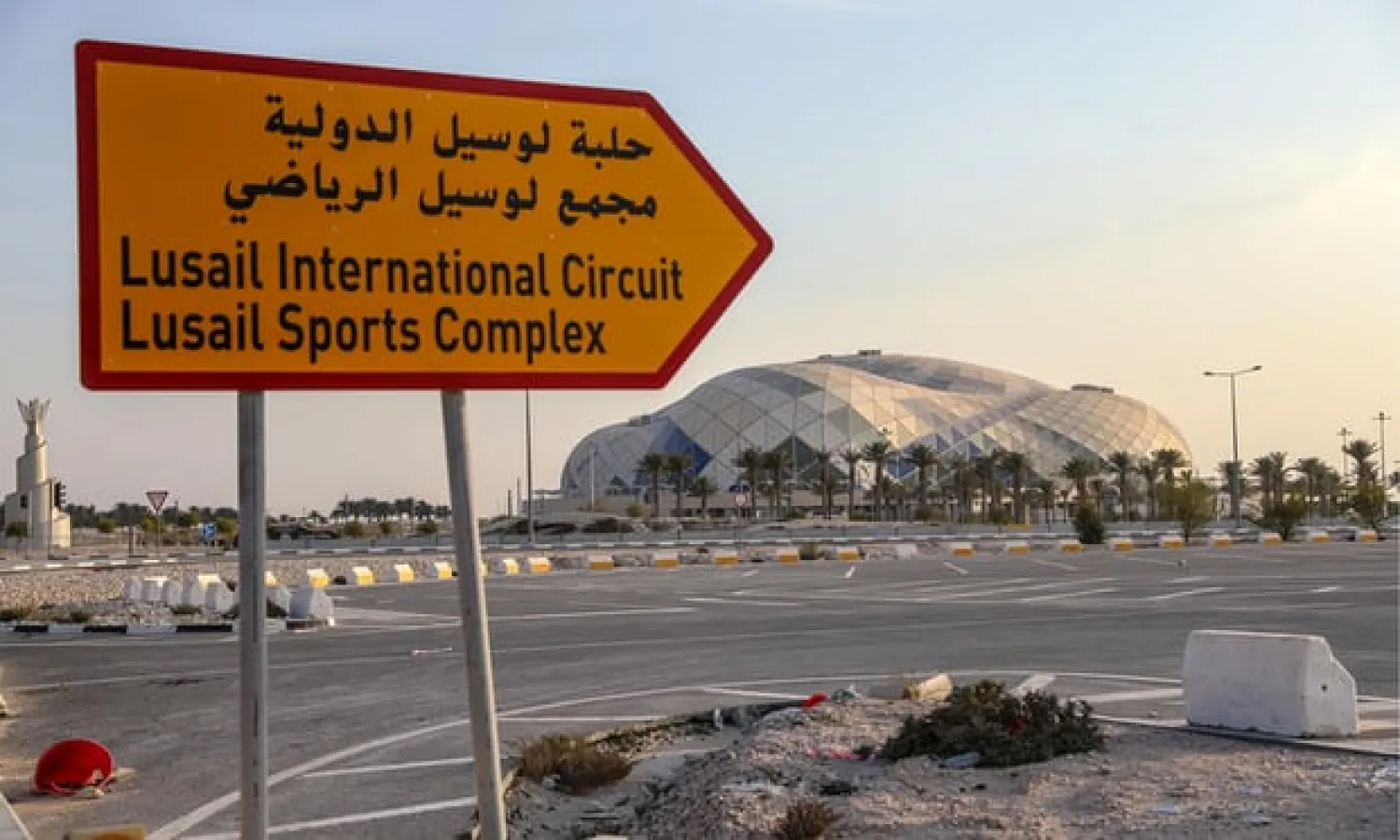
 The construction site for the Lusail Iconic Stadium, a venue for the 2022 World Cup. Photograph: Valery Sharifulin/Tass
The construction site for the Lusail Iconic Stadium, a venue for the 2022 World Cup. Photograph: Valery Sharifulin/Tass
TT

Fifa Trial Leaves Questions over 2022 Qatar World Cup

 The construction site for the Lusail Iconic Stadium, a venue for the 2022 World Cup. Photograph: Valery Sharifulin/Tass
The construction site for the Lusail Iconic Stadium, a venue for the 2022 World Cup. Photograph: Valery Sharifulin/Tass

The most stunning and tantalising revelations of the Fifa trial in Brooklyn, New York, had nothing much to do with the two of the three defendants finally hit with guilty verdicts on Friday. They were comparative small fry among football’s financial feeding sharks.

Gripping as it turned out to have live, lurid evidence presented of endemic bribery on the sale of television rights for South American tournaments, that wretched, racketeering reality had already been established from the guilty pleas of 23 other football officials from the Americas to a medley of corruption charges.

Yet almost as an aside, one defendant revealed in his evidence that key South American Fifa barons received bribes for voting to send the 2022 World Cup to Qatar. These allegations have been left hanging, prompting only further questions, as the defendants José Maria Marin and Juan Ángel Napout, found guilty of bribe-taking on South American TV deals, wait to receive their sentences and the jury continues to deliberate on the third defendant, Manuel Burga.

The claim about Qatar was said early in damning evidence given by Alejandro Burzaco, one of the sports rights company executives pinned by the US justice authorities into pleading guilty to bribing football officials and informing on what they did. The Argentinian’s evidence was key to convicting Marin, the former president of the Brazilian Football Federation (CBF), and Napout, the Paraguayan former president of the South American football confederation, Conmebol. They were found guilty of bribe-taking when selling TV rights for Copa América and Copa Libertadores tournaments, plus, in Marin’s case, the Copa do Brasil.

But Burzaco also testified that one of the most powerful Fifa chiefs of all, Julio Grondona, the Argentina FA president from 1979 until his death, while still in office, in 2014, was prodigiously corrupt. Burzaco said that while he was doling out the bribes in 2011 for the Copa América Grondona had told him he should have another $1m, which was heading for the then CBF president, Ricardo Teixeira.

Grondona was a Fifa executive committee member for 26 years and effectively a deputy to Sepp Blatter in his latter years as world football’s president. According to Burzaco, the Argentinian said that Teixeira “owed him”. This was because “Grondona voted for Qatar to host the 2022 World Cup”.

Burzaco said he travelled to the vote in Zurich in December 2010 with Grondona, Teixeira and the Paraguayan Nicolás Leoz, the Conmebol president for 27 years, and it was “not a private thing” that they were all voting for Qatar. He testified that during the early rounds of voting Grondona and Teixeira had berated Leoz, saying: “What the hell are you doing? Are you the one not voting for Qatar?” Leoz did then vote for Qatar, according to Burzaco. He also said Grondona was enraged by adverse media reports and that he had seen his compatriot demand that Qatari officials pay him $80m or write a letter certifying that they never paid him bribes.

The multibillion-dollar stadium construction work mandated by that 2010 vote continues in Qatar, the tiny, mega-wealthy Gulf emirate currently blockaded by its neighbours in an almighty political confrontation. Qatar’s official bid team have always denied any bribery and none was found in the investigations by the former Fifa ethics committee chairman and US prosecutor, Michael Garcia.

In Brooklyn, for all the visceral testimony heard against the three in the dock, their trial partly provided a daily reminder of the ones who have got away so far or declined to appear.

Marin was the CBF president for three years, having taken over in March 2012 from Teixeira, who is charged with much longer-prevailing and mountainous bribe-taking. The former son-in-law of João Havelange, the corrupt Brazilian Fifa president from 1974-1998, Teixeira, who clung to the gilded office of CBF president for a much-resented 23 years, has always denied wrongdoing and remains in his country with no intention of facing US justice.

Napout was the Conmebol president for one year, from August 2014 until his arrest in Zurich in December 2015. He succeeded Eugenio Figueredo, the Uruguayan who pleaded guilty then, but the meatier target, even at 89, remains Leoz. He ruled into the era of multiplying media millions for televised football and is accused of in effect pioneering this culture of kickbacks for every rights sale.

A power-wielding member of the Fifa executive committee alongside Grondona and Teixeira throughout Blatter’s years, Leoz also denies the charges and is expected to appeal against last month’s decision by a Paraguayan court to grant extradition to the US.

Burga, the former president of the Peru FA about whom the Brooklyn jury is taking longer to reach a verdict, was never a major Fifa figure and may forever now be known mostly for his alleged throat-slicing gesture to Burzaco in court, which his lawyer claimed was just “itching his neck”.

The other big beast who remains out of reach despite having his name on the criminal indictment is Jack Warner, president of the Confederation of North, Central American and Caribbean Football Associations (Concacaf) for 21 years until 2011.

Blatter, whose presidency fell after the dawn raids in Zurich in May 2015, has always raged at the US investigation, rightly arguing that it uncovered corruption largely in the US and the Americas, yet labelled Fifa as the criminal enterprise.

Warner is charged with one of the few alleged crimes involving Fifa business, that he took a $10m bribe to vote for South Africa to host the 2010 World Cup. He denies that, as do the South Africa bid team and government, and he remains at home in Trinidad, fighting the country’s extradition law.

As a result that dreadful allegation remains unresolved, as does this new accusation, that Leoz, Teixeira and Grondona were paid bribes, from somebody, to vote for Qatar.

The key question is whether this evidence, offered up almost in passing in a Brooklyn courtroom, has any solid basis or is just an unprovable secondhand anecdote about a Fifa baron no longer alive to account for himself. And whether the FBI, which has now notched up two criminal convictions to add to 23 guilty pleas, continues to investigate.

The Guardian Sport


Sinner Sees off Popyrin to Reach Doha Quarters

 Italy's Jannik Sinner greets the fans after defeating Australia's Alexei Popyrin in their men's singles match at the Qatar Open tennis tournament in Doha on February 18, 2026. (AFP)
Italy's Jannik Sinner greets the fans after defeating Australia's Alexei Popyrin in their men's singles match at the Qatar Open tennis tournament in Doha on February 18, 2026. (AFP)
TT

Sinner Sees off Popyrin to Reach Doha Quarters

 Italy's Jannik Sinner greets the fans after defeating Australia's Alexei Popyrin in their men's singles match at the Qatar Open tennis tournament in Doha on February 18, 2026. (AFP)
Italy's Jannik Sinner greets the fans after defeating Australia's Alexei Popyrin in their men's singles match at the Qatar Open tennis tournament in Doha on February 18, 2026. (AFP)

Jannik Sinner powered past Alexei Popyrin in straight sets on Wednesday to reach the last eight of the Qatar Open and edge closer to a possible final meeting with Carlos Alcaraz.

The Italian, playing his first tournament since losing to Novak Djokovic in the Australian Open semi-finals last month, eased to a 6-3, 7-5 second-round win in Doha.

Sinner will play Jakub Mensik in Thursday's quarter-finals.

Australian world number 53 Popyrin battled gamely but failed to create a break-point opportunity against his clinical opponent.

Sinner dropped just three points on serve in an excellent first set which he took courtesy of a break in the sixth game.

Popyrin fought hard in the second but could not force a tie-break as Sinner broke to grab a 6-5 lead before confidently serving it out.

World number one Alcaraz takes on Frenchman Valentin Royer in his second-round match later.


Ukraine's Officials to Boycott Paralympics over Russian Flag Decision

Milano Cortina 2026 Winter Olympics - Skeleton - Interview with Ukraine Youth and Sports minister Matvii Bidnyi - N H Hotel, Milan, Italy - February 12, 2026 Ukraine Youth and Sports Minister Matvii Bidnyi speaks after the disqualification of Ukrainian skeleton racer Vladyslav Heraskevych from the Winter Games. REUTERS/Kevin Coombs
TT

Ukraine's Officials to Boycott Paralympics over Russian Flag Decision

Milano Cortina 2026 Winter Olympics - Skeleton - Interview with Ukraine Youth and Sports minister Matvii Bidnyi - N H Hotel, Milan, Italy - February 12, 2026 Ukraine Youth and Sports Minister Matvii Bidnyi speaks after the disqualification of Ukrainian skeleton racer Vladyslav Heraskevych from the Winter Games. REUTERS/Kevin Coombs

Ukrainian officials will boycott the Paralympic Winter Games, Kyiv said Wednesday, after the International Paralympic Committee allowed Russian athletes to compete under their national flag.

Ukraine also urged other countries to shun next month's Opening Ceremony in Verona on March 6, in part of a growing standoff between Kyiv and international sporting federations four years after Russia invaded.

Six Russians and four Belarusians will be allowed to take part under their own flags at the Milan-Cortina Paralympics rather than as neutral athletes, the Games' governing body confirmed to AFP on Tuesday.

Russia has been mostly banned from international sport since Moscow invaded Ukraine. The IPC's decision triggered fury in Ukraine.

Ukraine's sports minister Matviy Bidny called the decision "outrageous", and accused Russia and Belarus of turning "sport into a tool of war, lies, and contempt."

"Ukrainian public officials will not attend the Paralympic Games. We will not be present at the opening ceremony," he said on social media.

"We will not take part in any other official Paralympic events," he added.

Ukrainian Foreign Minister Andriy Sybiga said he had instructed Kyiv's ambassadors to urge other countries to also shun the opening ceremony.

"Allowing the flags of aggressor states to be raised at the Paralympic Games while Russia's war against Ukraine rages on is wrong -- morally and politically," Sybiga said on social media.

The EU's sports commissioner Glenn Micallef said he would also skip the opening ceremony.

- Kyiv demands apology -

The IPC's decision comes amid already heightened tensions between Ukraine and the International Olympic Committee, overseeing the Winter Olympics currently underway.

The IOC banned Ukrainian skeleton racer Vladyslav Heraskevych for refusing to ditch a helmet depicting victims of the war with Russia.

Ukraine was further angered that the woman chosen to carry the "Ukraine" name card and lead its team out during the Opening Ceremony of the Games was revealed to be Russian.

Media reports called the woman an anti-Kremlin Russian woman living in Milan for years.

"Picking a Russian person to carry the nameplate is despicable," Kyiv's foreign ministry spokesman Georgiy Tykhy said at a briefing in response to a question by AFP.

He called it a "severe violation of the Olympic Charter" and demanded an apology.

And Kyiv also riled earlier this month at FIFA boss Gianni Infantino saying he believed it was time to reinstate Russia in international football.

- 'War, lies and contempt' -

Valeriy Sushkevych, president of the Ukrainian Paralympic Committee told AFP on Tuesday that Kyiv's athletes would not boycott the Paralympics.

Ukraine traditionally performs strongly at the Winter Paralympics, coming second in the medals table four years ago in Beijing.

"If we do not go, it would mean allowing Putin to claim a victory over Ukrainian Paralympians and over Ukraine by excluding us from the Games," said the 71-year-old in an interview.

"That will not happen!"

Russia was awarded two slots in alpine skiing, two in cross-country skiing and two in snowboarding. The four Belarusian slots are all in cross-country skiing.

The International Paralympic Committee (IPC) said earlier those athletes would be "treated like (those from) any other country".

The IPC unexpectedly lifted its suspension on Russian and Belarusian athletes at the organisation's general assembly in September.


'Not Here for Medals', Nakai Says after Leading Japanese Charge at Olympics

Ami Nakai of Japan competes during the women's short program figure skating at the 2026 Winter Olympics, in Milan, Italy, Tuesday, Feb. 17, 2026. (AP Photo/Ashley Landis)
TT

'Not Here for Medals', Nakai Says after Leading Japanese Charge at Olympics

Ami Nakai of Japan competes during the women's short program figure skating at the 2026 Winter Olympics, in Milan, Italy, Tuesday, Feb. 17, 2026. (AP Photo/Ashley Landis)

Ami Nakai entered her first Olympics insisting she was not here for medals — but after the short program at the Milano Cortina Games, the 17-year-old figure skater found herself at the top, ahead of national icon Kaori Sakamoto and rising star Mone Chiba.

Japan finished first, second, and fourth on Tuesday, cementing a formidable presence heading into the free skate on Thursday. American Alysa Liu finished third.

Nakai's clean, confident skate was anchored by a soaring triple Axel. She approached the moment with an ease unusual for an Olympic debut.

"I'm not here at this Olympics with the goal of achieving a high result, I'm really looking forward to enjoying this Olympics as much as I can, till the very last moment," she said.

"Since this is my first Olympics, I had nothing to lose, and that mindset definitely translated into my results," she said.

Her carefree confidence has unexpectedly put her in medal contention, though she cannot imagine herself surpassing Sakamoto, the three-time world champion who is skating the final chapter of her competitive career. Nakai scored 78.71 points in the short program, ahead of Sakamoto's 77.23.

"There's no way I stand a chance against Kaori right now," Nakai said. "I'm just enjoying these Olympics and trying my best."

Sakamoto, 25, who has said she will retire after these Games, is chasing the one accolade missing from her resume: Olympic gold.

Having already secured a bronze in Beijing in 2022 and team silvers in both Beijing and Milan, she now aims to cap her career with an individual title.

She delivered a polished short program to "Time to Say Goodbye," earning a standing ovation.

Sakamoto later said she managed her nerves well and felt satisfied, adding that having three Japanese skaters in the top four spots "really proves that Japan is getting stronger". She did not feel unnerved about finishing behind Nakai, who also bested her at the Grand Prix de France in October.

"I expected to be surpassed after she landed a triple Axel ... but the most important thing is how much I can concentrate on my own performance, do my best, stay focused for the free skate," she said.

Chiba placed fourth and said she felt energised heading into the free skate, especially after choosing to perform to music from the soundtrack of "Romeo and Juliet" in Italy.

"The rankings are really decided in the free program, so I'll just try to stay calm and focused in the free program and perform my own style without any mistakes," said the 20-year-old, widely regarded as the rising all-rounder whose steady ascent has made her one of Japan's most promising skaters.

All three skaters mentioned how seeing Japanese pair Riku Miura and Ryuichi Kihara deliver a stunning comeback, storming from fifth place after a shaky short program to capture Japan's first Olympic figure skating pairs gold medal, inspired them.

"I was really moved by Riku and Ryuichi last night," Chiba said. "The three of us girls talked about trying to live up to that standard."
