


Larry King to Asharq Al-Awsat: I was Disappointed in Fidel Castro and I Do Not Interrupt My Guests

May 1 marks the 61st anniversary of broadcasting legend Larry King’s first radio broadcast
TT

Larry King to Asharq Al-Awsat: I was Disappointed in Fidel Castro and I Do Not Interrupt My Guests

May 1 marks the 61st anniversary of broadcasting legend Larry King’s first radio broadcast

May 1 marks the 61st anniversary of broadcasting legend Larry King’s first radio broadcast at WAHR in Miami Beach in Florida. Since then, he’s conducted more than 60,000 interviews on both radio and TV, most famously for 25 years on CNN.

After stepping back from his regular show on CNN in 2010, King returned to the airwaves in 2012, founding the Ora TV production company in conjunction with Mexican businessman Carlos Slim. The following year, Ora signed a deal with controversial Russian media conglomerate Russia TV to carry his “Larry King Now” and “Politicking” shows.

To mark his 61 years of broadcasting, King, now 84, recently sat down with Asharq Al-Awsat to discuss the highs and lows of his illustrious career, the “fake news” phenomenon, his views on Saudi Crown Prince Mohammed bin Salman, and what keeps him going after so many years in the business.

You have been broadcasting and working in the media for almost more than 60 years, and you will celebrate your 61st year in this field on May 1st. How do you feel about that?

I never thought I would last for so long, I thought I could retire in 2010 when I left CNN but I couldn’t, and then we came up with ora.tv for more than six years now. I think it keeps me going, I love what I do, I love asking questions and I had no idea that I would be on the air for 61 years.

Do you think someone who works in the media can retire one day?

It's hard to retire from the media, I do not call it work. I love what I do and I love meeting people, I do not know what I’d retire to, retire to what.

Let’s go back to the beginnings of your career. Do you remember what was the worst moment for you on radio or on TV?

My first day on radio was scary because I did not know what to say, I just been given a new name, I was nervous. I always wanted to be on radio, but I did not think I could talk well, I could not say anything. The general manager kept talking, he said “this is communication business, communicate”. I turned on the microphone and I told the audience what was happening, that I just had a new name, that I wanted to be on radio all my life, that I was nervous, so I told them the truth. Since then, I’ve never been nervous, I have complete confidence in myself on the air. I love what I do. So I would say that my worst moment was my first moment.

If the time goes back, would you work in the media? Or you would have chosen something else? Why?

I'd still work in the media, I love what I do. But, if I couldn't have done that, I think I'd have been a standup comedian. I do a lot of that - comedy and storytelling - when I go out speaking. And I've done a comedy tour in the past. But my favorite job will still to be in the media. There's nothing like communicating with and interviewing interesting people for a living.

After all these years in the media, who was your favorite guest?

It's very hard to pick one up, you can say Frank Sinatra, Marlon Brando, Martin Luther King, Nelson Mandela. In the entertainment field, Sinatra and Brando would be the top 2.

And in the political field?

I met presidents, prime ministers from around the world, France, Germany, England, Mexico, South American leaders. Long list.

After conducting more than 60,000 interviews, who is the person that you wish to interview, and did not have the chance to?

Fidel Castro, I thought I could arrange a meeting with him when I went to Cuba some years ago, but we could not make it happen. Castro has led his country for more than 60 years, and I do not think any other leader have done that. Forget what you think of him politically, he would have been fascinating to talk to, but I never got to meet him.

If you had the chance to have the last interview in your life who would you like to meet?

I’d like to be old enough to meet "the president not yet born". I would like to meet German Chancellor Angela Merkel, she is a fascinating woman she has a lot of power, maybe the most powerful person in Europe. I also like to meet the prime minister of England, she is also fascinating to me, Theresa May and new French President Emmanuel Macron.

Do you think you will interview Prince Mohammed bin Salman?

Oh, I would love to interview him, I would like to have an interview with Saudi King Salman, and Crown Prince Mohammed bin Salman. I am sure I will make this interview.

Do you remember all the interviews that you conduct?

No, I did a lot of interviews and I do not remember many of them.

Who helps you to prepare the questions?

No one tells me the questions, I make up my own questions, they give me facts about people. I have a great staff that gives me information about the people, this staff I am working with, is the best, we had the biggest staff in CNN, but this staff is the best. They give me preparation and I make my own questions. The most important thing in questioning is listening to the answers, because often answers bring up follow up questions.

What about your experience with the Russians, why did you accept their offer to move to RT (Russia Today)?

I did not do it, RT made an agreement with ora.tv. I own a percentage of the company but not the majority. They licensed my program, in other ways I don’t work for them, and they never ever interfere with it. At my Politicking show, Russia and Putin are often criticized, they have never taken it out. I’ve never been edited.

And before that, with CNN, have they ever forced you to say something, have they ever interfered, did you change some political points of view?

Never, I’ve been very lucky, in all my years I’ve never been told what to ask what to do, who to be against or not to be against.

What do you think of what is happening now in the media, and the "fake news" terminology?

I do not know what that means. I have been in the media for a long time. In all my years in CNN and Ora, I’ve never said a word that is fake. There are opinionated news, MSNBC and FOX are opinionated, but fake news I have never seen.

Do you think the media is in risk because of social media? Or do you think they complete each other?

On social media, everyone has an opinion, everyone gives information, and people use it a lot. I don’t pay much attention to it, but anonymous people sending in their opinions are fine. I look responsibly at the major networks CBS, NBC and ABC. I respect the New York Times, Washington Post, Los Angeles Times, Miami Herald, I respect the BBC and a lot of media.

Media is fine, I am sad that the newspapers are going away in America, as well as books and encyclopedias, because everything has become dependent on the Internet. It’s a changed world.

Do you think journalism will disappear or the print will disappear?

I hope print doesn’t disappear, I love print. I've written a column for years for USA TODAY and MIAMI HERALD. I am sorry that our kids don’t read newspapers, that’s sad to me. I have teenage boys, I never see them reading newspapers, they get all their information from their iPhone and television. But you cannot stop time and this technology advance. It is very hard to read in the newspaper news that you don’t know, because you heard it already.

In one of your interviews, your guest Jerry Seinfeld got mad on air. Tell us why?

He got mad because I asked him “was the show cancelled?” and that was my fault. In fact, when I was on the air, Seinfeld was on the air, so I never got to watch Seinfeld until after I left CNN. Now I've been watching Seinfeld for 6 or 7 years, because I tape in the afternoon, and the show is brilliant, and I understand his success. We became friends after that, and I was in his movie The Bee Movie, and we did all the scenes together, and he appeared in my show after that.

People say that Larry King never "crowds his guests" in a corner, you do not interrupt them if not needed, he asks questions and lets them answer. How do you comment on this?

I do not believe in interrupting, but I never was afraid to ask any question. I ask in a different manner than other people ask. I am not confrontational, we make more fun page news than a talk show and I always got to the point. I have heard that said, but I have never heard a good example of it.

Why do people say that?

I don’t know why, I guess jealousy, I ask good questions, I listen to the answers, I follow up. I am a journalist, I am curious. I want to know everything about everything, so I’ve never understood that. I can’t tell people what to like and what not to like. I do my show my way, and I love what I do. You can either like me or not like me, you can be informed or not informed. I will say this, you watch any interview of mine and you will learn a lot more than you knew before it started.

Why is Larry King different? Why Larry King more famous than anyone?

I do not know why I am different; I just do me. I don’t analyze myself, someone told me years ago, "The only secret in your business is that there is no secret. Be yourself”. I’ve always been myself so I can’t write down what I do, I don’t know how I do it, I just know I love to communicate, I love broadcasting, I love radio, I love television I love print, and I love the whole business of communication. If you like what I do, you like it, and if you don’t, I can’t make you like it.

So, What makes you famous? What makes you different?

I've thought about that a lot. I think it's just because I don't pretend to be an intellectual. I don't have an agenda. I'm very curious. I ask short questions. I leave my ego at the door. I’m an everyman - and my guests have responded to that over the years. I can be as interested in a conversation with someone I meet on the street as I am in a conversation with the president. I like talking to people and hearing their stories. I ask questions that the average person wants to know about, maybe doesn't think about, but clearly wants to know about.

Have you watched Saudi Crown Prince Mohammed bin Salman's interview on "60 Minutes" on CBS?

Of course, he was very good. I am really interested in what he does, he is changing the country and I see the big things coming to Saudi Arabia, things we have not seen before.

I see Saudi Arabia changing rapidly, it’s almost a kind of revolution. He is a special young man, I love people who transform, I love people who change the landscape, and I think that this is what Prince Mohammed bin Salman is doing. I wish him the best.

What is your advice for people in the media? For those who want to be great like Larry King?

Always be yourself and never give up. If someone tells you, you can’t be in and you believe them, then you can’t be in, if you want it you’ll get it. There’s always a room in the media for talent you can make it if you’re good at it and you want it. Never give up.

May I ask some personal questions, general ones?

Yes sure, go ahead.

You have experienced critical health conditions in your life starting from the heart, type-2 diabetes in 1987 and prostate cancer in 1999 and recently you underwent surgery for lung cancer. How have these health crises affected your life and your way of thinking especially since you have always spoken of your fear of death?

Well, the way it has affected my life is that everything that’s happened has made me be a healthier person. I gave up smoking cigarettes. I try to eat right. I try to keep my body and mind in shape. It also forces me to get regular checkups, which is how I picked up the lung cancer at a very early stage. I'm very health aware. I'm not a hypochondriac, but I'm very health aware. I've been very lucky.

My work and my family keep me going. It keeps you alert. I think the fact that I keep on working keeps me young. I don't know where my stamina comes from, but I have a lot of stamina.

What’s your daily schedule? Your favorite hobby? Your favorite show? Your favorite food?

I get up early. I have breakfast with friends every day. We eat food and talk about things that are happening in the news, in sports, in politics. I read five newspapers every day. Then I go into the studio and tape my shows, “Larry King Now” and Politicking until the early afternoon.

I watch news and sports on television. I'm always learning. I'm always reading. I love going to the movies. For a laugh, I love watching all the old episodes of Seinfeld. I love going to my kid’s baseball games. For my favorite meal - I believe that would be lamb chops. I've always loved lamb chops since I was a child. With a baked potato and caesar salad, and if I had to choose something for dessert it would be lemon meringue pie.
Microsoft President: Saudi Arabia is Moving from Exporting Oil to Exporting Artificial Intelligence

Naim Yazbeck, President of Microsoft for the Middle East and Africa (Microsoft) 
TT

Microsoft President: Saudi Arabia is Moving from Exporting Oil to Exporting Artificial Intelligence

Naim Yazbeck, President of Microsoft for the Middle East and Africa (Microsoft) 

As Saudi Arabia accelerates its national transformation under Vision 2030, the region’s technology landscape is undergoing a decisive shift. For the first time, “the region is not merely participating in a global transformation, it is clearly leading it,” said Naim Yazbeck, President of Microsoft for the Middle East and Africa, in an interview with Asharq Al-Awsat.

Yazbeck argued that Saudi Arabia now stands at the forefront of what he called “a historic turning point not seen in the past century,” defined by sovereign cloud infrastructure, artificial intelligence, and national innovation capabilities.

He noted that Saudi Arabia’s rapid progress is driven by clear political will, explaining that the state is not simply modernizing infrastructure, but views AI as a strategic pillar comparable to the historical role of oil. While oil underpinned the economy for decades, AI has emerged as the new resource on which the Kingdom is staking its economic future.

According to Yazbeck, the recent visit of Crown Prince and Prime Minister Mohammed bin Salman to the United States underscored this shift, with AI and advanced technologies taking center stage in discussions, reflecting Saudi Arabia’s intent to build a globally influential knowledge economy.

This direction marks the start of a new phase in which the Kingdom is no longer a consumer of imported AI technologies but a developer of local capabilities and a producer of exportable knowledge, strengthening technological sovereignty and laying the foundation for an innovation-driven economy.

A Distinctive Tech Market

Yazbeck stressed that the regional landscape, especially in Saudi Arabia, is witnessing an unprecedented shift. Gulf countries are not only deploying AI but also developing and exporting it. The Kingdom is building advanced infrastructure capable of running large-scale models and providing massive computing power, positioning it for the first time as a participant in global innovation rather than a mere technology importer.

He pointed to a common sentiment he encountered in recent meetings across Riyadh’s ministries, regulatory bodies, national institutions, and global companies: “Everyone wants to be ahead of AI, not behind it.” Ambition has translated into action through revised budgets, higher targets, and faster project timelines.

He added that Saudi institutions now demand the highest standards of data sovereignty, especially in sensitive financial, health, and education sectors. The regulatory environment is evolving rapidly; Saudi Arabia has modernized its cybersecurity, data governance, cloud, and AI frameworks faster than many countries worldwide, turning regulatory agility into a competitive asset.

Yazbeck emphasized that success is not measured by the number of AI projects but by their alignment with national priorities, productivity, healthcare, education, and cybersecurity, rather than superficial, publicity-driven initiatives.

The ‘Return on Investment’ Equation

According to the Microsoft official, building an AI-driven economy requires more than advanced data centers. It begins with long-term planning for energy production and the expansion of connectivity networks. He further said that running large models demands enormous electrical capacity and long-term stability, which the Kingdom is addressing through strategic investments in renewable energy and telecommunications.

Yazbeck said return on investment is a central question. Nationally, ROI is measured through economic growth, job creation, higher productivity, enhanced innovation, and stronger global standing. At the institutional level, tangible results are already emerging: with tools such as Copilot, employees are working faster and with higher quality, shedding routine tasks and redirecting time toward innovation. The next phase, he added, will unlock new business models, improved customer experiences, streamlined operations, and higher efficiency across sectors.

Sovereignty and Security

Digital sovereignty is now indispensable, Yazbeck said. Saudi Arabia requires cloud providers to meet the highest accreditation standards to host sensitive national systems, which are criteria Microsoft is working to fulfill ahead of launch. Once the new cloud regions in Dammam go live, they will become part of the Kingdom’s sovereign infrastructure, requiring maximum protection.

Microsoft invests billions annually in cybersecurity and has repelled unprecedented cyberattacks, an indicator of the threats national infrastructure faces. The company offers a suite of sovereign cloud solutions, data-classification tools, and hybrid options that allow flexible operation and expansion. Yazbeck noted that sovereignty is not a single concept but a spectrum that includes data protection, regulatory control, and local hosting all play critical roles.

Data: The Next Source of Advantage

Yazbeck identified data as the decisive factor in AI success. He warned that any model built on unclean data becomes a source of hallucinations. Thus, national strategy begins with assessing the readiness of Saudi Arabia’s data landscape.

He revealed that the Kingdom, working with SDAIA, the Ministry of Communications, and national companies, is constructing a vast, high-quality data ecosystem, laying the groundwork for competitive Arabic language models.

He also called for a robust framework for responsible AI, saying that speed alone is not enough. He stressed that safe and trustworthy use must be built from the start, noting that Microsoft is collaborating with national bodies to craft policies that prevent misuse, protect data, and ensure fairness and transparency.

Skills: A National Advantage

Human capability is the true engine of national power; Yazbeck underlined, pointing that infrastructure means little without talent to run and advance it. He stated that Saudi youth represent the Kingdom’s greatest competitive advantage.

Microsoft has trained more than one million Saudis over the past two years through programs with SDAIA, the Ministry of Communications, the Ministry of Education, and the MISK Foundation. Its joint AI Academy has graduated thousands of students from over 40 universities, and it has launched broad programs to train teachers on AI tools in education.


El-Mahboub Abdul Salam to Asharq Al-Awsat: Al-Turabi Was Shocked by Deputy’s Role in Mubarak Assassination Plot

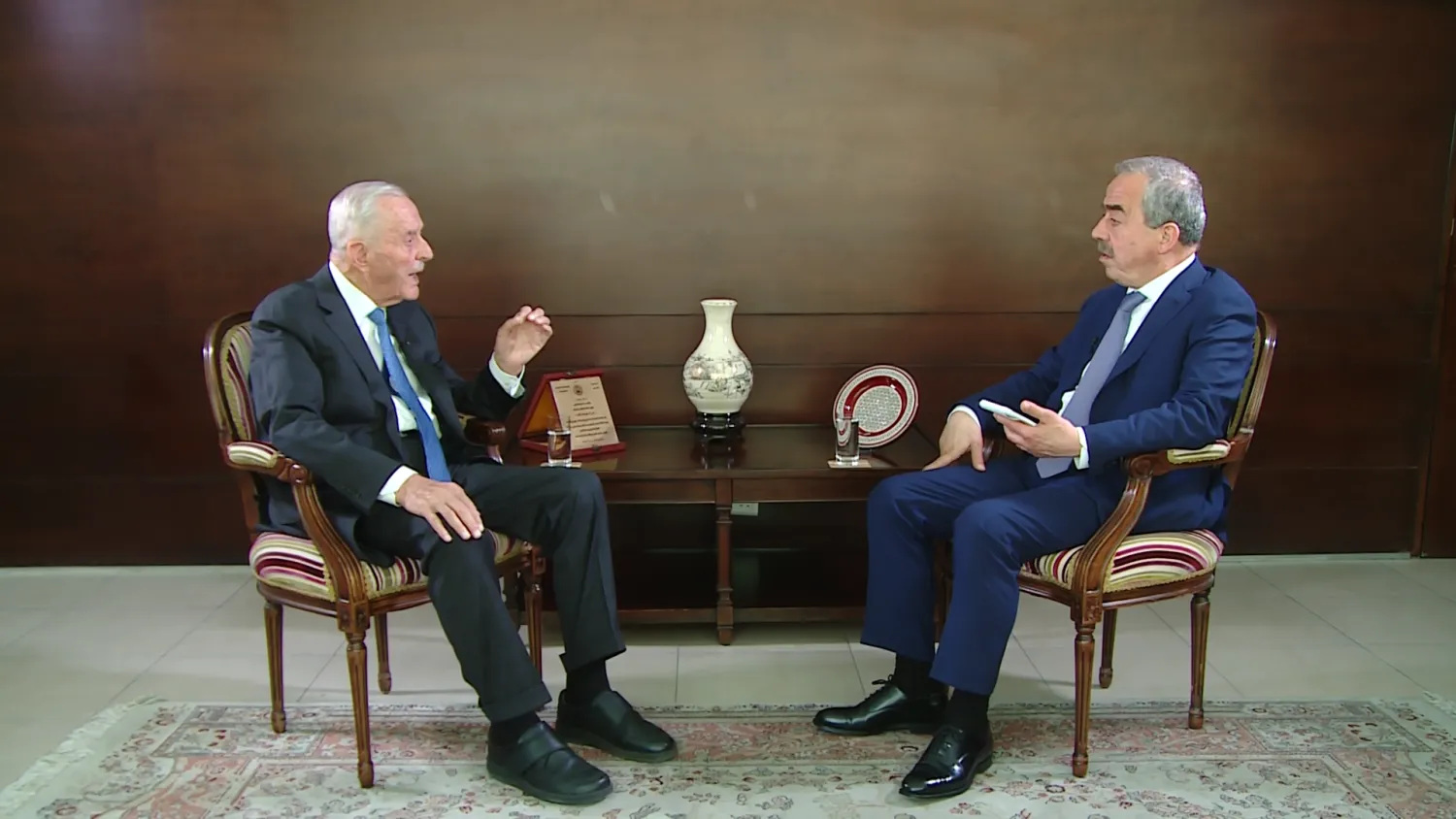
Dr. El-Mahboub Abdul Salam speaks to Asharq Al-Awsat. (Asharq Al-Awsat)
TT

El-Mahboub Abdul Salam to Asharq Al-Awsat: Al-Turabi Was Shocked by Deputy’s Role in Mubarak Assassination Plot

Dr. El-Mahboub Abdul Salam speaks to Asharq Al-Awsat. (Asharq Al-Awsat)

This happens only in thrillers. A religious leader summons an obscure army officer and meets him for the first time two days before a planned coup. He appoints him president with an unprecedented line, “You will go to the palace as president, and I will go to prison as a detainee.”

That is what happened on June 30, 1989. The officer, Omar al-Bashir, went to the presidential palace while security forces took Dr. Hassan Al-Turabi to the notorious Kober Prison along with other political leaders.

Al-Turabi’s “ruse” aimed to conceal the Islamic nature of the coup so that near and distant governments would not rush to isolate it. Intelligence agencies in neighboring states, including Egypt, fell for the deception and assumed that Bashir had seized power at the head of a group of nationalist officers. Cairo recognized the new regime and encouraged others to follow.

This happens only in stories. A young man landed at Khartoum airport carrying a passport that said his name was Abdullah Barakat. He arrived from Amman. One day he would knock on Al-Turabi’s office door, though Al-Turabi refused to see him.

Soon after, Sudanese security discovered that the visitor was a “poisoned gift,” in Al-Turabi’s words. He was the Venezuelan militant known as Carlos the Jackal, a “revolutionary” to some and a “notorious terrorist” to others.

He led the 1975 kidnapping of OPEC ministers in Vienna under instructions from Palestinian militant Dr. Wadie Haddad, an architect of aircraft hijackings. One night, and with the approval of Al-Turabi and Bashir, French intelligence agents arrived in Khartoum. Carlos awoke from sedatives aboard the plane taking him to France, where he remains imprisoned for life.

Bashir’s government was playing with explosives. In the early 1990s, it also hosted a prickly young man named Osama bin Laden, who after Afghanistan was seeking a base for training and preparation. He arrived under the banner of investment and relief work. Mounting pressure left bin Laden with no option but to leave.

This happens only in thrillers. The leadership of the National Islamic Front gathered with its top figures, Bashir, and security chiefs. The occasion was the assassination attempt against Egyptian President Hosni Mubarak in Addis Ababa.

Ali Osman Taha, Al-Turabi’s deputy, stunned attendees by admitting that Sudanese security services were linked to the attempt. Those present understood that he had been one of its sponsors. Neither the sheikh nor the president had prior knowledge.

After the attempt, some proposed killing the operatives who had returned from the Ethiopian capital to eliminate any trail that could incriminate the Sudanese regime. Al-Turabi opposed the assassinations. The impression spread that Bashir supported the killings and signs of a rift between him and Al-Turabi began to appear.

The split later became formal in what came to be known as the “separation” among Islamists. Power is a feast that cannot accommodate two guests. Bashir did not hesitate to send to prison the man who had placed him in the palace. Al-Turabi did not hesitate to back Bashir’s handover to the International Criminal Court. Al-Turabi tasted the betrayal of his own disciples. Disciples, after all, are known to betray.

This happens only in thrillers. Through Al-Turabi’s mediation, Osama bin Laden agreed to meet an intelligence officer from Saddam Hussein’s regime named Farouk Hijazi. The meeting produced no cooperation, but it became one of the early arguments George W. Bush used in 2003 to justify the invasion of Iraq.

Hijazi also met senior Sudanese security officials who later visited Baghdad and were warmly received, and it became clear that Ali Osman Taha was among Saddam’s most enthusiastic admirers.

Sudanese blood now flows like the waters of the Nile. Bodies scattered on the streets of el-Fasher are almost making the world forget the bodies buried under the rubble of Gaza. Hard men are pouring fire onto the oil of ethnic and regional hatreds. Making corpses is far easier than making a settlement, a state, or institutions.

Since independence, Sudan has been a sprawling tragedy. Because the present is the child of the recent past, searching for a witness who knows the game and the players, and journalism leads to meeting and interviewing the experienced politician and researcher Dr. El-Mahboub Abdul Salam.

For a decade he served as Al-Turabi’s office director. For another decade, he wrote some of Bashir’s speeches.

In recent years, his bold conclusions stood out, including that Sudan’s Islamic movement has exhausted its purposes, that it shares responsibility with other elites for the country’s condition, and that it erred in dealing with others just as it erred when it chose the path of coups, violence, ghost houses, and contributed to pushing the South outside Sudan’s map.

Abdul Salam does not hesitate to scrutinize Al-Turabi’s own mistakes and his passion for wielding power. I sat down for an interview with him, and this is the first installment.

Abdul Salam was a first-year university student when Al-Turabi’s ideas caught his attention. Al-Turabi then appeared different, moving outside Sudan’s traditional social divides. He also knew the West, having studied in Paris and London. In 1990, Abdul Salam became Al-Turabi’s office director until the end of that decade.

Abdul Salam recalled: “I am often asked this question, are you a disciple of Al-Turabi? I have told them more than once, yes, I am a disciple of Al-Turabi, a devoted one. But I graduated from this school and became an independent person with my own ideas and experiences, perhaps broader than those of the Islamic movement’s earlier leaders.”

Asked about when he discovered Al-Turabi’s mistakes and developed a critical sense toward his experience Abdul Salam said that it was “perhaps in 2011, with the ‘Arab Spring’, and the Egyptian revolution in particular and the change that took place in Egypt.”

A tense beginning

Abdul Salam said Al-Turabi’s relationship with Egyptian President Hosni Mubarak began on polite terms when they met in 1986 during an Al-Azhar conference on the Prophet’s biography. At the time, he recalled, Cairo was hostile or deeply wary of the Sudanese government under Sadiq al-Mahdi. The meeting, in his words, “was more courtesy than substance.”

According to Abdul Salam, relations later deteriorated sharply because of the deception surrounding the 1989 coup, then worsened further after the 1995 assassination attempt against Mubarak in Addis Ababa.

The Addis Ababa shock

Abdul Salam recounted that a major political meeting was convened after the failed attempt, held at the home of Ali Osman Mohammed Taha and attended by Al-Turabi, Bashir and all senior leaders. He said that during this gathering, both Bashir and Al-Turabi learned “for the first time” that Sudanese security services and Al-Turabi’s own deputy had been involved in the operation without informing them, describing the moment as a “huge shock” to the leadership.

He said Taha admitted at the meeting that the security services were involved and that it later became clear he himself was implicated. When a proposal emerged to kill the operatives returning from Ethiopia to erase evidence, Abdul Salam said Al-Turabi “rose in fierce opposition,” calling the idea outside both politics and Sharia. He cited Dr. Ali al-Haj as saying this moment “marked the beginning of the split.”

Egyptian intelligence reassesses Sudan

Abdul Salam describes how the Sudanese and Egyptian intelligence services eventually moved toward reconciliation. He said Omar Suleiman, Egypt’s intelligence chief, sent a message through French intelligence stating that the attack had been carried out by Egyptian Islamist groups.

According to Abdul Salam, Suleiman maintained that Sudan had only provided what he described as logistical support including money, shelter and weapons, rather than planning or executing the attack. This understanding, he says, prevented Egypt from responding harshly.

The communication opened a door for “major repair” of relations, Abdul Salam added, as Sudan began presenting itself as a pragmatic government after distancing itself from Al-Turabi.

After 1999: Rapprochement with Cairo

The reconciliation with Egypt and the region, Abdul Salam noted, took shape after 1999. He recalled that Taha’s visit to Cairo came after that date, followed by a visit from intelligence chief Salah Gosh. Foreign Minister Mustafa Osman regularly traveled to Egypt and maintained a friendship with his Egyptian counterpart, further improving ties.

The memorandum that shifted power

Abdul Salam described the turning point in relations between Bashir and Al-Turabi as the “Memorandum of Ten” in October 1998. During a major Shura gathering attended by hundreds of party, state and tribal leaders, ten members presented a document calling for the removal of Al-Turabi and the installation of Bashir as both head of state and leader of the movement.

He said the memorandum included reform language, but its essence was ending dual leadership. Bashir, according to Abdul Salam, “conspired with the ten” and accepted the proposal, calling the conspiracy “clear and very public.”

Abdul Salam recounted that Bashir wanted to confine Al-Turabi to a symbolic role and that some officers close to Bashir even asked Al-Turabi to remain as a spiritual figure who would bless decisions made elsewhere. “Al-Turabi would not accept this,” he stressed.

Al-Turabi’s influence and gradual reemergence

Reflecting on the early years of the Salvation regime, Abdul Salam said Al-Turabi authored all strategic decisions while the government handled daily business independently. He avoided public appearances during the first five years, he recalls.

Abdul Salam added that Al-Turabi gradually reemerged and became speaker of the National Assembly in 1996. He said Al-Turabi’s influence “never truly faded” because of his charisma, knowledge and strong presence, and diminished only when he was imprisoned after the split.

The 2001 Memorandum and South Sudan

Abdul Salam said Al-Turabi was arrested after the signing of a memorandum of understanding with the Sudan People’s Liberation Movement in February 2001. He confirmed he personally signed the document.

Asked whether he felt responsible for South Sudan’s independence, Abdul Salam rejected the suggestion. He said his position was clear and aligned with Sheikh Rached Ghannouchi, who argued that unity required suspending the hudud laws introduced under President Jaafar Nimeiri. Abdul Salam told southern leaders that unity should take precedence over maintaining those laws, adding that Islamic legislation, like all legal systems, is shaped by its psychological and historical context.

Complicated relationship

Abdul Salam described the relationship between Al-Turabi and his deputy Ali Osman Taha as complex and shaped by long-standing philosophical differences. He recalled a sharp split within the Islamist movement in 1968 when Taha aligned with figures who believed Al-Turabi had grown too dominant.

He cited Taha’s personal doctrine as follows: if an individual disagrees with the organization he sides with the organization, if the organization disagrees with the state he sides with the state, and if the state disagrees with Islam he sides with Islam. Al-Turabi, Abdul Salam said, did not operate that way and pursued his own ideas regardless of circumstance.

Abdul Salam recalled that during the Salvation regime, Ahmed Osman Maki had originally been prepared to succeed Al-Turabi but later moved to the United States. He stated that Maki’s strong charisma may have made him unsuitable as number two, while Taha excelled at concealing his emotions and functioning as deputy. He said the two leaders worked in outward harmony during the early years of the regime before deep differences surfaced later.

Abdul Salam added that Taha admired Saddam Hussein’s model of governance and believed Sudanese society was not ready for liberalism or pluralism.

The Arab Spring and the Islamic movement’s decline

According to Abdul Salam, the Arab Spring was “harsh on the Islamic movement.” Although the regional wave ended around 2012, Sudan’s version of it erupted in 2019. He said the uprising struck Islamists hard and reflected the real sentiment of the Sudanese street.

He argued that during its years in power, the Islamic movement held a barely concealed hostility toward civil society, youth, women and the arts. Sudanese intellectual and cultural life, he said, naturally opposed the regime’s long authoritarian rule. The revolution’s slogans of peace, freedom and justice were not part of the movement’s vocabulary, and over time the movement evolved into a posture “contrary to Sudanese society.”

The Communist Party’s influence

Abdul Salam said the Sudanese Communist Party helped shape opposition to the Salvation regime. After the execution of its leaders in 1971, the party underwent major transformation, and after the collapse of the Soviet Union it fully embraced liberalism. He remarked that many young Sudanese seeking freedom, justice and an expanded role for women found the Communist Party closer to their aspirations than the conservative Islamist movement.

Responsibility for Sudan’s political impasse

Abdul Salam rejected the narrative that Sudan’s decades of military rule make the military solely responsible for the country’s crises. He stressed that responsibility also lies with the civilian elite. Officers were part of this elite, and civilians who supported them in government shared responsibility. Sudan’s civilian parties, he argued, lacked clear programs to address longstanding distortions inherited from the colonial era.

One of Abdul Salam’s most sensitive moments with Al-Turabi occurred on the eve of the Islamist split. He said he personally succeeded in arranging a meeting between Al-Turabi and Bashir after months of estrangement, trying to avoid complete rupture. Bashir proposed turning the party conference into a political showcase while setting aside differences. Al-Turabi agreed, but according to Abdul Salam, disagreements reappeared by the end of the day.

Writing Bashir's speeches and choosing a side

Abdul Salam described his relationship with Bashir as very good and said he wrote the president’s speeches from early 1990 until the late 1990s. The speeches reflected the movement’s overall positions.

When the split occurred, Abdul Salam aligned with Al-Turabi not on personal grounds, but because he shared his positions on democracy, public freedoms, federal governance and adherence to agreements with the South.

Abdul Salam said the relationship between Al-Turabi and Bashir resembles other regional cases involving a sheikh and a president only to a limited extent. Bashir was originally a member of the Islamist movement led by Al-Turabi and obeyed him even after becoming president.

The split emerged naturally once the visible authority of the presidency clashed with the hidden authority of the movement, “which was the one truly governing,” he said.


UK Chancellor to Asharq Al-Awsat: Strengthening Partnership with Saudi Arabia a Top Priority

Reeves speaks during the Future Investment Initiative Conference in Riyadh (Asharq Al-Awsat)
TT

UK Chancellor to Asharq Al-Awsat: Strengthening Partnership with Saudi Arabia a Top Priority

Reeves speaks during the Future Investment Initiative Conference in Riyadh (Asharq Al-Awsat)

UK Chancellor of the Exchequer Rachel Reeves affirmed that strengthening relations and economic partnership with Saudi Arabia represents a top priority for her government, noting that under the ambitious Vision 2030, Saudi Arabia finds in the United Kingdom an ideal partner thanks to Britain’s stability, regulatory flexibility, and global expertise.

She revealed her government’s plan to support major projects that unleash growth, starting with the expansion of Heathrow Airport and extending to infrastructure spending exceeding £725 billion ($958.7 billion) over the next decade.

In an exclusive interview with Asharq Al-Awsat from Riyadh, Reeves said her participation in the Future Investment Initiative (FII) Conference stems from a key goal: deepening mutual investment and trade. She confirmed that this visit, the first by a UK Chancellor to the Gulf in six years, reflects London’s seriousness in strengthening regional relations.

“This visit marks the first time a UK Chancellor has travelled to the Gulf in six years, which reflects just how seriously this government takes our relationship with Saudi Arabia and the wider region,” Reeves said.

“I’m here with one of the largest UK business delegations to the Gulf in recent years, and our participation is driven by our number one priority: growth.”

“At a time of global uncertainty, the UK offers stability, regulatory agility and world-class expertise – qualities that make us an ideal partner for Saudi Arabia's ambitious Vision 2030 transformation,” she added.

Reeves emphasized the economic complementarity between the two nations, noting that her delegation includes UK business leaders in key sectors such as financial services, life sciences, AI, clean energy, and advanced manufacturing.

She pointed out that Britain’s expertise in these fields uniquely positions London to support Saudi Arabia’s economic diversification, while Gulf investment helps drive growth and create jobs across the UK. According to her, joint trade and investment deals exceeded £10 billion over the past 18 months alone, creating more than 4,100 jobs in the United Kingdom.

Reeves and her accompanying delegation meet with Saudi Minister of Commerce Majid Al-Qasabi at the National Competitiveness Center in Riyadh (Ministry)

Deepening Mutual Investment and Trade

The Chancellor said: “My discussions are focused on deepening the two-way investment and trade that benefits families and businesses in both our countries. The £6.4 billion ($8.4 billion) package we've announced this week demonstrates the tangible results of this approach.”

According to Reeves, the package includes £5 billion in Saudi-backed exports supporting British manufacturing, alongside major investments by Barclays, HSBC and others, strengthening their presence in Saudi Arabia.

Key Priorities

Reeves said that one of her top priorities is accelerating progress on a UK–GCC Free Trade Agreement, noting that such a deal could boost bilateral trade by 16 percent and represents the kind of forward-looking partnership that creates prosperity for both sides.

“My vision is straightforward: I want Britain and Saudi Arabia to be partners of choice for each other. We regulate for growth, not just risk. We're backing key infrastructure projects like Heathrow expansion – where the Saudi Public Investment Fund holds a 15 percent stake,” she said.

She added: “We’re creating opportunities for co-investment, particularly through our National Wealth Fund and pension reforms that will unlock tens of billions for infrastructure and innovation.”

“My message at the FII this week was clear – I'm championing the UK as a stable investment destination,” she stressed, referring to Britain’s “ironclad commitment to fiscal rules and our modern Industrial Strategy focused on the sectors of the future.”

Reeves speaks during the Future Investment Initiative Conference in Riyadh (Asharq Al-Awsat)

Saudi–British Cooperation

On the most prominent areas and nature of cooperation between Riyadh and London, Reeves said: “Our partnership – built on mutual respect and shared ambition – spans multiple high-value sectors and continues to deepen.”

“Over the past 18 months alone, we've secured over £10 billion in two-way trade and investment, creating more than 4,100 UK jobs and many others in Saudi Arabia. Over 1,600 UK companies also now have a presence in the Kingdom – this is a partnership that works to the benefit of families and businesses on both sides,” she added.

“In financial services, London remains a world-leading international financial centre. We’ve launched a new concierge service – the Office for Investment: Financial Services – to help international firms establish and expand in the UK, while banking giants like Barclays and HSBC are expanding their operations in Riyadh,” Reeves explained.

She highlighted that Riyadh Air’s first-ever flight landed in London this past weekend, powered by UK-manufactured wings and Rolls-Royce engines – showing how British engineering is integral to Gulf aviation ambitions.

According to Reeves, UK firms like Quantexa are launching new AI services in the region, while Saudi cybersecurity firm Cipher is investing $50 million to open its European headquarters in London, demonstrating a partnership at the forefront of technology and innovation.

She added: “We are also collaborating closely in areas like sustainable infrastructure, clean energy, education and the life sciences. But I feel we can and must go further – a UK–GCC Free Trade Agreement would unlock huge mutual benefits, including boosting bilateral trade by 16 percent.”

Reeves and the UK business delegation at the British Residence in Riyadh (Ministry)

A British Plan to Contain Financial Challenges

On her government’s plan to address the financial challenges facing the United Kingdom, Reeves said: “After years of decline – from austerity to Brexit to the mini-budget – we inherited significant challenges. But we've moved decisively to address them whilst investing in our future.”

“We have an ironclad commitment to robust fiscal rules. This provides the stability and certainty that investors need. The IMF now projects that, after the US, the UK will be the fastest-growing G7 economy. This didn't happen by accident – it's the result of tough choices and disciplined economic management,” she added.

Reeves emphasized that “growth is our number one priority, because it's how we overcome challenges and put more money in working people's pockets. Our modern Industrial Strategy focuses on key sectors of the future – AI, life sciences, financial services, clean energy – where Britain has genuine competitive advantages, many of which are shared by our partners in the Gulf.”

She continued: “We're catalysing private investment through our National Wealth Fund, which is driving over £70 billion in investment, and pension reforms unlocking up to £50 billion for infrastructure and innovation. This creates opportunities for co-investment with partners like Gulf sovereign wealth funds.”

Reeves confirmed that the United Kingdom offers strength in uncertain times by combining stability with ambition. She referred to her government’s plan to support major projects that unleash growth, from Heathrow Airport expansion to infrastructure spending exceeding £725 billion over the next decade.

“We're open for business, but we're being strategic about building partnerships that create good jobs, boost business and bring investment into communities across the UK – from the North East to the Oxford–Cambridge corridor. That's how we build an economy that works for, and rewards, working people in Britain,” she said.

The minister concluded by stressing that “turning inwards is the wrong response to global challenges.” She affirmed that Britain remains open for business and is taking a strategic approach to building partnerships that create jobs and benefit working people across the United Kingdom.

“After landmark deals with the US, EU and India, we're accelerating progress with the GCC,” she said.
