


Turkmen Urge Kurds to Resolve Kirkuk Dispute through Dialogue

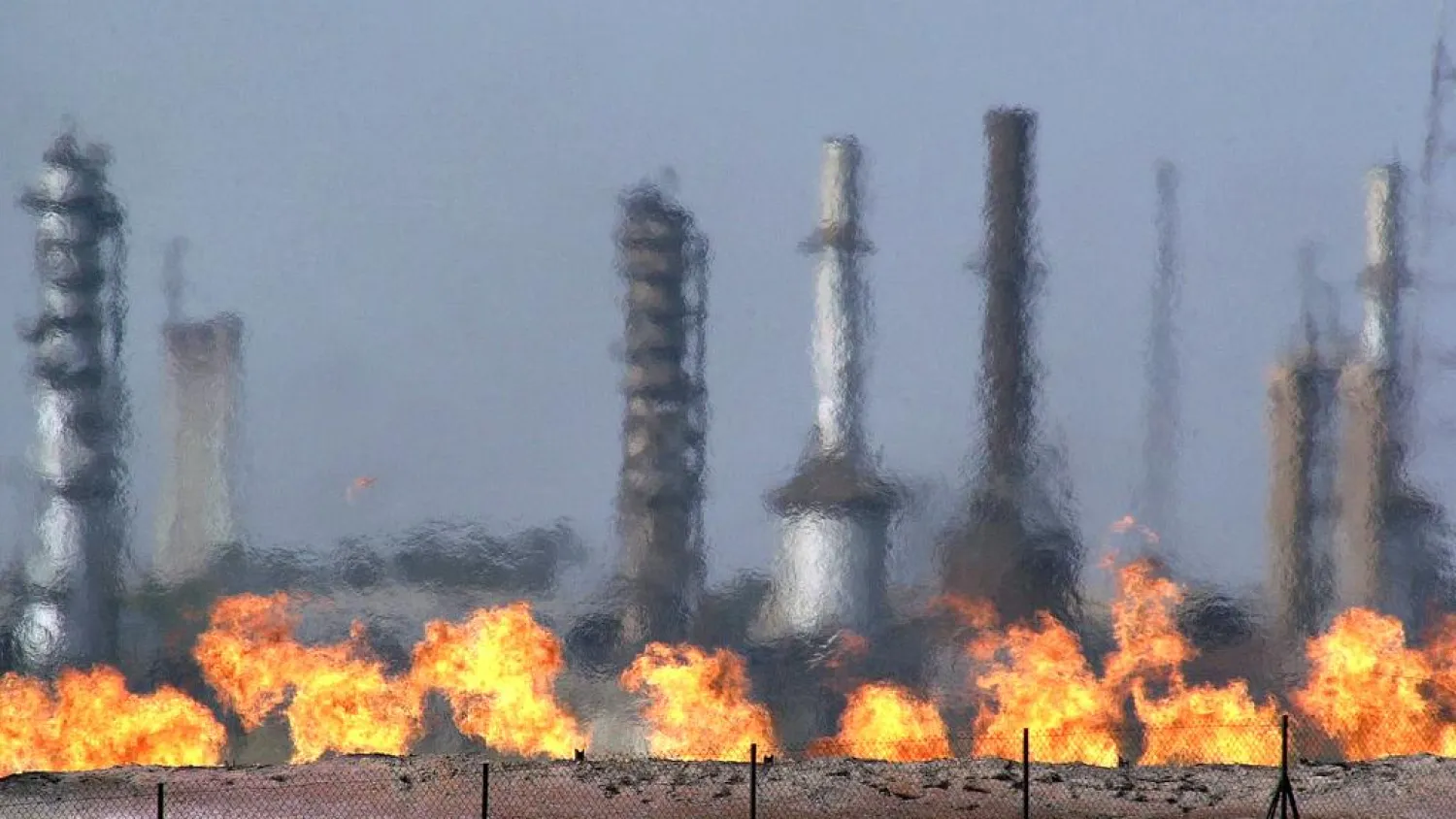
Fires flare off the gas from crude at an oil processing plant in the northern Iraqi town of Baba Gurgur, outside of Kirkuk. (AP)
TT

Turkmen Urge Kurds to Resolve Kirkuk Dispute through Dialogue

Fires flare off the gas from crude at an oil processing plant in the northern Iraqi town of Baba Gurgur, outside of Kirkuk. (AP)

Head of the Iraqi Turkmen Front Arshad al-Salehi called Kurdish forces in the Iraqi Kurdistan Region to dialogue to resolve the dispute over the oil-rich Kirkuk region.

The pro-Turkey figure invited the Kurds to hold talks with the Turkmen authorities to resolve the issue, because this was the best option to achieve justice for all sides.

“We are a side that is concerned with this file and resorting to others is futile,” he added.

Separately, the Iraqi Turkmen Front demanded the restructuring of the Kirkuk office of the Independent High Electoral Commission (IHEC) before it can start arrangement to hold provincial council elections in December.

Leading member of the Front Mohammed Samaan told Asharq Al-Awsat that the party will not allow the elections to be held in Kirkuk without the restructuring of the commission.

He cited the fraud allegations that marred the May parliamentary elections in Iraq and the ensuing manual recount of the vote.

Moreover, he said that the committee that was formed by Iraqi Prime Minister Haidar al-Abadi to investigate the massive fraud had ordered the sacking of the IHEC chief and a number of its members.

The Turkmen and Arabs in Kirkuk are “completely disappointed with what occurred during the parliamentary elections.”

They will not take part in the provincial council elections if the above-mentioned demands are not fulfilled, Samaan warned.

He said that the turnout could end up being as low as 20 percent, which cannot be ratified by the Supreme Court or enjoy the support of the international community.

Furthermore, he voiced concerns that the “Kurds may once again forge the elections results and seize six seats in the provincial council.”

“This will return us to square one and will be a repeat” of last year’s independence referendum and selling of Kirkuk oil without the approval of the federal authority, he added.

“We still do not know what happened to the billions of dollars of Kirkuk oil revenues that were reaped in the past years,” he said.

“If elections are imposed on us, then we will boycott them and resort to the international court,” he warned.

Meanwhile, Kirkuk MP and Patriotic Union of Kurdistan Ribwar Taha said that the date of the provincial elections was set by the Iraqi parliament.

He told Asharq Al-Awsat that all sides must respect this decision.

Addressing the Iraqi Turkmen Front’s fraud claims, he stressed that his party waged the May elections in spite of all of the challenges it was facing and it still won six seats in parliament.

“It proved to the local and international public that the Patriotic Union of Kurdistan enjoys wide support in Kirkuk,” he stated.

“The recount of the vote backs our claims,” he declared.


Residents of Southern Lebanon Gather to Watch Israeli Drones Drop Explosives on their Village

People from Mansouri record the smoke billowing from an Israeli-controlled detonation destroying their village, as seen from Hanniyeh village, southern Lebanon, Friday, Sept. 11, 2026. (AP Photo/Hussein Malla)
TT

Residents of Southern Lebanon Gather to Watch Israeli Drones Drop Explosives on their Village

People from Mansouri record the smoke billowing from an Israeli-controlled detonation destroying their village, as seen from Hanniyeh village, southern Lebanon, Friday, Sept. 11, 2026. (AP Photo/Hussein Malla)

A group of men and children gathered Friday at a vantage point overlooking their village in southern Lebanon, watching from a distance as Israeli drones descended, carrying boxes laden with explosives to be dropped on houses.

It has become a daily ritual for residents of Mansouri, who fled the village weeks ago and now are watching its destruction from the neighboring village of Hanniyeh.

Active fighting between Israel and the Iran-backed Lebanese militant group Hezbollah has simmered down since they entered into a truce in June, but the Israeli military now occupies large swaths of southern Lebanon, where it regularly carries out controlled demolitions.

Massive clouds of smoke and dust rise periodically from Mansouri, as the men watching debate which neighbor's house has been destroyed this time and look for signs of their own. Early Friday, the Israeli military detonated the village's public school, Lebanese state media reported.

The Israeli military did not immediately respond to a request for comment about the demolitions.

Villagers decry the Lebanese government's lack of response. Some displaced residents blame the Lebanese government along with Israel, saying that authorities abandoned the village.

Ali Hussein Ghanem, a tobacco farmer from Mansouri, is staying with relatives in Hanniyeh along with his wife and children.

“This is something that should never happen,” he said, watching the smoke rise over his village from a distance. “Isn’t the state supposed to protect our town rather than hand it over to Israel?”

Wissam Khashabi, a beekeeper, also from Mansouri, agreed.

“We are seeing our land being destroyed,” he said. “We have lost our property, our orchards, and all our livelihoods. The state is not really doing anything.”

On Thursday, Israeli officials said they had blown up Hezbollah tunnel networks under the strategic Ali Taher ridge near the town of Nabatiyeh, in a different part of southern Lebanon. The force of the blasts caused the earth to shake in surrounding areas.

The Israeli military said the ridge contained extensive underground military infrastructure built by Hezbollah. It had been the site of clashes between Israeli forces and the militant group in recent weeks, before Israel announced it had taken “operational control” of it.

No political solution in sight Many residents of Mansouri fled when the latest Israel-Hezbollah war began in March, but returned after the truce in June — only to flee again when the Israeli military issued a call to evacuate the village last month and began striking it again.

Israel said at the time that it was responding to ceasefire violations by Hezbollah. But it’s not clear why it has been demolishing the village since then.

Some of the displaced were taken in by relatives, while others are staying in school shelters in the nearby city of Tyre. At the height of the war, some 1.2 million people were displaced in Lebanon. The ceasefire has allowed most of them to return home, but more than 300,000 remain displaced.

With negotiations between Israel and Lebanon — and between the US and Iran — stalled, there is no political solution in sight that would allow them to go home.

The latest conflict between Israel and Hezbollah began on March 2, when the militant group fired rockets across the border two days after Israel and the US launched a war on Iran.

The Lebanese government and Israel reached a framework agreement in June stating Israel will withdraw from Lebanon as Hezbollah is disarmed, but there has been little movement on implementing it.

Lebanese and Israeli officials are expected to meet for another round of talks in Rome later this month.


Israel Says Ready for More Strikes on Hezbollah after Tunnel Detonation

Ali Al-Taher Heights east of the city of Nabatieh in southern Lebanon, with the towns of Kfar Tebnit and Nabatieh al-Fawqa visible below (Al-Sharq Al-Awsat).
TT

Israel Says Ready for More Strikes on Hezbollah after Tunnel Detonation

Ali Al-Taher Heights east of the city of Nabatieh in southern Lebanon, with the towns of Kfar Tebnit and Nabatieh al-Fawqa visible below (Al-Sharq Al-Awsat).

Israel said Friday that it was prepared for more strikes on Hezbollah after demolishing tunnels built by the Iran-backed group in southern Lebanon with a massive explosion.

"We are ready and prepared to continue the campaign, to continue striking Hezbollah and at additional locations," Defense Minister Israel Katz said in a video message, Reuters reported.

Israel late Thursday blew up what it described as a vast network of tunnels under the strategic Ali al-Taher ridge where Hezbollah kept a command center, living quarters and stocks of weapons with which to strike northern Israel and invading Israeli troops.

A huge fireball was seen in the area, with the US Geological Survey recording a tremor equivalent to a 4.1 magnitude earthquake.

The blast came a week after Israeli troops said they had seized the strategic highlands as they solidified control of a "security zone" in southern Lebanon.

"We promised protection to the residents of the north, and we delivered," Katz said in his message, which came on the Jewish new year and weeks ahead of tight elections.

"Now there is a strong security zone, stronger than ever before, which protects the communities from attack and direct fire, and enables us to maintain control and threaten Hezbollah deep inside the area."

Israel said the tunnel network was built over two decades with the help of Hezbollah's patron Iran, whose clerical government has also backed Hamas in the Gaza Strip.

Israel and the United States attacked Iran in late February, sparking the Middle East war.

Hezbollah, founded to oppose an earlier Israeli occupation of southern Lebanon that began in 1982, dragged the country into the wider conflict when it fired rockets at Israel in solidarity with Iran.

Lebanese authorities say Israeli military operations in the country have killed more than 4,300 people since March.

The Israeli army said that the Ali al-Taher network comprised tunnels extending for more than two kilometres that held dozens of Iranian-made rockets, missiles and drones, as well as other weapons.

The ridge lies on the edge of Israel's self-styled security zone just a few kilometres from the UNESCO-listed Beaufort castle, another strategic site that Israel captured in recent months.


Syria Arrests Nine Former Assad-Era Pilots

The Internal Security Forces arrested the nine former military pilots following a series of operations in Latakia. (SANA)
TT

Syria Arrests Nine Former Assad-Era Pilots

The Internal Security Forces arrested the nine former military pilots following a series of operations in Latakia. (SANA)

Syrian authorities said Thursday nine former pilots, including three generals, who are accused of having taken part in lethal bombings of towns and villages under the former rule of Bashar al-Assad, had been arrested.

For more than 13 years of a civil war that claimed over half a million lives, Syrian forces relentlessly shelled areas held by the opposition before Assad was toppled in December 2024 and the current government came to power.

Following a series of operations in Latakia in the country's west, the Internal Security Forces arrested nine former military pilots "involved in war crimes against the Syrian people... in several regions", news agency SANA reported, citing authorities.

Among them are generals Menhel Anwar Saleh, Sami Ibrahim Mahmoud, and Ghayath Ali Rehye.

"Their crimes caused a large number of casualties... and inflicted extensive damage on towns and villages, in addition to displacing residents and destroying homes and civilian infrastructure," SANA added.

Since al-Assad was overthrown, the new authorities have arrested dozens of former security officials, and trials began in April.

Syrian authorities said Monday they had arrested a former general accused of involvement in the bloody repression of protests in 2011 that sparked the country's civil war and the 1982 Hama massacre.

Syria sentenced Assad, his brother Maher al-Assad, and five other security officials to death in absentia in August for atrocities committed during the civil war, the first such ruling under the new authorities.

The former president fled Syria as his government fell and is believed to be living in Russia.
