Moroccan Government Approves Plan to Promote Youths

Moroccan Prime Minister Saadeddine Othmani delivers his first speech presenting the government's program at the Moroccan Parliament in Rabat, Morocco April 19, 2017. REUTERS/Youssef Boudlal
TT

Moroccan Government Approves Plan to Promote Youths

Moroccan Prime Minister Saadeddine Othmani delivers his first speech presenting the government's program at the Moroccan Parliament in Rabat, Morocco April 19, 2017. REUTERS/Youssef Boudlal

The Moroccan government has approved a plan to promote youths and enable them to play an effective role in developing the country.

Government spokesperson Mustapha Khalfi said in a press conference on Thursday that the roadmap set by the Ministry of Youth and Sport would provide opportunities that qualify youths to move to adulthood through high-quality education and access to respectful jobs, adequate health services and active participation in social, political and cultural life.

The new policy’s objectives include increasing economic opportunities available for youths, enhancing services presented to them, reducing geographical gaps, reinforcing their effective participation in social life, and advancing the respect for human rights.

Khalfi said Moroccan Prime Minister Saadeddine Othmani tackled during the cabinet session the importance of monitoring prices during the month of Ramadan.

In another context, the Moroccan PM prepares to brief the parliament on Monday on his government's achievements in the first half of its term in line with article 101 of the constitution. 

Moreover, Othmani chaired in Rabat on Wednesday the second meeting of the Inter-Ministerial Committee to follow up and facilitate the government program.

During the meeting, Othmani lauded the joint efforts of public sector institutions in implementing the government program. He also noted that several achievements have been made.

The PM added that workshops and programs are in progress while taking into consideration the aspirations of citizens.

The Inter-Ministerial Committee was established in August 2017. It consists of all cabinet members.


IMF Chief Warns Energy Shock, Growing Debt and AI Risks Threaten Global Growth

FILE PHOTO: International Monetary Fund (IMF) Managing Director Kristalina Georgieva participates in a press briefing at the IMF/World Bank 2026 Spring Meetings in Washington, D.C., US, April 17, 2026. REUTERS/Elizabeth Frantz/File Photo
TT

IMF Chief Warns Energy Shock, Growing Debt and AI Risks Threaten Global Growth

FILE PHOTO: International Monetary Fund (IMF) Managing Director Kristalina Georgieva participates in a press briefing at the IMF/World Bank 2026 Spring Meetings in Washington, D.C., US, April 17, 2026. REUTERS/Elizabeth Frantz/File Photo

The global economy is under threat from persistently high energy prices, record public debt and risks from the AI investment boom, International Monetary Fund Managing Director Kristalina Georgieva warned on Wednesday, urging governments to take protective fiscal and monetary policy measures.

In a speech previewing IMF and World Bank Annual Meetings next week in Bangkok, Georgieva said the world was being pulled in two directions -- a negative energy supply shock from the Middle East conflicts and a positive demand shock from artificial intelligence that is also fueling inflation.

"The combined impact of these two forces is highly uneven across the world," Georgieva said, adding that the AI boom was bypassing many countries.

New IMF growth forecasts to be released during the Bangkok meetings will show the biggest growth downgrades will come in economies ravaged by war, Georgieva said.

Georgieva did not indicate in her prepared remarks whether the ⁠IMF's latest World ⁠Economic Outlook would change the overall 2026 global growth forecast from the sluggish 3.0% rate forecast in July.

That forecast, which predicted a rebound to 3.4% growth in 2027, assumed the Strait of Hormuz would start to reopen in mid-July and return to pre-war conditions by March 2027. It assumed oil prices would average $89 a barrel in 2026 and $78 a barrel in 2027.

Georgieva said oil prices remain at $100 a barrel, with impaired refining capacity adding another $100 in "crack-spread" margins per barrel for key products including diesel. The winter heating season will boost demand as natural gas supplies remain restricted by threats to LNG shipping through the Strait of Hormuz, she added.

"Even if the war in the Gulf were to end soon, the problem of ⁠high energy prices will likely persist for some time," Georgieva said, adding that Brent crude oil futures predict high oil prices through 2027.

Higher energy prices are pushing up inflation, policy rates and benchmark bond yields, she said, noting that US, German and Japanese 10-year sovereign yields are now at their highest levels since 2007, 2009 and 1996, respectively, and still climbing.

Adding to the worries to be discussed by the IMF's 191 member countries next week is a growing public debt burden that is sapping growth and adding inflationary pressures, Georgieva said. The IMF says public debt is at the highest level since World War Two and is projected to exceed 100% of GDP before 2030.

Georgieva singled out advanced economies, led by the United States, as the "worst offenders" on debt loads, with debt-to-GDP ratios higher than emerging markets and low income countries.

Policymakers can no longer rely on higher growth rates alone to solve fiscal problems, Reuters quoted her as saying.

"And yet we don't see decisive action in the high-debt advanced economies where the need of the hour is for credible medium-term fiscal consolidation plans, ⁠supported in some cases by upfront ⁠fiscal measures, including to take some pressure off monetary policy," she said.

After five-and-a-half years of above-target inflation, Georgieva said inflationary pressures were persisting, from the AI build-out, energy and food price shocks, tariffs, higher defense spending and higher debt service costs.

"Now may be a good time for a prudently hawkish bias in many countries' monetary policy," Georgieva said, adding that rate hikes by the US Federal Reserve, the ECB and the Bank of Japan were "highly appropriate."

Georgieva highlighted other risks from AI, where investment as a share of GDP is likely to exceed that of railroads, the electricity grids or telecommunications infrastructure.

The rising economic and financial concentration puts pressure on AI companies to deliver productivity and earnings gains to justify lofty valuations, she said, warning that market disappointment could turn into "a far-reaching shock."

But she said IMF research suggests that AI, done right, could add a half percentage point of extra world growth annually.

AI preparedness is key, she said, including regulatory guardrails that "help manage AI's substantial perils, which include large-scale labor market fallout, serious cyber and stability risks and frontier models threatening to escape human control and run amok."

In addition to building fiscal strength, even at difficult political costs, Georgieva said governments should take other steps to boost growth, including reforms that would develop improved workforce skills, make corporate start-ups and wind-downs easier, boost energy security and streamline regulations.



Yemen Şafağı… Taiz ve Marib’de kazanımlar artıyor

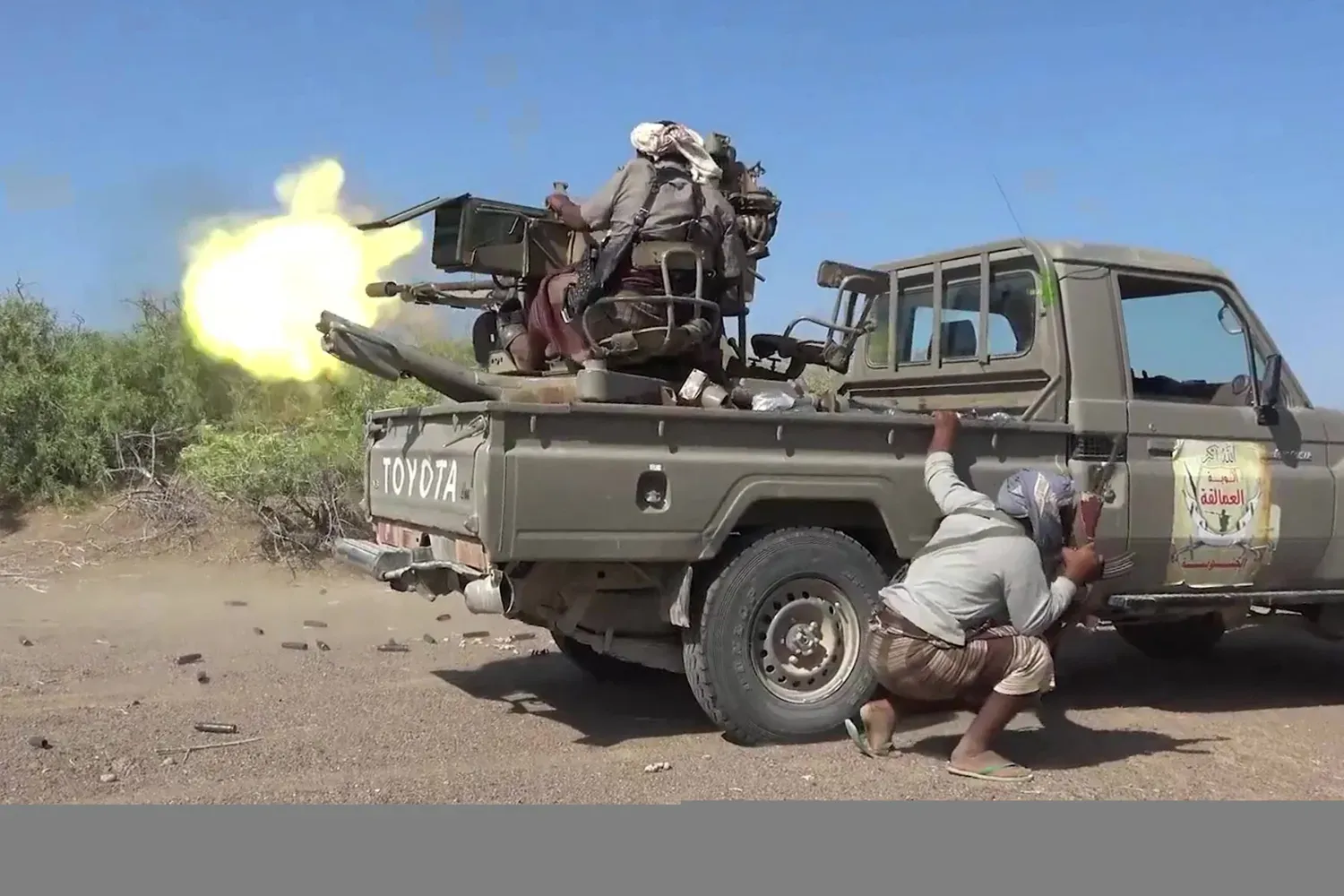
Yemen hükümetine bağlı Amalika Güçleri’ne mensup savaşçılar, Taiz vilayetinin Zubab bölgesinde Husilerle yaşanan çatışmalarda. (AP)
TT

Yemen Şafağı… Taiz ve Marib’de kazanımlar artıyor

Yemen hükümetine bağlı Amalika Güçleri’ne mensup savaşçılar, Taiz vilayetinin Zubab bölgesinde Husilerle yaşanan çatışmalarda. (AP)

“Yemen Şafağı” operasyonunun ikinci gününe girilirken hükümet güçleri, Taiz ve Marib’de sahadaki kazanımlarını genişleterek yeni cepheler açtı. Suudi Arabistan ise Husilerin darbesine son verilmesi, devletin ve kurumlarının yeniden tesis edilmesi amacıyla Yemen Başkanlık Konseyi ile meşru hükümete tam destek verdiğini teyit etti.

Suudi Arabistan’ın bu tutumu, Veliaht Prens ve Başbakan Muhammed bin Selman başkanlığında Riyad’da gerçekleştirilen Bakanlar Kurulu toplantısında dile getirildi. Konsey, Husilerin barış yerine askeri gerilimi tercih ettiğini, insani ve ekonomik sıkıntıları derinleştirdiğini, bölgenin güvenliğini ve Kızıldeniz’in güneyindeki deniz ulaşımı ile Babu’l Mendeb Boğazı’ndaki seyrüseferi tehdit ettiğini belirtti.

Yemen’in “Vatan Kalkanı” güçleri, Taiz’deki el-Vaziiyye ilçesini kurtarmak amacıyla geniş çaplı bir operasyon başlattı. Güçler, el-Mansura Dağı’na hâkim stratejik tepeleri ele geçirirken, Husilere bağlı unsurlar arasında toplu kaçış yaşandığı bildirildi. Vilayetin güneyinde ise hükümet güçleri, Hayfan ilçesinde el-Manzara, eEl-Eşarif ve Zeyban dağlarını kontrol altına alarak yeni bir ilerleme kaydetti. Bu gelişmeler, el-Muvasıt bölgesindeki Kuds kesiminde yaşanan şiddetli çatışmalarla eş zamanlı gerçekleşti.

Marib’de hükümet güçleri, vilayetin güneyindeki ilerleyişini sürdürerek stratejik mevzileri ve dağlık sırtları ele geçirdi. Askeri kaynaklara göre bunlar arasında Semed, el-Kayime, el-Mukaylat, Akd el-Kayime ve el-Rasîd bölgeleri bulunuyor. Aynı kaynaklar Şarku’l Avsat’a, çatışmalarda Husiler arasında ölü, yaralı ve esirlerin bulunduğunu, askeri teçhizatın imha edildiğini ve bir insansız hava aracının (İHA) düşürüldüğünü belirtti.

Batı kıyısında ise güçler, Zubab çevresinde, Zubab Havalimanı ve el-Umari Kampı hattında operasyonun ilk gününde elde edilen kazanımları pekiştirdi. Birliklerin ilerleyişi el-Muha yönünde sürerken, gelişmeler koalisyon güçlerinin çeşitli cephelerde Husilere ait askeri kapasiteyi hedef alan hava saldırılarıyla eş zamanlı gerçekleşti.


India Says 12 Seafarers Injured in Hormuz Tanker Attack

A man checks his cellphone at a waterfront shelter as commercial vessels appear anchored in the Strait of Hormuz off Bandar Abbas, Iran, Monday, Tuesday, Oct, 6, 202 (AP)
TT

India Says 12 Seafarers Injured in Hormuz Tanker Attack

A man checks his cellphone at a waterfront shelter as commercial vessels appear anchored in the Strait of Hormuz off Bandar Abbas, Iran, Monday, Tuesday, Oct, 6, 202 (AP)

India said 12 crew members on a Panama-flagged tanker had been injured in an attack while crossing the Strait of Hormuz, with those hurt receiving medical treatment in Oman.

“We condemn the attack earlier today on a Panama-flagged commercial vessel MT On Peace... it was struck by a projectile while transiting the Strait of Hormuz,” New Delhi’s foreign ministry said in a statement cited by AFP.

The ministry said the tanker had a 19-member crew, including 17 Indians. Of those injured, 11 are Indians.

“With the assistance of Omani authorities, the injured crew have since been evacuated and are receiving medical treatment in Khasab, Oman,” it said.

India is one of the largest contributors of sailors to merchant shipping worldwide, and several of its mariners have been killed in Hormuz attacks since the Middle East war began on February 28.

An attack on a cargo ship in the same region last month killed an Indian sailor, according to New Delhi.

“The continuing incidents of attacks on shipping in the region remain a cause of deep concern for India,” the ministry said.

Iran has sought to impose its control over the vital shipping lane for Gulf oil and gas since the start of the war, occasionally striking ships accused of failing to coordinate with its authorities or deviating from its preferred route.

In retaliation, the United States has been enforcing a counterblockade of Iranian ports, carrying out strikes of its own on ships it says refuse to comply.

“We reiterate our call for an immediate cessation of such attacks in the interests of peace and stability in the region,” the statement said.

“The targeting of commercial shipping, seafarers and civilian infrastructure in the region must end, and navigation and commerce through international waterways must be restored at the earliest.”