


Lionesses Inspire Us All but Heroes Alone Cannot Make a Nation More Sporty

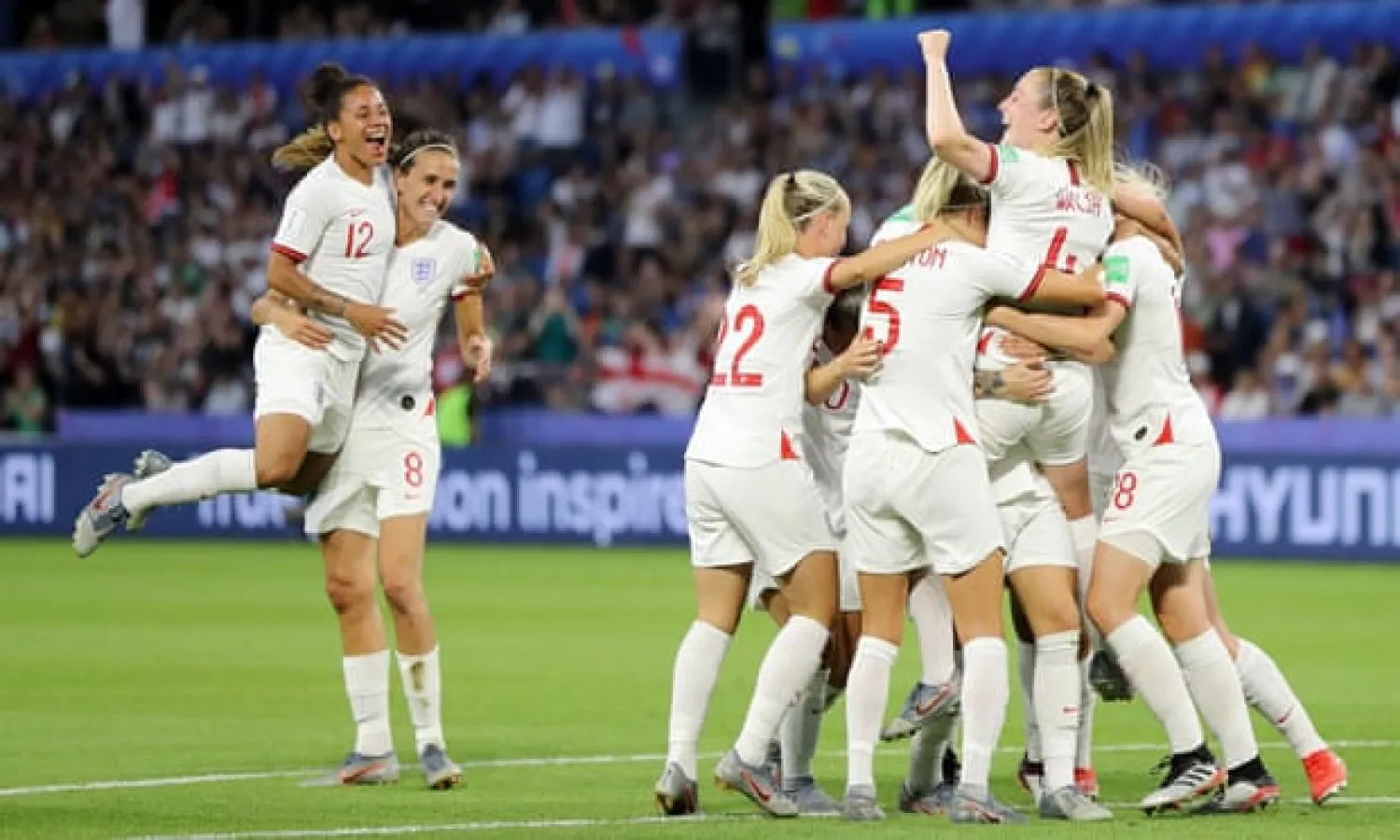
 England won over hearts and minds at the World Cup but there is not much evidence that their success will cause a ‘trickle-down’ effect and boost participation. Photograph: Dave Shopland/BPI/Rex Shutterstock
England won over hearts and minds at the World Cup but there is not much evidence that their success will cause a ‘trickle-down’ effect and boost participation. Photograph: Dave Shopland/BPI/Rex Shutterstock
TT

Lionesses Inspire Us All but Heroes Alone Cannot Make a Nation More Sporty

 England won over hearts and minds at the World Cup but there is not much evidence that their success will cause a ‘trickle-down’ effect and boost participation. Photograph: Dave Shopland/BPI/Rex Shutterstock
England won over hearts and minds at the World Cup but there is not much evidence that their success will cause a ‘trickle-down’ effect and boost participation. Photograph: Dave Shopland/BPI/Rex Shutterstock

The most seductive theory in sport has had one hell of a hearing during the past month. As the Women’s World Cup captured more hearts and minds, so the assumption intensified that England’s run will be a gamechanger, with elite success encouraging large numbers – particularly girls – to play football and get active. It sounds logical enough. Lucy Bronze, Megan Rapinoe, Wendie Renard and Rose Lavelle are fantastic role models, after all. There’s just one problem. There isn’t much evidence for what academics have called the “role‑modelling” or “trickle-down” effect.

Remember when Boris Becker, Steffi Graf and Michael Stich brought an unprecedented number of grand-slam victories for German tennis? There was a decline in membership of the German Tennis Association afterwards. Similarly, in the run up to London 2012 people such as Colin Moynihan, then chair of the British Olympic Association, promised a home Games would “motivate a whole generation of young people as they seek to emulate their Team GB heroes”. The reality has been less rosy. A recent Sport England survey found one in three children do less than 30 minutes of activity a day – such as walking, using a scooter, or playing sport – with the sports minister, Mims Davies, calling it “simply unacceptable”.

We should not be surprised. Long before 2012 researchers looked at Australia’s Olympic results between 1976 and 1996, and identified no correlation between national sporting achievements and “sedentariness” rates in the population. Meanwhile a systematic review of public health initiatives after the 2000 Sydney Olympics suggested there was no evidence that the euphoria of the Games turned into increased activity, despite the silky rhetoric and promises.

Other research has found a slight negative correlation between Olympic success and mass sports participation. As the authors of another study put it: “It is a well‑known assumption that the success of professional athletes increases sport participation in their home country. However, the theoretical support for such a relationship, as well as the empirical evidence, is shallow.”

Read that again. Let it marinate. Across the globe, politicians and public authorities partly justify investment in elite sport based on the effect it has on the ordinary population. But the evidence that such trickle‑down effects in sport work is as elusive as trickle‑down economics was in Ronald Reagan’s America.

Of course some of us are inspired to take up a sport after watching it on TV but studies suggest much of this comes from a “substitution effect”, with already active people switching from one sport to another, or from encouraging lapsed players to dig out their racket or golf clubs again during Wimbledon or the Open. The challenge is getting more people to become more active more of the time.

What about women’s football? Clearly it is growing in popularity, so it can be tricky to disentangle increasing participation with the success of a national team. However a study looking at the after‑effects of Japan’s Women’s World Cup victory in 2011 does just that. The academic Hideaki Ishigami examined all extracurricular activities recorded by 1.5m female Japanese students in the years leading up to and after the tournament – helped by the fact the Nippon Junior High School Physical Culture Association, a national governing body, compiles registration data for 99% of schools in Japan by type of sport.

As Ishigami noted, more girls played football in Japan after 2011. But there was a blunt kicker: his research also found it was “no greater than expected by chance” once growing participation levels before the 2011 tournament were taken into account. As he put it: “We found no quantitative evidence supporting the role-modelling effect. This implies the increase in their participation following the 2011 World Cup would have been observed regardless of whether Japan won.”

As Ishigami notes, gender is clearly a factor. The Daichi Life Insurance Company has conducted annual surveys with 13-year-olds in Japan since 1989. According to their findings, girls’ dream jobs have consistently included teaching, the medical profession and catering – with sports never ranking in the list, even after the 2011 World Cup. That contrasts markedly with boys of the same age, who always include baseball or football. This difference in genders for sporting role models has been found in other countries, too.

There is a message here for the Football Association and the government. Women’s football in Britain is clearly going the right way – given a record FA Cup final attendance, a new £10m Barclays sponsorship for the WSL, and a thrilling World Cup. But as we learned when England finished third in Canada in 2015 this is not enough. The Lionesses have again inspired the nation but now the harder work begins.

The game needs to better fertilise its grassroots – the FA’s new national strategy for girls aged five to 11 is a start – and get more consistent exposure. Stories that neither the FA nor Premier League considers itself capable of expanding the appeal of the WSL don’t bode well, given average crowds were under 1,000 last season, but just imagine the effect of a women’s match shown every Sunday on BBC2?

Meanwhile the fundamental point remains: elite success is not enough to get more people active. After Britain won only one Olympic medal at Atlanta 1996 there was a revolution in government funding that catapulted Team GB towards the top of the table. Is there a relentless desire for a similar upheaval when it comes to getting the rest of us moving, too?

The Guardian Sport


PSG’s Mental Strength Hailed as they Come from Behind to Win at Monaco

Soccer Football - UEFA Champions League - Play Off - First Leg - AS Monaco v Paris St Germain - Stade Louis II, Monaco - February 17, 2026 Paris St Germain coach Luis Enrique reacts REUTERS/Manon Cruz
TT

PSG’s Mental Strength Hailed as they Come from Behind to Win at Monaco

Soccer Football - UEFA Champions League - Play Off - First Leg - AS Monaco v Paris St Germain - Stade Louis II, Monaco - February 17, 2026 Paris St Germain coach Luis Enrique reacts REUTERS/Manon Cruz

Paris Saint-Germain coach Luis ‌Enrique hailed the mental strength of his side in coming from two goals down to win 3-2 away at Monaco in the Champions League on Tuesday, but warned the knockout round tie was far from finished.

The first leg clash between the two Ligue 1 clubs saw Folarin Balogun score twice for the hosts in the opening 18 minutes before Vitinha had his penalty saved to compound matters.

But after Desire Doue came on for injured Ousmane Dembele, the ‌match turned ‌and defending champions PSG went on to ‌secure ⁠a one-goal advantage ⁠for the return leg.

"Normally, when a team starts a match like that, the most likely outcome is a loss,” Reuters quoted Luis Enrique as saying.

“It was catastrophic. It's impossible to start a match like that. The first two times they overcame our pressure and entered our half, they scored. They ⁠made some very good plays.

“After that, it's difficult ‌to have confidence, but we ‌showed our mental strength. Plus, we missed a penalty, so ‌it was a chance to regain confidence. In the ‌last six times we've played here, this is only the second time we've won, which shows how difficult it is.”

The 20-year-old Doue scored twice and provided a third for Achraf Hakimi, just ‌days after he had turned in a poor performance against Stade Rennais last Friday ⁠and was ⁠dropped for the Monaco clash.

“I'm happy for him because this past week, everyone criticized and tore Doue apart, but he was sensational, he showed his character. He helped the team at the best possible time.”

Dembele’s injury would be assessed, the coach added. “He took a knock in the first 15 minutes, then he couldn't run.”

The return leg at the Parc des Princes will be next Wednesday. “Considering how the match started, I'm happy with the result. But the match in Paris will be difficult, it will be a different story,” Luis Enrique warned.


Mbappe Calls for Prestianni Ban over Alleged Racist Slur at Vinicius

TOPSHOT - Real Madrid's French forward #10 Kylian Mbappe talks with SL Benfica's Portuguese head coach Jose Mourinho during the UEFA Champions League knockout round play-off first leg football match between SL Benfica and Real Madrid CF at Estadio da Luz in Lisbon on February 17, 2026. (Photo by PATRICIA DE MELO MOREIRA / AFP)
TT

Mbappe Calls for Prestianni Ban over Alleged Racist Slur at Vinicius

TOPSHOT - Real Madrid's French forward #10 Kylian Mbappe talks with SL Benfica's Portuguese head coach Jose Mourinho during the UEFA Champions League knockout round play-off first leg football match between SL Benfica and Real Madrid CF at Estadio da Luz in Lisbon on February 17, 2026. (Photo by PATRICIA DE MELO MOREIRA / AFP)

Real Madrid forward Kylian Mbappe said Benfica's Gianluca Prestianni should be banned from the Champions League after the Argentine was accused of directing a racist slur at Vinicius Jr during the Spanish side's 1-0 playoff first-leg win on Tuesday.

Denying the accusation, Prestianni said the Brazilian misheard him.

The incident occurred shortly after Vinicius had curled Real into the lead five minutes into the second half in Lisbon.

Television footage showed the Argentine winger covering his mouth with his shirt before making a comment that Vinicius and nearby teammates interpreted as a racial ‌slur against ‌the 25-year-old, with referee Francois Letexier halting the match for ‌11 ⁠minutes after activating ⁠FIFA's anti-racism protocols.

The footage appeared to show an outraged Mbappe calling Prestianni "a bloody racist" to his face, Reuters reported.

The atmosphere grew hostile after play resumed, with Vinicius and Mbappe loudly booed by the home crowd whenever they touched the ball. Despite the rising tensions, the players were able to close out the game without further interruptions.

"I want to clarify that at no time did I direct racist insults to Vini Jr, ⁠who regrettably misunderstood what he thought he heard," Prestianni wrote ‌on his Instagram account.

"I was never racist with ‌anyone and I regret the threats I received from Real Madrid players."

Mbappe told reporters he ‌heard Prestianni direct the same racist remark at Vinicius several times, an allegation ‌also levelled by Real's French midfielder Aurelien Tchouamen.

Mbappe said he had been prepared to leave the pitch but was persuaded by Vinicius to continue playing.

"We cannot accept that there is a player in Europe's top football competition who behaves like this. This guy (Prestianni) doesn't ‌deserve to play in the Champions League anymore," Mbappe told reporters.

"We have to set an example for all the children ⁠watching us at ⁠home. What happened today is the kind of thing we cannot accept because the world is watching us.

When asked whether Prestianni had apologized, Mbappe laughed.

"Of course not," he said.

Vinicius later posted a statement on social media voicing his frustration.

"Racists are, above all, cowards. They need to cover their mouth with their shirt to show how weak they are. But they have the protection of others who, theoretically, have an obligation to punish them. Nothing that happened today is new in my life or my family's life," Vinicius wrote.

The Brazilian has faced repeated racist abuse in Spain, with 18 legal complaints filed against racist behavior targeting Vinicius since 2022.

Real Madrid and Benfica will meet again for the second leg next Wednesday at the Bernabeu.


Second Season of ‘Kings League–Middle East' to Kick off in March in Riyadh 

The second season of the Kings League-Middle East will kick off in Riyadh on March 27. (Kings League-Middle East on X)
TT

Second Season of ‘Kings League–Middle East' to Kick off in March in Riyadh 

The second season of the Kings League-Middle East will kick off in Riyadh on March 27. (Kings League-Middle East on X)

The Kings League-Middle East announced that its second season will kick off in Riyadh on March 27.

The season will feature 10 teams, compared to eight in the inaugural edition, under a format that combines sporting competition with digital engagement and includes the participation of several content creators from across the region.

The Kings League-Middle East is organized in partnership with SURJ Sports Investments, a subsidiary of the Public Investment Fund (PIF), as part of efforts to support the development of innovative sports models that integrate football with digital entertainment.

Seven teams will return for the second season: DR7, ABO FC, FWZ, Red Zone, Turbo, Ultra Chmicha, and 3BS. Three additional teams are set to be announced before the start of the competition.

Matches of the second season will be held at Cool Arena in Riyadh under a single round-robin format, with the top-ranked teams advancing to the knockout stages, culminating in the final match.

The inaugural edition recorded strong attendance and wide digital engagement, with approximately a million viewers following the live broadcasts on television and digital platforms.
