


Were England’s Errors Down to Complacency or Confidence? Either Way, Don’t Panic

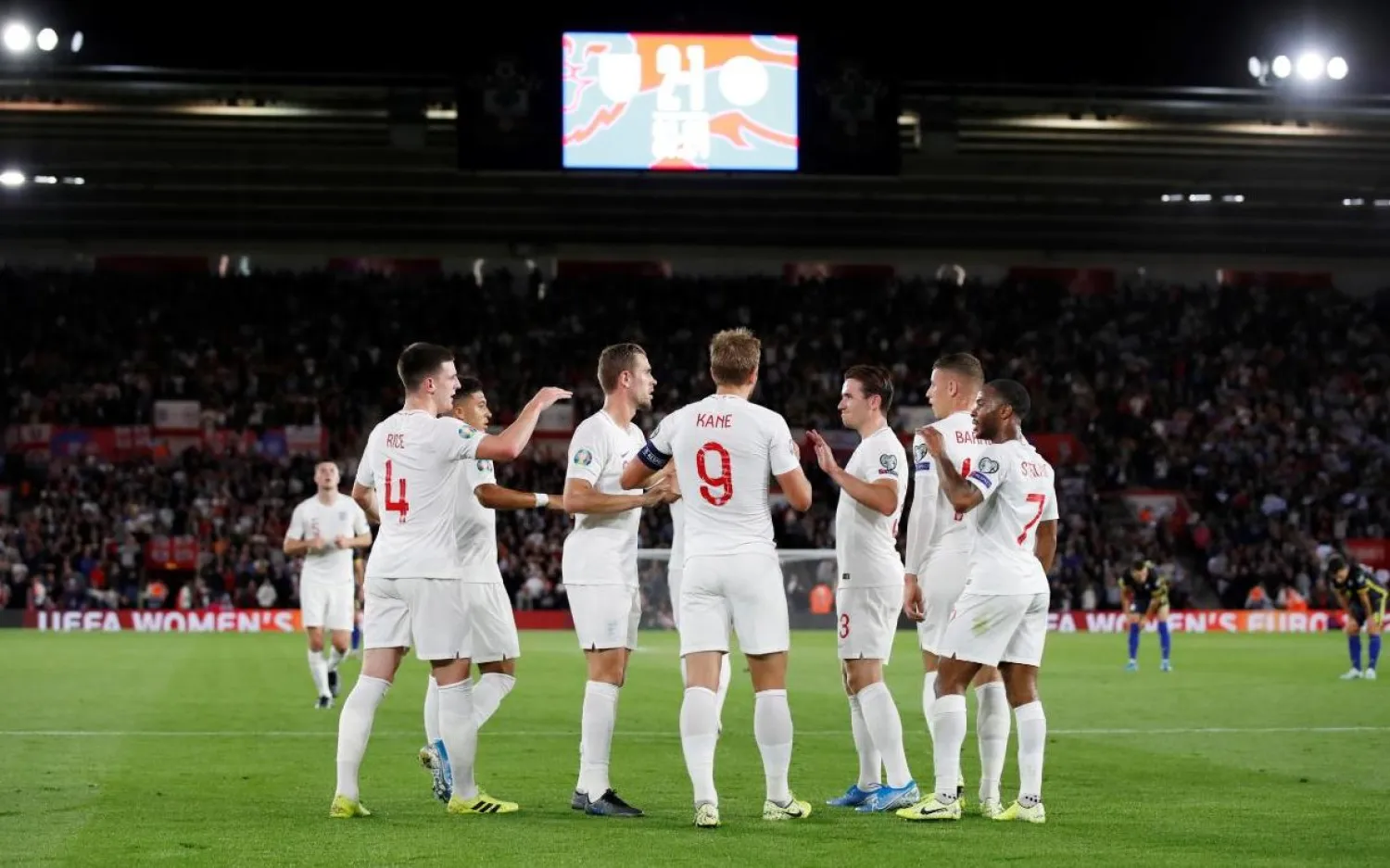
England players celebrate after scoring against Kosovo. (Reuters)
TT

Were England’s Errors Down to Complacency or Confidence? Either Way, Don’t Panic

England players celebrate after scoring against Kosovo. (Reuters)

Individual mistakes that gifted Kosovo goals will worry Gareth Southgate but there is no reason to think they will be repeated come the real thing next summer.

When Gareth Southgate sat down to meet the media in the Terry Paine lounge at St. Mary’s on Tuesday night, the topic in hand was human error.

Such a debate would normally offer great insight for all of us, given our proclivity for mistakes in the most unexpected (and expected) of circumstances. But this was specifically to do with the errors of human footballers, and the very best footballers at that, so the learnings for mere mortals were limited. However much you might wish to put yourself in Declan Rice’s shoes, in a very real sense, you could not.

To be fair, Southgate was struggling to make sense of things too. Kosovo had scored their first goal, in the first minute of the match, when a one-touch passing triangle went horribly wrong and Michael Keane played the ball blind into the hulking form of Kosovo’s Vedat Muriqi. The second error to result in a goal came just after half-time and belonged to Rice. This one was even worse, with the West Ham midfielder passing the ball to his opponent while looking straight at him.

Southgate suggested the glitches could have been due to pressure or to the intensity of the game. Certainly Kosovo had been talked up before the match as being more challenging opponents than England’s usual qualifying fare and this assessment wasn’t too far off. The visitors also set about the match eagerly and after half-time, desperate to restore some integrity with the score at 5-1, the intensity was increased. The Kosovans scored all three of their goals during these two periods and, so, the explanations were plausible. Southgate said he would take a little more time to make his mind up about what happened but, either way, it was “concerning”.

Just how concerning is that? Again, without a device that can wriggle inside his brain, we will struggle to know what Southgate really thinks. But you can say with confidence that the mistakes were concerning because they not only took off the gloss, but also a layer of undercoat from an otherwise Sterling performance (pun very much intended). England tore through the Kosovans with quick, vertical football and a world-class player (that’s Raheem again) directing the play. To see shoddy behavior at the other end, and behavior that was duly punished, harshed the buzz of many in the ground.

On the other hand, it is not as if England were ever really in danger of doing anything other than winning the game comfortably. They were so far ahead at half-time that keeping the same levels of concentration would have been difficult however hard they tried. And despite the two quick goals after the restart, England soon regained the balance of play and the initiative. They missed a penalty, hit the woodwork and failed to take other decent chances. They should surely have had more goals, though when the total is five already, that’s not much of a topic for complaint.

Another reason not to worry so much is that the most apocalyptic reading of events – make those mistakes against the best opposition and the game would be over – doesn’t really translate too well. Yes, England might have been feeling pressure as Southgate suggested, but it was not the same pressure as they would face in, say, a European Championship semi-final against France. Far from it. In fact some of the pressure might come not from fear of defeat but from wishing to prove one’s superiority over the opposition, hence popping off those triangles as soon as the first whistle had blown. England’s psychological preparation and approach will be very different against the very best.

But on the other hand again … it’s not as if similar mistakes haven’t happened against the very best, and very recently. England’s collapse against the Netherlands in this summer’s Nations League happened thanks to two moments where confidence was misplaced, where displays of technical prowess backfired.

Looking back slightly further, it’s tempting to include the crucial edge Croatia’s Mario Mandzukic got over a dozing John Stones in the World Cup semi-final a year earlier, a moment where an England player thought everything was OK when it very much was not.

Rice performed well over the two qualifying matches, Keane less so. It’s a team game with collective responsibility but certain individual components are likely still to change as England close in on next year’s finals. The rest of the challenge falls to Southgate and his coaches, trying to strike that most difficult of balances between confidence and complacency, knowing that this is where the biggest opportunities can be seized or spurned. It may prove a task too tricky to complete but, if so, England fans can at least console themselves watching scintillating attacking play from a team wearing the Three Lions. This has not always been the case.

The Guardian Sport


Shakhtar Boss Pays Ukrainian Racer $200,000 After Games Disqualification

Ukrainian President Volodymyr Zelenskiy holds helmet as he meets with a Ukrainian skeleton racer Vladyslav Heraskevych , who was disqualified from the Olympic skeleton competition over his "helmet of remembrance" depicting athletes killed since Russia's invasion and his father and coach, Mykhailo Heraskevych, amid Russia's attack on Ukraine, in Munich, Germany February 13, 2026. (Ukrainian Presidential Press Service/Handout via Reuters)
TT

Shakhtar Boss Pays Ukrainian Racer $200,000 After Games Disqualification

Ukrainian President Volodymyr Zelenskiy holds helmet as he meets with a Ukrainian skeleton racer Vladyslav Heraskevych , who was disqualified from the Olympic skeleton competition over his "helmet of remembrance" depicting athletes killed since Russia's invasion and his father and coach, Mykhailo Heraskevych, amid Russia's attack on Ukraine, in Munich, Germany February 13, 2026. (Ukrainian Presidential Press Service/Handout via Reuters)

The owner of ‌Ukrainian football club Shakhtar Donetsk has donated more than $200,000 to skeleton racer Vladyslav Heraskevych after the athlete was disqualified from the Milano Cortina Winter Games before competing over the use of a helmet depicting Ukrainian athletes killed in the war with Russia, the club said on Tuesday.

The 27-year-old Heraskevych was disqualified last week when the International Bobsleigh and Skeleton Federation jury ruled that imagery on the helmet — depicting athletes killed since Russia invaded Ukraine in 2022 — breached rules on athletes' expression at ‌the Games.

He ‌then lost an appeal at the Court ‌of ⁠Arbitration for Sport hours ⁠before the final two runs of his competition, having missed the first two runs due to his disqualification.

Heraskevych had been allowed to train with the helmet that displayed the faces of 24 dead Ukrainian athletes for several days in Cortina d'Ampezzo where the sliding center is, but the International Olympic Committee then ⁠warned him a day before his competition ‌started that he could not wear ‌it there.

“Vlad Heraskevych was denied the opportunity to compete for victory ‌at the Olympic Games, yet he returns to Ukraine a ‌true winner," Shakhtar President Rinat Akhmetov said in a club statement.

"The respect and pride he has earned among Ukrainians through his actions are the highest reward. At the same time, I want him to ‌have enough energy and resources to continue his sporting career, as well as to fight ⁠for truth, freedom ⁠and the remembrance of those who gave their lives for Ukraine," he said.

The amount is equal to the prize money Ukraine pays athletes who win a gold medal at the Games.

The case dominated headlines early on at the Olympics, with IOC President Kirsty Coventry meeting Heraskevych on Thursday morning at the sliding venue in a failed last-minute attempt to broker a compromise.

The IOC suggested he wear a black armband and display the helmet before and after the race, but said using it in competition breached rules on keeping politics off fields of play. Heraskevych also earned praise from Ukraine President Volodymyr Zelenskiy.


Speed Skating-Italy Clinch Shock Men’s Team Pursuit Gold, Canada Successfully Defend Women’s Title

 Team Italy with Davide Ghiotto, Andrea Giovannini, Michele Malfatti, celebrate winning the gold medal on the podium of the men's team pursuit speed skating race at the 2026 Winter Olympics, in Milan, Italy, Tuesday, Feb. 17, 2026. (AP)
Team Italy with Davide Ghiotto, Andrea Giovannini, Michele Malfatti, celebrate winning the gold medal on the podium of the men's team pursuit speed skating race at the 2026 Winter Olympics, in Milan, Italy, Tuesday, Feb. 17, 2026. (AP)
TT

Speed Skating-Italy Clinch Shock Men’s Team Pursuit Gold, Canada Successfully Defend Women’s Title

 Team Italy with Davide Ghiotto, Andrea Giovannini, Michele Malfatti, celebrate winning the gold medal on the podium of the men's team pursuit speed skating race at the 2026 Winter Olympics, in Milan, Italy, Tuesday, Feb. 17, 2026. (AP)
Team Italy with Davide Ghiotto, Andrea Giovannini, Michele Malfatti, celebrate winning the gold medal on the podium of the men's team pursuit speed skating race at the 2026 Winter Olympics, in Milan, Italy, Tuesday, Feb. 17, 2026. (AP)

An inspired Italy delighted the home crowd with a stunning victory in the Olympic men's team pursuit final as

Canada's Ivanie Blondin, Valerie Maltais and Isabelle Weidemann delivered another seamless performance to beat the Netherlands in the women's event and retain their title ‌on Tuesday.

Italy's ‌men upset the US who ‌arrived ⁠at the Games ⁠as world champions and gold medal favorites.

Spurred on by double Olympic champion Francesca Lollobrigida, the Italian team of Davide Ghiotto, Andrea Giovannini and Michele Malfatti electrified a frenzied arena as they stormed ⁠to a time of three ‌minutes 39.20 seconds - ‌a commanding 4.51 seconds clear of the ‌Americans with China taking bronze.

The roar inside ‌the venue as Italy powered home was thunderous as the crowd rose to their feet, cheering the host nation to one ‌of their most special golds of a highly successful Games.

Canada's women ⁠crossed ⁠the line 0.96 seconds ahead of the Netherlands, stopping the clock at two minutes 55.81 seconds, and

Japan rounded out the women's podium by beating the US in the Final B.

It was only Canada's third gold medal of the Games, following Mikael Kingsbury's win in men's dual moguls and Megan Oldham's victory in women's freeski big air.


Lindsey Vonn Back in US Following Crash in Olympic Downhill 

Milano Cortina 2026 Olympics - Alpine Skiing - Women's Downhill 3rd Official Training - Tofane Alpine Skiing Centre, Belluno, Italy - February 07, 2026. Lindsey Vonn of United States in action during training. (Reuters)
TT

Lindsey Vonn Back in US Following Crash in Olympic Downhill 

Milano Cortina 2026 Olympics - Alpine Skiing - Women's Downhill 3rd Official Training - Tofane Alpine Skiing Centre, Belluno, Italy - February 07, 2026. Lindsey Vonn of United States in action during training. (Reuters)

Lindsey Vonn is back home in the US following a week of treatment at a hospital in Italy after breaking her left leg in the Olympic downhill at the Milan Cortina Games.

“Haven’t stood on my feet in over a week... been in a hospital bed immobile since my race. And although I’m not yet able to stand, being back on home soil feels amazing,” Vonn posted on X with an American flag emoji. “Huge thank you to everyone in Italy for taking good care of me.”

The 41-year-old Vonn suffered a complex tibia fracture that has already been operated on multiple times following her Feb. 8 crash. She has said she'll need more surgery in the US.

Nine days before her fall in Cortina d'Ampezzo, Italy, Vonn ruptured the ACL in her left knee in another crash in Switzerland.

Even before then, all eyes had been on her as the feel-good story heading into the Olympics for her comeback after nearly six years of retirement.
