


Ole Gunnar Solskjær Needs More Time and Respect at Manchester United

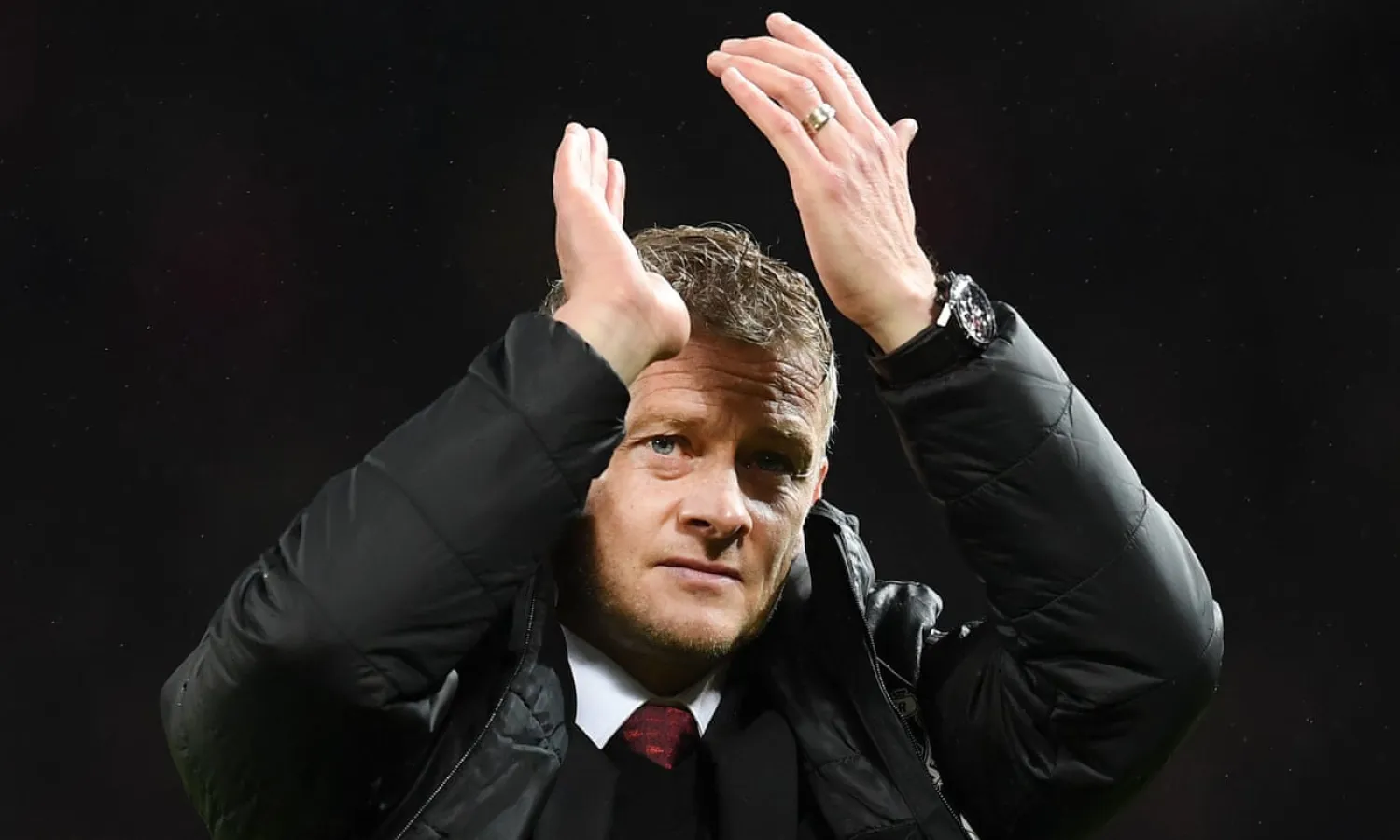
 Ole Gunnar Solskjær is attempting to rebuild Manchester United and his signings have worked out well. Photograph: Michael Regan/Getty Images
Ole Gunnar Solskjær is attempting to rebuild Manchester United and his signings have worked out well. Photograph: Michael Regan/Getty Images
TT

Ole Gunnar Solskjær Needs More Time and Respect at Manchester United

 Ole Gunnar Solskjær is attempting to rebuild Manchester United and his signings have worked out well. Photograph: Michael Regan/Getty Images
Ole Gunnar Solskjær is attempting to rebuild Manchester United and his signings have worked out well. Photograph: Michael Regan/Getty Images

It has been widely reported, not entirely without glee, that Manchester United have had their worst start to a league season since 1989-90. Plenty of those reports have excluded one not insignificant detail; that the manager of the club back then was Alex Ferguson.

It is easy to forget how truly abysmal Ferguson’s United were between 1988 and 1990. They made the current lot look like freewheeling entertainers by comparison. In April 1989, United scored one goal in five games – and that was an own goal by Tony Adams, all his own work.

The subsequent success of Ferguson should logically carry the power of a judicial precedent. But giving managers time is an endangered concept, and there is a good chance that Manchester United’s endless transition will continue with a fourth change of manager in six years.

There are understandable concerns that the scale of the job is too great for Ole Gunnar Solskjær. But no one really knows; not Solskjær himself, certainly not Twitter’s finest. And the rush to print another P45 wilfully ignores both mitigating circumstances for their recent form and the good work that Solskjær has done since taking over.

Solskjær is the first manager since Ferguson who has attempted to rebuild rather than live hand to mouth and game to game. United have been decaying since the Glazers pillaged them in 2005. Ferguson’s genius masked that for a time, but now United are back where he found them, in urgent need of change from top to bottom.

Of the four managers at Old Trafford since Ferguson, Solskjær has been easily the best in the transfer market. His signings so far are both instant hits and part of a long-term plan. His predecessors bought all kinds of wrong, in terms of ability, character or both, and José Mourinho in particular has some front playing the mistreated sage given all he had to show for spending £350m.

Solskjær has been widely criticised for not replacing Romelu Lukaku, but he recognised that teams with Lukaku in them don’t win trophies. Solskjær wanted more from a No 9, and effectively replaced Lukaku with Anthony Martial (who in turn was replaced by Daniel James). That decision looked inspired in the first few games, with Martial sharper than at any stage since his first season at the club. Then he injured a thigh against Crystal Palace.

Solskjær was without six of his first-choice team in the last match at Newcastle. United may be 12th in the league but they are flying high in one table; only Norwich City have more players out through injury. Solskjær inherited an inadequate, poisonous mess of a squad, put together by four managers, and now he has a major injury crisis as well. In any sane culture these are mitigating circumstances.

Those who aren’t injured are painfully low on confidence; and, unlike his predecessors, Solskjær does not have a peak David de Gea turning defeats into draws and draws into wins. Good luck to anyone in those circumstances. Pep Guardiola could defect to Old Trafford tomorrow, citing a long-standing ambition to work with Phil Jones, and it would make no difference in the short term. There is no quick fix at United. The mess is too great. They hired the king of instant success in Mourinho and even that didn’t really work out. United have a simple choice between potential long-term success under Solskjær and guaranteed long‑term failure under a load of different managers.

This should be an exciting time for United supporters, a chance to potentially experience a modern equivalent of the magical rebirth under Tommy Docherty. And any success under Solskjær would be worth far more than under somebody such as Mourinho or David Moyes.

There is no point denying that United’s attacking play in recent matches has been dreadful. The team look like they have forgotten how to shoot, never mind score, and it’s hard to reconcile some of Solskjær’s recent decisions and demeanour with the shiny, happy manager who took over at the end of last year. But the fact he won 14 of his first 17 games counts for something.

Under Solskjær, United have been both thrilling and boring; aggressive and passive; tactically smart and tactically rigid. It’s unusual and confusing, but until we see more – a lot more – we can’t know which is representative. Given the scale of the job, and especially his status at United, he deserves time to come to terms with it. Even Ferguson – Sir Alex Bloody Ferguson, the greatest manager in history – looked out of his depth for a few years. Solskjær also deserves far more respect, particularly from United fans. (On this subject, I speak with the evangelical zeal of the reformed moron.)

It would be unfair to say there is an anti-Solskjær agenda in the media, both traditional and social, not least because that would give far too much credit to a scattergun process. But there is certainly an anti-Solskjær mood. There are probably a few reasons for this – the reliability of a United bad-news story, residual hatred from the Ferguson years and a frankly pathetic snobbery about Scandinavian football. Most of all, there is a culture of instant gratification, unrealistic expectations and brattish demands that has made football management harder than ever.

That mood has, probably unconsciously, contributed to a certain economy with the truth in the reporting of United this season. There has been little talk of their injuries and markedly improved defence, and hardly any of the fact they were robbed by VAR against Crystal Palace and Arsenal. Even our new friend Expected Goals, who normally has plenty to say, has gone quiet.

At the end of last season there were plenty of self-satisfied observations that Solskjær should not have been given the job permanently because his xG wasn’t very good even when he was winning twice a week. Few have commented on United’s xG this season, which has them third in every table we could find on the internet. Even those of us who don’t really care for xG would accept that, if the prosecution is able to use it as evidence, then the defence should be allowed to as well.

Solskjær is second on the expected sackings list, behind Everton’s Marco Silva. There isn’t just a sacking culture in football; in the media, certainly, it’s a sacking cult. Every time a manager is under pressure we get the same rituals; the same bloodlust; the same grave expression on newsreaders’ faces as we are solemnly informed that so-and-so’s weekly press conference is scheduled for 10am.

There is no greater indictment of football’s descent into reality TV than the infantile nonsense that has made it normal, almost compulsory, to get rid of a manager at the first sign of trouble. That big old mess in the White House; he’d have sacked Solskjær already. There has to be a moral in that.

The Guardian Sport


Rodgers Takes Charge of Saudi Team Al-Qadsiah After Departure from Celtic 

Then-Celtic head coach Brendan Rodgers greets supporters after a Europa League soccer match between Red Star and Celtic at Rajko Mitic Stadium in Belgrade, Serbia, Sept. 24, 2025. (AP)
TT

Rodgers Takes Charge of Saudi Team Al-Qadsiah After Departure from Celtic 

Then-Celtic head coach Brendan Rodgers greets supporters after a Europa League soccer match between Red Star and Celtic at Rajko Mitic Stadium in Belgrade, Serbia, Sept. 24, 2025. (AP)

Brendan Rodgers has returned to football as the coach of Saudi Arabian club Al-Qadsiah, six weeks after resigning from Scottish champion Celtic.

Al-Qadsiah, whose squad includes Italian striker Mateo Retegui and former Real Madrid defender Fernandez Nacho, is in fifth place in the Saudi Pro League in its first season after promotion.

Rodgers departed Celtic on Oct. 27 and has opted to continue his managerial career outside Britain for the first time, having previously coached Liverpool, Leicester and Swansea.

In its statement announcing the hiring of Rodgers on Tuesday, Al-Qadsiah described him as a “world-renowned coach” and said his arrival “reflects the club’s ambitious vision and its rapidly growing sporting project.”

Aramco, the state-owned Saudi oil giant, bought Al-Qadsiah in 2023 in a move that has helped to transform the club’s status.

“This is a landmark moment for the club,” Al-Qadsiah chief executive James Bisgrove said. “The caliber of his experience and track record of winning reflects our ambition and long-term vision to establish Al-Qadsiah as one of Asia’s leading clubs.”

Rodgers is coming off winning back-to-back Scottish league titles with Celtic, where he won 11 major trophies across his two spells. He also won the FA Cup with Leicester.

Al-Qadsiah's last two coaches were former Liverpool striker Robbie Fowler and former Spain midfielder Michel.


Portugal to Return to F1 Calendar in 2027 and 2028 

12 July 2025, United Arab Emirates, Abu Dhabi: Red Bull driver Max Verstappen leads into turn one during the Abu Dhabi Grand Prix at the Yas Marina Circuit, Abu Dhabi. (dpa)
TT

Portugal to Return to F1 Calendar in 2027 and 2028 

12 July 2025, United Arab Emirates, Abu Dhabi: Red Bull driver Max Verstappen leads into turn one during the Abu Dhabi Grand Prix at the Yas Marina Circuit, Abu Dhabi. (dpa)

Formula One will return to Portugal's Portimao circuit in 2027 and 2028 after the Dutch Grand Prix at Zandvoort drops off the calendar.

Formula One announced a two-year deal in a statement on Tuesday.

The 4.6-km Algarve International circuit in the country's south last hosted the Portuguese Grand Prix in 2020 and 2021, both seasons impacted by the COVID-19 pandemic with stand-in venues.

In 2020, seven-times world champion Lewis Hamilton took his 92nd career win at Portimao, breaking the record previously held by Michael Schumacher. Hamilton also won in 2021.

"The interest and demand to host a Formula One Grand Prix is the highest that it has ever been," said Formula One chief executive Stefano Domenicali, thanking the Portuguese government and local authorities.

The financial terms of the deal were not announced.

"Hosting the Grand Prix in the Algarve reinforces our regional development strategy, enhancing the value of the territories and creating opportunities for local economies," said Economy Minister Manuel Castro Almeida.

Portugal first hosted a grand prix in Porto in 1958, with subsequent races at Monsanto and Estoril near Lisbon. The late Brazilian great Ayrton Senna took his first grand prix pole and win at the latter circuit in 1985.

Formula One announced last year that Zandvoort, a home race for four-times world champion Max Verstappen, would drop off the calendar after 2026.

The championship already features a record 24 races and Domenicali has spoken of European rounds alternating to allow others to come in.

Belgium's race at Spa-Francorchamps is due to be dropped in 2028 and 2030 as part of a contract extension to 2031 announced last January.


ATP to Introduce New Heat Policy from 2026 Season 

Novak Djokovic of Serbia cools himself with water during the men's singles semifinal match with Valentin Vacherot of Monaco, at the Shanghai Masters tennis tournament at Qizhong Forest Sports City Tennis Center, in Shanghai, China, Saturday, Oct. 11, 2025. (AP)
TT

ATP to Introduce New Heat Policy from 2026 Season 

Novak Djokovic of Serbia cools himself with water during the men's singles semifinal match with Valentin Vacherot of Monaco, at the Shanghai Masters tennis tournament at Qizhong Forest Sports City Tennis Center, in Shanghai, China, Saturday, Oct. 11, 2025. (AP)

The ATP Tour said it will introduce a new heat policy that will come into effect from 2026 after a string of retirements due to soaring temperatures and punishing humidity at the Shanghai Masters earlier this season.

The governing body of men's tennis said the rule, based on the internationally recognized Wet Bulb Globe Temperature (WBGT) index used to measure human heat stress in direct sunlight, had "clear thresholds" for cooling measures and suspension of play.

"The new heat rule provides a structured, medically supported approach to managing extreme heat, with the objective of safeguarding player health," the ATP said on Monday.

It added the rule would also improve conditions for fans, officials, ball persons and tournament staff.

If the WBGT reaches 30.1 C (86.18 F) or higher in the first two sets of a best-of-three-set singles match, a 10-minute cooling break after the second set can be requested by either player and will apply to both competitors.

During breaks, players can hydrate, change clothing, shower and receive coaching under the supervision of ATP medical staff, the governing body added. Play will be suspended when the WBGT goes past 32.2 C.

World number two Jannik Sinner's Shanghai title defense ended in agony in October when the Italian struggled to walk due to cramp in his right thigh before he retired in the deciding set of his third-round clash with Tallon Griekspoor.

At the same event, Novak Djokovic vomited during his encounter with Yannick Hanfmann while Holger Rune was heard asking an official during a medical timeout in his meeting with Ugo Humbert if players had to "die on court" amid the heat and humidity.

The need for a formal ATP heat rule had sprung up in August in Cincinnati when Arthur Rinderknech collapsed on court during a match in sweltering conditions, before handing Felix Auger-Aliassime the victory.

Previously, ATP regulations stated that decisions on the suspension of play due to adverse weather conditions - including extreme heat - lie with an onsite ATP supervisor who coordinates with medical teams at the venue as well as local authorities.

The new rule aligns the ATP with the WTA. The four Grand Slams have also formally implemented the rules that allow for extended breaks and match suspensions.

Several professional sports including football, Formula One and cycling have formal policies to deal with extreme weather.
