Saudi-British MoU Emphasizes Facing Platforms of Extremist Rhetoric

View shows the King Abdullah Financial District, north of Riyadh, Saudi Arabia, March 1, 2017. REUTERS/Faisal Al Nasser
TT

Saudi-British MoU Emphasizes Facing Platforms of Extremist Rhetoric

View shows the King Abdullah Financial District, north of Riyadh, Saudi Arabia, March 1, 2017. REUTERS/Faisal Al Nasser

A Saudi-British memorandum devoted to the study of terrorist organizations’ messages stressed the need to observe the use of precise terminology to label extremists and terrorists, and not to give them names that would encourage sympathy for them.
 
The International Coalition against ISIS published on its website a summary of the Riyadh-London Memorandum on Good Practices in Combating the Messages of Terrorist Organizations in both Arabic and English.
 
Those practices include encouraging Internet companies and social media to remove extremist and terrorist content in all its forms from all digital platforms, in addition to taking into account the use of precise terminology to label extremists and terrorists, and not to call them names that might allow sympathy for them, such as calling ISIS the “Islamic State.”
 
The memorandum came as a result of the cooperation between the Saudi General Directorate for Combating Extremism and the International Coalition Against ISIS, through an international panel discussion in Riyadh entitled: “Integration in Combating the Messages of Terrorist Organizations: ISIS as a model.”
 
This memorandum is the first advisory note issued by the International Coalition against ISIS and its affiliates, since its formation in 2014.
 
Saudi Arabia is a founding member and an active partner of the Coalition. The Kingdom offered $100 million last year to efforts to restore stability in Syria in Raqqa and northeastern regions liberated from ISIS.



Gulf, UN Condemnation of Houthi Attacks on Saudi Arabia

UN Secretary-General Antonio Guterres and GCC Secretary-General Jasem AlBudaiwi meet in New York. (GCC)
TT

Gulf, UN Condemnation of Houthi Attacks on Saudi Arabia

UN Secretary-General Antonio Guterres and GCC Secretary-General Jasem AlBudaiwi meet in New York. (GCC)

The United Nations and the Gulf Cooperation Council (GCC) condemned on Saturday the terrorist Houthi militia's attacks on Saudi Arabia, its targeting of civilian objects, and their dangerous impact on regional security and stability.

UN Secretary-General Antonio Guterres and GCC Secretary-General Jasem AlBudaiwi exchanged views on the latest regional developments during their meeting on Saturday on the sidelines of the 81st session of the UN General Assembly in New York.

The two sides discussed several regional issues and the efforts exerted toward them. Guterres praised the development, progress, and prosperity achieved by the Gulf states, as well as their regional and international efforts to promote security and stability.

Guterres and AlBudaiwi reviewed issues of mutual interest, as well as cooperation relations between the GCC and the UN, and ways to boost and consolidate them to serve shared interests.

The UN Security Council had warned of the consequences of the Houthi attacks on Saudi Arabia and the threats posed to international navigation in the Red Sea and the Bab al-Mandeb Strait, considering that the militia's military actions in Yemen, alongside its targeting of Saudi territory and commercial shipping, threaten to expand the regional conflict, undermine maritime security and international trade, and hinder regional and international efforts aimed at achieving peace in Yemen.

In a statement on Friday night, the Council members strongly condemned in the strongest terms the ongoing attacks launched by the Houthis on Saudi Arabia, including those that caused damage to civilians and energy infrastructure, and resulted in civilian casualties, including women and children.

The Council stressed the importance of maintaining the safety of commercial vessels and their crews, the necessity of adhering to international law, particularly the UN Convention on the Law of the Sea, and respecting navigational rights and freedoms, at a time when military developments in Yemen raise concerns regarding the security of sea lanes and the movement of international trade.

The Council expressed its solidarity with Saudi Arabia in confronting attacks that affect civilians and civilian objects on its territory, affirming its inherent right to self-defense in accordance with international law.

The Council members demanded that the Houthis immediately cease their attacks affecting civilians and civilian objects, expressing their grave concern over reports regarding the killing and injuring of civilians, as well as the destruction of civilian objects and infrastructure resulting from these attacks


Coalition Destroys Ballistic Missile Fired by Houthis at Riyadh

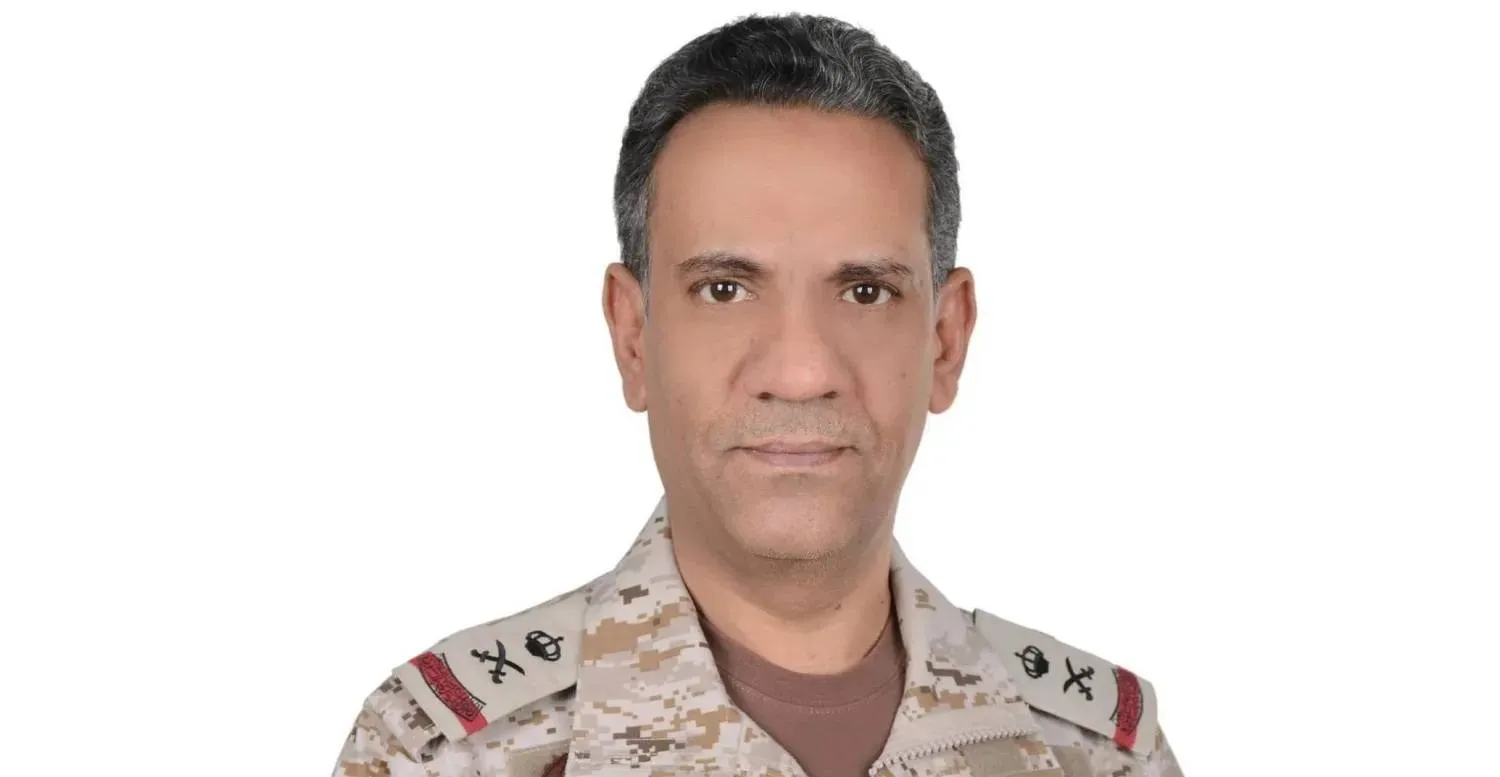
Coalition spokesman Major General Turki Al-Malki. (Asharq Al-Awsat)
TT

Coalition Destroys Ballistic Missile Fired by Houthis at Riyadh

Coalition spokesman Major General Turki Al-Malki. (Asharq Al-Awsat)

The Arab Coalition to Restore Legitimacy in Yemen announced that Saudi air defenses successfully intercepted and destroyed a ballistic missile fired by the terrorist Houthi militia towards Riyadh on Saturday morning.

Coalition spokesman Major General Turki Al-Malki said the Houthi escalation and their continued attempts to target civilians and civilian areas in the Saudi capital, Riyadh, home to over 8 million citizens and residents, underscore the militia’s intransigence and its persistence in deliberately and systematically targeting civilians and civilian objects in a hostile and terrorist manner.

Al-Malki added that the Houthis attempted to target civilians in the cities of Taif, Baysh, Yanbu and Farasan, saying the air defenses thwarted all the hostile attempts.

In a statement on Saturday, Al-Malki underlined the Coalition command’s inherent right to take whatever measures it deems appropriate, and in accordance with international humanitarian law and its customary rules, to deter the behavior of the terrorist Houthi militia.

The Jordanian Ministry of Foreign Affairs condemned the Houthi attacks on Saudi Arabia as a flagrant violation of its sovereignty, a threat to its security, stability, and territorial integrity, and a blatant breach of international law and the United Nations Charter.

It stressed Amman's absolute solidarity with Riyadh and its support for all measures it takes to protect its security, stability, assets, and the safety of its citizens and residents.

The Lebanese Ministry of Foreign Affairs also strongly condemned the missile attack that targeted Riyadh, considering the assault on Saudi Arabia's security a grave violation of international law and a threat to regional security and stability.

In a statement, the ministry expressed Lebanon's full solidarity with Saudi Arabia and its support for the Kingdom in confronting any attack targeting its security and territorial integrity, reiterating its categorical rejection of any targeting of cities and civilian facilities or placing the lives of civilians in danger.


Saudi Arabia Lifts Early Warning Alerts Issued in Ten Cities

Saudi Civil Defense (Asharq Al-Awsat)
TT

Saudi Arabia Lifts Early Warning Alerts Issued in Ten Cities

Saudi Civil Defense (Asharq Al-Awsat)

The Saudi Civil Defense sent an all clear on Saturday after issuing alerts for potential ⁠danger in several cities of the kingdom as part of emergency procedures to alert residents.

The alerts included Riyadh, al-Kharj, Khamis Mushait, Jeddah, Taif, Yanbu, AlUla, Jazan, Farasan and Abha.

The sirens had been activated in those cities and governorates as part of the emergency early warning system before the Civil Defense later declared that the danger had passed.

The Civil Defense stressed the importance of refraining from circulating rumors and videos from unknown sources, emphasizing that information related to emergency situations should be obtained from official sources. Residents should comply with instructions and guidance issued by the relevant authorities, it added.