Network for Security, Defense Research Centers Established in Rabat

Driss Benomar, Executive Chairman of the Atlantis think tank. (Asharq Al-Awsat)
TT

Network for Security, Defense Research Centers Established in Rabat

Driss Benomar, Executive Chairman of the Atlantis think tank. (Asharq Al-Awsat)

The founding conference for the Network of African Security and Defense Research Centers will be held on Tuesday in Rabat with the participation of 37 research centers from Africa, as well as specialized centers from China, Brazil, Argentina, the United States, France, Belgium, Spain and Morocco.

This conference is taking place on the sidelines of the fourth edition of the Africa Security Forum, which opened on Monday with the participation of hundreds of figures from different countries under the theme, “The impact of climate change on security in Africa”.

“The aim of this conference is to bring together the 140 African research centers specialized in security and defense issues,” Driss Benomar, Executive Chairman of the Atlantis think tank in Casablanca, told Asharq Al-Awsat.

Speaking on the benefits of forming a network, Benomar said: “African defense and security research and studies centers will have greater weight in their dealings with relevant regional and international institutions. Their recommendations and suggestions will gain even more strength when they are presented by a 140-seat club rather than by individual centers.”

The three-day Africa Security Forum focuses on three major issues: "Demographic Growth and Agricultural Development", "Food Security and Water Management" and "Anticipating Tomorrow's Solutions".

Hundreds of high-level personalities and government representatives from 35 African countries and 400 participants from the other continents are expected to find solutions to curb the adverse impacts of climate change on food security, terrorism, development, and biodiversity that grips the continent.


Fighting Against Houthis Resumes on Bab Al-Mandab Front

Southern Giants Brigades forces clash with the Houthis on the Lahj and Bab Al-Mandab fronts (Military Media)
TT

Fighting Against Houthis Resumes on Bab Al-Mandab Front

Southern Giants Brigades forces clash with the Houthis on the Lahj and Bab Al-Mandab fronts (Military Media)

Fighting against the Houthis resumed on the Bab Al-Mandab front on Monday, coinciding with fierce clashes in Lahj Governorate and advances by the Southern Giants Brigades in Al-Mudarabah and Ras Al-Arah district.

Meanwhile, government forces deployed military reinforcements to Al-Maqatirah district in northern Lahj to regain the initiative and recapture areas seized by the Houthis in recent days, while maintaining their positions on the front lines surrounding Taiz.

Clashes resumed on the Bab Al-Mandab front early Monday morning, with the Southern Giants Brigades taking part in military operations that resulted in the recapture of several positions and advances in contested areas, according to field sources. The fighting also left Houthi fighters dead and wounded.

The renewed battles coincided with continued clashes in Al-Mudarabah and Ras Al-Arah district in western Lahj, where the Giants Brigades regained control of strategic positions, including Jabal Safan and Qarn Al-Shamayah, while fighting continued in the Al-Majza and Zurayqat Al-Sham areas on the district's outskirts.

In a related development, the Southern Giants Brigades denied reports that their forces had withdrawn from Dhubab, Kahbub and their positions along the western coast.

Aseel Al-Saqaldi, director of the forces' media center, said their units remained deployed at their positions and would not withdraw under pressure from what he described as rumors and false claims.

Al-Saqaldi added that the forces' presence in Dhubab marked the beginning of a theater of operations that he said would extend as far as Saada, reaffirming their commitment to continuing the fight against the Houthis and pressing ahead with military operations.

Regaining the Initiative

In Al-Maqatirah district in northern Lahj Governorate, government forces deployed substantial reinforcements from the Southern Giants Brigades and Nation's Shield Forces.

The reinforcements took over the headquarters of the Tur Al-Bahah Military Axis Command and immediately joined the front lines against the Houthis, in a move aimed at recapturing areas seized by the group in recent days.

Field sources said government forces and the Popular Resistance had thwarted Houthi attempts to advance and seize additional territory, forcing the attackers to retreat after inflicting casualties and equipment losses.

The arrival of reinforcements is part of broader military efforts to regain the initiative in the district and prevent the Houthis from expanding their control over positions and high ground that have witnessed clashes in recent weeks.

Taiz: Government Forces Hold Their Ground

In Taiz Governorate, government forces and the Popular Resistance continued to repel Houthi attacks on the fronts surrounding the city, with fighting persisting along the southeastern axis.

Operations focused on thwarting Houthi movements and targeting the group's reinforcements and military positions.

The Taiz Military Axis Command reported that government forces, supported by military aircraft, carried out strikes against Houthi positions and concentrations in the Bardad area of Wadi Anqab on Jabal Sabr, destroying a military vehicle.

Other strikes targeted positions in Hisn Al-Mukhaaf and areas of Al-Misrakh district in the southern part of the governorate.

The command added that air defenses shot down two Houthi drones on the Sabr front as fighting continued across several sectors, with government forces maintaining their positions and preventing the group from making further breakthroughs.

Separately, local sources reported that Houthi fighters raided and forcibly seized the homes of government, political and community figures in Al-Shamayatayn district, south of Taiz.

According to the sources, the properties included the home of Water and Environment Minister Tawfiq Al-Sharjabi in the village of Sharjab, the home of former Baath Party leader Qasim Sallam, and the home of Brigadier General Abdulwahab Al-Sharjabi.

The incidents come amid an expanding Houthi presence in several districts of the governorate, raising concerns about further seizures of private property and the targeting of government officials, politicians and community figures.

Air Support and Military Operations

On the broader military front, the Yemeni army announced that it had carried out 1,272 targeting operations during the 24 hours preceding Sunday evening as part of Operation Fajr Yemen.

The operations targeted Houthi concentrations, reinforcements, fortifications, firing positions, vehicles and supply assets.

Colonel Majed Al-Nuzayli, spokesperson for the Yemeni Armed Forces, said the operations had weakened the group's capabilities, supported government advances and helped recapture positions in Al-Jawf Governorate.

He noted that operations were continuing on the northern fronts and in Marib and Al-Bayda, as well as on the southern and southwestern fronts.

Al-Nuzayli added that the operations had resulted in the neutralization of approximately 500 Houthi field commanders and fighters, along with the destruction or disabling of 169 vehicles, pieces of equipment and heavy weapons.

He reaffirmed that military operations would continue, with the necessary precautions taken to protect civilians and civilian objects.


Arab League Secretary-General: Palestinian Cause True Test of International Order’s Credibility

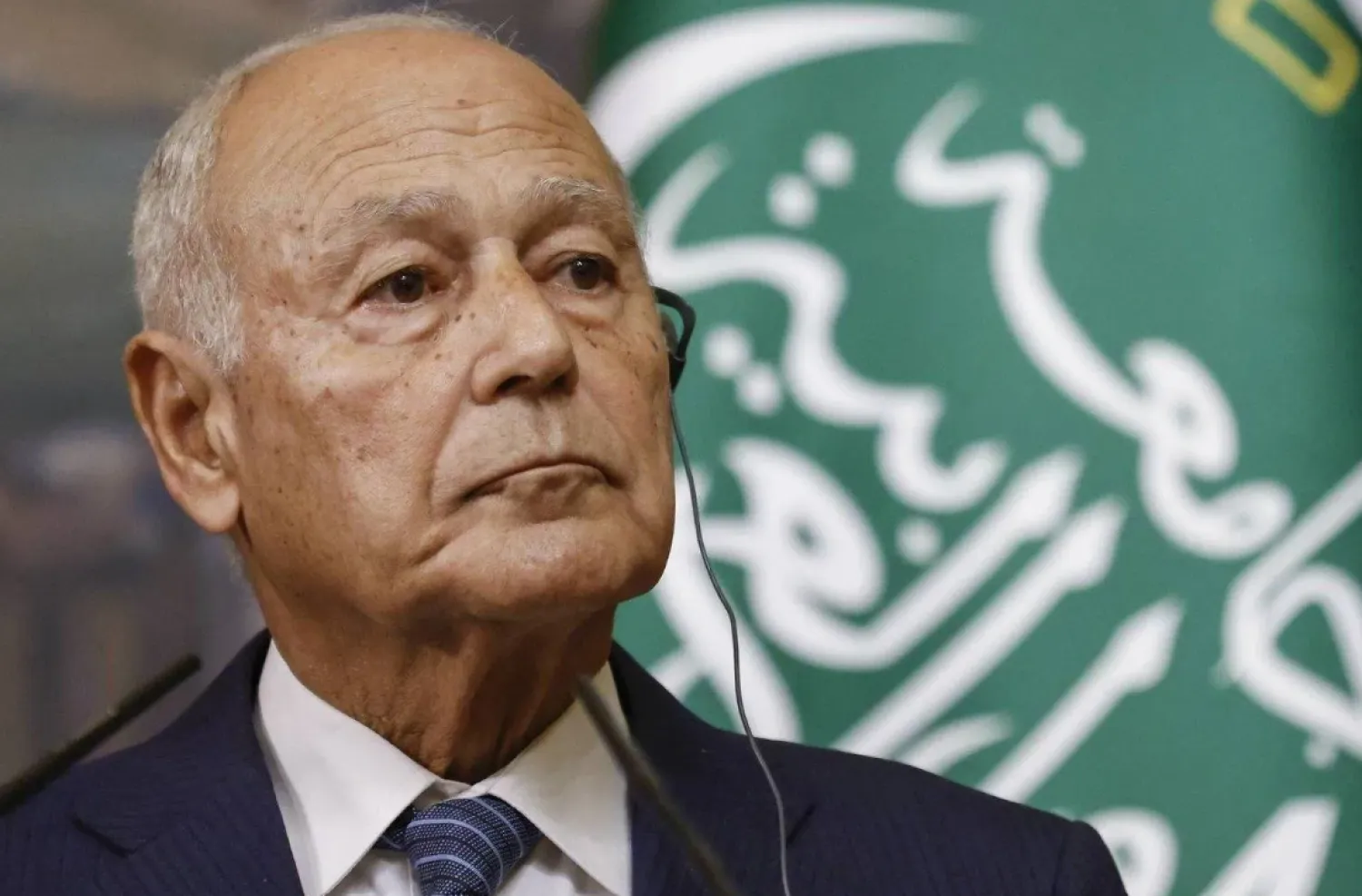
Secretary-General of the Arab League Ahmed Aboul Gheit. (Asharq Al-Awsat)
TT

Arab League Secretary-General: Palestinian Cause True Test of International Order’s Credibility

Secretary-General of the Arab League Ahmed Aboul Gheit. (Asharq Al-Awsat)

Arab League Secretary-General Nabil Fahmy affirmed that the Palestinian cause is a true test of the credibility of the international order, in light of persistent double standards and Israeli violations of international law, stressing the need to end the occupation and establish an independent Palestinian state.

He also underscored the importance of preserving the unity, sovereignty, and territorial integrity of Arab states and supporting their national institutions as a fundamental pillar of security and stability, SPA reported.

Fahmy made the remarks during an open dialogue at the third edition of the Cairo Forum, where he reviewed the main challenges facing the Arab region, explored ways to strengthen security and stability, and discussed the role of joint Arab action in responding to regional and global shifts.

He explained that Arab security extends beyond military considerations to include political, economic, social, and developmental dimensions. He highlighted the crises and instability affecting Syria, Sudan, Lebanon, Yemen, and the Arab Gulf region, noting that addressing them requires looking beyond their immediate manifestations to tackle their root causes, foremost among them weak institutions and the accumulation of political, economic, and social challenges.

Fahmy stressed the need to move from merely managing the repercussions of crises to adopting proactive approaches that prevent their recurrence. He also emphasized strengthening cooperation and integration among Arab states, establishing balanced relations with neighboring countries based on respect for sovereignty and non-interference in internal affairs, and engaging with the wider world on the basis of parity and shared interests.


Jordan's King Says 'No Security or Stability' in Region Without Palestinian Homeland

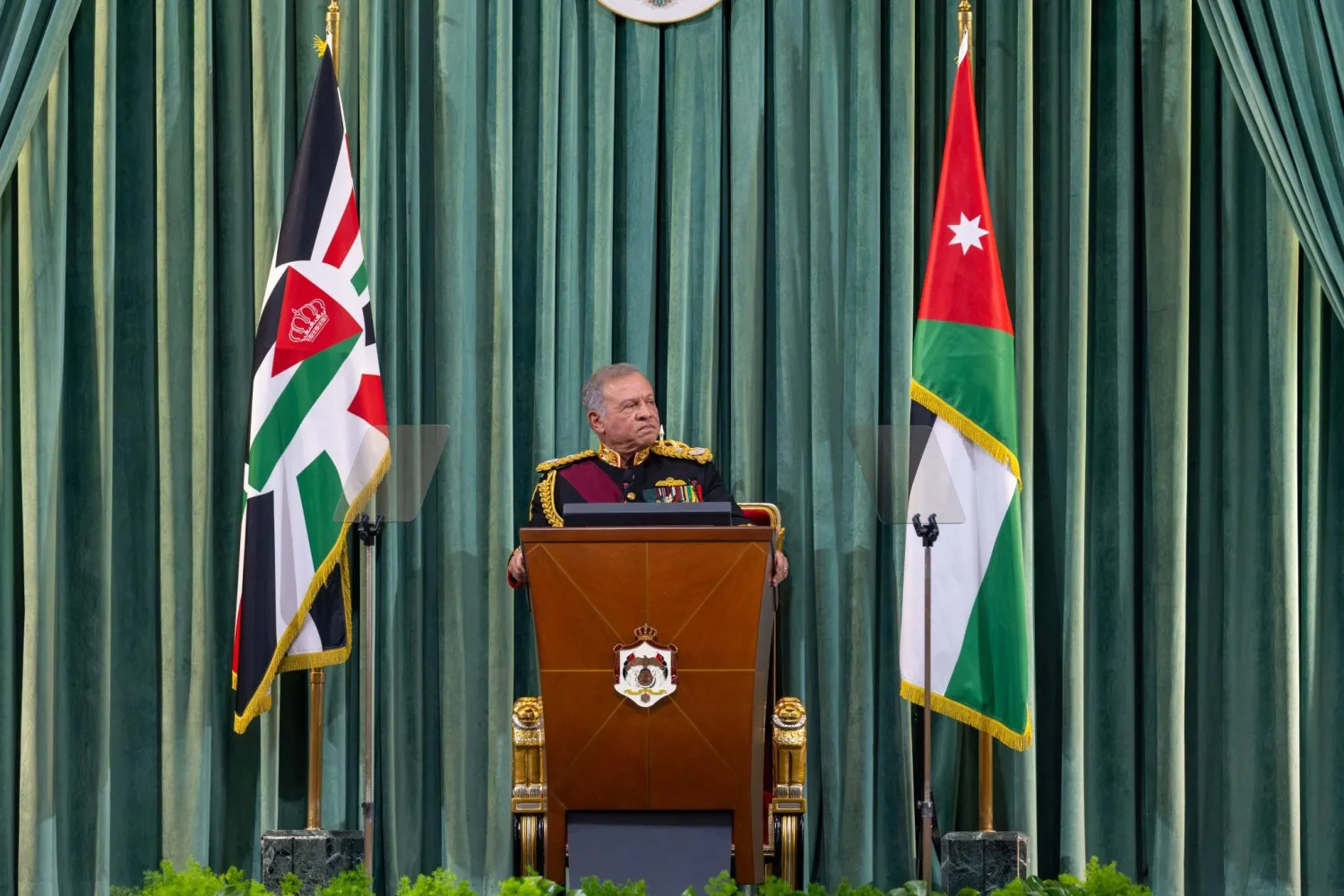
Jordanian Monarch King Abdullah II bin Al-Hussein during today's speech (Petra)
TT

Jordan's King Says 'No Security or Stability' in Region Without Palestinian Homeland

Jordanian Monarch King Abdullah II bin Al-Hussein during today's speech (Petra)

Jordan's King Abdullah II on Monday said there would be no security in the Middle East region until the Palestinians' right to a homeland is fulfilled. 

"We reiterate, time and again, that there can be no security or stability in our region without upholding the Palestinian people's right to their homeland," he said at the opening of Jordan's parliament. 

Jordan neighbors Israel and the occupied West Bank. It has long advocated for a two-state solution, and signed a peace treaty with Israel in 1994. 

"Despite international calls for an end to Israel's violations, the humanitarian catastrophe in Gaza continues, as do the relentless attacks in the West Bank and Jerusalem, whilst Israel's expansionist ambitions remain the greatest threat to the region's future and hopes," the king said. 

The speech came days after Israel held a legislative election which saw Prime Minister Benjamin Netanyahu's party win the most votes, but still fall short of a majority. 

It also follows threats of a renewed conflict in the wider region, with Iran vowing to hit back should the United States and Israel renew strikes against the Iranian republic.