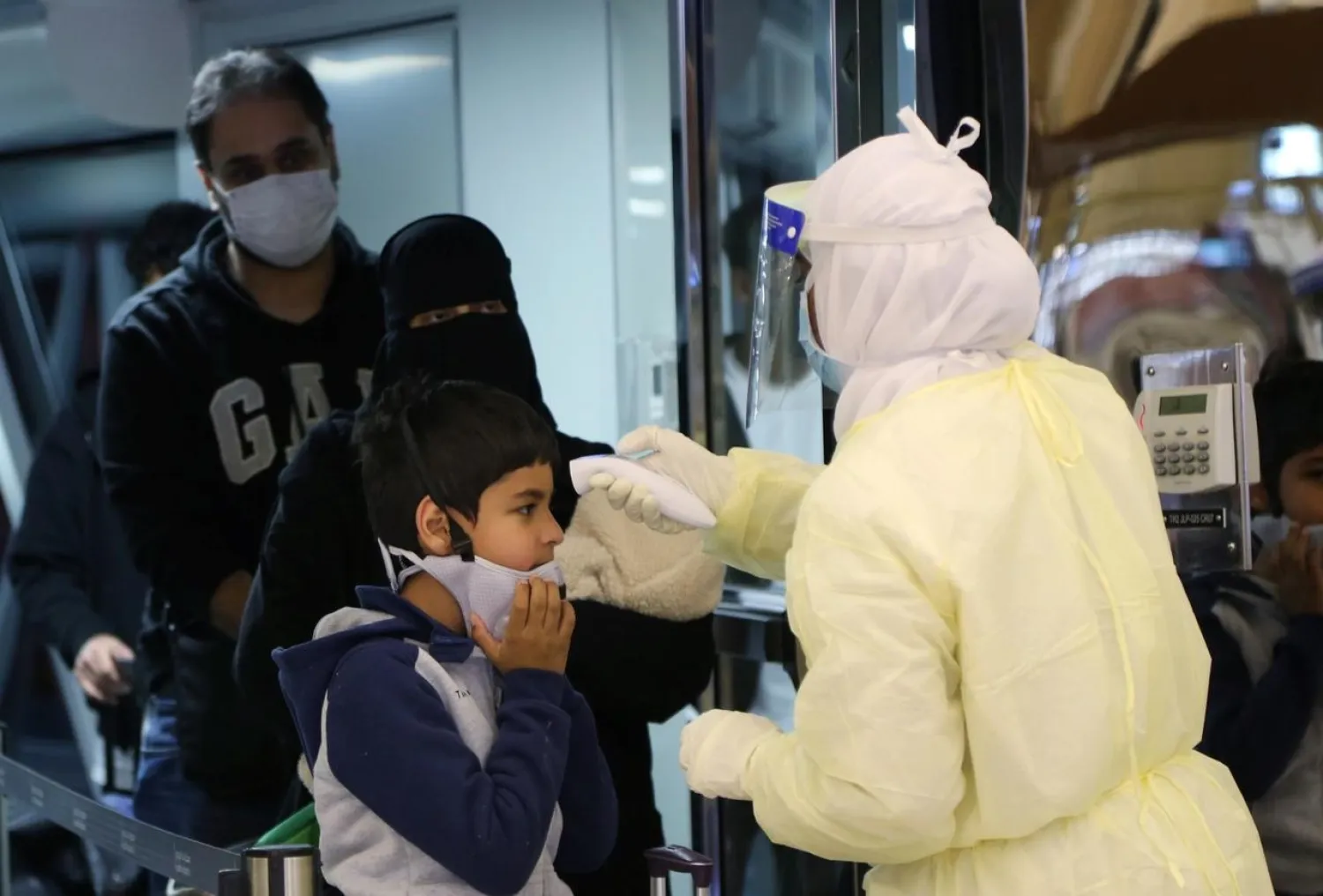
Saudi Arabia Earmarks $4 Billion to Fight Coronavirus

Saudi Arabia Earmarks $4 Billion to Fight Coronavirus
TT

Saudi Arabia Earmarks $4 Billion to Fight Coronavirus

Saudi Arabia Earmarks $4 Billion to Fight Coronavirus

Saudi Arabia has allocated an additional 7 billion riyals (USD 1.8 billion) to face the new coronavirus, in addition to the 8 billion riyals (USD 2.1 billion) earmarked at the beginning of the virus outbreak.

The Kingdom has registered on Wednesday 272 new infections and 64 new recoveries. The Ministry of Interior issued decisions, including the prolongation of curfew hours, starting from 3 pm until 6 am.

Dr. Tawfiq Al-Rabiah, the Saudi Minister of Health, said that his country has provided the financial needs for efforts to combat this pandemic, as 8 billion riyals have been approved since the first case of infection was recorded in the country.

He added that a committee chaired by Crown Prince Mohammed bin Salman on Monday has allocated an additional 7 billion riyals to fight the virus, in addition to the approval of a request submitted by the ministry to earmark 32 billion riyals for the end of the fiscal year.

Rabiah regretted that some people did not abide by the directives, as some roads recorded an increase in the number of cars during the day.

“We need to take other measures to protect the society from these people. We stand before a decisive moment as we have to raise our sense of responsibility and contribute firmly to stop the spread of this pandemic,” he emphasized.

The Minister of Health shared the results of four different studies carried out by Saudi and international epidemics experts.

The studies expected that the number of infections during the next few weeks would range from 10,000 to a maximum of 200,000 cases.

According to official data, the Kingdom recorded 272 new COVID-19 cases on Tuesday, bringing the total infections in Saudi Arabia to 2,795 cases.

While the total number of deaths reached 41 until Tuesday, 615 people have fully recovered from the virus to date.


MWL Condemns Continued Iranian Attacks on Gulf States, Jordan, Commercial Vessels

The Muslim World League (MWL) logo
TT

MWL Condemns Continued Iranian Attacks on Gulf States, Jordan, Commercial Vessels

The Muslim World League (MWL) logo

The Muslim World League (MWL) on Sunday strongly condemned Iran’s continued aggression against Kuwait, Bahrain, Qatar, the United Arab Emirates, Oman and Jordan, as well as the targeting of commercial vessels, the Saudi Press Agency said on Sunday.

In a statement by its General Secretariat, the MWL denounced these Iranian attacks as violations of international law, the UN Charter, the Charter of the Organization of Islamic Cooperation, and the principles of good neighborliness.

Secretary-General of the MWL and Chairman of the Organization of Muslim Scholars Sheikh Dr. Mohammed Al-Issa renewed his condemnation of these repeated Iranian attacks, stressing that they violate all religious values as well as international and humanitarian laws and norms.

Al-Issa underscored that the continued attacks also undermine efforts to restore security and stability across the region.

Iran launched missile and drone attacks on Sunday targeting US military facilities in Qatar, Bahrain, Kuwait, Oman, Jordan, and the United Arab Emirates, marking a significant escalation in regional tensions following US strikes on Iranian targets.


Saudi Foreign Minister Holds Separate Talks with Arab and International Counterparts

Prince Faisal bin Farhan, Saudi Foreign Minister (Asharq Al-Awsat)
TT

Saudi Foreign Minister Holds Separate Talks with Arab and International Counterparts

Prince Faisal bin Farhan, Saudi Foreign Minister (Asharq Al-Awsat)

Saudi Minister of Foreign Affairs Prince Faisal bin Farhan bin Abdullah held talks with several counterparts from Qatar, Oman, Bahrain, Jordan, Iraq and Ukraine, the Saudi Press Agency reported on Sunday.

The Saudi minister discussed with his Ukrainian counterpart Andrii Sybiha, the bilateral relations between their countries, the latest regional developments and the crisis in Ukraine, and exchanged views on a range of issues of mutual interest.

The Saudi minister also held separate phone calls with Prime Minister and Minister of Foreign Affairs of Qatar Sheikh Mohammed bin Abdulrahman Al Thani; Minister of Foreign Affairs of Oman Sayyid Badr bin Hamad Albusaidi; Minister of Foreign Affairs of Bahrain Dr. Abdullatif bin Rashid Al Zayani; and Deputy Prime Minister and Minister of Foreign Affairs and Expatriates of Jordan Ayman Safadi.

Discussions focused on the latest developments in the region where the ministers reaffirmed their condemnation of the repeated Iranian attacks against countries in the region, as well as their rejection of any actions that could undermine the sovereignty of states or threaten the region’s security and stability. They also exchanged views on a number of issues, foremost among them efforts to restore security, de-escalate tensions, and ensure freedom of navigation in the Strait of Hormuz.

Furthermore, an official meeting was held between the Saudi minister and Deputy Prime Minister and Minister of Foreign Affairs of Iraq Dr. Fuad Hussein, with the attendance of several senior officials from both sides.

During the meeting, they reviewed the fraternal relations between the two brotherly countries and explored ways to strengthen them across various fields. They also discussed the latest developments in the region and issues of mutual interest.

The two sides emphasized the importance of respecting national sovereignty, upholding the principles of good neighborliness, refraining from interference in the internal affairs of states, and rejecting the use of any country’s territory to threaten the security and stability of other states.

The Iraqi side reaffirmed commitment not to allow its territory or airspace to be used as a launching point for any acts or attacks targeting the Kingdom of Saudi Arabia, the Gulf Cooperation Council (GCC) member states, or other countries in the region.

The two sides also stressed the importance of supporting Iraq’s security and stability, strengthening the role of its national institutions, and continuing coordination and cooperation.


GCC Sec-Gen Condemns Iran's Continued Destabilizing Behavior, Repeated Attacks on Member States

Secretary-General of the Gulf Cooperation Council (GCC) Jasem Albudaiwi. SPA
TT

GCC Sec-Gen Condemns Iran's Continued Destabilizing Behavior, Repeated Attacks on Member States

Secretary-General of the Gulf Cooperation Council (GCC) Jasem Albudaiwi. SPA

Gulf Cooperation Council (GCC) Secretary-General Jasem Albudaiwi expressed his condemnation and denunciation in the strongest terms of Iran's continued destabilizing behavior regarding regional security and stability, its repeated brutal targeting of the United Arab Emirates (UAE), the Kingdom of Bahrain, the Sultanate of Oman, the State of Qatar, the State of Kuwait, and the Hashemite Kingdom of Jordan, as well as its dangerous attacks on commercial vessels.

Albudaiwi stated that Iran's behavior constitutes a grave violation of the principles of international law, the United Nations Charter, and UN Security Council Resolution 2817, as well as a direct undermining of maritime security and freedom of navigation, SPA reported.

He noted that these repeated, brutal Iranian attacks not only hinder all endeavors aimed at achieving security and stability in the region, but also reveal a systematic insistence on perpetuating chaos, in blatant defiance of international law and the international community's shared will to establish peace.

He underlined that the GCC supports all measures taken by the UAE, Bahrain, Oman, Qatar, Kuwait, and Jordan to bolster their security, safeguard their sovereignty, and protect their peoples and residents across their territories.