Saudi defenses intercepted on Tuesday a hostile drone fired by the terrorist Houthis in Yemen before it entered the prohibited airspace area of the holy city of Makkah.
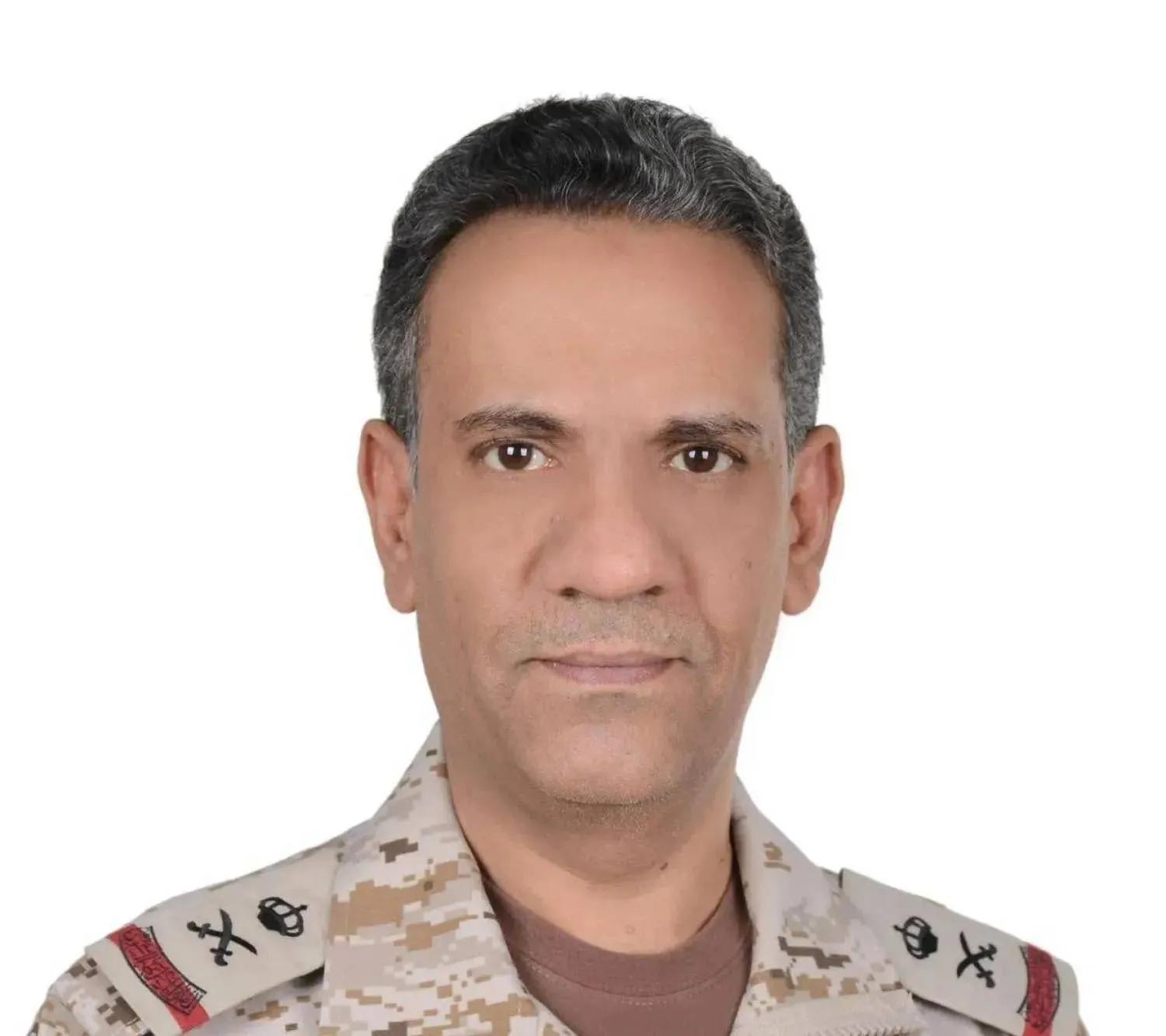
Official Spokesperson of the Coalition to Restore Legitimacy in Yemen Major General Turki Al-Malki revealed that this was the second hostile and terrorist attempt to target Makkah.
The first took place on July 27, 2017.
“This can only be described as a disgraceful act, an attempt to target the birthplace of revelation, the land of the message, and the destination that draws the hearts of millions of Muslims from around the world,” Al-Maliki continued.
“It was also an attempt to terrorize the Umrah performers visiting the Grand Mosque in peace and to harm citizens and residents,” he noted.
“This hostile attempt will remain a mark of shame on the record of violations committed by the extremist terrorist Houthi militia, as it was a deliberate act intended to provoke the feelings of millions of Muslims,” he added.
“The security of the Two Holy Mosques and the Umrah performers is a red line, and the Joint Forces Command of the Coalition will not hesitate to take the necessary and deterrent measures against the terrorist Houthi militia and its hostile and terrorist behavior,” Al-Malki stressed.
Repeated attacks
The repeated attacks on houses of worship highlight the stark contradiction between the Houthi militia's declared rhetoric and its conduct on the ground.
While the Iran-backed group seeks to hide behind religion and adopt sectarian slogans to advance its military agenda, its practices prove that it is executing regional agendas that destabilize the security of the region and target its religious and civil foundations.
The pace of attacks by the Houthis has witnessed a systematic escalation targeting Islamic holy sites and civilian objects within Saudi Arabia. This included attempted attacks toward the cities of Makkah and Madinah, as well as causing material damage to a mosque and injuring civilians in the Jazan region, in flagrant violation of the principles of international humanitarian law.
According to Islamic law, mosques possess a sanctity guaranteed by explicit texts that mandate their protection and prohibit targeting them or transforming them into arenas of conflict, in times of both peace and war alike.
The recent attack that caused damage to a mosque in the Jazan region is more evidence of the militia’s violation of Islamic legal tenets and values. This exposes its use of religious cover as a tool for political deception and to mask its violations against civilian objects and houses of worship.
Dr. Qais Al-Mubarak, a former member of the Saudi Council of Senior Scholars, said: “The preservation of life is one of the fundamental, essential interests for creation, and a Muslim is commanded to safeguard it and everything that ensures its preservation. Muslims have reached a consensus on this, and this meaning is further reinforced if the killing takes place in houses of worship.”
Dr. Al-Mubarak stressed that what the Houthis have done in Yemen, including harming the Yemeni people and demolishing houses, is among the greatest evils.
He added: “Today, they are targeting the holy sites in the Two Holy Mosques, without any consideration for their visitors and what might befall them from these indiscriminate attacks.”
“This is a great evil that no nation would accept, is prohibited by all divine laws, and is only committed by those who hold no value or respect for human life; for the preservation of life is universally agreed upon among Muslims,” he added.
Dr. Youssef Al-Rumaih, security advisor and professor of crime and terrorism counter-measures at Qassim University, stated that the Houthis’ terrorist targeting of holy sites inside Saudi Arabia demonstrates their disregard for the most basic Islamic principles.
Despite pretending to uphold Islamic law, the group's actions never rise above mere rhetoric, exposed by the reckless projectiles they fire at the holiest sanctuaries of Islam, he remarked.
“This terrorist group is beholden to regional agendas,” he said, pointing to the negative impacts that subservience to regional agendas has brought upon many countries in the Arab region, leaving them vulnerable to divisions and undermining their stability and social peace.
Dr. Mohammed Al-Omari, a researcher in the history of Islamic legal sciences, said the recent Houthi attacks have gone beyond the military and security dimensions to become a direct assault on the sanctity of Islamic holy sites and a provocation to the sentiments of more than two billion Muslims around the world.
“Makkah is not merely a geographical location, but rather the Holy City and the unifying Qibla for Muslims. Compromising its security or targeting the mosques of God in any region are an assault on the Islamic faith and collective conscience,” he stressed.
“Saudi Arabia, its leadership and people, remains dedicated to the honor of protecting and caring for the Two Holy Mosques, and safeguarding the security of these holy sites against any threat,” he added.