Calls for More Protests in Tripoli, Benghazi to ‘Save Libya’ from Corruption

Protests in Tripoli in August. (AFP)
TT

Calls for More Protests in Tripoli, Benghazi to ‘Save Libya’ from Corruption

Protests in Tripoli in August. (AFP)

Residents of the Libyan capital, Tripoli, and eastern city of Benghazi have called for peaceful protests on Monday against “all forms of corruption” and the “toppling of all political bodies.”

Activists in eastern Libya have been making these calls for days ahead of Monday’s rally that will be held in the afternoon in Benghazi.

The activists have been calling for “saving Libya” and “rejecting corruption”, which they blame on the spread of the coronavirus in the country, lack of basic services and unemployment.

The organizers urged the people to protest peacefully and shun weapons and violence as a means to resolve conflicts. They instead demanded peaceful solutions to problems.

Salheen al-Neihoumy, an official at the foreign ministry in the east-based interim government and a supporter of the Benghazi protests, told Asharq Al-Awsat that the rallies were prompted by the recent dramatic drop in living conditions.

The protesters will demand the overthrow of the political class and call for presidential and parliamentary elections, he said.

He accused the Tripoli-based Government of National Accord (GNA) and the National Oil Corporation, headed by Mustafa Sanallah, of “tightening the noose around eastern Libya by cutting fuel supplies, which has led to power cuts for several hours of the day.”

Despite their divisions, the people in eastern and western Libya will protest on Monday for the same reason, sending a message that all regions are united in their demand for better living conditions and the ouster of corruption politicians.


Lebanese Army Rejects Direct Coordination with Israel Before Withdrawal from South

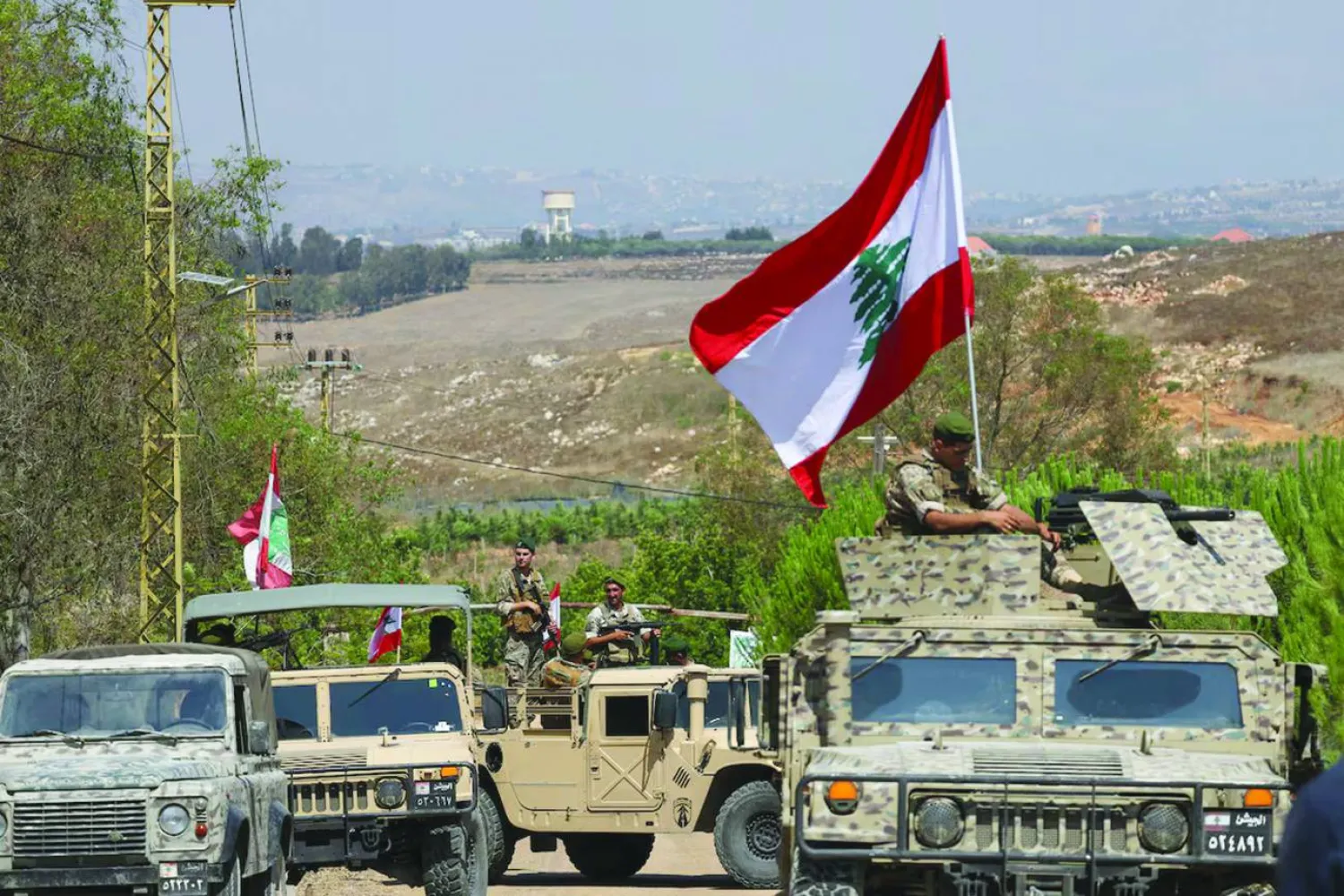
The entrance to the village of Zawtar al-Gharbiyeh in South Lebanon as the Lebanese Army deployed following the withdrawal of Israeli forces on July 21, 2026. (Reuters)
TT

Lebanese Army Rejects Direct Coordination with Israel Before Withdrawal from South

The entrance to the village of Zawtar al-Gharbiyeh in South Lebanon as the Lebanese Army deployed following the withdrawal of Israeli forces on July 21, 2026. (Reuters)

The Lebanese Army has rejected Israeli demands for direct military coordination while Israeli forces continue to occupy Lebanese territory, fearing the move could undermine negotiations and draw the military into domestic political disputes.

The army wants to preserve the trust it has built with communities in South Lebanon, even as it cracks down on gunmen and weapons traffickers and expands its deployment in areas outside Israeli control.

Washington has conveyed Israel’s demand for direct coordination between the two armies, which would replace the existing US-mediated mechanism, the Military Coordination Group for Lebanon (MCG4L).

The group oversees implementation of the “framework agreement”, coordination arrangements and assistance with military deployments, beginning in designated pilot areas.

Israel repeated its demand during the eighth round of military-only talks in Tampa, Florida.

President Joseph Aoun backs the army’s refusal. Visitors to the president told Asharq Al-Awsat that he had personally instructed the military not to establish direct contact with Israeli forces.

“It is still far too early to discuss such a step,” Aoun told his visitors. “Under the current circumstances, direct communication is impossible while the Israeli army continues to occupy our territory and attack it every day.”

Indirect coordination

Sources familiar with contacts between the army and Lebanon’s political leadership explained that the military insists coordination with Israel remain indirect, either through the US military or the United Nations, as under previous UN-chaired tripartite and five-party committees.

The army wants an international witness to any discussions, particularly after what the sources described as negative experiences with Israel.

They cited Israel’s refusal to acknowledge the Lebanese Army’s progress in implementing the first phase of the government’s plan to bring weapons under exclusive state control south of the Litani River before fighting resumed on March 2.

Political and domestic concerns

The army’s position also reflects Israel’s continued occupation of Lebanese territory and its refusal to withdraw, halt attacks or offer political concessions that could strengthen Beirut’s negotiating position, according to the sources.

They stressed that the military does not oppose negotiations and has participated in US-mediated talks in Rome and the United States under the framework agreement.

But the army is determined to avoid becoming a target of domestic political disputes over direct negotiations with Israel.

“The military wants to preserve its standing as a national institution trusted across Lebanon’s political and sectarian divides,” the sources explained.

They warned that “direct coordination could expose the army to criticism whenever Israeli forces carried out attacks or violations, weakening public confidence in the institution.”

“Such divisions could also obstruct its mission to implement Cabinet decisions on bringing all weapons under state control and extending government authority across Lebanese territory.”

US praise

The sources reported that the Lebanese Army had faced no opposition from residents south of the Litani River while implementing the first phase of the government’s weapons-control plan.

It collected 2.7 million weapons and pieces of ammunition without coordinating with any domestic party, including Hezbollah, they noted.

The army also pursued and arrested gunmen, people who opened fire and those transporting weapons, while maintaining local support.

US Central Command praised its operations and recognized the difficulties of working in heavily damaged areas, according to the sources.

These included clearing roads, restoring basic living conditions and helping residents return to their villages, particularly in designated pilot areas.

The sources highlighted US military support for the army’s civil-military operations, which have enabled it to carry out its mission without confrontation with local communities.


Iraq’s Ruling Coordination Framework Faces Growing Risk of Split

Prime Minister Ali al-Zaidi with Islamic Supreme Council of Iraq leader Humam Hamoudi (Prime Minister’s Media Office). 
TT

Iraq’s Ruling Coordination Framework Faces Growing Risk of Split

Prime Minister Ali al-Zaidi with Islamic Supreme Council of Iraq leader Humam Hamoudi (Prime Minister’s Media Office). 

Deepening divisions over Prime Minister Ali al-Zaidi, the disarmament of armed factions and the distribution of government posts threaten to fracture Iraq’s ruling Shiite Coordination Framework, according to sources close to the alliance.

The sources describe intense polarization fueled by competing political interests, disagreements over the country’s financial crisis and disputes over vacant and previously allocated government positions. Recent public clashes among senior figures have further exposed the widening rifts.

Dispute Erupts in Public

Tensions erupted publicly last Saturday when Khalid al-Marsoumi, a member of the Reconstruction and Development Alliance led by former Prime Minister Mohammed Shia al-Sudani, called for the prosecution of former Prime Minister Nouri al-Maliki.

Al-Marsoumi accused Maliki of “destroying society and spreading discord,” citing the fall of nearly a third of Iraq’s territory to Daesh in 2014, when Maliki was prime minister.

Hisham al-Rikabi, director of Maliki’s media office, responded: “Enough hypocrisy and political grandstanding. Those who speak today about the fall of the provinces and discord must stop exploiting the tragedies of Iraqis in their political disputes.”

Last week, the Reconstruction and Development parliamentary bloc announced it would suspend its attendance at parliamentary sessions in protest against what it described as “systematic violations and irresponsible behavior that some lawmakers insist on pursuing.”

The bloc said such conduct amounted to “malicious smear campaigns and systematic targeting of the Reconstruction and Development Alliance and its leadership.”

Criticism and accusations directed at the alliance and its leader, Sudani, frequently come from lawmakers and political figures affiliated with other Coordination Framework parties.

Al-Zaidi’s Frustration

Sources close to the government and the Coordination Framework told Asharq Al-Awsat that sharp polarization had taken hold within the alliance.

They attributed the divisions to some factions aligning themselves with Prime Minister Ali al-Zaidi while others sought to cast doubt on his management of the state and obstruct his efforts to disarm armed groups.

The sources also pointed to objections to Zaidi’s foreign visits, particularly his recent trip to Syria, and competition over vacant government positions, including the premiership and leadership of the National Security Service.

They said Zaidi was frustrated by the polarization and attempts by certain blocs and parties to undermine many of his powers and pressure him over efforts to combat corruption and disarm armed factions.

The prime minister also finds himself heavily constrained by Coordination Framework leaders who insist on meeting with him every week, in parallel with his regular weekly Cabinet meetings, the sources added.

Last Saturday, Humam Hamoudi, head of the Islamic Supreme Council of Iraq, said Zaidi was the Coordination Framework’s choice for prime minister.

“The Coordination Framework is accountable before God and the people for formulating visions and policies in accordance with the law and constitution, while Zaidi is responsible for implementing them through his government’s mechanisms,” Hamoudi said.

Observers interpreted the remarks as reflecting the alliance’s dominance over government decision-making and the limited authority exercised by the prime minister.

Political analyst Ihsan al-Shammari, head of the Center for Political Thinking, said the Coordination Framework, which had maintained its cohesion through two successive governments, was now facing serious disagreements stemming from competing interests and conflicting positions on several issues.

“Foremost among these disputes are the distribution of government posts, the handling of corruption cases and the issue of weapons, all of which could expose the Coordination Framework to the risk of a split,” Shammari told Asharq Al-Awsat.

Leadership Rivalries

Shammari said the long-running struggle for leadership within the Coordination Framework had become increasingly evident in the rivalry between Maliki and former Prime Minister Sudani.

The dispute, he explained, reflected a broader contest for leadership and attempts to impose influence and control over decision-making within the alliance.

Dispute Over Armed Factions

Shammari identified the weapons issue as one of the alliance’s most significant sources of division, extending beyond Maliki and Sudani to other Coordination Framework factions.

Most of its members favor keeping weapons in the hands of armed groups, although this is not a position shared by all parties, he said.

The issue has created a crisis between the prime minister’s push for rapid progress toward bringing all weapons under state control and factions unwilling to relinquish their arms amid mounting US pressure.

Shammari warned that the Coordination Framework’s failure to meet US demands to dismantle armed structures operating outside state authority could deepen its divisions.

He said the risk was particularly acute if President Donald Trump’s administration resorted to a maximum-pressure campaign that could include sanctions and other measures. Such developments, he argued, could accelerate the alliance’s fragmentation.

Iran’s Role in Preserving Unity

Despite the mounting tensions, Shammari noted that the Coordination Framework and Iraq’s Shiite political forces had weathered major political and popular upheavals since 2019.

What distinguished the period following the formation of Sudani’s government, he said, was the presence of a political force capable of managing the alliance’s internal balance, containing disputes and preserving a minimum level of cohesion among its members.

Shammari noted that Iran had been the principal external factor preventing the Coordination Framework from breaking apart.

He explained that Tehran continues to regard the alliance’s survival, despite its internal divisions, disputes and mutual accusations, as a means of strengthening its influence over Iraqi decision-making and maintaining a political umbrella that protects its influence in the country.

“As long as this factor remains in place, Iran will apparently continue working to prevent the Coordination Framework from splintering and preserve its cohesion, even if only formally,” Shammari said.

He cautioned, however, that Iranian influence did not guarantee the alliance’s survival.


Arab Parliament Reaffirms Inalienable Rights of the Palestinian People

Arab Parliament logo
TT

Arab Parliament Reaffirms Inalienable Rights of the Palestinian People

Arab Parliament logo

The Arab Parliament affirmed that the rights of the Palestinian people are inalienable and cannot be erased by the passage of time. Foremost among these rights are self-determination and the establishment of an independent Palestinian state along the June 4, 1967 borders, with East Jerusalem as its capital.

It stressed that these rights must be upheld in accordance with the two-state solution, relevant international resolutions, and the Arab Peace Initiative, in a manner that ensures a just and comprehensive peace.

In a statement issued on Monday to mark the 109th anniversary of the Balfour Declaration, the Arab Parliament described the declaration as a historic crime against the Palestinian people, whose devastating consequences continue to this day.

It noted that these repercussions are reflected in the ongoing crimes committed by the Israeli occupation against Palestinians and its persistent violations across the occupied Palestinian territories, particularly in the Gaza Strip, Jerusalem, and the West Bank. These include killings, forced displacement, starvation, and genocide, all in flagrant violation of international law, norms, and conventions.

The Arab Parliament condemned these continued crimes and violations, calling on the international community to assume its responsibilities and take decisive measures to stop them and hold those responsible accountable.