


Saudi Arabia: Nine Decades Peacemaking, Creating Regional Stability

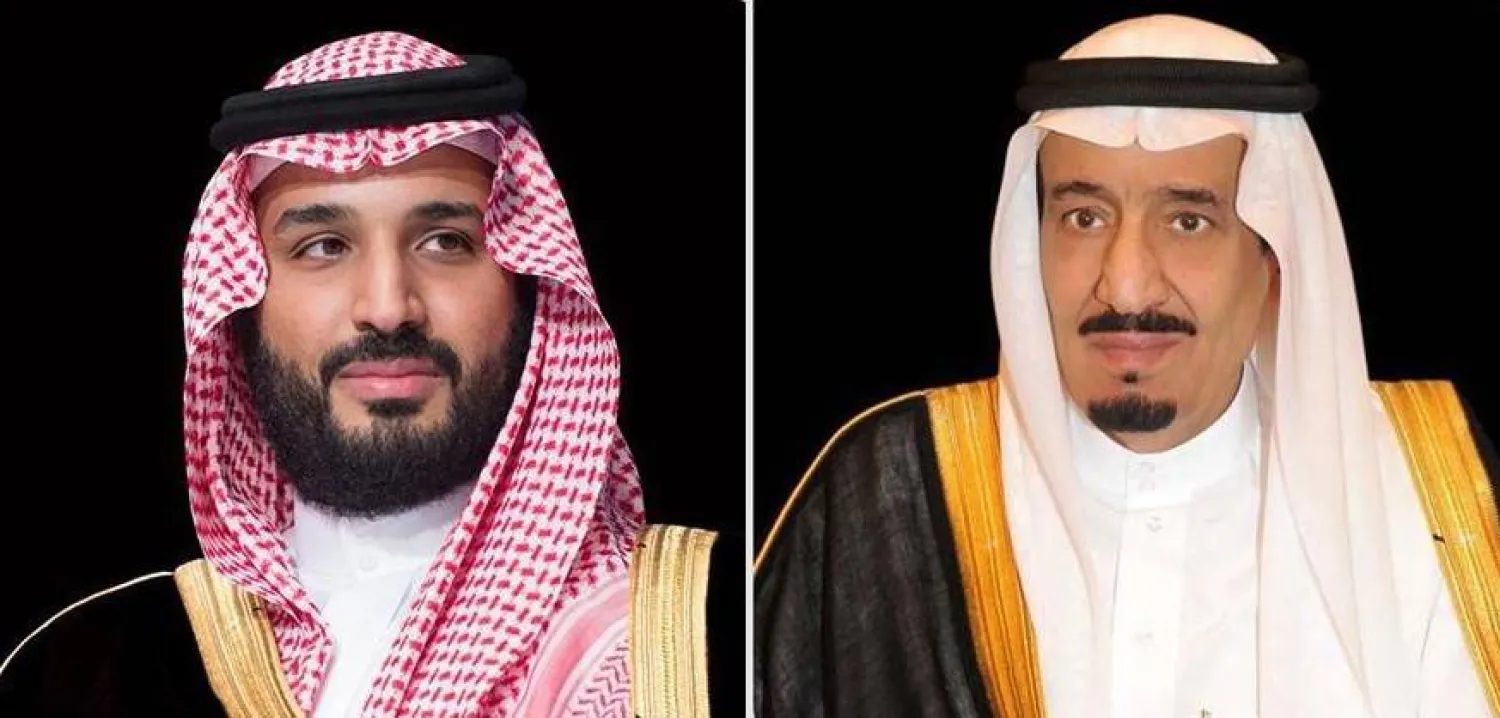
King Salman bin Abdulaziz and Crown Prince Mohammad Bin Salman during the 14th Islamic Summit  in Makkah, Saudi Arabia, Asharq Al-Awsat
King Salman bin Abdulaziz and Crown Prince Mohammad Bin Salman during the 14th Islamic Summit in Makkah, Saudi Arabia, Asharq Al-Awsat
TT

Saudi Arabia: Nine Decades Peacemaking, Creating Regional Stability

King Salman bin Abdulaziz and Crown Prince Mohammad Bin Salman during the 14th Islamic Summit  in Makkah, Saudi Arabia, Asharq Al-Awsat
King Salman bin Abdulaziz and Crown Prince Mohammad Bin Salman during the 14th Islamic Summit in Makkah, Saudi Arabia, Asharq Al-Awsat

For the last nine decades, Saudi Arabia has been mounting herculean diplomatic efforts that are centered around making the world a safer and more tolerant place, despite the Kingdom being located in a region that is infested with conflict and disputes.

Stemming from its pivotal role in the Arab and Islamic worlds, Saudi Arabia occupies a prime position that qualifies it to boost peace efforts and to unify discourse on the Arab and Islamic levels.

Apart from helping contain regional conflicts, the Kingdom has played a significant role in bridging the gap between peoples from the Arab and Muslim worlds and the global community.

Saudi Arabia has overseen agreements, summits, conferences and projects through which it sought to bring warring parties together to unite peoples, end wars, and promote the values of tolerance and coexistence at the regional and international levels.

Political Agreements

Lebanon's Taif Agreement in 1989, brokered by Saudi Arabia, restored Lebanese unity and ended a bloody civil war in the Levantine country.

In 2018, the Kingdom also succeeded in ending the longest-spanning conflict on the African continent between Ethiopia and Eritrea and a peace agreement was signed under the auspices of the Custodian of the Two Holy Mosques King Salman bin Abdulaziz, in the presence of Crown Prince Mohammed bin Salman.

Saudi efforts also sponsored the ending of a 10-year conflict between Djibouti and Eritrea in 2018.

By the end of 2019, Yemeni rivals signed the Riyadh Agreement which laid the foundations for peace among Yemeni parties.

In July 2018, Saudi Arabia contributed to bettering the security and stability of Afghanistan by hosting reconciliation sessions between warring parties and holding the International Ulama Conference on Afghanistan, during which Muslim scholars presented different views on achieving Afghan reconciliation and stopping terrorism and extremism.

Through many organizations, such as the Muslim World League and the KAICIID Dialogue Center, Saudi Arabia had strived to unify the discourse among clerks and scholars from different religious and sectarian backgrounds.

The Kingdom has been an avid supporter of coexistence and tolerance values among peoples of different religions, sects and cultures.

Boosting Coexistence Values

In 2006, Saudi Arabia managed to help bring sectarian fighting in Iraq to an end by sponsoring the signing of the Makkah Declaration of 2006.

In 2019, Saudi Arabia produced the Makkah Declaration, which is a document that called for anti-extremism, religious and cultural diversity, and legislation against hate and violence.

The document was declared in May 2019 at the end of the four-day conference organized by the Muslim World League conference in Makkah. It was approved by Islamic leaders of 139 countries and signed by around 1,200 prominent Muslim figures.

These agreements and documents have played a great role in bridging the gap between rival parties, ending wars, restoring development, establishing the values of coexistence and achieving peace.



Erdogan: Saudi Arabia, Türkiye Eye Joint Investment in KAAN Fighter Jet

Saudi Crown Prince Mohammed bin Salman met Turkish President Recep Tayyip Erdogan in Riyadh (Turkish Presidency). 
TT

Erdogan: Saudi Arabia, Türkiye Eye Joint Investment in KAAN Fighter Jet

Saudi Crown Prince Mohammed bin Salman met Turkish President Recep Tayyip Erdogan in Riyadh (Turkish Presidency). 

Turkish President Recep Tayyip Erdogan said work has begun on a defense cooperation agreement between Türkiye and Saudi Arabia that includes joint investment in the production of the fifth-generation KAAN fighter jet.

Erdogan said Türkiye’s progress in defense industries is being closely followed by Saudi Arabia, as well as by other countries, adding that Ankara is preparing to conclude significant agreements with Riyadh in this field.

Speaking to a group of Turkish journalists on his return from a regional tour that included Saudi Arabia and Egypt, with his remarks published on Thursday, Erdogan said: “We have received many positive comments on the Turkish fighter KAAN, and discussions are under way on joint investment with Saudi Arabia in this regard.”

He stressed that KAAN is not merely a combat aircraft but a symbol of Türkiye’s engineering capabilities and its determination to maintain an independent defense posture. He added that cooperation with Saudi Arabia in this area is likely to expand, including through joint investments.

In February 2024, Türkiye announced the successful first flight of its domestically produced fifth-generation fighter jet, KAAN, manufactured by Turkish Aerospace Industries. With this milestone, Türkiye became one of only five countries capable of producing fifth-generation fighter aircraft and aims to export the jet.

KAAN is designed to carry out air-to-air combat missions and conduct precision strikes from internal weapons bays at supersonic speed.

Erdogan said he held “highly productive” talks with Saudi Crown Prince Mohammed bin Salman during his visit to Riyadh on Tuesday, noting that Saudi Arabia holds a special place for Türkiye in defense industries, transport, healthcare, investment, and construction services. Bilateral trade reached $8 billion in 2025, while Turkish contractors have completed more than 400 projects in the Kingdom worth a total of $30 billion.

He added that Saudi Arabia and Türkiye share aligned views on regional issues, stressing that both countries oppose any new war in the region and favor peace, stability, and calm, which he said would benefit all parties.


Saudi Crown Prince Receives Letter from Maldives President

Saudi Crown Prince Mohammed bin Salman bin Abdulaziz (SPA)
TT

Saudi Crown Prince Receives Letter from Maldives President

Saudi Crown Prince Mohammed bin Salman bin Abdulaziz (SPA)

Prince Mohammed bin Salman bin Abdulaziz Al Saud, Saudi Crown Prince and Prime Minister, received a letter from Maldives President Dr. Mohamed Muizzu on bilateral relations between their countries.

Vice Minister of Foreign Affairs Waleed Elkhereiji received the letter on Thursday during a meeting with Maldives Ambassador to Saudi Arabia Ahmed Sareer at the ministry’s headquarters in Riyadh.

Discussions during the meeting addressed bilateral relations and topics of mutual interest.


Albudaiwi: 'Arabian Gulf Security 4' Exercise Enhances GCC Security Integration

Secretary General of the Gulf Cooperation Council Jasem Mohamed Albudaiwi. GCC
TT

Albudaiwi: 'Arabian Gulf Security 4' Exercise Enhances GCC Security Integration

Secretary General of the Gulf Cooperation Council Jasem Mohamed Albudaiwi. GCC

Gulf Cooperation Council (GCC) Secretary-General Jasem Mohamed Albudaiwi affirmed that the "Arabian Gulf Security 4" tactical exercise serves to bolster Gulf security integration and embodies the unity and shared destiny of member states.

The statement was made Wednesday during Albudaiwi’s participation in the closing day of the exercise, held in Qatar. The event was attended by Qatari Interior Minister Shaikh Khalifa bin Hamad bin Khalifa Al Thani along with the GCC Ministers of Interior.

"This fourth edition of the drill, conducted by the GCC Ministries of Interior with the participation of specialized units from the friendly United States of America, is of paramount importance in supporting the collective Gulf security framework," the secretary-general said.

He stressed its role in enhancing coordination and integration among the respective ministries and elevating joint readiness and response to security challenges, thereby contributing to the consolidation of security and stability across the GCC.

He further highlighted that the "Arabian Gulf Security 4" exercise reflects a mutual commitment to advancing security operational mechanisms, exchanging expertise and best practices, as well as unifying efforts to counter transnational risks and threats. He pointed out that such maneuvers constitute a fundamental pillar for strengthening institutional integration and security cooperation pathways among member states.

The secretary-general expressed his appreciation for the efforts of the Ministry of Interior of Qatar in hosting and organizing the exercise, noting that the extensive resources and capabilities provided were instrumental to its success.

Closing his remarks, he voiced his aspiration that the exercise achieves its strategic objectives, fulfilling the visions of leaders of the GCC states, and ensuring sustained security and stability for the peoples of the GCC.