Deadly Dychonomics: Premier League Clubs Won't Care if EFL Teams Go Under

Jamie Vardy scores a consolation goal for Fleetwood in their 5-1 home defeat to Blackpool in the FA Cup third round in 2012. | Photograph: Phil Oldham/Shutterstock
TT

Deadly Dychonomics: Premier League Clubs Won't Care if EFL Teams Go Under

Jamie Vardy scores a consolation goal for Fleetwood in their 5-1 home defeat to Blackpool in the FA Cup third round in 2012. | Photograph: Phil Oldham/Shutterstock

One by one, they lined up to condemn the madness. “It’s certainly destroying my enjoyment of the game of football,” said Roy Hodgson. “You’re ruining football for everybody,” fumed Jamie Carragher. “The game’s gone,” tweeted Andros Townsend. “Maybe we can all get together and stop it,” urged Steve Bruce.

Meanwhile, on Monday a group of football fans, former players, administrators, and politicians sent an open letter to the government warning that many EFL and National League clubs were “unable to meet their payroll obligations for next month”, and that without government assistance English football was facing “the collapse of the league structure that we have known for over one hundred years”.

The two were unrelated.

Perhaps it was no surprise, on reflection, that the imminent implosion of the domestic game generated considerably less ill-feeling over the weekend than the Premier League’s adoption of a handball rule that virtually everyone else in Europe was already using. This is, after all, how feelings work. They’re primal, unfocused, irrational, disproportionate. If someone slaps you in the face, your first thought isn’t necessarily going to run to all the millions of other people in the world getting punched.

But partly, too, it stems from the basic sense that the Premier League and the rest of English football may as well now exist in different worlds: a growing disconnect that the coming days could bring into ever sharper focus. On Tuesday, the Premier League clubs will hold a virtual meeting to discuss the game’s looming financial crisis, with little prospect of fans returning to stadiums unless the government makes another of its sudden and unceremonious U-turns.

And so one of the items on the agenda will be the possibility of providing emergency financial support to clubs further down the ladder, who rely disproportionately on gate income for their solvency. The culture secretary, Oliver Dowden, has already urged Premier League clubs to “step up to the plate” and “start looking after the football family as a whole”. All of which raises a host of supplementary questions. Namely: why would they? What’s in it for them? And is there not a certain doomed, unicorns-and-fairies idealism in expecting English football’s elite to care about propping up a system they have spent years actively seeking to obliterate?

It is at this point that people will generally throw in nice-sounding words like “ecosystem” and “the greater good”. They will point out how many of today’s Premier League stars – Jamie Vardy, Raheem Sterling, Harry Maguire – were forged at EFL clubs. Implicit in this is the idea that from top to bottom, we are all somehow part of an organic and interdependent whole. That when one club goes under, it weakens everyone.

For an alternative standpoint you only had to ask the Burnley manager, Sean Dyche, who took a dim view of Premier League clubs being pressured into bailing out their poorer counterparts. “Does that mean every hedge fund manager who is incredibly successful does that to the hedge fund managers who are not so successful?” he sniffed. “Do the restaurants who are surviving look after the ones who are not? If you are going to apply it to football, you have to apply it to everyone and every business.” (Congratulations, Sean: you’ve just invented social democracy!)

At its heart, Dychonomics is underpinned by a heartbreaking, devastatingly cynical, and yet largely accurate idea of the modern football club, which is essentially an animal of the market: one that sees not a pyramid but a jungle of predators and prey. Big clubs may not necessarily need smaller clubs to go under – far better, surely, to maintain them in vassalage as an easy talent pipeline and loan destination for young players – but they’re probably not too fussed either way. Big-club fanbases – now more disparate, international, and overwhelmingly organized online – certainly seem to care less about smaller clubs than they ever did.

Or, to put it another way: there may be individuals at Manchester United or Manchester City who personally mourn the plight of Macclesfield Town or Bury, or those we may yet lose. But the organism as a whole will feel nothing at all. It’s the same reason Amazon wants to shut your local bookshop, why Pret a Manger is indifferent to the fate of the sandwich shop round the corner, why the Athletic wants traditional newspapers to bleed to death. Nothing personal, you understand. But expecting the modern super-club to heed any impulse other than its own avarice is a bit like asking Siri to mend your broken heart.

And so, here we are: raging at handball decisions while an entire way of life goes to the wall. Perhaps this was inevitable once we began to recondition the entire concept of football around escapism and mass entertainment, discarding all its alternative meanings in the process. Football, the employer. Football, the glue and the pride of small towns. Football, the nice day out. Burn the entire structure from the ground up and few will bat an eyelid. Tamper with the product even one iota, and people will start howling about “moral corruption”, perversion and theft.

Meanwhile, whether it’s a condition-strapped Premier League loan or a massive cheque from Rishi Sunak, you assume someone will see the PR value in saving the EFL for now. In the long run, though, the triumph of Dychonomics is more or less complete. The only way the game can emerge from this crisis intact is if everyone manages to put aside their self-interest and work together for the common good. Well, we generally know how that turns out.

(The Guardian)


IOC Boss Coventry Hails Milano Cortina Games a Success

 20 February 2026, Italy, Milan: President of the International Olympic Committee (IOC) Kirsty Coventry holds a press conference. (dpa)
20 February 2026, Italy, Milan: President of the International Olympic Committee (IOC) Kirsty Coventry holds a press conference. (dpa)
TT

IOC Boss Coventry Hails Milano Cortina Games a Success

 20 February 2026, Italy, Milan: President of the International Olympic Committee (IOC) Kirsty Coventry holds a press conference. (dpa)
20 February 2026, Italy, Milan: President of the International Olympic Committee (IOC) Kirsty Coventry holds a press conference. (dpa)

The Milano Cortina Olympics exceeded expectations despite a shaky build-up, IOC President Kirsty Coventry said on Friday, hailing the first spread-out Winter Games a success.

"These Games are truly ... successful in a new way of doing things, in a sustainable way of doing things, in a way that I think many people thought maybe we couldn't do, or couldn't be done well, and it's been done extremely well, and it's surpassed everyone's expectations," Coventry told a press conference.

It was the International Olympic Committee chief's clearest endorsement yet of a format that split events across several Alpine clusters rather than concentrating them in one host city.

Her assessment came after two weeks in which organizers sought to prove that a geographically dispersed Games could still deliver a consistent athlete experience.

The smooth delivery ‌comes after years ‌of logistical and political challenges, including construction delays at Milan’s Santagiulia Arena ‌and ⁠controversy over building ⁠a new sliding center in Cortina against IOC advice.

Organizers have also faced isolated disruptions during the Games, such as suspected sabotage on rail lines and protests in Milan over housing and environmental issues.

Transport concerns across the dispersed venues have been mitigated by limited cross-regional travel among spectators, though some competitors had to walk to the Cortina Curling Olympic Stadium in heavy snowfall that stopped traffic.

Central to the success of the Games, Coventry argued, was the effort to standardize conditions across multiple athlete villages despite the distances separating venues from Cortina d’Ampezzo to ⁠Livigno and Bormio.

Italian athletes’ performances also helped ticket sales, which amounted to ‌about 1.4 million.

"And the athletes are extremely happy. And they're happy ‌because the experiences that the MiCo (Milano Cortina) team and my team delivered to them have been the same," she ‌said.

Mixed relay silver medalist Tommaso Giacomel did, however, lament the fact there was no Olympic village near ‌the Antholz-Anterselva Biathlon Arena and that competitors were dotted around different hotels near the venue instead of in one place.

TWO OPENING CEREMONIES

Two opening ceremonies were held - the main one at Milan’s San Siro stadium and a more low-key parade on Cortina d’Ampezzo's Corso Italia, where athletes and spectators were within touching distance.

Feedback from competitors suggested the more intimate ‌settings had in some cases enhanced the Olympic atmosphere, Coventry said, taking the Cortina opening ceremony as an example.

The Zimbabwean, presiding over her first Games ⁠as IOC chief after elections in ⁠2025, framed Milano Cortina as proof of concept for future hosts grappling with rising costs and climate constraints, while acknowledging adjustments would follow.

"It allows us to really look at ourselves and look at the things that we have in place and how we're then going to make certain adjustments for the future," she said.

Beyond logistics, Coventry pointed to the broader impact of the Games, highlighting gender balance - with women making up 47% of competitors - and global engagement as marks of progress.

"But it's been an incredible experience and we're all very proud to have gender equity playing a big role in the delivery of the Games," she said, describing a "tremendous Games" in which athletes have "come together and shared in their passion".

With the closing ceremony in Verona approaching, Coventry said the focus would soon shift to a formal evaluation process, but insisted the headline conclusion was already clear.

"So we look forward to doing that and to learning from all the incredible experiences that I think all of the stakeholders have had across these Games, across these past two weeks," she said.


‘A Huge Mistake.’ Kompany Hits Out at Mourinho for Vinícius Júnior Comments

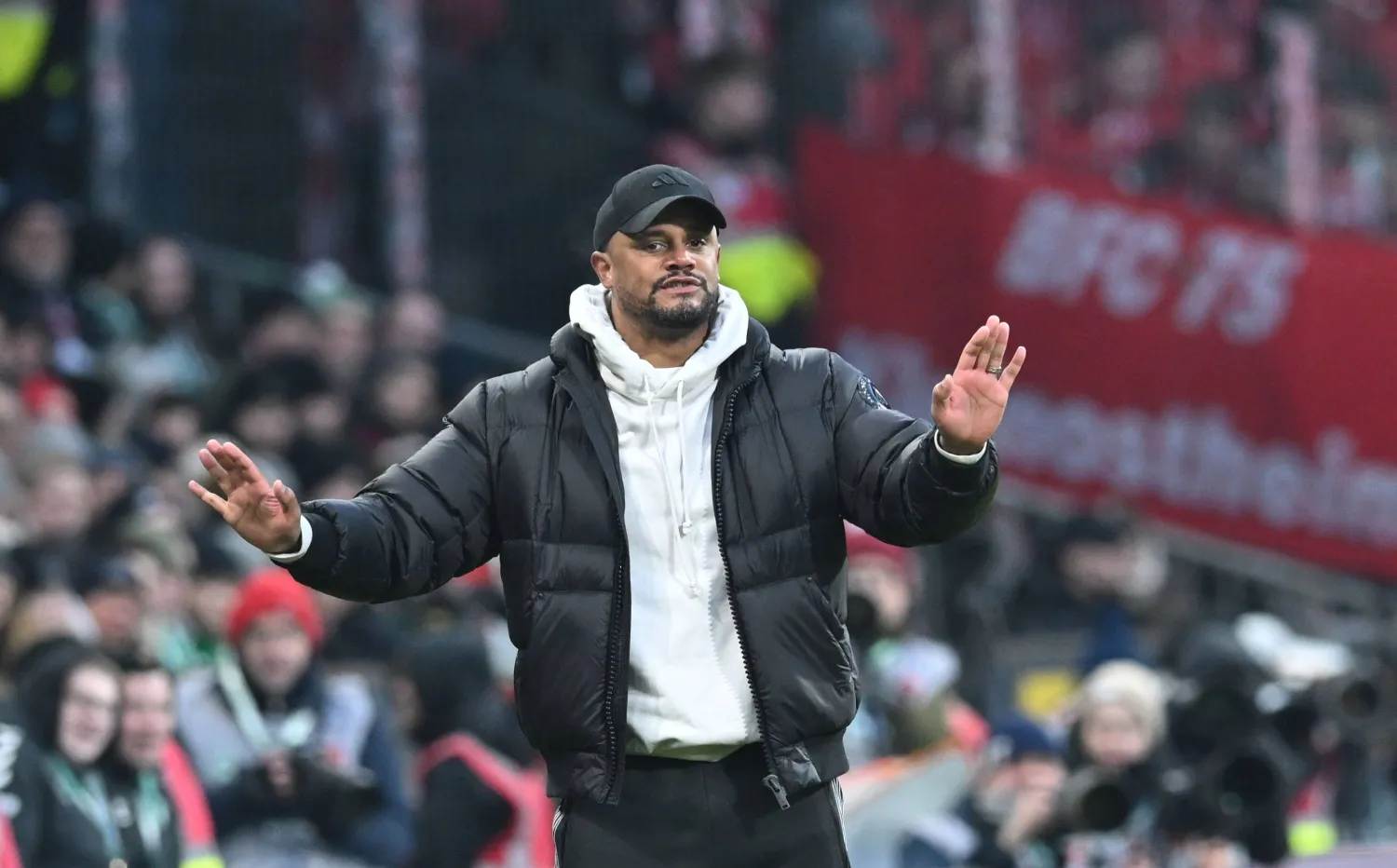
14 February 2026, Bremen: Bayern Munich coach Vincent Kompany gestures during the German Bundesliga soccer match between Werder Bremen and Bayern Munich at Weserstation. (dpa)
TT

‘A Huge Mistake.’ Kompany Hits Out at Mourinho for Vinícius Júnior Comments

14 February 2026, Bremen: Bayern Munich coach Vincent Kompany gestures during the German Bundesliga soccer match between Werder Bremen and Bayern Munich at Weserstation. (dpa)

Bayern Munich coach Vincent Kompany has criticized José Mourinho for attacking the character of Vinícius Júnior after the Real Madrid star accused an opponent of racially insulting him during a Champions League match.

Benfica coach Mourinho suggested that Brazil forward Vinícius had incited Benfica's players with his celebrations after scoring the only goal in Tuesday's playoff match.

Vinícius accused Benfica's Gianluca Prestianni of calling him "monkey" during a confrontation after his goal.

Mourinho also questioned why Vinícius, who is Black and has been subjected to repeated racist insults in Spain, was so frequently targeted.

"There is something wrong because it happens in every stadium," Mourinho said. "The stadium where Vinícius played something happened. Always."

Speaking on Friday, Kompany condemned Mourinho's comments.

"So after the game you have the leader of an organization, José Mourinho, who attacks the character of Vinícius Júnior by bringing in the type of celebration to discredit what Vinícius is doing in this moment," Kompany said. "And for me in terms of leadership, it’s a huge mistake and it’s something that we should not accept."

Mourinho’s celebrations

UEFA appointed a special investigator on Wednesday to gather evidence about what happened in Lisbon in Madrid’s 1-0 win in the first leg of the Champions League playoffs. Madrid said it had sent "all available evidence" of the alleged incident to European soccer's governing body.

Referring to Vinícius' celebrations after curling a shot into the top corner, Mourinho said he should "celebrate in a respectful way."

Kompany pointed out Mourinho's own history of exuberant celebrations — such as when he ran down the sideline to cheer when his Porto team beat Manchester United in the Champions League.

Kompany said Mourinho's former players "love him" and added "I know he’s a good person."

"I don’t need to judge him as a person, but I know what I’ve heard. I understand maybe what he’s done, but he’s made a mistake and it’s something that hopefully in the future won’t happen like this again," he said.

Prestianni denied racially insulting Vinícius. Benfica said the Argentine player was the victim of a "defamation campaign."

‘Right thing to do’

Kompany said Vinícius' reaction "cannot be faked."

"You can see it — his reaction is an emotional reaction. I don’t see any benefit for him to go to the referee and put all this misery on his shoulders," he said. "There is absolutely no reason for Vini Junior to go and do this.

"I think in his mind he’s doing it more because it’s the right thing to do in that moment."

Kompany added: "You have a player who’s complaining. You have a player who says he didn’t do it. And I think unless the player himself comes forward, it’s difficult. It’s a difficult case."


FIFA to Lead $75m Palestinian Soccer Rebuilding Fund

President of FIFA Gianni Infantino attended the inaugural meeting of US President Donald Trump's 'Board of Peace'. CHIP SOMODEVILLA / GETTY IMAGES NORTH AMERICA/AFP
TT

FIFA to Lead $75m Palestinian Soccer Rebuilding Fund

President of FIFA Gianni Infantino attended the inaugural meeting of US President Donald Trump's 'Board of Peace'. CHIP SOMODEVILLA / GETTY IMAGES NORTH AMERICA/AFP

FIFA will spearhead a $75 million fund to rebuild soccer facilities in Gaza that were destroyed by the war between Israel and Hamas, President Donald Trump and the sport's governing body said Thursday.

Trump made the announcement in Washington at the first meeting of his "Board of Peace," an amorphous institution that features two dozen of the US president's close allies and is initially focused on rebuilding the Gaza strip, said AFP.

"I'm also pleased to announce that FIFA will be helping to raise a total of $75 million for projects in Gaza," said Trump.

"And I think they're soccer related, where you're doing fields and you're getting the greatest stars in the world to go there -- people that are bigger stars than you and I, Gianni," he added, referring to FIFA president Gianni Infantino, who was present at the event.

"So it's really something. We'll soon be detailing the announcement, and if I can do I'll get over there with you," Trump said.

Later Thursday, FIFA issued a statement providing more details, including plans to construct a football academy, a new 20,000-seat national stadium and dozens of pitches.

The FIFA communique did not mention Trump's $75 million figure, and said funds would be raised "from international leaders and institutions."

Infantino has fostered close ties with Trump, awarding him an inaugural FIFA "Peace Prize" at the World Cup draw in December.

At Thursday's meeting, the FIFA president donned a red baseball cap emblazoned with "USA" and "45-47," the latter a reference to Trump's two terms in the White House.

In FIFA's statement, Infantino hailed "a landmark partnership agreement that will foster investment into football for the purpose of helping the recovery process in post conflict areas."

The "Board of Peace" came together after the Trump administration, teaming up with Qatar and Egypt, negotiated a ceasefire in October to halt two years of devastating war in Gaza.

The United States says it is now focused on disarming Hamas -- the Palestinian group whose unprecedented October 7, 2023, attack on Israel triggered the massive offensive.