Ahmadinejad: Resolving Iran, Saudi Arabia’s Issues Would Be a Lasting Favor to the Region, World

Ahmadinejad: Resolving Iran, Saudi Arabia’s Issues Would Be a Lasting Favor to the Region, World
TT

Ahmadinejad: Resolving Iran, Saudi Arabia’s Issues Would Be a Lasting Favor to the Region, World

Ahmadinejad: Resolving Iran, Saudi Arabia’s Issues Would Be a Lasting Favor to the Region, World

The former Iranian president, Mahmoud Ahmadinejad, has not left the country’s political scene. The forthcoming presidential election in 2021 along with economic frustrations over Hassan Rouhani’s administration in the past three and half years have once again attracted attention to Ahmadinejad as a possible candidate in the presidential race.

Unlike other former presidents, he has a different perspective towards the region. It is reported that Ahmadinejad was rare among Iranian officials who opposed the country’s interference in Syrian affairs from the start of protests against president Bashar Assad’s regime. It was, however, the Supreme Leader who ordered the army to act upon preventing Assad’s downfall.

In contrast to harsh rhetoric used by other Iranian top officials against countries in the region, in particular Saudi Arabia, Ahmadinejad recently sent a letter to Saudi Crown Prince, Mohammad bin Salman, asking for direct negotiations aimed at de-escalating regional tensions.

In an exclusive interview with the Independent Persian, Ahmadinejad maintains that priority should be given to détente and establishing favorable relations with Saudi Arabia devoid of foreign involvement.

Ahmadinejad’s name in Iran’s political arena has always been accompanied with controversy. It derives in part from his own different performance and attitude, and in part from his particular relationship with the media. But Iran’s former president is adamant that one changes with the passage of time.

In a live Instagram interview with Camelia Entekhabifard, Chief Editor of Independent Persian, Ahmadinejad talks about Iran’s internal and international policies, the coronavirus pandemic and presidential elections in Iran and the United States:

Camelia Entekhabifard: Mr. Ahmadinejad, along with Iran’s nuclear and missile programs, a number of analysts refer to Iran’s issues with its neighbors - in particular Saudi Arabia - as an obstacle on the way of Tehran’s normalization of its relations with the rest of the world. You have repeatedly visited Saudi Arabia and were a guest of King Abdullah at the Makkah Conference. It seemed at the time that the bilateral relationship was on the way of improvement. What are the obstacles that have prevented Iranian presidents from improving relations with Saudi Arabia over the past 41 years?

Ahmadinejad: As you said, Iran’s relations with Saudi Arabia is of utmost importance and a decisive factor in the affairs of our region. The nature of this relationship greatly influences world affairs as well. There are two issues that have adversely affected the bilateral relationship. The first is the element of rivalry. Wherever we have indulged in rivalry, we both suffered from the brunt of it. And the region has also paid for it. There is no winner in such rivalries; there are only losers. These rivalries should transform into constructive cooperation and friendly and brotherly relations. This would be to the benefit of both countries, the region and the world at large.

The other problem is other countries’ interference in the region. A considerable part of our relations is influenced by others. I think both sides should once and for all decide to transform rivalry to cooperation and friendship and not allow any other player to interfere in our bilateral relations.

We share far more than what we differ. I have visited Saudi Arabia several times, taken part in the Gulf Cooperation Council, travelled to all Gulf countries and extended my hand of friendship to all. We tried to strengthen and develop our brotherly relations, and forged cooperation with them. But mistakes on both sides turned relations cold again.

Entekhabifard: Does it mean that forging relations between Iran and the West would face obstacles until such time that the country improves its relationship with regional governments particularly Saudi Arabia? What strategy do you suggest for Iran to exit its current isolation?

Ahmadinejad: If Iran’s foreign relations are hostage to its relations with regional countries, then this would constitute interference by others in our regional affairs. We are brothers who have lived side by side for thousands of years. We should live with each other now regardless of what others think and what plans other countries have for our region.

Entekhabifard: What concerns does Iran have over its relations with its neighbors?

Ahmadinejad: There are no concerns. We should only set aside our past problems and stand shoulder to shoulder, extend our brotherly hands to each other and resolve problems.

Entekhabifard: What are your views about normalization of relations between the Arab governments of the region and Israel? Could it be due to their frustration over any improvement of relations with Iran? How do you assess recent developments in the region vis-a- vis Israel?

Ahmadinejad: There are two points here. If we intend to attach our problems to others, there would always be such problems.

The fact that these countries have established diplomatic relations with Israel is not of much importance. There were many others before them that did the same including those that have the right of veto in the United Nations Security Council that shape its main components. The problem is not resolved. The problem of Palestine is an internal issue that belongs to Palestinians. After all, it is home to people who want the right of self-rule. There are refugees, too. They want to have their own sovereign government. These problems have to be addressed. It may be that some of our neighbors say that such a step was taken with Iran in mind. This would not help in resolving the situation. We are neighbors whatever the circumstances. You cannot eliminate that or remove it from the geographical map. We have no choice but to live together as brothers and friends. As a result, I think whoever embarks on this important path will go down in history in good light.

Entekhabifard: The hot topic of the day is the US presidential election. Joe Biden – the president-elect - was vice president during the entire period of the Obama administration, had been for years chair of US Senate’s Foreign Committee, knows the region and has personal friendships with some of the Middle East’s kings and leaders. He has clearly said that one of the policies of his administration would be de-escalating tensions in the region. Perhaps we could say that Iran will find opportunities under Biden’s administration.

What advice do you have for Iranian politicians for using this opportunity in order to reduce US sanctions against the Iranian population and the improvement of bilateral relations? Is there a realistic chance for it? What are your views and your advice for Iranian officials?

Ahmadinejad: Who decides US foreign policies is a broad question. I do not think that presidents have a major role in forging such policies, or if they do, it is limited. These policies should change.

Then comes the question of neighborly relations. Nobody welcomes tensions, but expecting a foreign hand from thousands of kilometers away to alleviate the existing tensions is giving the opportunity to the very same external elements that history has shown have never intended to resolve problems. On the contrary, they have constantly attempted to intensify them.

Regardless of who resides (in the White House), we are neighbors and should resolve our differences among ourselves. Should we expect someone else to come around (to solve our problems)? That other person would most certainly act on its own interest. After all, one of the main markets for American arms is our region. What are arms and armament for? Arms are not intended for détente. To sell arms, there must be tensions. If they really seek peace, they should first, not sell arms and second, not interfere in our affairs. We resolve our differences among ourselves. We are brothers, friends, share the same culture, live in the same region and are neighbors.

Entekhabifard: What solution do you propose?

Ahmadinejad: Iran and Saudi Arabia should put their rivalries aside and not give external elements the opportunity to interfere. Whatever side takes the initiative for solving the existing problems has done the people of the region and the world great service.

Entekhabifard: So along with resolving issues regarding Iran’s nuclear and missile programs, do you believe Tehran’s foreign policy’s priority should be set on removing differences between Iran and Saudi Arabia?

Ahmadinejad: Do not attach it to international issues. We should keep friendly relations with Saudi Arabia under all circumstances. Our differences work against both countries. Neither Saudi nor Iran has benefitted from the present stand-off. If current problems with Saudi Arabia are resolved, other outstanding issues with other Gulf countries will be resolved as well.

Entekhabifard: What solution do you offer for Iran’s exit from the current US sanctions? The US presidential administration will change on January 20, but Trump has announced new sanctions against Iran in the 70 days that have remained of his presidency. What suggestions do you have for the Iranian government to ease the pressure of sanctions on the people?

Ahmadinejad:I have suggestions that I shall produce in time.

Entekhabifard: Can’t you tell us now?

Ahmadinejad: I believe it is still too soon (to reveal them).

Entekhabifard: Would Rouhani be able to revive the nuclear deal in the months left to his administration?

Ahmadinejad: You should put this to the people.

Entekhabifard: How do you see problems that Iranians are facing today? Are they the outcome of US sanctions or performance of Rouhani’s government?

Ahmadinejad: I think they move together and are part of the same package.

Entekhabifard: What shortcomings do you see on the part of the government that you believe have moved along with the sanctions?

Ahmadinejad: One unified project is being executed. There are no two separate projects.

Entekhabifard: A few months into the new US administration, Iran will have its own presidential election. Are you going to nominate yourself?

Ahmadinejad: I have so far not expressed an opinion about it.

Entekhabifard: …And you do not wish to express an opinion now?

Ahmadinejad: I have always been at the service of my country and my people.

Entekhabifard: Should you wish not to take part in the election, would you support a certain candidate?

Ahmadinejad: I have no views over it yet. I think we have more important national and international issues to consider before the election.

Entekhabifard: What issues?

Ahmadinejad: The world is moving fast and Iran with it, too. We have to be patient.

Entekhabifard: It seems that you have changed greatly in your attitude between the two presidential periods, is that right? And if so, how should it be interpreted?

Ahmadinejad: People should change. Could anybody stay the same throughout their life? People grow, the amplitude of their knowledge, understanding, depth and values change. People should grow and move towards perfection. I reserve the right for myself to move in that direction.

Entekhabifard: You wrote a letter to Saudi Crown Prince Mohammad Bin Salman and asked for a meeting in Saudi Arabia in order to resolve current differences between the two countries. Has he received the letter? Have you had any other correspondence with him? What steps have the United Nations taken in order to relay your message to the Crown Prince?

Ahmadinejad: The letters that I have written have all been published in full. My letter was about Yemen and not a meeting in Saudi Arabia, but I am still waiting to hear from them. The topic (of the letter) was Yemen. The country is in the grip of a difficult situation; people are under pressure, women and children get killed, there is no medical facility, there is poverty and the country’s infrastructure is being destroyed. In my letter to Crown Prince and Mr. Badreddin (leader of Yemen’s Houthi militias), I have invited them to reconciliation and understanding.

Entekhabifard: Have you received a particular answer?

Ahmadinejad: Some have replied and we are still waiting for others.

Entekhabifard: What are your views about the US presidential election and the current conflicts there? Do you see similarities between this election and protests following Iran’s presidential election of 2009?

Ahmadinejad: I have no opinion about the US election because it is a matter for Americans. They have to pursue the matter and the will of the people should prevail. But from watching US developments, I can tell that there are behind the scene differences within the main administration. What we see is the result of conflict within the ruling class.

Entekhabifard: What do you think of Iran’s involvement in Syria? There are 12 million Syrian refugees throughout the world and some 10 million others oppose Assad’s rule. Do you vouch for Iran’s interference in the affairs of the region or do you think that Iran could have spent its resources for its people within the country?

Ahmadinejad: I have repeatedly explained this point. You can refer to them… I fundamentally believe that nations have the right to decide their destiny, and that wherever there is a difference of opinion, it should be put to the majority decision. War and skirmishes are not a solution. They can only deepen and complicate problems further. This is the right of all peoples of the world. Whether in America, in Syria, in Iran, in Africa or Asia, the right of deciding on the destiny (of a region or a country) belongs to the people of that country and there should be no reason for war and conflict. It is true in Syria as well. I fundamentally oppose to interference.

Entekhabifard: Are you banned from traveling?

Ahmadinejad: Where to?

Entekhabifard: Out of Iran?

Ahmadinejad: No, there is no such ban. Why should there be one?

Entekhabifard: What I mean is that should you wish to travel to foreign countries, would you face any restriction or obstacles?

Ahmadinejad: No, so far I have not faced any restrictions.

Entekhabifard: How do you assess the current situation with regard to the coronavirus pandemic in Iran and Rouhani’s inability to combat the disease? Iran is among a handful countries in the world that have failed to keep the first wave of the pandemic under check. What advice do you have for the people and the government?

Ahmadinejad: It is obvious that the coronavirus was developed in a laboratory and spread in the world with political goals. I believe that those who ran the world over the past 100 years, came to the conclusion that their strategies do not work anymore. They have to make fundamental changes. One of the goals for the spread of the virus is preparing the scene for these changes. The instruction they issue in the world are vague and contradictory. Countries that follow these instructions face problems. I think the main problem in Iran is that the management of the pandemic is done according to policies issued by the World Health Organization and that is the reason for the serious problems Iran is facing in reining in the pandemic.

Entekhabifard: What advice do you have for it?

Ahmadinejad: We have scientists and experts who can speedily produce drugs to treat the coronavirus. They can also provide people and organizations with simple health guidance through which we can overcome the pandemic.

Camelia Entekhabifard is Chief Editor of the Independent Persian.

This article has been syndicated from the Independent Persian.


Healey to Asharq Al-Awsat: UK Has More Jets Flying in the Region Than at Any Time in the Last 15 Years

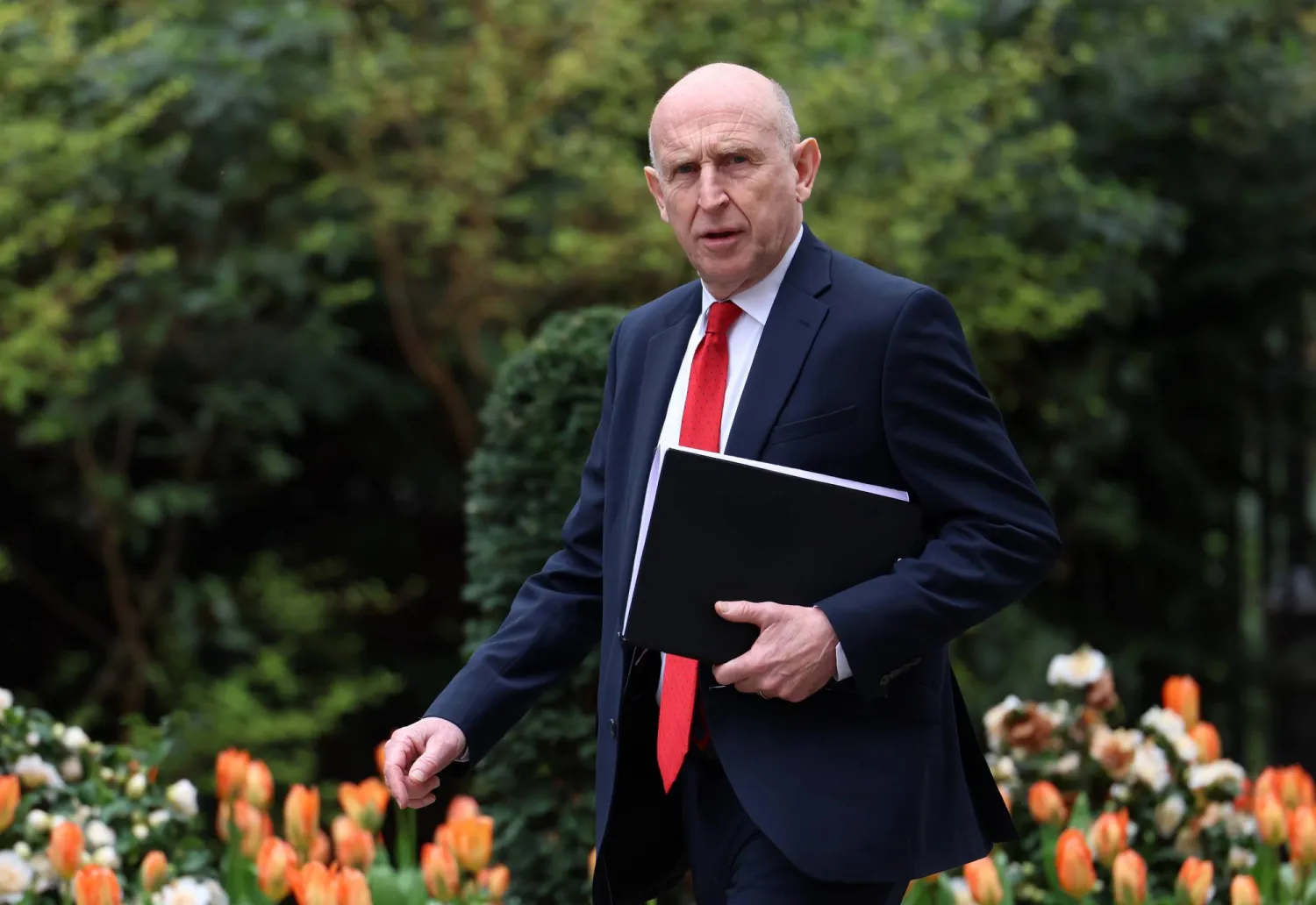
British Secretary of State for Defense John Healey arrives for a cabinet meeting at 10 Downing Street in London, Britain, 24 March 2026.  EPA/ANDY RAIN
British Secretary of State for Defense John Healey arrives for a cabinet meeting at 10 Downing Street in London, Britain, 24 March 2026. EPA/ANDY RAIN
TT

Healey to Asharq Al-Awsat: UK Has More Jets Flying in the Region Than at Any Time in the Last 15 Years

British Secretary of State for Defense John Healey arrives for a cabinet meeting at 10 Downing Street in London, Britain, 24 March 2026.  EPA/ANDY RAIN
British Secretary of State for Defense John Healey arrives for a cabinet meeting at 10 Downing Street in London, Britain, 24 March 2026. EPA/ANDY RAIN

British Defense Secretary John Healey revealed Wednesday that UK pilots and aircrew have flown over 1,200 hours on defensive missions across the Middle East since the conflict with Iran erupted, saying they have now had over 80 engagements together with RAF Regiment Gunners.

In an interview with Asharq Al-Awsat following his visit to Saudi Arabia, Healey said that the UK has around 1,000 personnel in the region and an extra 500 air defense personnel in Cyprus.

“I continue to work closely with our partners in the region on what further support we can provide,” he said, lauding the UK-Saudi Arabia defense partnership which he said is “founded on mutual security interests and longstanding industrial collaboration.”

“Although our friendship is historic, it has evolved into a modern partnership that responds to contemporary challenges,” he added.

On ties between Moscow and Iran, Healey did not rule out a hidden Russian hand behind some of the Iranian tactics.

The following are the key points from the interview:

80 engagements

“UK pilots and aircrew have flown over 1,200 hours on defensive missions across the region. Together with our RAF Regiment Gunners, they have now had over 80 engagements since the conflict began,” said Healey.

“I am proud of the work that our UK Armed Forces are doing alongside our Gulf partners to help keep people safe in the region. Their dedication and professionalism is helping to save lives as Iran indiscriminately targets countries across the Gulf,” he added.

Heavy Deployment

“The UK has around 1,000 personnel deployed to the region, not including our personnel in Cyprus,” he told Asharq Al-Awsat. “Force protection is at the highest levels for UK bases in the region.”

“We have more UK jets flying in the region than at any time in the last 15 years. We are undertaking defensive counter air operations over Bahrain, Jordan, Qatar, and the UAE as well as Cyprus,” he said.

“Since January, I have deployed extra equipment and people to the region. This includes Typhoon and F-35 jets, Wildcat helicopters armed with purpose-built counter-drone Martlet missiles, a Merlin Crowsnest helicopter, providing airborne surveillance and control plus radar systems, air defense systems and counter-drone units.”

He added that there are now an extra 500 air defense personnel in Cyprus, and the warship, HMS Dragon - which is fully integrated within the layered air defense system with allies and partners - is deployed in the Eastern Mediterranean.

Defense Systems to Support the Gulf

“I continue to work closely with our partners in the region on what further support we can provide, which was the purpose of my visit (to Riyadh) this week,” Healey told Asharq Al-Awsat.

“I confirmed during my meeting with the Defense Minister, His Royal Highness Prince Khalid bin Salman Al Saud, that we will deploy Sky Sabre to the Kingdom of Saudi Arabia - an air defense system that will be integrated into Saudi Arabia’s defenses to support Saudi Arabia's efforts in repelling Iran's attacks,” he added.

He also said that Rapid Sentry – a system made up of a radar and a missile launcher – was deployed to Kuwait, and Lightweight Multiple Launchers to Bahrain.

“We have extended the operations of our jets in Qatar which are flying defensive missions every night, and through Taskforce Sabre we're ensuring UK industry steps up too. The Taskforce brings together industry who offer counter drone and air defense capabilities with governments, including Gulf partners ... to rapidly provide them with the equipment they need.”

Advanced defense partnership with Saudi Arabia

On his visit to Saudi Arabia, he said the trip was aimed at showing support “during this period of sustained and indiscriminate Iranian attacks, and also to discuss further cooperation between our nations to protect our people and our shared interests in the Kingdom. That's why I was delighted to meet with His Royal Highness Prince Khalid bin Salman to discuss recent events in the region.”

“The UK and Saudi Arabia have a close, longstanding friendship, and share a decades-long defense partnership, founded on mutual security interests and longstanding industrial collaboration.”

That friendship “has evolved into a modern partnership that responds to contemporary challenges. This really matters in times like today: it means we have the trust and the shared understanding to respond quickly and decisively when the security environment demands it. It is precisely because of that deep foundation that we are able to act as we have done, such as deploying Sky Sabre to Saudi Arabia.”

Russian-Iranian cooperation

On Russia’s role in the Iran war, Healey said: “Our assessment is that, even prior to US and Israeli strikes, Russia highly likely shared intelligence and provided training to Iran, including on things such as drone technology and operations, and electronic warfare. And our intelligence also indicates that this cooperation is ongoing.”

“No one will be surprised that Putin’s hidden hand may be behind some of the Iranian tactics and potentially some of their capabilities as well. We see an axis of aggression between Russia and Iran - two countries that menace their neighbors and that pose a threat more widely to us all.”

No assessment on targeting Europe

Healey said that there is no assessment Iran is trying to target Europe with missiles. “Even if they did, we have the resources and alliances we need to keep the UK and our allies safe from any kind of attacks, whether it's on our soil or from abroad. The UK stands ready 24/7 to defend itself and protection of forces is at the highest levels for our bases in the region.”


Spain’s FM Backs Saudi Arabia, Tells Asharq Al-Awsat that Iranian Attacks Are ‘Unjustified’

Spanish Foreign Minister Jose Manuel Albares. Photo: Foreign Ministry
TT

Spain’s FM Backs Saudi Arabia, Tells Asharq Al-Awsat that Iranian Attacks Are ‘Unjustified’

Spanish Foreign Minister Jose Manuel Albares. Photo: Foreign Ministry

Spanish Foreign Minister Jose Manuel Albares has expressed Madrid’s support to Saudi Arabia, describing Iranian attacks on the Kingdom and other countries in the Gulf as “unjustified.”

In an interview with Asharq Al-Awsat published Thursday, the minister revealed that efforts were being exerted by Spain as part of several European countries and in coordination with nations in the Middle East to de-escalate, resort to diplomacy and put an end to the US-Israeli-Iranian war.

Albares said “Spain has openly condemned” the Iranian attacks and summoned Iran’s ambassador to convey “its firm rejection of violence.”

The Spanish Foreign Ministry also “called for an immediate cessation of these attacks," he said.

“The attacks conducted by Iran are completely unjustified,” Albares told Asharq Al-Awsat, while stressing full solidarity with Saudi Arabia and other Gulf countries against the Iranian attacks.

Saudi Crown Prince Mohammed bin Salman has recently received a phone call from the Spanish Prime Minister, Pedro Sanchez, who expressed “Spain’s support and solidarity in light of the unjustified attacks that the country is suffering.”

“Spain's stance is firmly rooted in defending international law and the United Nations Charter, rather than the principle of might makes right,” said Albares.

This message has been conveyed to Saudi Arabia, Bahrain, Kuwait, the United Arab Emirates, Oman, Qatar, Jordan, Türkiye, Egypt, Uzbekistan and Azerbaijan, he added.

Call for de-escalation and negotiation

“Spain advocates de-escalation, negotiation, and respect for international law. Our voice aims to bring reason and restraint to the current situation. We cannot accept the idea of war becoming a means by which countries interact with one another or a mechanism for establishing a balance of power in the Middle East. Violence never brings peace, stability or democracy; it only creates more violence and chaos,” said the minister.

“In light of this military escalation, Spain is acting coherently in accordance with the values of peace and solidarity that define Spanish society — values that are also shared by the majority of European states. Our country makes its decisions in line with European principles, the UN Charter, and international law,” he added.

The war has already had consequences that extend beyond the Middle East. For example, it has affected Cyprus and Türkiye, he said, warning that this increases the risk of the ongoing conflict spreading beyond the region.

The minister told Asharq Al-Awsat that the war is also affecting international trade and production of energy, which have a direct impact on global economies and geopolitics.

“The unpredictable consequences of the current conflict are making the situation extremely dangerous for the security and stability of the Middle East, including the Gulf states, which are being particularly targeted,” he said in response to a question.

Countries involved in the confrontation

Albares spoke about the situation of several countries in the region, including Lebanon, which he said “is facing a dramatic situation with numbers of victims increasing daily, an overstretched medical system incapable to attend them, more than a million of displaced people, and the destruction of civil infrastructure. The life of the people of Lebanon is disappearing before their eyes.”

He said Spain has condemned the attacks carried out by Hezbollah, that are fueling the spiral of confrontation, as well as Israel's attacks. “An Israeli land invasion is already ongoing, a grave error in a country that has already endured immense suffering.”

“We cannot ignore the attacks by Israel and non-State actors on UN forces, on UNIFIL, in which Spain has a significant presence, nor the repeated violations of international humanitarian law," Albares said.

The minister also expressed concern over the situation in Gaza and the West Bank. “There is no clear vision for the future, and humanitarian aid is not reaching the area, with access blocked and NGOs and humanitarian actors prevented to operate on the ground. In the West Bank in particular, settlement expansion and settler violence continues to increase with impunity,” he said.

High-risk situation defined by an unpredictable conflict

“We are facing an escalation of violence that has already killed thousands of people and negatively impacted maritime navigation in the Strait of Hormuz, and critical energy infrastructures, with direct consequences for global energy security,” he said.

“In short, it is an extremely high-risk situation defined by an unpredictable conflict that poses a direct threat to the security and stability of the Middle East, with repercussions that can be felt across the globe,” he added.

Asked about his views of the Gulf's concern about the war’s repercussions, Albares said: “Spain fully understands the Gulf countries' concerns about the consequences of this war. This has been reflected in the diplomatic outreach that I have conducted with my counterparts in the region.”

“Increasing insecurity in countries under attack from missiles and drones without justification — attacks that Spain firmly condemns — particularly those launched by Iran, contribute to an increasingly dangerous and complex situation. In this context, Spain advocates clear de-escalation, negotiation and respect for international law, insisting that we must avoid anything that adds to the tension.”

He added that “the situation in the Strait of Hormuz is also extremely worrying, as its impact on energy security and international trade is clear.”

He stressed that the conflict has human and humanitarian dimensions, such as loss of life and displacement, warning that this could have direct consequences also in Europe. So, he called for “a responsible solution based on solidarity.”

Unified position

“The only clear thing is that a response is necessary, and in this sense, Spain supports a response based on the unity of the international community around the universal applicability and respect of International law and the UN Charter,” said Albares.

Asked to what extent the current situation is likely to explode into a broader war,” the minister said: “The consequences of the actions of Israel, as well as Iran’s response, are unpredictable. We are entering a situation that makes it difficult to determine where the escalation could lead and what the ultimate effects could be.”


Al-Khanbashi to Asharq Al-Awsat: We Warn Against Incitement, Hadramout Has Room for All

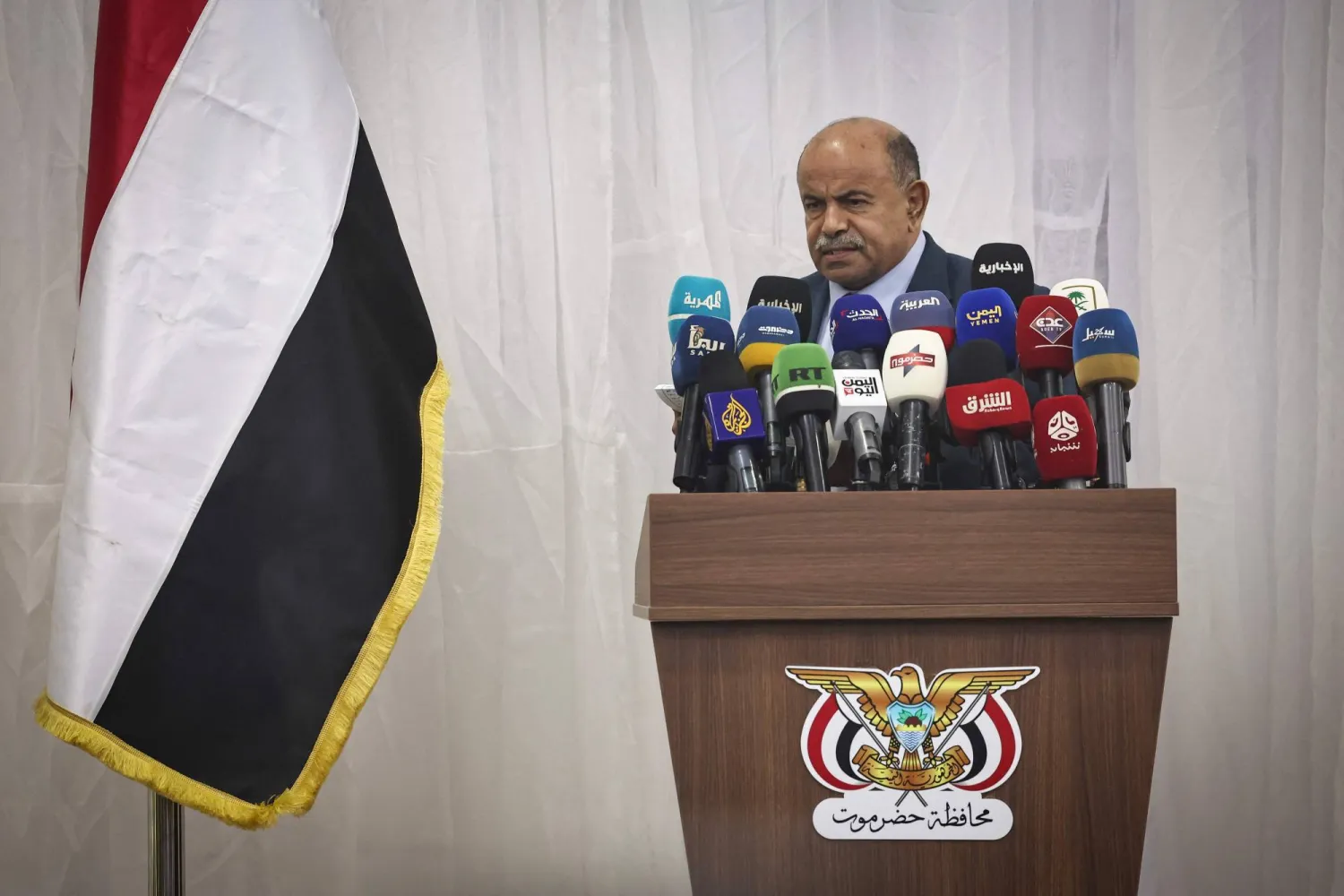
Governor of Hadramout, Salim Al-Khanbashi delivers a press conference in the city of Mukalla in Yemen's coastal southern Hadramout province on January 19, 2026. (Photo by FADEL SENNA / AFP)
TT

Al-Khanbashi to Asharq Al-Awsat: We Warn Against Incitement, Hadramout Has Room for All

Governor of Hadramout, Salim Al-Khanbashi delivers a press conference in the city of Mukalla in Yemen's coastal southern Hadramout province on January 19, 2026. (Photo by FADEL SENNA / AFP)

Presidential Leadership Council (PLC) member and Governor of Yemen's eastern Hadramout province Salem al-Khanbashi says he believes that “Hadramout triumphed for itself,” and that what took place there in December 2025 and early January 2026 marked a decisive moment in which Hadhramis reclaimed their right to protect their identity and blocked any political project seeking to dissolve the “Hadhrami self” under the slogans of outsiders.

In an interview with Asharq Al-Awsat Podcast, recorded in Riyadh on February 9, 2026, al-Khanbashi advised the new Yemeni government led by Dr. Shayea al-Zindani to steer clear of partisanship, raise performance levels, and combat corruption. During the discussion, he presented his account of events, framing the operation as a “takeover of military camps,” not the “ignition of a war.” He broadened the discussion to what he views as the priority of the current phase: consolidating stability, activating development, and opening the door to long-awaited Hadhrami investments returning home.

“Liberate us" from ourselves?

In describing the outcome of the confrontation, the deputy rejects reducing the picture to who won and who lost. He says the real victory was achieved when the people of Hadramout rejected the notion that someone could arrive and say, “We came to liberate you,” asking: “Liberate you from whom? From ourselves?” He stresses that the governorate, with its history stretching back “thousands of years,” cannot have another identity imposed upon it. He records his appreciation for those who stood in defense of this distinctiveness, while at the same time extending explicit thanks to the Kingdom of Saudi Arabia, its leadership and role, which he said was a key player in containing last month’s events.

On the moment he was tasked with the governorship at an extremely sensitive time, al-Khanbashi recounts that he was residing in Hadramout and did not leave except when necessary, before receiving a call from President Rashad al-Alimi and from parties including Saudi officials and colleagues on the Leadership Council, asking him to assume responsibility for the governorate “because we need you.”He says he tried to decline, but accepted under the pressure of “necessity,” emphasizing that he is a son of Hadramout who spent most of his life there, and that he accepted the post fully aware of the weight and complexity of the phase.

The picture becomes heavier as al-Khanbashi moves to his successive roles: governor, then commander of the National Shield Forces in Hadramout , then a member of the Leadership Council with the rank of vice president. He deliberately labels the January operation a “battle to take over the camps,” so that it would not be understood as targeting civilian society or as a search for settling scores.

Al-Khanbashi says his overriding concern was to spare Hadramout street fighting, protect civilian infrastructure, and minimize human losses. He describes the operation as “swift and decisive,” with a limited number of casualties.

Securing withdrawals... and a political outlet

Asked whether the military operation in Hadramout ended with reprisals against opponents, al-Khanbashi is keen to deny this. He says the withdrawal of departing forces was secured and that they were not subjected to any military or popular harassment. “We instructed that no one who was in the Southern Transitional Council, whether military or civilian, be harmed,” he says. At the same time, he explains that he took decisions to dismiss certain security and military leaders accused of involvement in looting weapons and ammunition or of poor performance, and that they will be referred for accountability in accordance with what they committed against the governorate.

Amid this, al-Khanbashi reiterates a message he wants widely understood: “Hadramout has room for all.” He calls for civic conduct that avoids incitement, and warns against marches he believes target civil peace and provoke the local scene.

He again urges adherence to civil behavior without incitement, citing gatherings that took place in early February 2026 in Seiyun. He suggests they were not spontaneous, saying: “We have evidence that these people were paid, and we want them not to force us to take measures involving a degree of coercive force against those who want to practice such acts. We are still under a state of emergency, and all measures can be taken.”

In the broader political context, al-Khanbashi speaks of moves to convene a broad Hadhrami meeting in Saudi Arabia bringing together political and social components, including Hadhramis from the Southern Transitional Council, with the aim of preparing a unified vision in the name of Hadramout to be presented to the Southern Dialogue Conference. He notes that a preparatory committee was formed in Mukalla to draft a position reflecting “all societal and political forces” in the governorate, alongside a parallel desire to represent the voice of Hadhrami expatriates within a single vision.

Electricity and investment

Electricity tops the services file, according to the governor. He places it at the head of priorities, explaining that the needs of the coast and the valley differ, but the headline is the same: energy that does not meet demand, especially in summer, with humidity and heat on the coast and harsh desert conditions in the valley.

He speaks of support projects to generate 300 megawatts for the coast, and other projects for the valley, alongside proposals for gas-powered plants and private-sector solar energy options with capacities that could reach 150 megawatts. He believes that a medium-term solution is not a substitute for a long-term strategic project for a large gas plant capable of covering Hadramout's future needs.

From energy he turns to investment as the other face of stability. Al-Khanbashi lists opportunities he sees as promising: tourism, real estate, the export of high-purity gypsum, potential minerals, coal in specific areas, black sands and heavy elements, fisheries, and the idea of aquaculture. He recalls his participation in a Hadhrami investment conference, calling on businessmen to balance their external investments with investing in Hadramout, while pledging to provide facilitation and an attractive environment.

On government affairs, al-Khanbashi describes the discussions that preceded the formation of the new government as having focused on criteria of competence, experience, and geographic balance, while rejecting the principle of quota-sharing. He then offers three pieces of advice he places at the core of the government’s test: moving away from ego and partisan drift, combating entrenched corruption in several ministries, and raising the level of revenue collection and transferring it to the central bank, especially in revenue-generating ministries. He highlights the need to regulate the financial relationship between the center and the governorates in accordance with the Local Authority Law, arguing that strict application would ease many chronic problems.

He recalls Hadramout's experience with oil revenues before exports were halted, noting that the governorate received 20 percent of the value of exported oil and used it for development projects such as electricity, roads, health, and education, before this resource stopped after the Houthis targeted export facilities.

"No barriers" with Saudi Arabia

In assessing Saudi development support, al-Khanbashi links relief and reconstruction as a single window for enabling Yemen to overcome its crisis, pointing to packages of projects in electricity, roads, health services, and others within Hadramout.

He places this within a relationship he describes as intertwined, difficult to separate socially, economically, and politically, invoking the extended borders, shared tribes, and cultural ties, to conclude that it is not possible to erect a “barrier” between Hadramout and the Kingdom.

Asked about the moment that remained most vivid in his memory during the 48 hours of the operation, al-Khanbashi says he feared the forces might not withdraw easily and what that could entail in terms of destruction and casualties, before the operation ended in record time with limited losses. He says this is what he will continue to take pride in: that Hadramout succeeded in avoiding internal fighting. In his message to the people of Hadramout, he calls for unity, abandoning the causes of division, and prioritizing security and development, pledging that the expansion of stability will lead to a “bright development era” reflected in the lives of the governorate’s residents.