Dubai Airports, GMR Hyderabad Agree Deal to Aid Vaccine Distribution

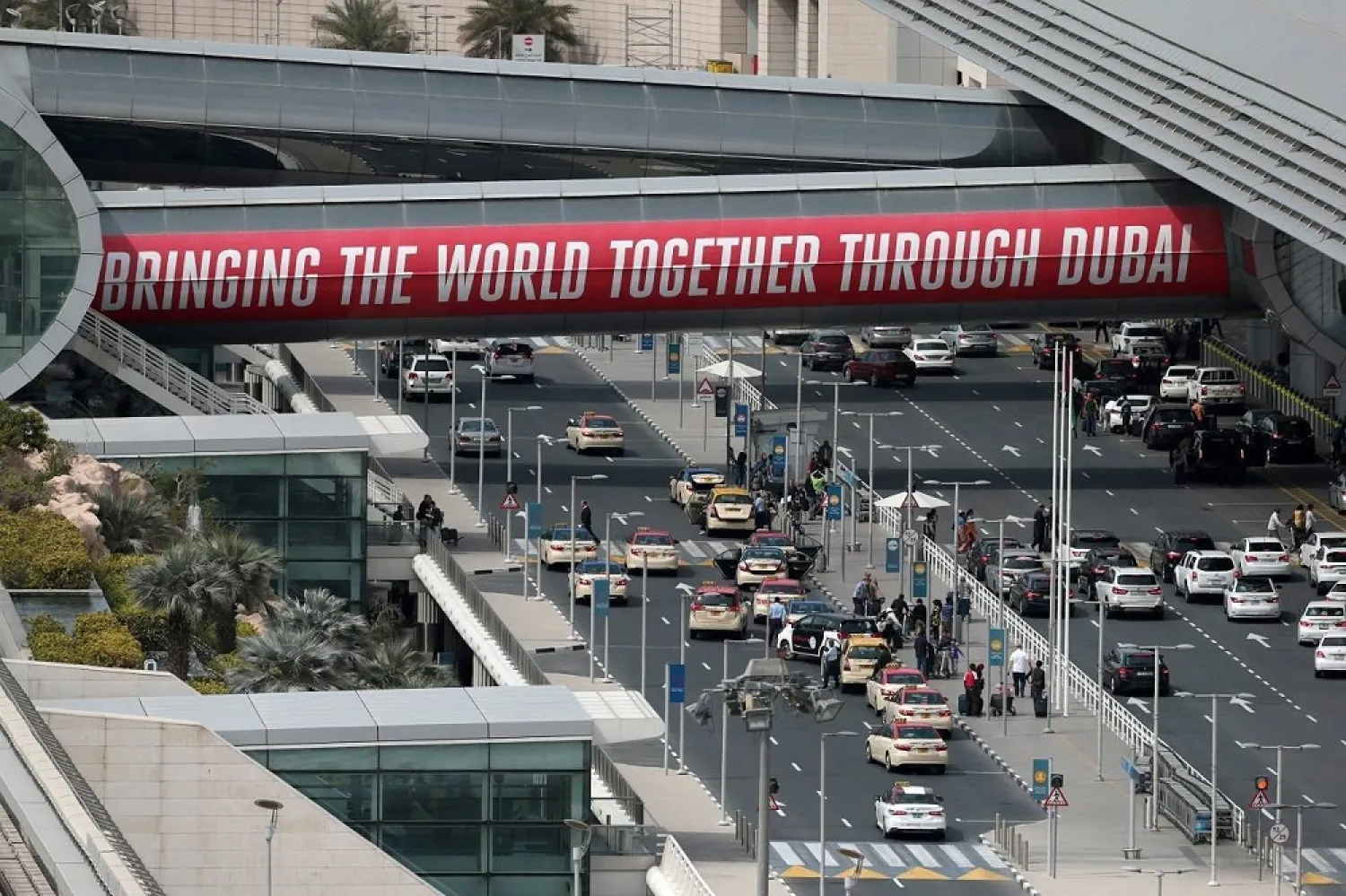
A general view of terminal three at Dubai International Airport in Dubai, United Arab Emirates, February 15, 2019. (Reuters)
TT

Dubai Airports, GMR Hyderabad Agree Deal to Aid Vaccine Distribution

A general view of terminal three at Dubai International Airport in Dubai, United Arab Emirates, February 15, 2019. (Reuters)

Dubai Airports and the operator of Hyderabad airport, GMR Hyderabad, have agreed a logistics deal for COVID-19 vaccine distribution to handle up to 300 tons of vaccines per day, the companies said on Monday.

The vaccine corridor between Dubai and Hyderabad connects leading vaccine manufacturers in India with markets around the world through the Dubai International Airport cargo hub.

“A major surge in demand for the efficient, safe and reliable global distribution of high volumes of COVID-19 vaccines is expected in the coming months,” said Paul Griffiths, CEO of Dubai Airports.

“We wanted to be ready to respond to and accommodate that demand.”

Hyderabad is the world’s emerging vaccine capital, with five major vaccine producers in the vicinity.

India, which has the second-highest number of coronavirus infections in the world, on Sunday approved two coronavirus vaccines for emergency use – one developed by AstraZeneca and Oxford University, the other by local company Bharat Biotech.


South Korea and Indonesia Discuss Energy Security, Sign Agreements on Minerals and Tech

Indonesian President Prabowo Subianto (L) and South Korean President Lee Jae Myung (R) pose for a photo during their meeting at the presidential office in Seoul on April 1, 2026. (Photo by YONHAP / AFP)
TT

South Korea and Indonesia Discuss Energy Security, Sign Agreements on Minerals and Tech

Indonesian President Prabowo Subianto (L) and South Korean President Lee Jae Myung (R) pose for a photo during their meeting at the presidential office in Seoul on April 1, 2026. (Photo by YONHAP / AFP)

South Korean President Lee Jae Myung held talks on Wednesday with Indonesian leader Prabowo Subianto, discussing energy security and agreeing to expand cooperation in areas such as critical minerals and technology, Lee's office said.

The summit talks followed a welcome ceremony at the presidential Blue House in Seoul.

Lee said energy security had become a growing concern amid the global uncertainty triggered by the conflict in the Middle East.

"We view Indonesia's stable role in supplying key energy resources such as LNG and coal as very ⁠reassuring," Lee said ⁠in a statement, calling for closer cooperation on energy supply and resource security.

Indonesia is the world's largest exporter of thermal coal, while South Korea has been among the five biggest importers of the fuel in recent years, according to Korean government data.

South Korea also imported about 2.1 million tons of liquefied natural gas from Indonesia in 2025, data showed.

The Indonesian president arrived in Seoul from Japan where Jakarta agreed to ⁠step up coordination with Tokyo on energy security, Reuters reported.

Prabowo described South Korea and Indonesia as natural partners with "complementary roles,” pointing to South Korea's industrial and technological strengths and Indonesia's abundant resources and large market.

South Korea's exports to Indonesia stood at $7 billion in 2025, while imports were $11.3 billion, trade data showed.

Lee and Prabowo also oversaw the signing of multiple preliminary agreements, including support for projects in renewable energy and data centers as the countries elevate their relationship into a strategic partnership.

JOINT FIGHTER PROJECT

Prabowo, a former general, also said that strong defense capabilities were essential, saying peace and stability required "robust security and defense."

No deals were announced on defense cooperation, however, including on the two ⁠countries' joint project ⁠to develop South Korea's homegrown KF-21 fighter jet.

Korea Aerospace Industries last month said it was in talks with Indonesia on a potential sale of KF-21 fighter jets, but said no decisions had been made. Media reports said that Jakarta was considering purchasing an initial batch of 16 aircraft.

South Korea expects Indonesia to complete a payment related to the joint development program by the end of this year, an official told Reuters. The countries were expected to advance defense ties, as well as strengthen cooperation in new growth areas such as artificial intelligence, infrastructure, shipbuilding, nuclear power, energy conversion, and cultural industries, the Blue House said in an earlier statement.

Lee is also set to award Prabowo South Korea's highest civilian honor, the Grand Order of Mugunghwa, during the state visit, the presidential office said.


Saudi Stocks End March Higher amid Geopolitical Tensions

Two investors monitor Saudi Aramco stock movements on the Saudi market. (Reuters)
TT

Saudi Stocks End March Higher amid Geopolitical Tensions

Two investors monitor Saudi Aramco stock movements on the Saudi market. (Reuters)

Saudi Arabia’s stock market closed March on a strong note, advancing while most Gulf markets declined, underscoring its resilience in the face of heightened geopolitical tensions.

The benchmark Tadawul All Share Index (TASI) ended the final session of the month at a two-month high, trading above 11,200 points, supported by gains in Saudi Aramco and Al Rajhi Bank.

The index rose about 4.5 percent in March, recovering part of its 5.9 percent loss in February. On a quarterly basis, it gained roughly 6.7 percent, putting it on track for its strongest performance since the fourth quarter of 2023.

Economic adviser Hussein Al-Attas told Asharq Al-Awsat that the market’s strong performance reflects the broader resilience of the Saudi economy and its ability to absorb regional shocks.

He said the gains were driven in part by Saudi Aramco maintaining crude flows to global markets despite disruptions in the Strait of Hormuz.

Aramco shares rose 9.6 percent in March, climbing from 25 riyals to 27.44 riyals by Tuesday’s close.

The company has resumed exports through Saudi Arabia’s East-West pipeline, which bypasses the Strait of Hormuz. The pipeline is operating at full capacity of 7 million barrels per day via the Red Sea port of Yanbu, according to a source cited by Bloomberg.

Al-Attas added that petrochemical stocks have rallied since the start of the war, supported by their connection to Aramco and stronger global demand driven by supply disruptions linked to the conflict with Iran.

All 12 petrochemical firms listed on TASI have gained since the outbreak of the war, led by Yanbu National Petrochemical Company (Yansab), whose shares have surged 46 percent.

Gulf markets under pressure

The war involving Iran weighed on most Gulf markets in March, with heightened uncertainty driving sharp volatility and broad-based declines.

Dubai index recorded the steepest losses, falling 16.44 percent, followed by Abu Dhabi, down 8.93 percent. Bahraini and Qatari index each declined 7.84 percent, while Kuwait slipped 1.82 percent.

In contrast, Muscat bucked the regional trend, posting gains of about 10.5 percent. The Saudi market also outperformed its regional peers, rising 5.05 percent.


Saudi Women Help Steady Unemployment at End of 2025

The unemployment rate among Saudi women fell by 1.8 percentage points to 10.3 percent compared with the third quarter of 2025. (SPA)
TT

Saudi Women Help Steady Unemployment at End of 2025

The unemployment rate among Saudi women fell by 1.8 percentage points to 10.3 percent compared with the third quarter of 2025. (SPA)

In a sign of the profound changes reshaping Saudi Arabia’s labor market, Saudi women emerged as a key factor in keeping unemployment stable at the end of 2025, helped by higher economic participation and growing job opportunities across a range of vital sectors.

The labor force participation rate for Saudi women rose by 0.8 percentage point to 34.5 percent in the fourth quarter of last year, underlining the success of empowerment programs and reforms linked to Vision 2030.

The gains have strengthened the presence of Saudi women in the labor market not only in terms of numbers, but also in their contribution to greater balance and sustainability in employment, supporting the stability of economic indicators and improving labor market efficiency over the longer term.

According to the latest indicators released on Tuesday by the General Authority for Statistics (GASTAT), the Saudi labor market ended 2025 on a strong note, reflecting the scale of the economic transformation under way in the Kingdom.

Fourth-quarter results showed continued improvement in employment indicators, lower unemployment and higher participation rates, pointing to the success of empowerment programs and structural reforms tied to Vision 2030.

Based on Labor Force Survey estimates, the overall unemployment rate for Saudis and non-Saudis stood at 3.5 percent in the fourth quarter of last year, up 0.1 percentage point from the third quarter of the same year and unchanged from the fourth quarter of 2024.

The overall labor force participation rate for Saudis and non-Saudis reached 67.4 percent, rising 0.5 percentage point from the third quarter and 1 percentage point year on year.

Among Saudis, the unemployment rate stood at 7.2 percent in the fourth quarter of last year, down 0.3 percentage point from the third quarter of the same year but up 0.2 percentage point from the corresponding period of 2024.

The employment-to-population ratio for Saudis rose by 0.6 percentage point from the third quarter to 45.9 percent, although it was down 1.6 percentage points from a year earlier.

Saudi labor force participation increased by 0.5 percentage point in the final quarter of 2025 from the third quarter to 49.5 percent, while recording a year-on-year decline of 1.6 percentage points compared with the same period in 2024.

Labor market indicators for the fourth quarter also showed that the participation rate of Saudi women in the labor force rose by 0.8 percentage point to 34.5 percent, while the employment-to-population ratio for Saudi women increased by 1.3 percentage points to 31 percent.

The unemployment rate among Saudi women fell by 1.8 percentage points to 10.3 percent compared with the third quarter of 2025.

For Saudi men, the labor force participation rate rose by 0.4 percentage point to 64.7 percent, while the employment-to-population ratio was unchanged at 61.1 percent. The unemployment rate among Saudi men rose to 5.6 percent compared with the third quarter of 2025.