


Iran Starts Trial of New Homegrown Vaccine as Campaign Lags

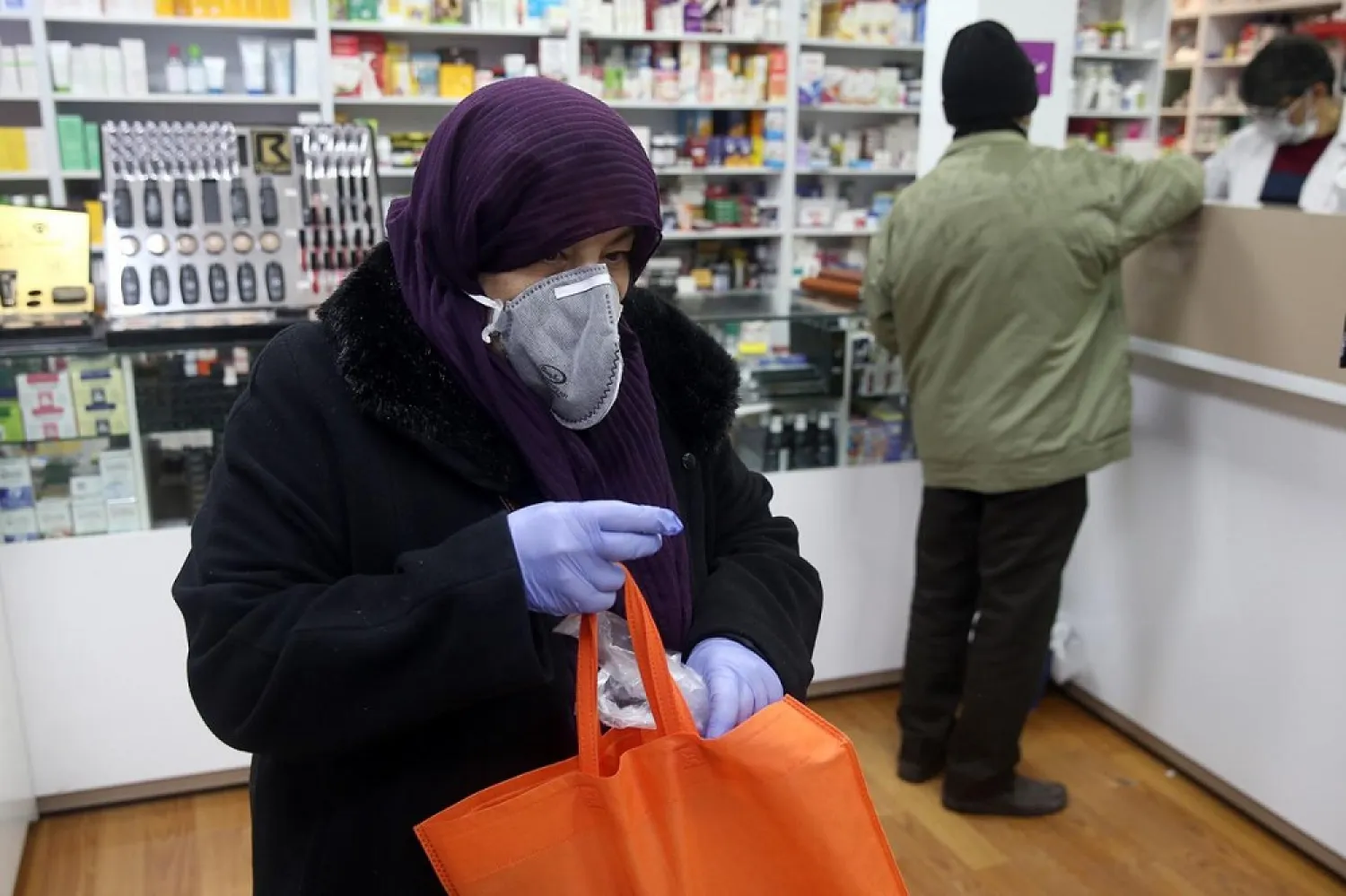
An Iranian woman wears a protective mask to prevent contracting coronavirus, and she is seen at a drug store in Tehran on February 25, 2020. (Reuters)
TT

Iran Starts Trial of New Homegrown Vaccine as Campaign Lags

An Iranian woman wears a protective mask to prevent contracting coronavirus, and she is seen at a drug store in Tehran on February 25, 2020. (Reuters)

Iran's campaign to inoculate its population against the coronavirus and promote itself as an emerging vaccine manufacturer inched on as health authorities announced Tuesday that the country's third homegrown vaccine has reached the phase of clinical trials.

Details about its production, however, remained slim.

Although Iran, with a population of more than 80 million, has so far imported foreign vaccines from Russia, China, India and Cuba to cover over 1.2 million people, concerns over its lagging pace of vaccinations have animated Iran's drive to develop locally produced vaccines as wealthier nations snap up the lion’s share of vaccine doses worldwide.

Iranian scientists, like elsewhere in the world, are rushing to condense the typically years-long process to develop vaccines into a few months — a task that has acquired urgency as the country struggles to stem the worst virus outbreak in the region and its economy reels from harsh American sanctions.

But details are scant about the country’s vaccine production efforts. Two other Iranian vaccines are also in the phase of clinical trials, with the most advanced, called Barekat, tested on 300 people so far.

The government said 20,000 volunteers in the capital of Tehran and other cities will soon receive Iran's new vaccine, called Fakhra, which an official described to state-run media as being “100% safe,” without providing any evidence or data to support the claim. Earlier this week, the government launched a vaccine production factory it claims can make 3 million doses a day.

The vaccine introduced Tuesday on state TV was created by an affiliate of Iran's Defense Ministry, known as the Research and Innovation Organization.

Like with the Barekat vaccine still in the initial phase of clinical trials, the company used inactivated coronaviruses from 35,000 samples to make the new vaccine, a traditional technology based on cultivating batches of the virus and then killing it. By comparison, Western drug manufacturers are taking a newer gene-based approach to target the spikes on the outer structure of the coronavirus, a method that had never been approved for widespread use before.

Iran's fragmented approach to domestic vaccine production, with entities ranging from state-owned pharmaceutical conglomerates to the Defense Ministry working separately on at least six different vaccines, reflect the country's wider factional rivalries and competing power structures.

At a ceremony attended by high-ranking officials in Tehran on Tuesday, Iranian state TV broadcast footage of just a single volunteer receiving the Fakhra vaccine, named after chief Iranian nuclear scientist Mohsen Fakhrizadeh, who was killed in a November attack that Iran blamed on Israel.

While Fakhrizadeh was known to lead the country's disbanded nuclear weapons program in the early 2000s, Iran has eulogized him as a leader of country's domestic coronavirus vaccine development drive. Fakhrizadeh's son was the first to receive the jab of the new vaccine.

The coronavirus has infected more than 1.7 million people in Iran and killed 61,427, according to health ministry figures released Tuesday — the highest death toll in the region.

Iran formally launched its limited vaccination campaign last month, doling out Russia's Sputnik V vaccine to health workers and those with chronic health conditions. Supreme Leader Ali Khamenei has banned Iran from importing American and British vaccines, a reflection of its deep-rooted mistrust of the West.

Nonetheless, Iran later said it would receive 4.2 million doses of the vaccine developed by Oxford University and UK-based drugmaker AstraZeneca through the global COVAX initiative, which was created to ensure that low- and middle-income countries have fair access to vaccines.

The Health Ministry has vowed to vaccinate all adults in the country by late September, although how the government will reach that ambitious goal remains uncertain. Iran says it expects to import doses for over 16 million people from COVAX.

The government has alleged that tough American sanctions imposed by former President Donald Trump in 2018 undermine efforts to purchase foreign-made vaccines and roll out mass inoculation campaigns like those making headway in the US and Europe. Although international banks and financial institutions often hesitate in dealing with Iranian transactions for fear of being fined or locked out of the American market, US sanctions do have specific carve-outs for medicine and humanitarian aid to Iran.



US Judge Blocks Deportation of Columbia University Palestinian Activist

Mohsen Mahdawi at a press conference in Vermont last year - Photo by Alex Driehaus/AP
TT

US Judge Blocks Deportation of Columbia University Palestinian Activist

Mohsen Mahdawi at a press conference in Vermont last year - Photo by Alex Driehaus/AP

A US immigration judge has blocked the deportation of a Palestinian graduate student who helped organize protests at Columbia University against Israel's war in Gaza, according to US media reports.

Mohsen Mahdawi was arrested by immigration agents last year as he was attending an interview to become a US citizen.

Mahdawi had been involved in a wave of demonstrations that gripped several major US university campuses since Israel began a massive military campaign in the Gaza Strip.

A Palestinian born in the occupied West Bank, Mahdawi has been a legal US permanent resident since 2015 and graduated from the prestigious New York university in May. He has been free from federal custody since April.

In an order made public on Tuesday, Judge Nina Froes said that President Donald Trump's administration did not provide sufficient evidence that Mahdawi could be legally removed from the United States, multiple media outlets reported.

Froes reportedly questioned the authenticity of a copy of a document purportedly signed by Secretary of State Marco Rubio that said Mahdawi's activism "could undermine the Middle East peace process by reinforcing antisemitic sentiment," according to the New York Times.

Rubio has argued that federal law grants him the authority to summarily revoke visas and deport migrants who pose threats to US foreign policy.

The Trump administration can still appeal the decision, which marked a setback in the Republican president's efforts to crack down on pro-Palestinian campus activists.

The administration has also attempted to deport Mahmoud Khalil, another student activist who co-founded a Palestinian student group at Columbia, alongside Mahdawi.

"I am grateful to the court for honoring the rule of law and holding the line against the government's attempts to trample on due process," Mahdawi said in a statement released by his attorneys and published Tuesday by several media outlets.

"This decision is an important step towards upholding what fear tried to destroy: the right to speak for peace and justice."


Fire Breaks out Near Iran's Capital Tehran, State Media Says

Smoke rises from a fire caused by an explosion in Tehran (File photo - Reuters)
TT

Fire Breaks out Near Iran's Capital Tehran, State Media Says

Smoke rises from a fire caused by an explosion in Tehran (File photo - Reuters)

A fire broke out in Iran's Parand near the capital city Tehran, state media reported on Wednesday, publishing videos of smoke rising over the area which is close to several military and strategic sites in the country's Tehran province, Reuters reported.

"The black smoke seen near the city of Parand is the result of a fire in the reeds around the Parand river bank... fire fighters are on site and the fire extinguishing operation is underway", state media cited the Parand fire department as saying.


Pakistan PM Sharif to Seek Clarity on Troops for Gaza in US Visit

US President Donald Trump looks at Pakistan's Prime Minister Shehbaz Sharif speaking following the official signing of the first phase of the Gaza ceasefire agreement between Israel and Hamas, during a world leaders' summit on ending the Gaza war, in Sharm El-Sheikh, Egypt, October 13, 2025. REUTERS/Evelyn Hockstein/File Photo
TT

Pakistan PM Sharif to Seek Clarity on Troops for Gaza in US Visit

US President Donald Trump looks at Pakistan's Prime Minister Shehbaz Sharif speaking following the official signing of the first phase of the Gaza ceasefire agreement between Israel and Hamas, during a world leaders' summit on ending the Gaza war, in Sharm El-Sheikh, Egypt, October 13, 2025. REUTERS/Evelyn Hockstein/File Photo

Before Pakistan commits to sending troops to Gaza as part of the International Stabilization Force it wants assurances from the United States that it will be a peacekeeping mission rather than tasked with disarming Hamas, three sources told Reuters.

Pakistan's Prime Minister Shehbaz Sharif is set to attend the first formal meeting of President Donald Trump's Board of Peace in Washington on Thursday, alongside delegations from at least 20 countries.

Trump, who will chair the meeting, is expected to announce a multi-billion dollar reconstruction plan for Gaza and detail plans for a UN-authorized stabilization force for the Palestinian enclave.

Three government sources said during the Washington visit Sharif wanted to better understand the goal of the ISF, what authority they were operating under and what the chain of command was before making a decision on deploying troops.

"We are ready to send troops. Let me make it clear that our troops could only be part of a peace mission in Gaza," said one of the sources, a close aide of Sharif.

"We will not be part of any other role, such as disarming Hamas. It is out of the question," he said.

Analysts say Pakistan would be an asset to the multinational force, with its experienced military that has gone to war with arch-rival India and tackled insurgencies.

"We can send initially a couple of thousand troops anytime, but we need to know what role they are going to play," the source added.

Two of the sources said it was likely Sharif, who has met Trump earlier this year in Davos and late last year at the White House, would either have an audience with him on the sidelines of the meeting or the following day at the White House.

Initially designed to cement Gaza's ceasefire, Trump sees the Board of Peace, launched in late January, taking a wider role in resolving global conflicts. Some countries have reacted cautiously, fearing it could become a rival to the United Nations.

While Pakistan has supported the establishment of the board, it has voiced concerns against the mission to demilitarize Gaza's militant group Hamas.