


US Praises Saudi Commitment to End Conflict in Yemen

US envoy to Yemen Tim Lenderking
TT

US Praises Saudi Commitment to End Conflict in Yemen

US envoy to Yemen Tim Lenderking

US envoy to Yemen Tim Lenderking stressed that he found a strong commitment from the Saudi leadership to end the Yemeni conflict.

In a television interview with the British BBC channel and the American PBS, Lenderking said, “what I hear is a consistent message from the Saudi leadership that they want to do their part to bring the conflict to a close … I'm confident that we're going to be able to count on Saudi Arabia to do its part.”

The envoy has recently paid a second visit to Riyadh that lasted 17 days.

There, Lenderking said he saw that the humanitarian crisis in Yemen is a critical priority as well to the Saudis, not only getting supplies into the country, but then moving them to the people in the greatest need.

Asked whether a recent proposal to end the conflict in Yemen differs from the one presented by the UN envoy for Yemen, Martin Griffiths, to the warring parties, Lenderking said it was exactly the same.

“I'm hopeful that all the parties will recognize that this is a critical moment, that if we want to see a better situation in Yemen, we want to see a move toward a ceasefire that is a lasting ceasefire, a durable ceasefire, and not just one that is broken by one side or the other after 24 hours, that it's going to require international buy-in,” he said.

Meanwhile, efforts are being exerted by the US House of Representatives and the Senate to mobilize support to the positions of Griffiths and Lenderking in reaching a ceasefire and ending the fighting in the city of Marib, informed sources at the US Congress told Asharq Al-Awsat Tuesday.

“The move aims to push legislators to condemn the attack launched on Marib by the Iran-backed Houthis,” the sources said.

They added that Congressmen were informed that Saudi Arabia seeks a political solution to the conflict in Yemen in line with UN Security Council resolutions.

“Riyadh respects the efforts of Martin and Lenderking to reach a negotiated settlement to the conflict,” the sources said.
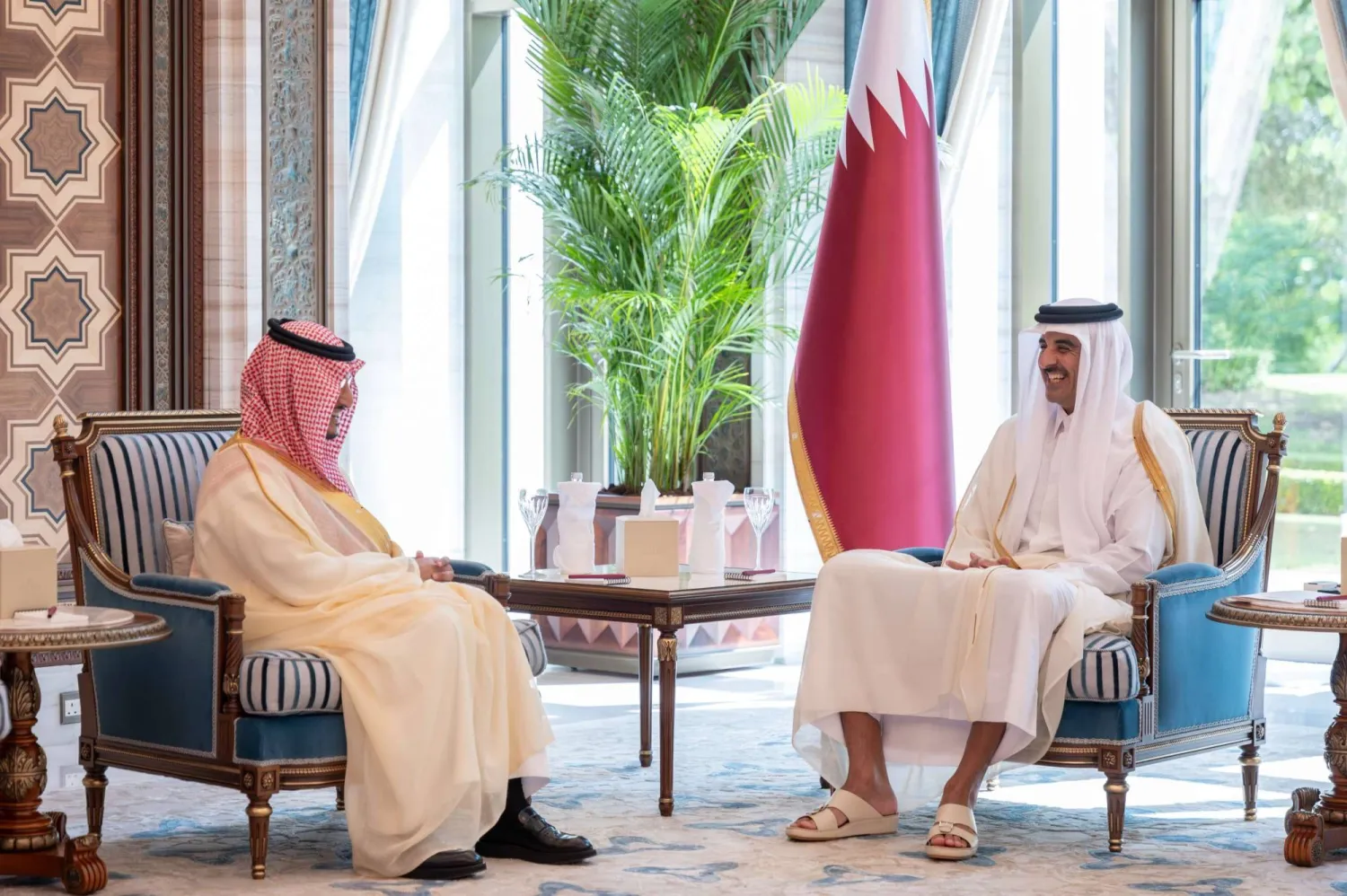



King Salman Invites Qatar’s Emir to Participate in Second GCC-EU Summit

Qatar's Emir Sheikh Tamim bin Hamad Al Thani receives the Saudi ambassador in Doha (QNA).
TT

King Salman Invites Qatar’s Emir to Participate in Second GCC-EU Summit

Qatar's Emir Sheikh Tamim bin Hamad Al Thani receives the Saudi ambassador in Doha (QNA).

Custodian of the Two Holy Mosques King Salman bin Abdulaziz Al Saud sent a written message to Emir of Qatar Sheikh Tamim bin Hamad Al Thani, inviting him to participate in the second Gulf Cooperation Council (GCC)-European Union (EU) Summit, which Saudi Arabia will host in October.

The message was delivered by Saudi Ambassador to Qatar Prince Saad bin Mansour bin Saad during the Emir's reception of him at his office at Lusail Palace, SPA reported.

The ambassador conveyed to the Emir the greetings of the Custodian of the Two Holy Mosques, along with his wishes for continued health and happiness and for the Qatari people to enjoy further progress and prosperity.

For his part, the Qatari Emir asked the ambassador to convey his greetings to his brother, the Custodian of the Two Holy Mosques, along with his wishes for continued health and well-being and for the Saudi people to enjoy continued prosperity and progress.

During the reception, the two sides reviewed the fraternal relations between the two countries and ways to develop and strengthen them.


Saudi Arabia Provides $59.7 Million to Support Yemen's Budget, Salaries

Custodian of the Two Holy Mosques King Salman bin Abdulaziz Al-Saud and Prince Mohammed bin Salman, Crown Prince and Prime Minister. (SPA)
TT

Saudi Arabia Provides $59.7 Million to Support Yemen's Budget, Salaries

Custodian of the Two Holy Mosques King Salman bin Abdulaziz Al-Saud and Prince Mohammed bin Salman, Crown Prince and Prime Minister. (SPA)

Under the leadership's directives, the Kingdom of Saudi Arabia, through the Saudi Development and Reconstruction Program for Yemen (SDRPY), has provided a new financial installment of more than $59.7 million to support the Yemeni state budget.

The funding is designated to cover operational expenses and salaries, reflecting the Kingdom's ongoing commitment to supporting stability and development for the brotherly Yemeni people.

The support aims to ensure the regular flow of government funds and salary payments and to improve the efficiency of fiscal policy, putting economic and social development on a more sustainable path. It is also expected to boost purchasing power, stabilize household incomes, and revive commercial markets.

Saudi Arabia is Yemen's largest supporter across the humanitarian, development, and economic fields. Its development and economic interventions totaled more than $12.6 billion between 2012 and 2026. These interventions include deposits and grants to the Central Bank of Yemen aimed at achieving fiscal balance and supporting macroeconomic stability. They have been a cornerstone in strengthening Yemeni institutions' capacity to continue delivering services and easing economic and social pressures.

To date, SDRPY has implemented 300 development projects and initiatives across eight vital sectors in Yemen, upgrading infrastructure, improving public services, building local institutional capacity, and creating job opportunities.


Coalition to Asharq Al-Awsat: Houthi Claims about Targeting Riyadh Are Misleading

Coalition official spokesman Major General Turki Al-Malki. (Coalition to Restore Legitimacy in Yemen)
TT

Coalition to Asharq Al-Awsat: Houthi Claims about Targeting Riyadh Are Misleading

Coalition official spokesman Major General Turki Al-Malki. (Coalition to Restore Legitimacy in Yemen)

The Saudi-led Coalition to Restore Legitimacy in Yemen dismissed on Saturday as “misleading” Houthi claims that they targeted the Saudi capital Riyadh.

Coalition official spokesman Major General Turki Al-Malki told Asharq Al-Awsat that “what the Houthis are facing in Taiz, and the human losses suffered by the group's members at the hands of the heroes of the Yemeni Armed Forces and the Popular Resistance on all fronts drives them to seek illusory victories.”

The Houthis are “attempting to divert attention from the scale of the losses and the growing public anger against them,” he added, while stressing that their “ties to external agendas that have brought chaos and devastation to Yemen.”

The Iran-backed group claimed it had targeted Riyadh at a time when unified Yemeni forces are fighting battles to repel the group's attempts to secure positions it attacked on the West Coast.

Recent Yemeni reports said the group has lost around 5,000 fighters within a week, while the Yemeni Armed Forces are carrying out a series of aerial and ground military operations across various fronts targeted by the Houthis.

Spokesperson for the Yemeni Armed Forces Colonel Majid Al-Nuzaili announced in a statement the execution of 257 precision targeting operations against Houthi military positions, movements, and capabilities, utilizing fighter jets, drones, artillery, missiles, and rocket launchers.

The operations covered Sanaa, Midi (northwest), and Baqim (Saada), the fronts of Al-Jawf, Marib, Al-Bayda, and Lahij, with operational efforts concentrated on the Taiz fronts, targeting command and control centers, troop gatherings and mobilizations, combat reserves, weapons and ammunition depots, as well as military supply lines and means, he added.

According to preliminary field estimates, the operations resulted in the neutralization of at least 700 militants and destruction of 170 combat vehicles, stated Al-Nuzaili.

This had a direct impact on the militias' combat capacity and limited their ability to continue their assaults against civilians in their homes and villages, he went on to say.