Sudan Says Russian Base Complies with its Conditions

A Russian warship in Port Sudan last April (AFP)
TT

Sudan Says Russian Base Complies with its Conditions

A Russian warship in Port Sudan last April (AFP)

Sudan hasn’t withdrawn from the agreement with Russia on establishing a military base near the Port of Sudan on the Red Sea, a high-ranking Sudanese official told Asharq Al-Awsat newspaper.

The official, who preferred to remain anonymous, said that the decision was issued by the Transitional Military Council upon agreeing on both countries’ conditions.

He rejected to reveal further details on the matter.

He ensured that discussions regarding the deal will be resumed once Russia fulfills its pledges.

Sudanese Chief of Staff Lt. Gen. Mohammed Osman Al Hussein pointed out that the agreement was signed during the term of ousted president Omar al-Bashir.

However, it hasn’t been approved by the parliament following the drastic changes that took place in the country.

“I think a compromise can always be found,” Russian Deputy Foreign Minister Mikhail Bogdanov said on Friday. “They have not denounced the agreement, have not withdrawn their signature, they said some questions have emerged,” he added.

Retired lieutenant colonel in the Sudanese Navy Omar Arbab said the Russian presence in the Red Sea became a status-quo before completing the protocol procedures of the agreement.

In February, Russia reinforced its presence at Flamingo base, Arbab added.

A Russian military delegation led by Deputy Defense Minister Alexander Fomin recently held talks in Khartoum with the Sudanese Chief of Staff.

Osman said that negotiations are underway with Russian officials "to achieve Sudan’s interests."

US AFRICOM spokesperson stated earlier that there is no agreement between Russia and Sudan on establishing a Russian military basis on the Red Sea.

The spokesperson added that Sudan hasn’t signed any agreement, therefore no prejudgments can be made on the official policy.
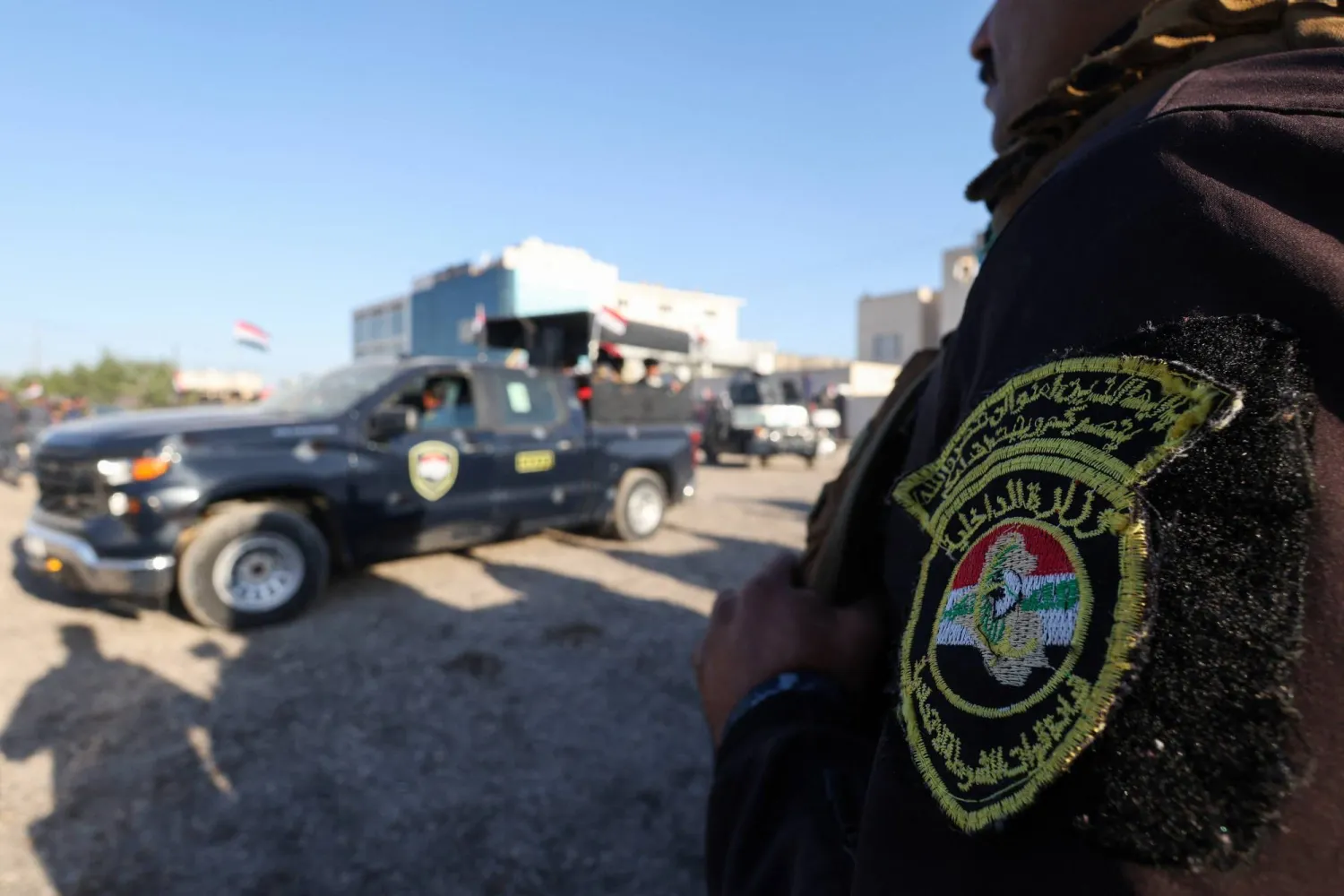


Iraqi Security Forces to Deploy in Jurf al-Sakhar, Security Officials Say

 Members of the Iraqi police take part in a security deployment on the outskirts of Jurf al-Sakhar, Babil province, Iraq, November 20, 2026. (Reuters)
Members of the Iraqi police take part in a security deployment on the outskirts of Jurf al-Sakhar, Babil province, Iraq, November 20, 2026. (Reuters)
TT

Iraqi Security Forces to Deploy in Jurf al-Sakhar, Security Officials Say

 Members of the Iraqi police take part in a security deployment on the outskirts of Jurf al-Sakhar, Babil province, Iraq, November 20, 2026. (Reuters)
Members of the Iraqi police take part in a security deployment on the outskirts of Jurf al-Sakhar, Babil province, Iraq, November 20, 2026. (Reuters)

Iraqi security forces will deploy in Jurf al-Sakhar, a stronghold of the Kataib Hezbollah armed group, on Friday, security officials told a press conference, under a compromise deal designed to ease tensions with the most powerful Iran-aligned armed faction in the country. 

Prime Minister Ali al-Zaidi earlier this week ordered security forces to prepare to move against Kataib Hezbollah, which officials accused of running an oil smuggling network siphoning state-owned oil worth hundreds of millions of dollars. 

Under the deal, brokered by Shiite politicians, Kataib members were expected to withdraw to other parts of Iraq, a major oil producer and ally of both the United States and Iran. 

Kataib Hezbollah, ‌branded a terrorist group by the United States, has rejected ‌the ⁠smuggling accusations. So far, ⁠nine senior security and oil officials have been dismissed following an investigation focused on Jurf al-Sakhar in Babil province, a Kataib stronghold about 50 km (30 miles) south of Baghdad. 

Any direct confrontation with the Iran-backed armed factions in Iraq could be risky. 

After one of al-Zaidi's predecessors ordered a similar crackdown on factions five years ago, the prime minister's Baghdad home was hit in a drone strike that authorities described at the time as an assassination attempt. 

US President Donald Trump has pressured ⁠al-Zaidi to disarm the factions that have struck US troops and facilities ‌in Saudi Arabia and the United Arab Emirates in ‌solidarity with Tehran since the United States and Israel launched attacks on Iran at the end of February. ‌Kataib Hezbollah and other groups have refused to hand over their weapons to the ‌state. 

Pro-Iranian factions, including Kataib Hezbollah, enjoy a semi-official status in Iraq, which critics say encourages them to act with impunity. A shadowy group with no announced leadership structure, Kataib Hezbollah has thousands of hardened fighters. 

It forms several battalions in Iraq's Popular Mobilization Forces (PMF), a grouping of armed factions set up in 2014 to fight ‌ISIS and subsequently recognized as an official security force. 

Fighters receive state salaries and Kataib Hezbollah members, including some designated as terrorists ⁠by the US, hold senior ⁠positions in the PMF. 

While it is technically under the command of Iraq's prime minister as part of the PMF, the group often operates outside the chain of command and has defied and challenged government statements calling for an end to attacks on US forces. 

Kataib Hezbollah has its own political party, called Huquq, or Rights, with five lawmakers. An Iraqi official report said the group also generates cash through businesses, such as construction, housing, trade, tourism and currency exchange, though the group denies this and says it is dedicated to security. 

In August, Iraqi special forces reporting directly to the prime minister arrested the intelligence chief of the Iran-aligned faction Harakat al-Nujaba on accusations of involvement in drone attacks against US interests. 

The detention, which lasted 48 hours, triggered threats of retaliation from the group and prompted intervention by senior Shiite politicians who helped defuse tensions. A week later, Iraqi special forces arrested four faction members over allegations they facilitated attacks on US interests. 


Lebanese Journalist Wounded by Israel Honored at CPJ Awards

Lebanese journalist Christina Assi attends the 2026 Committee to Protect Journalists (CPJ) International Press Freedom Awards at The Glasshouse in New York on November 19, 2026. (AFP)
TT

Lebanese Journalist Wounded by Israel Honored at CPJ Awards

Lebanese journalist Christina Assi attends the 2026 Committee to Protect Journalists (CPJ) International Press Freedom Awards at The Glasshouse in New York on November 19, 2026. (AFP)

AFP journalist Christina Assi, who lost a leg in an Israeli strike reporting from the Lebanese border and has become a vocal campaigner for reporters' safety, was honored by the Committee to Protect Journalists on Thursday.

In October 2023, Reuters journalist Issam Abdallah was killed and six others were wounded, including AFP journalists Assi and Dylan Collins, while covering the conflict near the Israeli border.

An independent AFP investigation concluded that two Israeli 120mm tank shells were fired from the Jordeikh area in northern Israel.

The findings were corroborated by other international investigations, including those conducted by Reuters, CPJ, Human Rights Watch, Amnesty International and Reporters Without Borders.

Since the attack Assi, a Lebanese photographer and photo editor, has campaigned tirelessly for justice for her slain colleague, to improve safety for journalists in war zones, and to support a program aimed at helping reporters injured in the field.

In July 2024, she carried the Olympic flame in Paris, in tribute to journalists who died on assignment.

"I am happy and honored, but at the same time, angry and sad by the reasons for it," Assi told AFP ahead of the awards.

"We lost so many colleagues in the past three years, and everything we've done so far and our advocacy just feels like it's not enough."

AFP News Director Phil Chetwynd said ahead of the award ceremony that "the attack on Christina and her journalist colleagues is a clear war crime."

"AFP has repeatedly demanded answers from Israel and has received only silence. We cannot allow a culture of impunity to be accepted," he added.

Other journalists decorated with CPJ's Press Freedom Award on Thursday included Hungarian investigative reporter Szabolcs Panyi, who probed graft under Viktor Orban, and Colombian journalist Estefany Rodriguez, who was arrested in the United States while reporting on immigration enforcement.

CPJ is an independent US-based organization dedicated to defending press freedom around the world.


Families of Syrians Transferred to Iraq as ISIS Detainees Demand Answers

A convoy carrying ISIS detainees during their transfer to Iraq (File photo – Circulated online)
TT

Families of Syrians Transferred to Iraq as ISIS Detainees Demand Answers

A convoy carrying ISIS detainees during their transfer to Iraq (File photo – Circulated online)

Families of Syrians transferred to Iraq earlier this year among ISIS detainees staged a protest in Deir Ezzor on Thursday, demanding answers about the fate of their loved ones.

The protesters called for a review of detainees' cases and scrutiny of the grounds for their arrests, citing what they described as malicious accusations and extortion by groups affiliated with the Syrian Democratic Forces (SDF), local media reported.

They said some detainees had been arrested simply for raising the flag of Syria's new government or the Free Syrian Army, while others were detained over personal disputes or financial extortion.

The families insisted that anyone suspected of wrongdoing should face justice in Syrian courts, on Syrian soil, under due legal process and with guarantees of a fair trial, rather than being transferred to another country.

They also demanded official explanations of the legal grounds and procedures behind the transfers.

In what they called a "humanitarian appeal," the families urged Syrian President Ahmed al-Sharaa and Foreign Minister Asaad al-Shibani to intervene urgently, investigate the fate and conditions of those transferred to Iraq, seek justice for their families and safeguard their legal and human rights.

In January, US Central Command (CENTCOM) launched an operation to transfer ISIS detainees from northeastern Syria to Iraq, saying the move was aimed at ensuring they remained in secure detention facilities.

An Iraqi security spokesman said 5,064 ISIS members had been transferred from Syrian prisons and detention centers to Iraq by air and land.

The total included more than 3,000 Syrians and over 270 Iraqis, with the remainder holding nationalities from 42 other Arab and foreign countries.