Saudi Arabia Delivers New Batch of Oil Supplies to Yemen’s Al Mahra

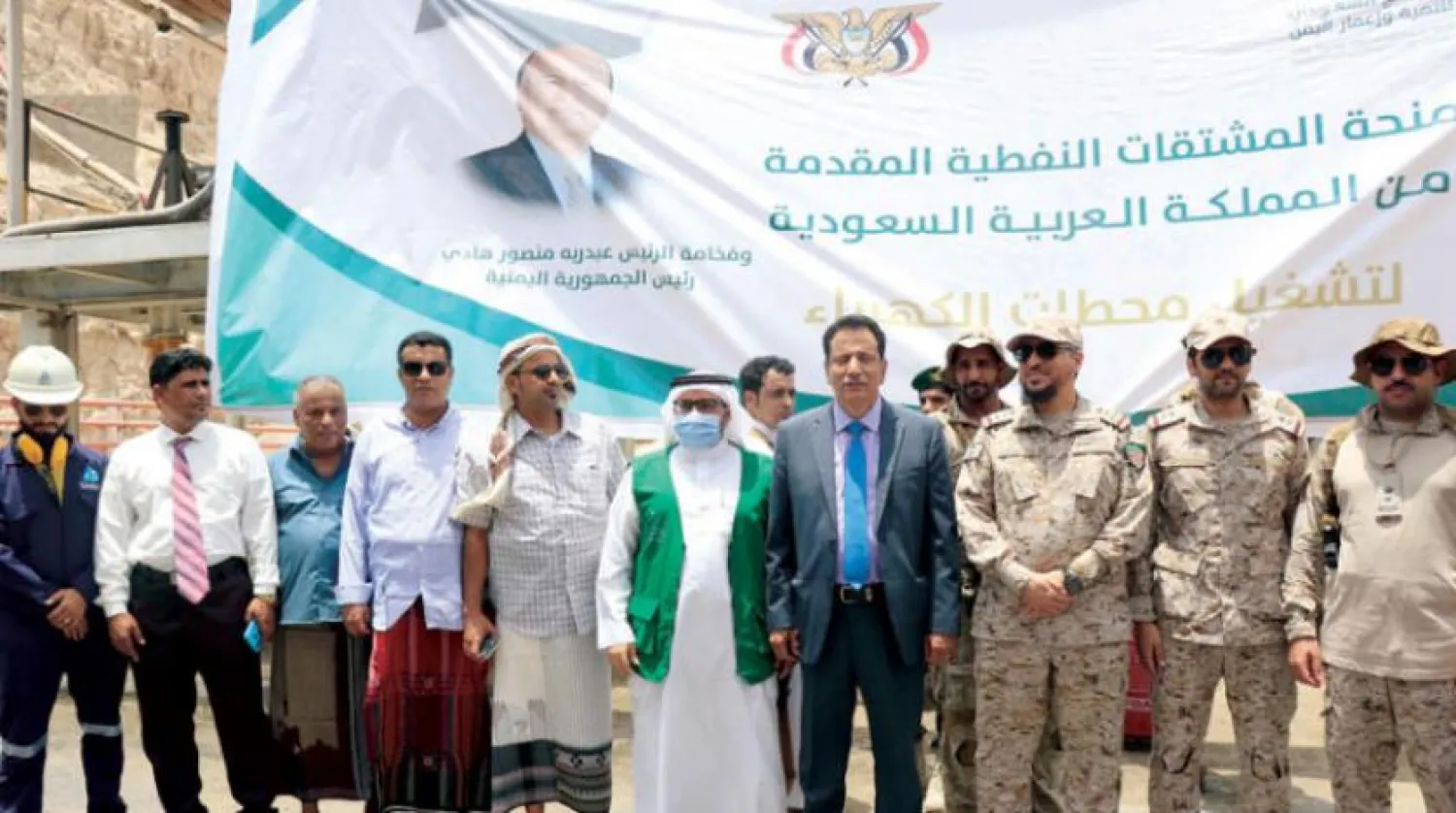
Al Mahra Governor and SDRPY Director for Al Mahra Governorate receiving the Saudi oil grant (Asharq Al-Awsat)
TT

Saudi Arabia Delivers New Batch of Oil Supplies to Yemen’s Al Mahra

Al Mahra Governor and SDRPY Director for Al Mahra Governorate receiving the Saudi oil grant (Asharq Al-Awsat)

Yemen’s Al Mahra governorate has received a new batch of Saudi oil derivatives, delivered as part of a grant initiative by the neighboring Kingdom. This time, the fuel delivery amounted to 5,500 metric tons of diesel that are meant to feed power plants across Al Mahra.

Made through the Saudi Development and Reconstruction Program for Yemen (SDRPY), the transfer involved transporting 4,000 metric tons by the sea and 1,500 tons by land.

The shipment will help reduce budget burdens suffered by the Yemeni government, limit the Yemen Central Bank’s spending of hard currency on fuel supplies from global markets, and stabilize the Yemeni rial’s exchange rate.

Moreover, the donation will aid in soothing soaring oil rates, creating jobs, and raising local productivity. Vital sectors will also benefit from the shipment as well as overall living conditions in Al Mahra.

The donation was received by Al Mahra Governor Muhammad Ali Yasser and SDRPY Director of Operations in Al Mahra Eng. Abdullah Basliman.

Representatives from the Yemeni Oil Company and the Electricity and Energy Company in Yemen were also present.

The shipment will reduce daily blackouts, help the government save funds for development projects, and meet the monthly fuel needs of Al Mahra.

Both the SDRPY and the Yemeni government have worked together to develop integrated governance mechanisms for oil derivatives.

The Yemeni government has formed a supervision, oversight, and follow-up committee from all relevant Yemeni ministries and authorities and linked it to an executive program and a control mechanism that ensures that grants reach beneficiary stations with high reliability to ensure actual access to beneficiaries and to ensure the use of oil derivatives for what they are allotted.

The joint committee has scheduled the Saudi oil derivatives grant shipments in a way that contributes to helping the Yemeni government redirect expenses. It will be able to use the money previously allocated for the purchase of oil derivatives to support paying the salaries of civil servants.


Saudi Arabia Underscores its Keenness on Establishing Regional, Int’l Peace and Stability

Prince Mohammed bin Salman bin Abdulaziz Al Saud, Crown Prince and Prime Minister, chairs the Cabinet meeting in Riyadh. (SPA)
TT

Saudi Arabia Underscores its Keenness on Establishing Regional, Int’l Peace and Stability

Prince Mohammed bin Salman bin Abdulaziz Al Saud, Crown Prince and Prime Minister, chairs the Cabinet meeting in Riyadh. (SPA)

Saudi Arabia underlined on Tuesday its commitment to establishing regional and international security and stability, the pivotal role of the Makkah Agreement states in ensuring regional security, and the Kingdom's support for mediation efforts by Qatar and Pakistan to de-escalate tensions, as well as for all endeavors aimed at achieving peace.

Prince Mohammed bin Salman bin Abdulaziz Al Saud, Crown Prince and Prime Minister, chaired the Cabinet meeting that was held in Riyadh.

Crown Prince Mohammed briefed the ministers on the letters received by Custodian of the Two Holy Mosques King Salman bin Abdulaziz Al Saud and the Crown Prince from President of Egypt Abdel Fattah al-Sisi and President of Kazakhstan Kassym-Jomart Tokayev.

He briefed the Cabinet on his meeting with French President Emmanuel Macron and the outcomes of his official talks with Greek PM Kyriakos Mitsotakis, which underscored the strength of the historic relations between the two countries and their shared commitment to enhancing cooperation across various fields.

The Cabinet discussed the talks held between states party to the Makkah Joint Defense Agreement and senior Iranian officials that were held on Monday.

The Cabinet also commended the advanced capabilities of Saudi air defense systems and their success in thwarting the Houthi terrorist militia's repeated attempts to target Makkah, Madinah, and a number of Saudi cities and facilities.

It condemned these criminal attacks as a grave aggression against the Kingdom's sovereignty and the sanctity of Islamic holy sites, and a flagrant provocation to Muslims worldwide. It underscored the Kingdom's legitimate right to defend with full resolve the security of the Two Holy Mosques and their visitors, as well as the country's citizens and residents.

The Cabinet hailed the increase in localization rate of military spending in the Kingdom, which reached 27.3% by the end of 2025, surpassing the annual target of 24%, with local content rising to 40.9%. This reflects robust national capabilities and supports integrated public-private efforts, advancing steadily toward the goal of localizing more than 50% of total military spending by 2030.

The Cabinet further reviewed several government performance indicators and progress in administration, governance, and institutional excellence. It praised the Ministry of Human Resources and Social Development for winning an international award from the Project Management Institute, outperforming 53 entities from 28 countries, in recognition of its contribution to boosting the effectiveness of initiative implementation, achieving targets, and aligning them with national priorities.


Qatar Urges 'Good Faith' from Iran as Talks Renew

FILED - 16 January 2024, Switzerland, Davos: FILE PHOTO - Qatar's Prime Minister and Minister of Foreign Affairs, Mohammed Bin Abdulrahman Al Thani, speaks during a panel discussion at the World Economic Forum Annual Meeting 2024 in Davos. Photo: Jakob Polacsek/World Economic Forum/dpa
TT

Qatar Urges 'Good Faith' from Iran as Talks Renew

FILED - 16 January 2024, Switzerland, Davos: FILE PHOTO - Qatar's Prime Minister and Minister of Foreign Affairs, Mohammed Bin Abdulrahman Al Thani, speaks during a panel discussion at the World Economic Forum Annual Meeting 2024 in Davos. Photo: Jakob Polacsek/World Economic Forum/dpa

Qatar on Tuesday said Iran must show good faith with its neighbors to prevent further escalation, following renewed efforts to end the US-Iran war.

The comments came a day after senior officials from Saudi Arabia, Türkiye and Pakistan held talks with Iran in an attempt to stop the Middle East war from reigniting.

Qatari foreign ministry official Ibrahim Al-Hashmi said the region needed a new security framework to prevent further violence.

"The ball is now in Iran's court to commit to these principles and demonstrate good faith," he said.

"We have heard positive statements from the Iranian side... but they still need to demonstrate good faith, stop threatening countries of the region, and reopen the Strait of Hormuz so that all those efforts can go towards having a safe and prosperous region," he added.

Monday's talks in Tehran included Saudi Defense Minister Khalid bin Salman, Pakistan's army chief General Asim Munir and Türkiye's intelligence chief Ibrahim Kalin. Iran described them as "very good".

They followed warnings by the United States, Iran and Israel that hostilities could restart in the eight-month war, which saw Tehran strike US allies in the region including Qatar.

US-Iran mediation efforts have been led by Qatar and Pakistan. A Qatari delegation visited Tehran on Sunday, Iran's foreign ministry spokesman Esmaeil Baqaei said.

Asked for details on the Qatari visit to Tehran, Hashmi said "messages are ongoing and the exchange of ideas continues through the mediators".


Kuwait Sentence 3 to Death for Collaborating with Iran, Plotting to Assassinate Interior Minister

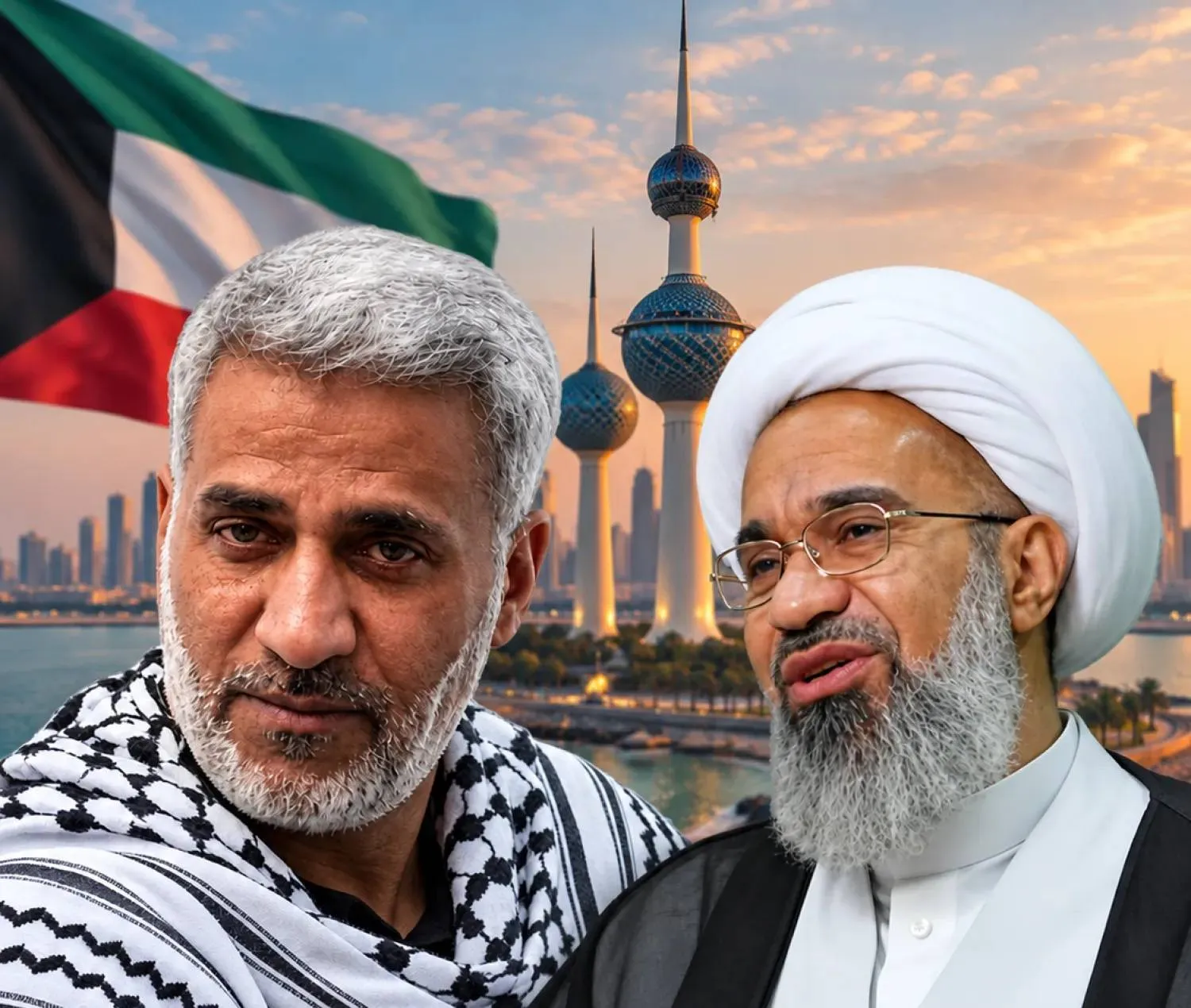
Sheikh Hussein Abdullah Al-Matouq and Hassan Abdulhadi Hajieh. (Asharq Al-Awsat)
TT

Kuwait Sentence 3 to Death for Collaborating with Iran, Plotting to Assassinate Interior Minister

Sheikh Hussein Abdullah Al-Matouq and Hassan Abdulhadi Hajieh. (Asharq Al-Awsat)

The Kuwaiti Criminal Court, represented by the State Security Circuit, sentenced on Monday three defendants to death and eight others to five years in prison, in a case involving espionage for Iran and the Lebanese Hezbollah, and plotting to assassinate the Kuwaiti First Deputy Prime Minister and Minister of Interior, Sheikh Fahad Al-Yousuf, along with other state figures.

The court, presided over by Counselor Nasser Al-Badr, convicted Sheikh Hussein Abdullah Al-Matouq, Hassan Abdulhadi Hajieh and Abdulreza Haidar Dehqani, an Iranian national, with harming Kuwait's national interests, spying for foreign entities, and joining the Lebanese Hezbollah group.

The Public Prosecution charged the defendants with committing acts that would undermine the independence, unity, and territorial integrity of the country, as well as seeking and communicating with Iran and Hezbollah to carry out hostile acts against Kuwait, which included plotting to assassinate the Minister of Interior and other leading figures.

Case documents revealed that remaining defendants held meetings to plan the assassination and assigned roles among themselves. An eleventh defendant was tasked with providing the necessary equipment to execute the plot, acting under instructions from the first three defendants who received death sentences.

The court stressed that "national security is not the interest of an individual or a faction, but a right of society as a whole," adding that state sovereignty cannot be contested by a foreign power.