Saudi-Chinese Talks on Strategic Partnership, Global Developmentshttps://english.aawsat.com/home/article/3083391/saudi-chinese-talks-strategic-partnership-global-developments
Saudi-Chinese Talks on Strategic Partnership, Global Developments
The Saudi foreign minister and his Chinese counterpart perform a preventive elbow bump during their meeting on Thursday in the Uzbek capital (SPA)
Saudi Foreign Minister Prince Faisal bin Farhan met on Thursday with Chinese State Councilor and Foreign Minister Wang Yi for official discussions in the Uzbek capital, Tashkent.
During the meeting, Prince Faisal and Councilor Wang reviewed strategic ties and their two countries’ close partnership.
They also discussed ways of reinforcing bilateral relations in several fields of common interest, boosting multilayered coordination and the latest developments in the region and the world.
The two officials also examined cooperation on combating the coronavirus pandemic and support for all international efforts in this regard. They voiced their anticipation for continued collaboration in fighting the spread of the COVID-19 disease.
Prince Faisal had arrived in Tashkent for a two-day international conference titled “Central and South Asia: Regional Connectivity, Challenges, and Opportunities.”
During his stay in Tashkent, the Saudi minister met with Kazakhstan’s Deputy Prime Minister and Foreign Minister Mukhtar Tleuberdi, Tajikistan’s Foreign Minister Sirojiddin Muhriddin, and Turkmenistan’s Foreign Minister Raşit Meredow.
During the meetings, the officials discussed bilateral relations and the means to strengthen them in different fields to serve common interests.
Also, they reviewed Saudi Arabia’s global efforts and support for ways to address the coronavirus pandemic through the Kingdom’s presidency of the G20 last year.
The meetings also shed light on Vision 2030 and its programs, which aim to achieve sustainable development and provide significant investment opportunities in different sectors.
In other news, Prince Faisal received a written message from his Omani counterpart, Sayyed Badr Al-Busaidi.
The message was received on Prince Faisal’s behalf by Saudi Deputy Foreign Minister Walid Al-Khuraiji upon meeting Oman’s ambassador to Saudi Arabia in Riyadh.
The deputy foreign minister and Omani ambassador discussed bilateral relations and ways to enhance them across various fields. They also exchanged views on regional and international issues.
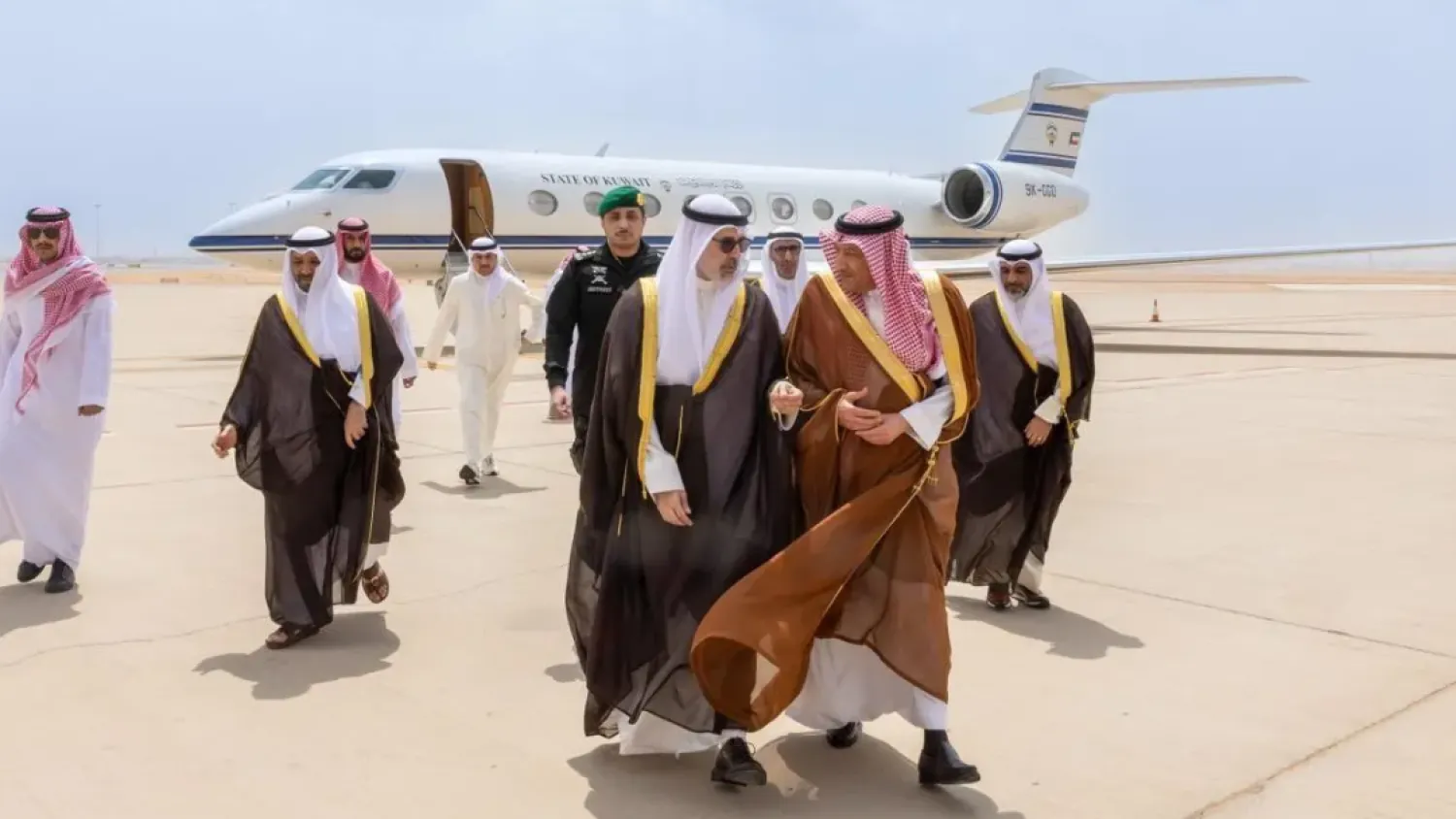
Kuwaiti Foreign Minister Arrives in Riyadh on Official Visithttps://english.aawsat.com/gulf/5257653-kuwaiti-foreign-minister-arrives-riyadh-official-visit
28 March 2026, Qatar, Doha: A view of the West Bay skyline in Doha with its lights switched off during Earth Hour. (dpa)
TT
TT
Qatar Says Iran Missile Struck Tanker in Its Waters
28 March 2026, Qatar, Doha: A view of the West Bay skyline in Doha with its lights switched off during Earth Hour. (dpa)
Qatar said on Wednesday that a tanker leased to its state-owned energy company was struck by an Iranian missile in the Gulf country's territorial waters.
"Qatar was targeted... by three cruise missiles launched from Iran," the Defense Ministry said in a statement.
Qatar's military "intercepted two of the cruise missiles, while the third missile struck an oil tanker leased to QatarEnergy in Qatar's territorial waters," it said.
"Coordination was established with relevant authorities to evacuate the tanker, which had 21 crew members on board, without any human casualties," the ministry added.
Gulf countries have faced repeated drone and missile salvos from Iran over the past month in response to US and Israeli strikes that began at the end of February.
Iran has targeted hydrocarbon infrastructure in the oil-rich Gulf nations as well as shipping, effectively closing the strategic Strait of Hormuz, through which one-fifth of global oil usually passes.
QatarEnergy said in a statement the Aqua 1, a fuel oil tanker, had been "the subject of a missile attack in the northern territorial waters of the State of Qatar in the early morning hours of Wednesday".
It confirmed no crew members had been injured and there was "no impact on the environment as a result of this incident".
Gulf Countries Demand to Be Part of Any Regional Security Agreementhttps://english.aawsat.com/gulf/5257525-gulf-countries-demand-be-part-any-regional-security-agreement
Damage to the Kuwait-flagged Al-Salmi crude oil tanker, following a reported strike, amid the US-Israeli conflict with Iran, March 31, 2026. (Kuwait Petroleum Corporation / Reuters)
Gulf Countries Demand to Be Part of Any Regional Security Agreement
Damage to the Kuwait-flagged Al-Salmi crude oil tanker, following a reported strike, amid the US-Israeli conflict with Iran, March 31, 2026. (Kuwait Petroleum Corporation / Reuters)
Defenses across the Gulf continued on Wednesday to shoot down dozens of rockets and drones from Iran targeting civilian and private property in blatant violation of international law and the United Nations Charter.
Amid the tensions, Gulf countries stressed on Tuesday the need for them to be part of any future security agreement covering the region. They underlined that their regional security is integral to any future arrangements.
Qatar’s Foreign Ministry spokesman Majed al-Ansari said Gulf countries share a united stance that calls for ending the escalation.
They are in agreement on the need to be main party to any agreement struck in the region, he told a press briefing.
The countries are in constant contact with each other to serve everyone’s interests, he went on to say.
"Several red lines have been crossed in this war, especially with the targeting of infrastructure and nuclear sites. Gulf leaders are working on ending the war," he stated.
He added that Qatar supports the Pakistan-led mediation to end the conflict, hoping they would lead to peace and de-escalation.
Al-Ansari also warned of the danger against marine navigation in the Gulf, saying the closure of the Hormuz Strait impacts global energy security.
He called against attacks on energy infrastructure, revealing: "We are acting with international partners over Hormuz and we are committed to the security of energy and supply chains."
Prime Minister Sheikh Mohammed bin Abdulrahman Al Thani discussed Hormuz during a recent visit to Washington.
Moreover, Doha rejects attempts to drag it into the conflict, said al-Ansari, while also expressing concern over the possibility of an American ground operation in Iran.
On the ground, Saudi defenses intercepted and destroyed seven ballistic missiles fired at Riyadh and one fired at the Eastern Region.
Twelve drones were also destroyed on Tuesday, said Defense Ministry spokesman Turki al-Malki.
The civil defense, meanwhile, said shrapnel from a downed drone wounded two people and damaged three houses and several vehicles in the Al-Kharj region.
Meanwhile, the Ministry of Hajj and Umrah activated a special operations room to facilitate the arrival of pilgrims amid the war. Efforts will aim to resolve all challenges and offer services to pilgrims arriving from outside the Kingdom, with cooperation being carried out between the General Authority of Civil Aviation and concerned parties to ensure their safety.
Minister of Hajj and Umrah Dr. Tawfig Al-Rabiah made the announcement during an Umrah forum in Madinah. He underlined the readiness of the ministry and concerned parties to handle emergencies amid the developments in the region.
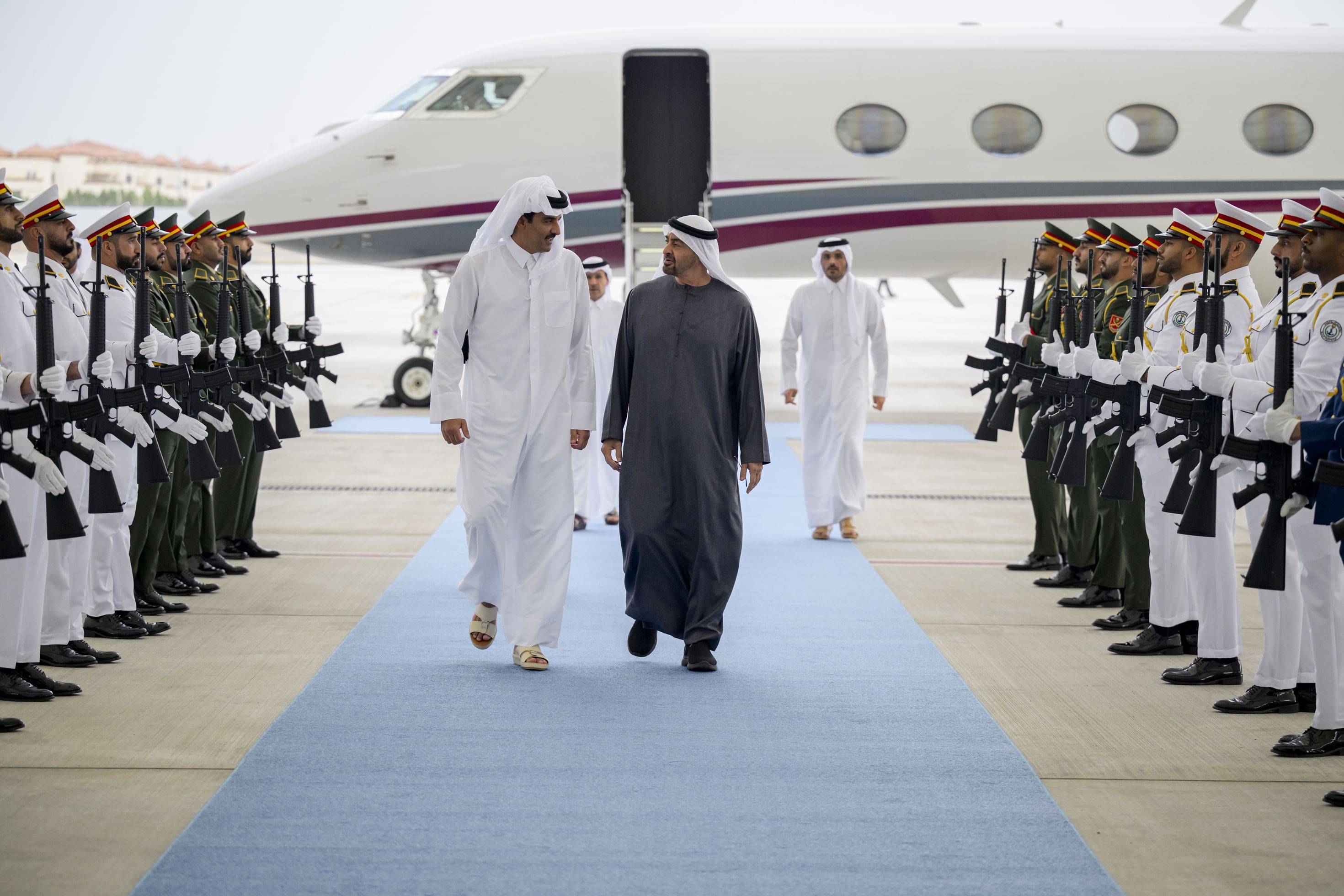
UAE President Sheikh Mohamed bin Zayed Al Nahyan and Emir of Qatar Sheikh Tamim bin Hamad Al Thani meet in Abu Dhabi. (WAM)
In Kuwait, a drone attack by Iran and its allies hit a fuel tank at Kuwait International Airport, sparking a fire, authorities said.
The state-run KUNA news agency said the attack early Wednesday sparked a "large fire" at the airport.
It said there were no immediate injuries from the attack and firefighters were working to control the blaze.
Kuwait International Airport has been attacked before by Iran during the war. The KUNA report suggested the attack may have been launched by Iranian-supported militias in Iraq with Tehran’s support.
The armed forces destroyed five hostile ballistic missiles and seven drones on Tuesday.
In another strike, Bahrain said early on Wednesday morning that it was working to extinguish a fire at a business facility that resulted from an Iranian attack.
A Bangladeshi national was killed by falling shrapnel after a drone interception in the United Arab Emirates, the official WAM news agency said on Wednesday.
"Shrapnel falling from the interception of a drone... resulted in the killing of a person of Bangladeshi nationality," WAM posted on X, adding that the incident happened in Fujairah.
On Tuesday, UAE President Sheikh Mohamed bin Zayed Al Nahyan and Emir of Qatar Sheikh Tamim bin Hamad Al Thani held talks on regional developments in Abu Dhabi.
They tackled the impact of the war on the region, world and the global economy.
They discussed the terrorist Iranian attacks against the Gulf and that are targeting civilians and civilian infrastructure.
لم تشترك بعد
انشئ حساباً خاصاً بك لتحصل على أخبار مخصصة لك ولتتمتع بخاصية حفظ المقالات وتتلقى نشراتنا البريدية المتنوعة