


Turkey’s Wildfires Hit Hopes for Tourism Rebound

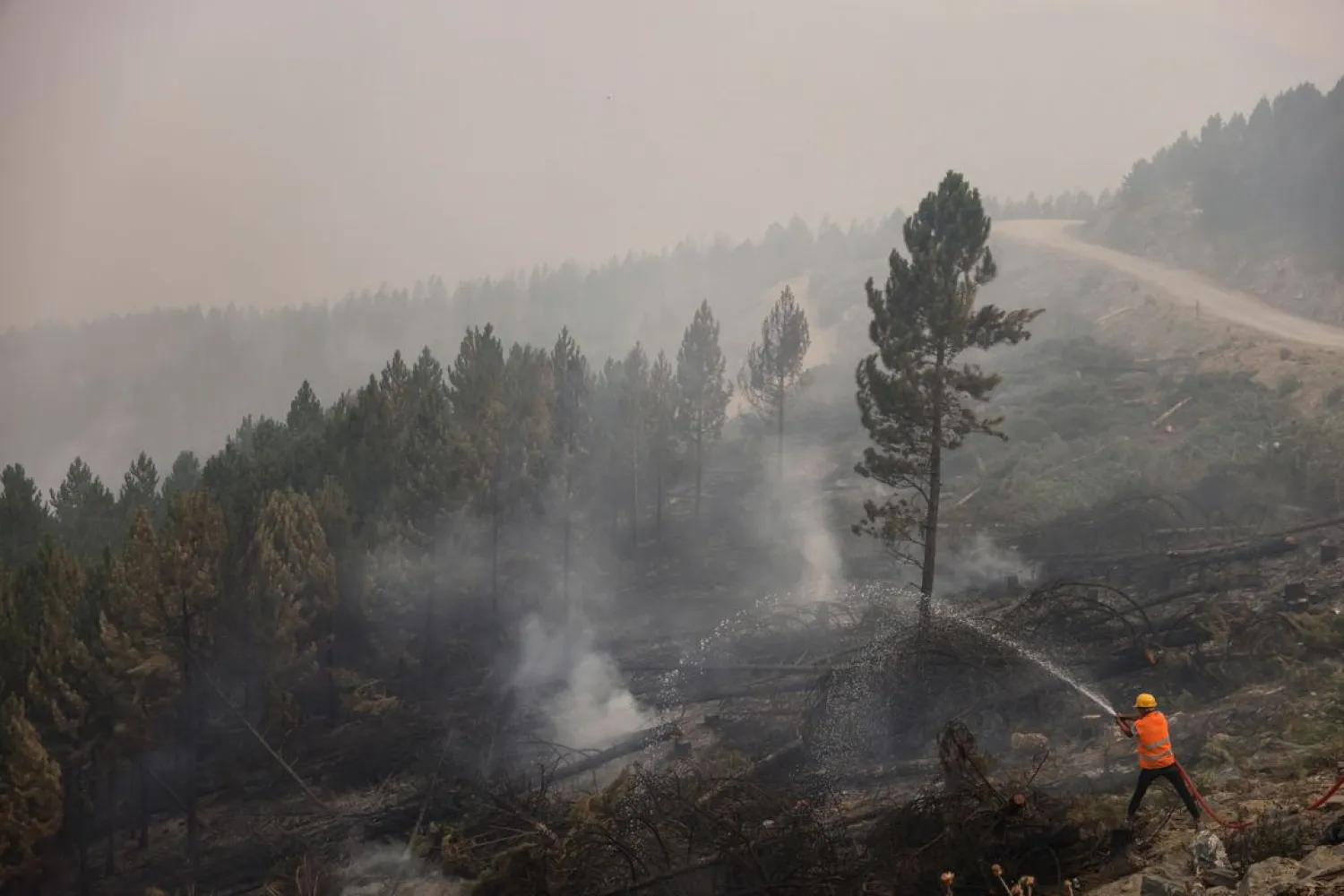
A volunteer from a nearby village sprays water to cool down a recently burnt part of a forest during a wildfire near Kavaklidere a town in Mugla province, Turkey, August 5, 2021. (Reuters)
TT

Turkey’s Wildfires Hit Hopes for Tourism Rebound

A volunteer from a nearby village sprays water to cool down a recently burnt part of a forest during a wildfire near Kavaklidere a town in Mugla province, Turkey, August 5, 2021. (Reuters)

The first cancellations from tourists booked onto one of Ozkan Selcuk’s cruises off Turkey’s southern coast came when the forests near where he takes visitors turtle-watching caught fire.

A year after the global COVID-19 pandemic devastated Turkey’s tourism industry, the worst wildfires in living memory along its southern coast have delivered a fresh blow to the sector which makes up some 5% of the Turkish economy.

In ten days, the fires have destroyed tens of thousands of hectares of forest in Mediterranean and Aegean provinces, eight people died and thousands of Turks and tourists have fled.

In the province of Mugla, where major tourist resorts Marmaris and Bodrum are located, at least 36,000 people have had to be evacuated, including from some coastal resort towns.

The relaxation of COVID-19 travel restrictions this summer had led to hope of a rebound in Turkey’s tourism industry, but for Selcuk and others in his region, the wildfires put paid to that.

“I have two more bookings for Saturday but I’m not getting any new bookings,” said Selcuk. “I am scared that the fire will continue. We wake up to ashes falling on our houses and on our boats.”

Firefighters have contained most of the around 200 wildfires that broke out in the last ten days, but on Friday there were still some 12 blazes burning on the Mediterranean and Aegean coasts, according to official data.

“There are no new bookings due to wildfires. Existing bookings are being cancelled. The hotels are also empty, with early check-outs,” Bulent Bulbuloglu, head of the Southern Aegean Hoteliers Union said.

Britain’s decision on Wednesday to keep Turkey on a COVID-19 “red list” for another three weeks is a further blow to the industry.

Tourism Minister Nuri Ersoy said on Friday Turkey was sticking to its targets of 25 million visitors this year and $20 billion tourism revenue - still far short of the $34.5 billion in pre-pandemic 2019.

“We had the expectation that the British visitors would come back, but that is not happening,” Bulbuloglu said.

Most tourists who visit Turkey are British, followed by Russians and Germans. In 2019 more than 2.5 million visitors came from Britain, according to official data.

In 2021, foreign arrivals were 5.7 million in the first half of the year while revenues stood at $5.5 billion, official data shows.

Former tourism minister Bahattin Yucel said the government forecasts were not realistic. “On top of the outbreak now there are wildfires...it will take a long time for the southern Aegean coast to recover,” he said.

Gonca Umul, whose family run a guesthouse in the coastal town of Oren, had hoped that a packed July would jumpstart a recovery from last year’s slump, but her small hotel is now empty after many residents were evacuated.

“We were fully booked for July and even turned down guests. Now people are only calling to cancel their bookings,” Umul said.



US Stocks Fall as Iran Angst Lifts Oil Prices

A screen displays a stock chart at a work station on the floor of the New York Stock Exchange (NYSE) in New York City, US, April 6, 2022. REUTERS/Brendan McDermid
TT

US Stocks Fall as Iran Angst Lifts Oil Prices

A screen displays a stock chart at a work station on the floor of the New York Stock Exchange (NYSE) in New York City, US, April 6, 2022. REUTERS/Brendan McDermid

Wall Street stocks retreated early Thursday as worries over US-Iran tensions lifted oil prices while markets digested mixed results from Walmart.

US oil futures rose to a six-month high as Iran's atomic energy chief Mohammad Eslami said no country can deprive the Islamic republic of its right to nuclear enrichment, after US President Donald Trump again hinted at military action following talks in Geneva.

"We'd call this an undercurrent of concern that is bubbling up in oil prices," Briefing.com analyst Patrick O'Hare said of the "geopolitical angst."

About 10 minutes into trading, the Dow Jones Industrial Average was down 0.6 percent at 49,379.46, AFP reported.

The broad-based S&P 500 fell 0.5 percent to 6,849.35, while the tech-rich Nasdaq Composite Index declined 0.6 percent to 22,621.38.

Among individual companies, Walmart rose 1.7 percent after reporting solid results but offering forecasts that missed analyst expectations.

Shares of the retail giant initially fell, but pushed higher after Walmart executives talked up artificial intelligence investments on a conference call with analysts.

The US trade deficit in goods expanded to a new record in 2025, government data showed, despite sweeping tariffs that Trump imposed during his first year back in the White House.


Gold Advances on US–Iran Tensions as Markets Weigh Fed Policy Path

UK gold bars and gold Sovereign coins are displayed at Baird & Co in Hatton Garden in London, Britain, October 8, 2025. REUTERS/Hiba Kola/File Photo
TT

Gold Advances on US–Iran Tensions as Markets Weigh Fed Policy Path

UK gold bars and gold Sovereign coins are displayed at Baird & Co in Hatton Garden in London, Britain, October 8, 2025. REUTERS/Hiba Kola/File Photo

Gold prices extended gains on Thursday after rising more than 2% in the previous session, as lingering tensions between the United States and Iran prompted a flight to safety, while investors evaluated the Federal Reserve's monetary policy path.

Spot gold rose 0.2% to $4,989.09 per ounce by 1227 GMT. US gold futures for April delivery held steady at $5,008.60.

"Geopolitical concerns are front and centre with reports that, if the US were to take military action against Iran, it could go on for several weeks," said Jamie Dutta, market analyst at Nemo.money, Reuters reported.

Some progress was made during Iran talks this week in Geneva but distance remained on some issues, the White House said on Wednesday.

FED LARGELY UNITED

Top US national security advisers met in the White House Situation Room on Wednesday to discuss Iran and were told all US military forces deployed to the region should be in place by mid-March.

Meanwhile, the Fed's January minutes showed it largely united on holding interest rates steady, but divided over what comes next, with "several" open to rate hikes if inflation remains elevated, while others were inclined to support further cuts if inflation recedes.

The weekly jobless claims data, due later in the day, and Friday's Personal Consumption Expenditures report, the Fed’s preferred inflation gauge, will provide further clues on the central bank's policy trajectory.

Markets currently expect this year's first interest rate cut to be in June, according to CME's FedWatch Tool.

Non-yielding bullion tends to do well in low-interest-rate environments.

Spot silver rose 0.9% to $77.87 per ounce after climbing more than 5% on Wednesday.

Silver is "supported by tight supply and low COMEX stock levels ahead of the delivery period of the March contract. However, given the extent of the historic correction earlier this month, silver is not back on safer ground until it trades back above $86," said Ole Hansen, head of commodity strategy at Saxo Bank.

Spot platinum fell 0.6% to $2,059.55 per ounce, while palladium lost 1.7% to $1,686.47.


Oil Prices Extend Gains on Concerns of Potential US-Iran Conflict

FILE PHOTO: The Phillips 66 Lake Charles Refinery is pictured in West Lake, Louisiana, US, June 12, 2018. REUTERS/Jonathan Bachman/File Photo
TT

Oil Prices Extend Gains on Concerns of Potential US-Iran Conflict

FILE PHOTO: The Phillips 66 Lake Charles Refinery is pictured in West Lake, Louisiana, US, June 12, 2018. REUTERS/Jonathan Bachman/File Photo

Oil prices rose on Thursday as the US and Iran attempted to ease a standoff in talks over Tehran's nuclear program while both sides heightened military activity in the key oil-producing region.

Brent futures climbed 23 cents, or 0.3% to $70.58 a barrel by 0735 GMT, while US West Texas Intermediate (WTI) crude gained 25 cents, or 0.4%, to trade at $65.44 a barrel.

Both benchmarks settled more than 4% higher on Wednesday, posting their highest settlements since January 30, as traders priced in the risk of supply disruptions in the event of ‌a conflict.

"Oil prices are ‌rallying as the market becomes increasingly concerned over the potential ‌for ⁠imminent US action ⁠against Iran," said ING analysts in a Thursday note.

Iranian state media reported the country had shut down the Strait of Hormuz for a few hours on Tuesday, without making clear whether the waterway had fully reopened. About 20% ⁠of the world's oil supply passes through the waterway.

"Tensions between Washington ‌and Tehran remain high, but the prevailing view ‌is that full-scale armed conflict is unlikely, prompting a wait-and-see approach," said Hiroyuki Kikukawa, chief strategist of ‌Nissan Securities Investment, a unit of Nissan Securities.

"US President Donald Trump does not ‌want a sharp rise in crude prices, and even if military action occurs, it would likely be limited to short-term air strikes," Kikukawa added.

A degree of progress was made during Iran talks in Geneva this week but distance remained on some issues, the White House said on Wednesday, ‌adding that it expected Tehran to come back with more details in a couple of weeks.

Iran issued a notice to ⁠airmen (NOTAM) that ⁠it plans rocket launches in areas across its south on Thursday from 0330 GMT to 1330 GMT, according to the US Federal Aviation Administration website.

At the same time, the US has deployed warships near Iran, with US Vice President JD Vance saying Washington was weighing whether to continue diplomatic engagement with Tehran or pursue "another option".

Meanwhile, two days of peace talks in Geneva between Ukraine and Russia ended on Wednesday without a breakthrough, with Ukrainian President Volodymyr Zelenskiy accusing Moscow of stalling US-mediated efforts to end the four-year-old war.

US crude and gasoline and distillate inventories fell last week, market sources said, citing American Petroleum Institute figures on Wednesday, contrary to expectations in a Reuters poll that crude stocks would rise by 2.1 million barrels in the week to February 13.

Official US oil inventory reports from the Energy Information Administration are due on Thursday.