


Athens' Acropolis Witnesses ‘Majestic Moment’ Under Moonlight

People observe a rising full snow moon rises as they visit the Areios Pagos hill at the archaeological site of the Acropolis in Athens, Greece, February 9, 2020. REUTERS/Alkis Konstantinidis
TT

Athens' Acropolis Witnesses ‘Majestic Moment’ Under Moonlight

People observe a rising full snow moon rises as they visit the Areios Pagos hill at the archaeological site of the Acropolis in Athens, Greece, February 9, 2020. REUTERS/Alkis Konstantinidis

Under the light of the full moon, Athens' Acropolis looked ethereal as people crowded on Sunday to enjoy this "majestic moment." The Acropolis was among 120 other landmarks and museums in Greece that opened their doors for visitors to watch the last full moon event for this summer.

From the museum's balcony that was exceptionally opened for free until midnight, the Parthenon looked fabulous standing on a hill overlooking the capital. Near 9:00 pm (local time), the massive yellow circle rose from between the hills surrounding Athens, and the full moon scene started. "It's a majestic moment," Yonissis, a Greek who lives in Switzerland told AFP.

While Spiros, 22, was gazing at the illuminated Parthenon, he regretted "the huge crowd," but also said that "all those people who came to explore the ancient history of Greece made him feel proud."

Time passed nine, and the queue of people waiting to enter the museum in the front yard was still long, extending to the pedestrian lane that surrounds the Acropolis.

Visitors were eager to benefit from the free entrance and the extension of work hours. Sophie, a French tourist, noticed that "all Athens was here like if it was a fashion week event," noting that "the night ambiance in museums is always special."

The activities and events celebrating the last full moon for this season were held across the country. Islands in the Cyclades Archipelago, Ionian Sea, and Aegean Sea like Crete saw concerts, plays, dancing performances, poetry readings and star gazing circles.

Greeks and tourists alike, anywhere in the country, had the chance to explore all the historic and cultural landmarks under moonlight. Among these sites are Kassope in Epirus (northwest Greece), Palace of the Grand Master of the Knights of Rhodes (southeast), in addition to the archeological sites in the Olympia, Mistras, Corinth, and Nemea in the Peloponnese peninsula (southwest), Thebes (center), and Corfu (west).
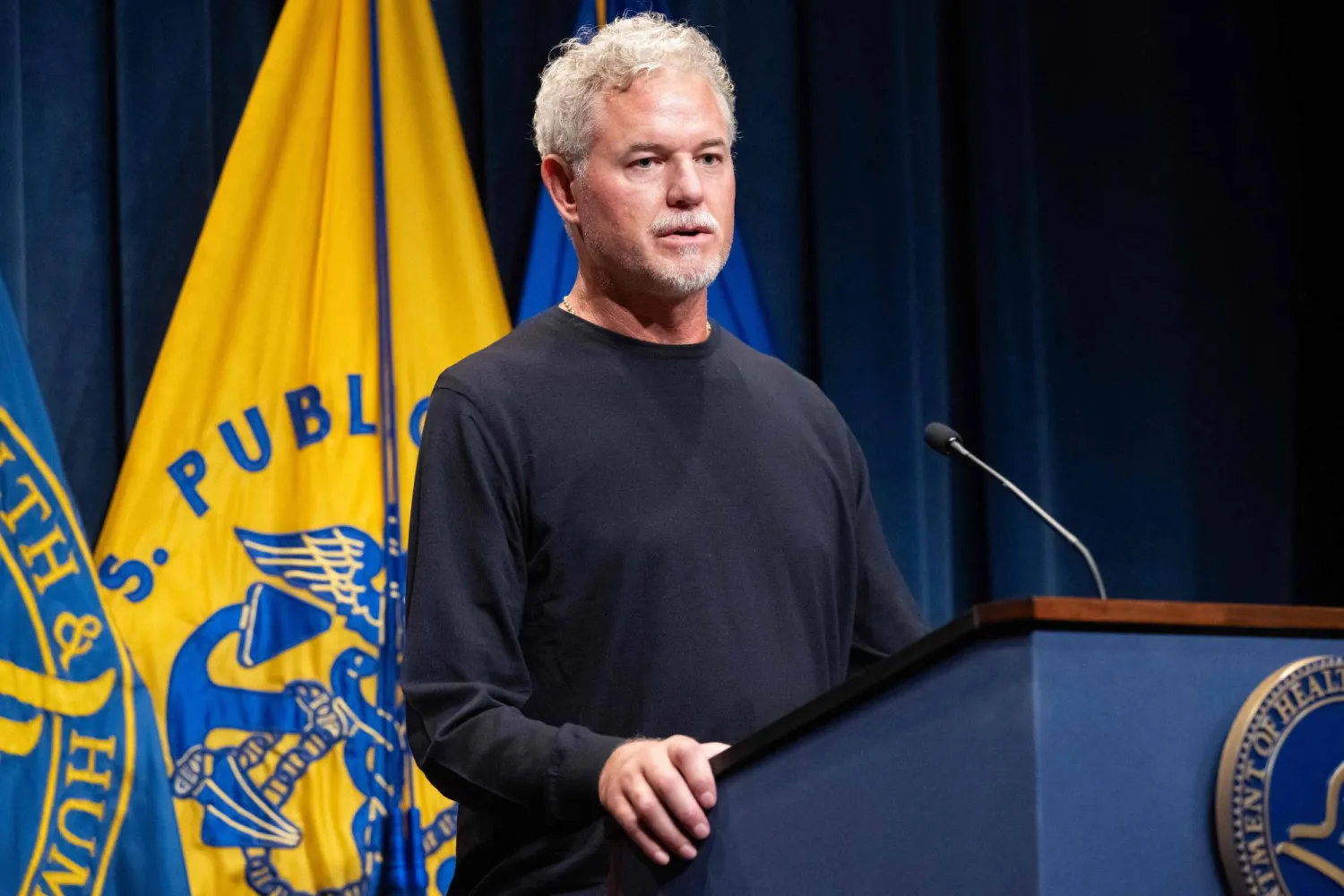



What Is ALS, the Disease That Killed Actor Eric Dane?

US actor Eric Dane speaks about his ALS diagnosis during a news conference to discuss health insurance at the Department of Health and Human Services Headquarters in Washington, DC, on June 23, 2025. (AFP)
TT

What Is ALS, the Disease That Killed Actor Eric Dane?

US actor Eric Dane speaks about his ALS diagnosis during a news conference to discuss health insurance at the Department of Health and Human Services Headquarters in Washington, DC, on June 23, 2025. (AFP)

Eric Dane, known for his roles on "Grey’s Anatomy" and "Euphoria," died this week from amyotrophic lateral sclerosis at age 53.

The fatal nervous system disease, also known as Lou Gehrig’s disease, killed Dane less than a year after he announced his diagnosis.

According to the Centers for Disease Control and Prevention, ALS is rare. In 2022, there were nearly 33,000 estimated cases, say researchers, who project that cases will rise to more than 36,000 by 2030.

The disease is slightly more common in men than in women and tends to strike in midlife, between the ages of 40 and 60.

Here’s what to know.

What is ALS? It affects nerve cells in the brain and spinal cord, causing loss of muscle control and getting worse over time.

ALS causes nerve cells in the upper and lower parts of the body to stop working and die. Nerves no longer trigger specific muscles, eventually leading to paralysis. People with ALS may develop problems with mobility, speaking, swallowing and breathing.

The exact cause of the disease is unknown, and Mayo Clinic experts said a small number of cases are inherited.

It’s called Lou Gehrig’s disease after the Hall of Fame New York Yankees player. Gehrig was diagnosed with ALS in 1939 on his 36th birthday, died in 1941 and was the face of ALS for decades.

What are some signs of ALS? Experts say the first symptoms are often subtle. The disease may begin with muscle twitching and weakness in an arm or leg.

Over time, muscles stop acting and reacting correctly, said experts at University of California San Francisco Health. People may lose strength and coordination in their arms and legs; feet and ankles may become weak; and muscles in the arms, shoulders and tongue may cramp or twitch. Swallowing and speaking may become difficult and fatigue may set in.

The ability to think, see, hear, smell, taste and touch are usually not affected, UCSF experts said.

Eventually, muscles used for breathing may become paralyzed. Patients may be unable to swallow and inhale food or saliva. Most people with ALS die of respiratory failure.

How is ALS diagnosed and treated? The disease is difficult to diagnose because there’s no test or procedure to confirm it. Generally, doctors will perform a physical exam, lab tests and imaging of the brain and spinal cord.

A doctor may interpret certain things as signs of ALS, including an unusual flexing of the toes, diminished fine motor coordination, painful muscle cramps, twitching and spasticity, a type of stiffness causing jerky movements.

There’s no known cure for ALS, but the drug riluzole has been approved for treatment. According to the Mayo Clinic, it may extend survival in the early stages of the disease or extend the time until a breathing tube is needed.

Another much-debated drug, Relyvrio, was pulled from the US market by Amylyx Pharmaceuticals in 2024. Its development had been financed, in part, by the ALS Association, the major beneficiary of the 2014 " ice bucket challenge " viral phenomenon.

Other medications are sometimes prescribed to help control symptoms.

Choking is common as ALS progresses, so patients may need feeding tubes. People may also use braces, wheelchairs, speech synthesizers or computer-based communication systems.

After the onset of the disease, experts say patients may survive from two years to a decade. Most people live from two to five years after symptoms develop, and about a fifth live more than five years after they are diagnosed.


Snowstorm Paralyzes Vienna Airport

People wait at a tram stop after heavy snowfalls in Vienna, Austria, February 20, 2026. REUTERS/Elisabeth Mandl
TT

Snowstorm Paralyzes Vienna Airport

People wait at a tram stop after heavy snowfalls in Vienna, Austria, February 20, 2026. REUTERS/Elisabeth Mandl

Massive snowstorms caused power outages and transport chaos in Austria on Friday, forcing the Vienna airport to temporarily halt all flights.

Flights departing from the capital, a major European hub, were cancelled or delayed, and more than 230 arrivals were similarly disrupted or rerouted.

"Passengers whose flights have been delayed are asked not to come to the airport," the facility said in a statement.

The area received 20 centimeters (nearly eight inches) of snow, national news agency APA reported.

The main highway south of Vienna was closed for several hours, and other sections of highway were temporarily inaccessible because of snowdrift, stranded lorries or poor visibility, said the national automobile association, OAMTC.

According to AFP, electric companies reported power outages in several regions in the south and east, including Styria, where 30,000 homes lost electricity.

The weather was forecast to improve from around midday, but the risk of avalanches remained high.


NASA Delivers Harsh Assessment of Botched Boeing Starliner Test Flight

NASA duo Butch Wilmore and Suni Williams were stuck on the ISS for nine months. Handout / NASA TV/AFP/File
TT

NASA Delivers Harsh Assessment of Botched Boeing Starliner Test Flight

NASA duo Butch Wilmore and Suni Williams were stuck on the ISS for nine months. Handout / NASA TV/AFP/File

NASA on Thursday blamed what it called engineering vulnerabilities in Boeing's Starliner spacecraft along with internal agency mistakes in a sharply critical report assessing a botched mission that left two astronauts stranded in space.

The US space agency labeled the 2024 test flight of the Starliner capsule a "Type A" mishap -- the same classification as the deadly Challenger and Columbia shuttle disasters -- a category that reflects the "potential for a significant mishap," it said.

The failures left a pair of NASA astronauts stranded aboard the International Space Station for nine months in a mission that captured global attention and became a political flashpoint.

"Starliner has design and engineering deficiencies that must be corrected, but the most troubling failure revealed by this investigation is not hardware. It's decision-making and leadership," said NASA administrator Jared Isaacman in a briefing.

"If left unchecked," he said, this mismanagement "could create a culture incompatible with human spaceflight."

The top space official said the investigation found that a concern for the reputation of Boeing's Starliner clouded an earlier internal probe into the incident.

"Programmatic advocacy exceeded reasonable bounds and place the mission, the crew and America's space program at risk in ways that were not fully understood at the time," Isaacman said.

He said Starliner currently "is less reliable for crew survival than other crewed vehicles" and that "NASA will not fly another crew on Starliner until technical causes are understood and corrected" and a problematic propulsion system is fixed.

But the administrator insisted that "NASA will continue to work with Boeing, as we do all of our partners that are undertaking test flights."

In a statement, Boeing said it has "made substantial progress on corrective actions for technical challenges we encountered and driven significant cultural changes across the team that directly align with the findings in the report."

- 'We failed them' -

Isaacman also had harsh words for internal conduct at NASA.

"We managed the contract. We accepted the vehicle, we launched the crew to space. We made decisions from docking through post-mission actions," he told journalists.

"A considerable portion of the responsibility and accountability rests here."

In June 2024 Butch Wilmore and Suni Williams embarked on what was meant to be an eight-to-14-day mission. But this turned into nine months after propulsion problems emerged in orbit and the Starliner spacecraft was deemed unfit to fly them back.

The ex-Navy pilots were reassigned to the NASA-SpaceX Crew-9 mission. A Dragon spacecraft flew to the ISS that September with a team of two, rather than the usual four, to make room for the stranded pair.

The duo, both now retired, were finally able to arrive home safely in March 2025.

"They have so much grace, and they're so competent, the two of them, and we failed them," NASA associate administrator Amit Kshatriya told Thursday's briefing.

"The agency failed them."

Kshatriya said the details of the report were "hard to hear" but that "transparency" was the only path forward.

"This is not about pointing fingers," he said. "It's about making sure that we are holding each other accountable."

Both Boeing and SpaceX were commissioned to handle missions to the ISS more than a decade ago.