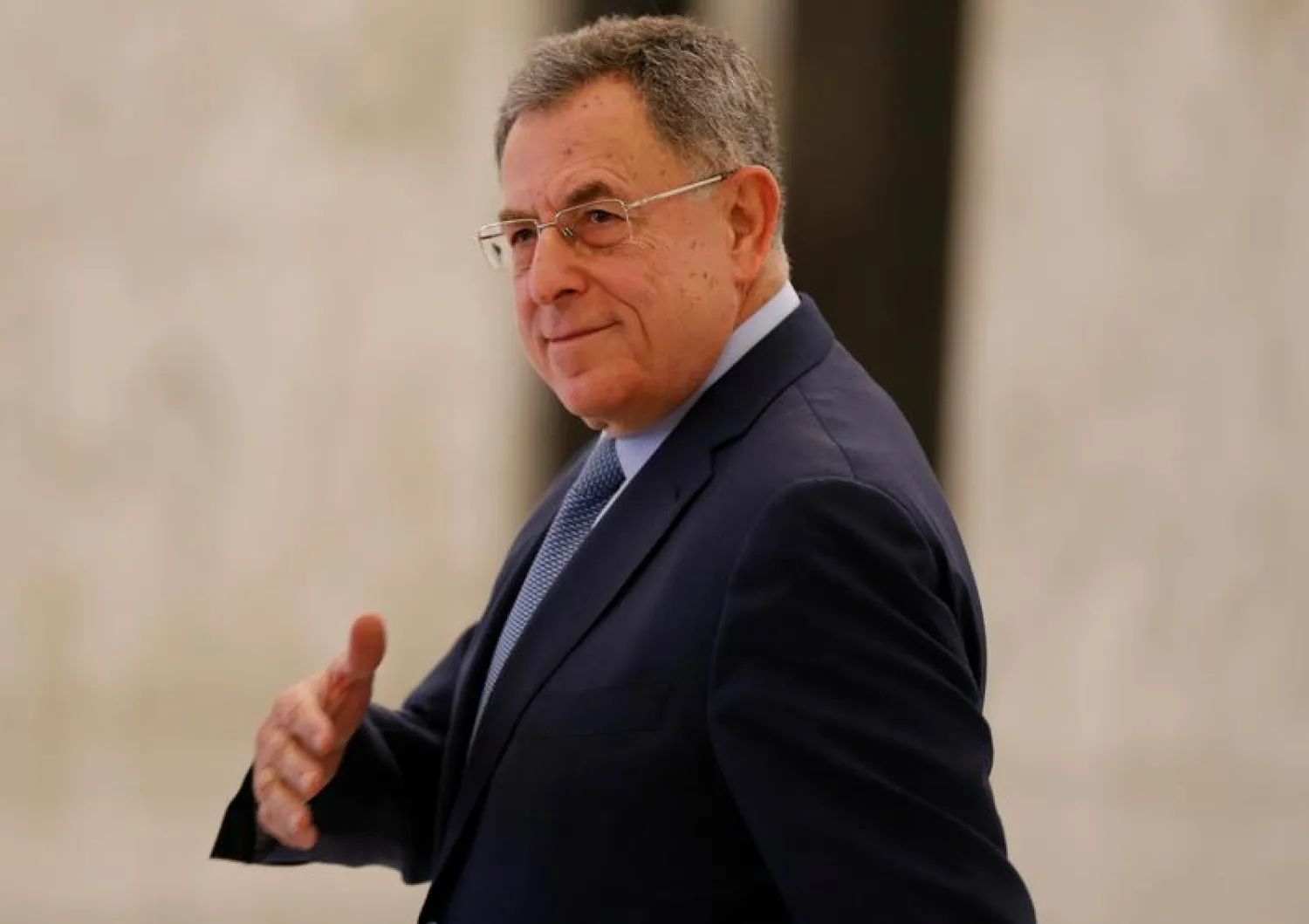
Former Lebanese Prime Minister Fouad Siniora gestures at the presidential palace in Baabda, Lebanon, November 7, 2017. REUTERS/Mohamed Azakir
Former Prime Minister Fouad Siniora reiterated that Lebanon was hijacked by Hezbollah, stressing that the country could not be restored without the return of the rule of state.
In an interview with a number of media outlets, including Asharq Al-Awsat, Siniora said any solution to the crisis with Saudi Arabia and the Gulf countries should begin with the resignation of Information Minister George Kordahi.
“The problem is Hezbollah; it is no longer permissible to ignore the perpetrator,” he said, asserting that the state “no longer enjoys the free decision.”
The danger of what is happening lies in “messing with the democratic system,” the former premier warned, noting that the national unity governments that were formed following the Doha agreement and the events of May 7, 2008 (Hezbollah’s invasion of Beirut and some areas) were an “unnatural context for the course” of the democratic political life.
He stressed that a natural democratic rule requires “a majority that controls, and an opposing minority,” adding that the Council of Ministers should be the basis for decision-making.
Siniora considered that the election of President Michel Aoun to power “messed up the role of the Presidency of the Republic,” pointing out that the president should be the symbol of the unity of the Lebanese in line with the Constitution.
“When he became a party to the internal crisis, he lost his ability to unite the Lebanese people,” the former premier stated.
Lebanese Divisions over Approach to US Pressure for Aoun–Netanyahu Meetinghttps://english.aawsat.com/arab-world/5268857-lebanese-divisions-over-approach-us-pressure-aoun%E2%80%93netanyahu-meeting
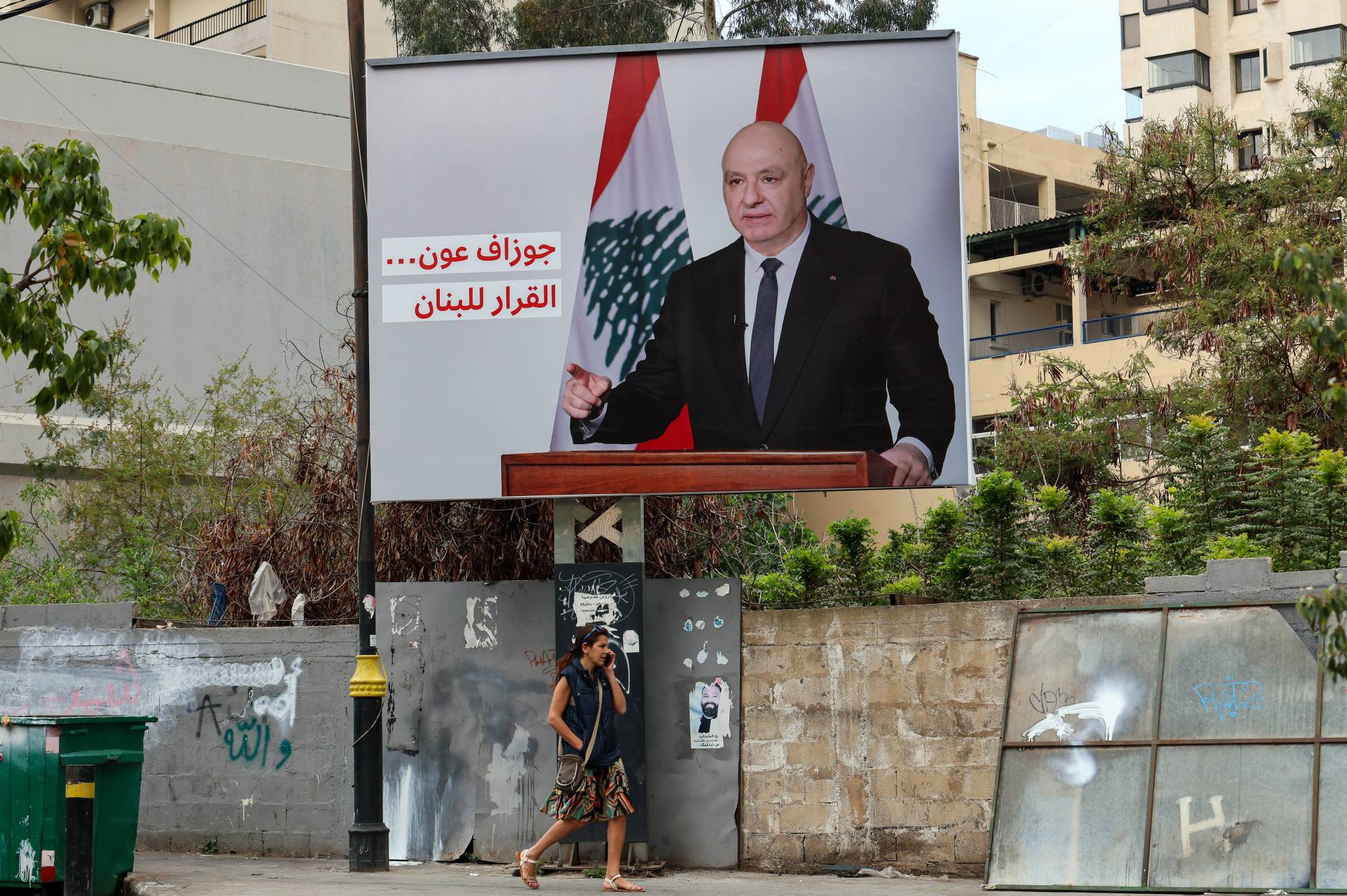
A poster depicting the portrait of Lebanon's President Joseph Aoun that reads "The decision-maker, the protector of Lebanon, Lebanon first...The State always. We are with you" hangs at the entrance of a tunnel on a street in Beirut (Photo by Joseph EID / AFP)
Lebanese Divisions over Approach to US Pressure for Aoun–Netanyahu Meeting
A poster depicting the portrait of Lebanon's President Joseph Aoun that reads "The decision-maker, the protector of Lebanon, Lebanon first...The State always. We are with you" hangs at the entrance of a tunnel on a street in Beirut (Photo by Joseph EID / AFP)
Lebanese political forces are split between those supporting direct negotiations with Israel to end the ongoing war in the south and those opposing them, placing the Lebanese president in a difficult position amid internal divisions that could affect the course of the state. There are warnings that pursuing any option without consensus could have repercussions for unity and internal stability.
In a statement notable for both its timing and content, the US Embassy in Beirut on Thursday called for direct engagement between Lebanon and Israel, saying a direct meeting between Aoun and Netanyahu, mediated by the US president, could give Lebanon an opportunity to obtain tangible guarantees regarding full sovereignty, territorial integrity, secure borders, humanitarian support and reconstruction, and the full restoration of the Lebanese state’s authority over every inch of its territory, guaranteed by the United States.
Hezbollah–Amal alliance
It was not surprising that the “Shiite duo” (Hezbollah and the Amal Movement) fully opposes such a meeting, viewing it as contrary to the path of direct negotiations underway between Lebanon and Israel.
Sources close to the two parties told Asharq Al-Awsat: “There is absolutely no support for this meeting, and a scene like this cannot be accepted. It is true that US pressure is very clear, but there is also Lebanon’s interest and the position of Arab states, which advised the president not to move toward such a meeting and instead to seek, through negotiations, a security arrangement similar to the 1949 armistice agreement, even if with some amendments.”
The sources added that “President Aoun is caught between US pressure on one hand and Arab pressure on the other, and must decide where Lebanon’s interest lies and define its position, role, and future in the region.”
A woman walks past a billboard supporting Lebanese President Joseph Aoun - EPA/WAEL HAMZEH
Progressive Socialist Party
The position of the Progressive Socialist Party, expressed by MP Dr. Bilal Abdallah, is not far from that of the “duo.” Abdallah considers that “the meeting is premature, and there are many stages that must be completed before it can take place, most notably consolidating the ceasefire, halting attacks, Israeli withdrawal, and reaching a security agreement based on international agreements (a revised armistice agreement), after which each step can be addressed in due course.”
He stressed the need to respect “the Arab and international ceiling and avoid preempting developments or skipping stages, as the repercussions would be negative for national interest and internal unity.”
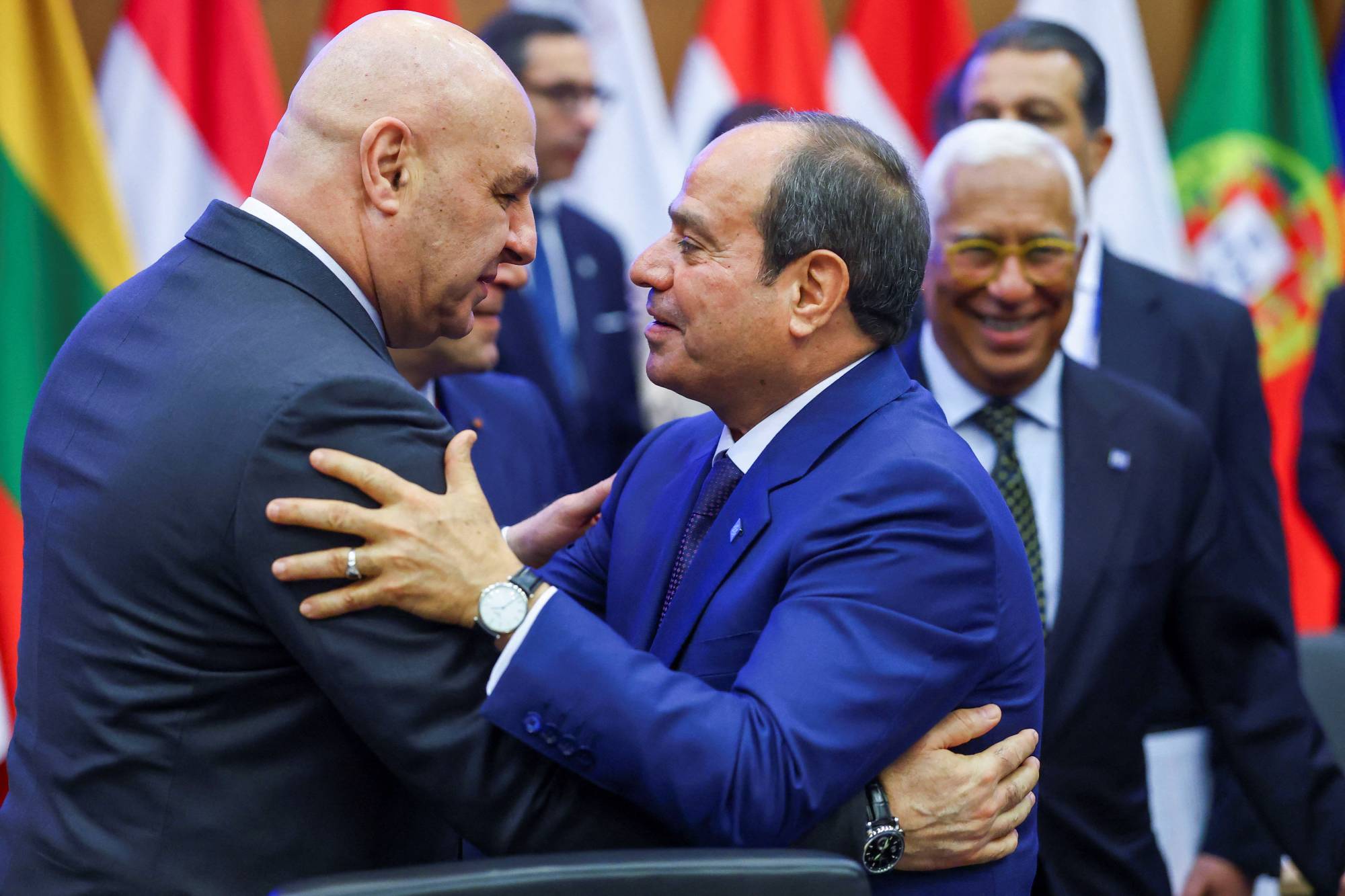
Lebanese President Joseph Aoun speaks with Egypt's President Abdel Fattah el-Sisi on the day of a summit of the European Union and regional partners' leaders in Nicosia (Lefkosia), Cyprus, April 24, 2026. REUTERS/Yves Herman
Lebanese Forces and Kataeb position
By contrast, the Lebanese Forces and Kataeb parties take a different approach. MP Ghada Ayoub of the “Strong Republic” bloc (Lebanese Forces) said her party supports “the negotiating initiative undertaken by Aoun, which falls within the core powers of the president,” leaving it to him to assess its course, including the timing of any meeting or even a potential handshake with Benjamin Netanyahu, whether it should take place now or come as the culmination of negotiations.
She told Asharq Al-Awsat: “We support the president in what he sees as appropriate to save Lebanon and extricate it from this predicament, which has imposed a heavy cost as a result of Hezbollah’s decision to draw Israel into Lebanon. Today it realizes it is unable to remove it, and that the only party capable of doing so is the United States. We saw how President Donald Trump was able to impose a ceasefire on Benjamin Netanyahu despite his team’s insistence on continuing the war.”
Ayoub stressed that “any negotiating track will be tied to clear conditions where the US position intersects with that of the Lebanese government, foremost among them disarmament, preventing Lebanese territory from being used as a launchpad for military operations against Israel, and banning the party’s security and military activities.”
Sources in the Kataeb Party, while confirming significant US pressure to arrange an Aoun–Netanyahu meeting, said such a step requires “historic courage,” adding that “what matters in the end is the outcome, which should be a roadmap for peace.”
Asharq Al-Awsat Reveals Contents of Hamas and Factions’ Response to Mediators’ Amendments and Mladenovhttps://english.aawsat.com/arab-world/5268852-asharq-al-awsat-reveals-contents-hamas-and-factions%E2%80%99-response-mediators%E2%80%99
Palestinians take part in a protest against the limited access to medical spare parts and batteries for deaf and hearing-impaired individuals in the Gaza Strip, as they gather in Gaza City, Saturday, May 2, 2026. (AP Photo/Abdel Kareem Hana)
Asharq Al-Awsat Reveals Contents of Hamas and Factions’ Response to Mediators’ Amendments and Mladenov
Palestinians take part in a protest against the limited access to medical spare parts and batteries for deaf and hearing-impaired individuals in the Gaza Strip, as they gather in Gaza City, Saturday, May 2, 2026. (AP Photo/Abdel Kareem Hana)
Hamas and Palestinian factions submitted their response at dawn on Saturday to the mediators and the High Representative for Gaza at the Peace Council, Nickolay Mladenov, regarding the amendments paper presented to the factions, which had previously submitted their initial response to the “roadmap” presented on April 19.
The response by Hamas and the Palestinian factions included amendments to some of the points contained in Mladenov’s paper, which Asharq Al-Awsat had disclosed on Friday. These included acceptance by Hamas and the factions of a text acceptable to all parties within the framework of US President Donald Trump’s plan, commitment to what was agreed in Sharm el-Sheikh in full, and acceptance of the recently presented roadmap as a basis for entering negotiations to reach an agreement quickly.
It also stipulated that the issue of weapons be addressed in accordance with Trump’s plan and UN Security Council Resolution 2803, and that both continue to be implemented in a way that ensures Palestinians obtain self-determination and establish a sovereign state.
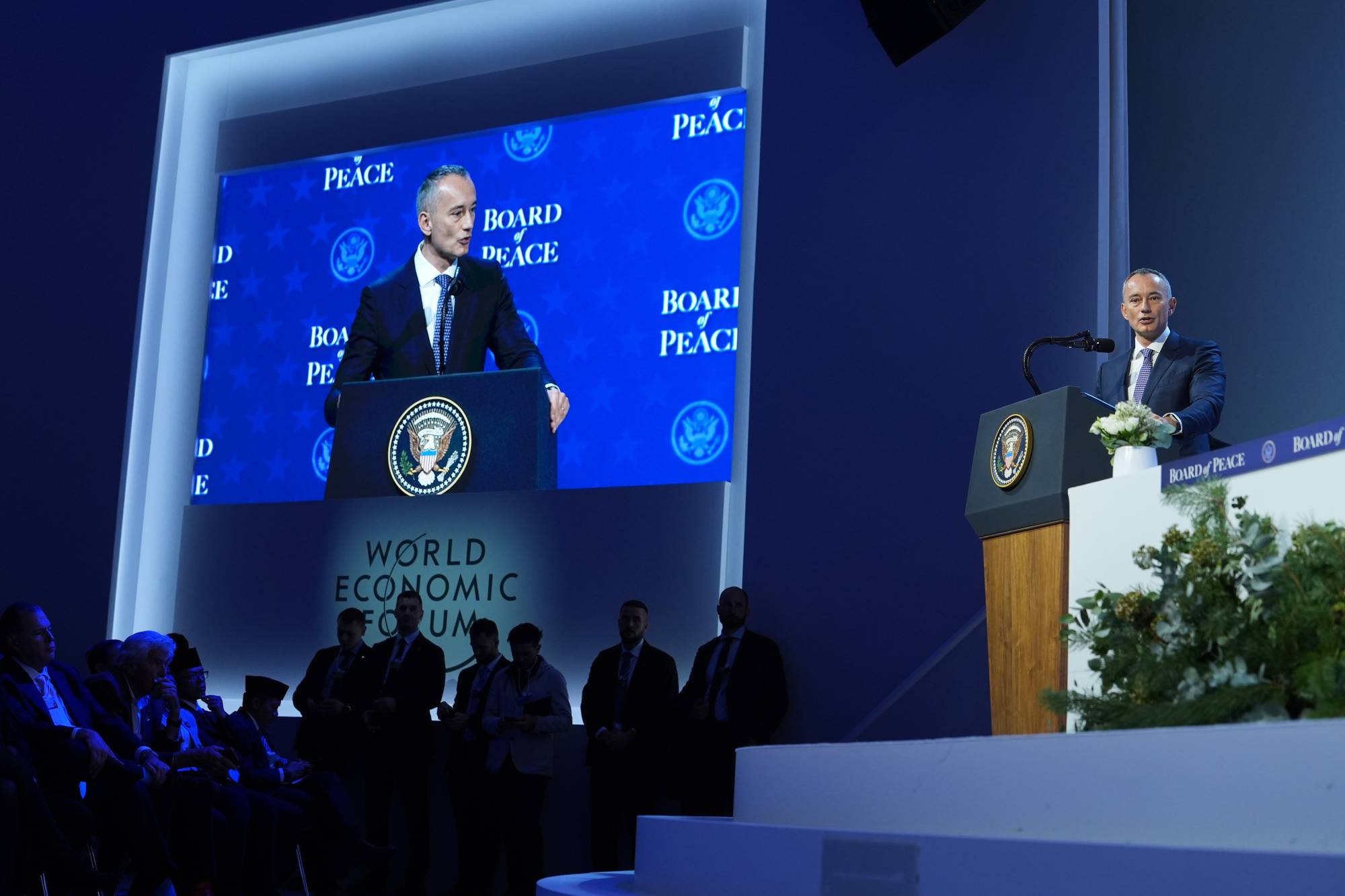
FILE - Board member Nickolay Mladenov speaks after the signing of a Board of Peace charter during the Annual Meeting of the World Economic Forum in Davos, Switzerland, Thursday, Jan. 22, 2026. (AP Photo/Evan Vucci, file)
The response by Hamas and the factions, as revealed by Asharq Al-Awsat, to Mladenov’s amendments expressed appreciation for the mediators’ efforts to reach a text acceptable to all parties within the framework of Trump’s plan, and called for Israel’s full and immediate commitment to the obligations of this text as stipulated in the Sharm el-Sheikh agreement, according to an agreed timetable.
It also included approval of the recently submitted roadmap as a basis for entering serious negotiations on its contents, and its implementation after reaching an acceptable agreement as soon as possible, in a way that ensures a ceasefire between the two sides, an end to the humanitarian crisis in the Gaza Strip, full withdrawal from the Strip, reconstruction, the entry of international forces, addressing the issue of weapons, and transferring governance of the Strip to the national committee with full powers.
It further stressed that the issue of weapons would be handled in connection with the political rights of the Palestinian people, within a national framework, and in the context of establishing the necessary security arrangements as a basis for guaranteeing security for both sides. It added that mediators and all parties should work to achieve the objective stated in Trump’s plan of establishing a sovereign Palestinian state and securing the Palestinian people’s right to self-determination.
A senior Hamas source told Asharq Al-Awsat that the movement submitted this response on behalf of the Palestinian factions after taking into account observations presented by some factions, noting that there are substantive remarks on Mladenov’s amended paper.
The source indicated that Hamas leadership senses a degree of discomfort among the mediators regarding the submitted response after changes were made to it. This was confirmed by another source from a Palestinian faction whose representatives met Egyptian mediators, who expressed surprise at the manner of the response. Two sources from Palestinian factions represented by delegations in Cairo said that Hamas’s response showed divergence from what some factions had proposed.
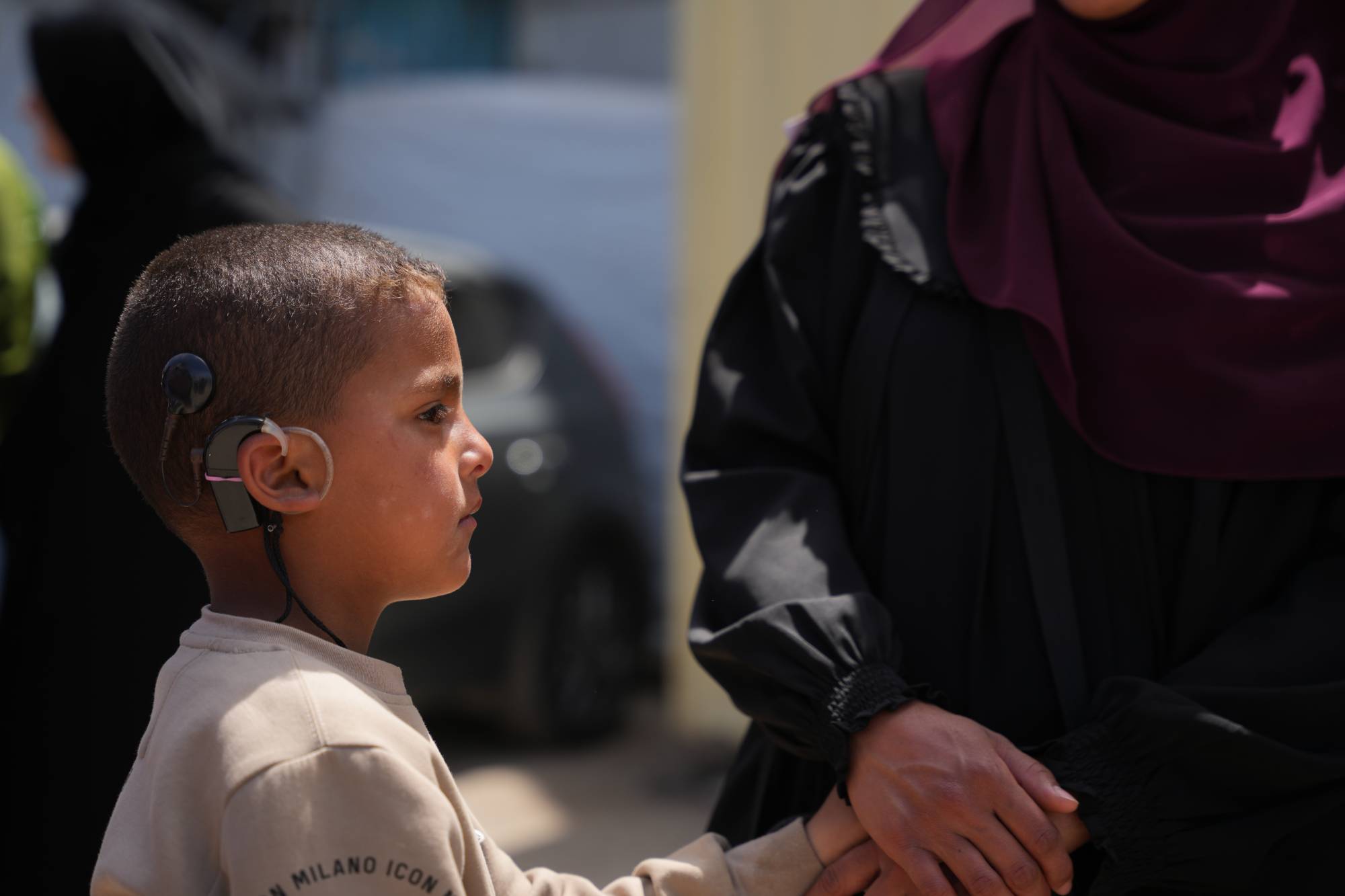
A Palestinian child participates in a protest against the shortage of medical equipment and hearing aid batteries for deaf and hearing-impaired individuals in Gaza City on Saturday (AP)
According to the sources, some points of contention relate to the factions’ recommendation for immediate and full implementation of the first phase, as set out in the roadmap, paving the way for the administrative committee to assume its role, and establishing a clear timetable to follow up and monitor implementation of the phase’s provisions in a simultaneous and balanced manner between the parties. This was not addressed by Hamas, particularly regarding simultaneity and balance.
The factions’ remarks stressed that the issue of weapons should be addressed within a political horizon for the Palestinian people in the context of ensuring the success of Trump’s plan and the objectives of the roadmap, and that factions should work to complete this track in a way that enables Palestinians to achieve self-determination and establish their independent state in accordance with international legitimacy resolutions.
Asharq Al-Awsat learned that after receiving the Hamas and factions’ response, Mladenov left the Egyptian capital, Cairo. The Hamas delegation may also leave Cairo to participate in completing the election of the head of its political bureau, while contacts and meetings are expected to continue in the coming days.
Conflicting Reports on Two Iraqi Factions Giving Up Their Weaponshttps://english.aawsat.com/arab-world/5268844-conflicting-reports-two-iraqi-factions-giving-their-weapons
Mourners attend the funeral of members of the Iraqi armed group Kataib Hezbollah who were killed in an airstrike that targeted a PMF headquarters on the Syrian border, amid the US-Israel conflict with Iran, in Baghdad, Iraq, March 2, 2026. REUTERS/Thaier Al-Suda
Conflicting Reports on Two Iraqi Factions Giving Up Their Weapons
Mourners attend the funeral of members of the Iraqi armed group Kataib Hezbollah who were killed in an airstrike that targeted a PMF headquarters on the Syrian border, amid the US-Israel conflict with Iran, in Baghdad, Iraq, March 2, 2026. REUTERS/Thaier Al-Suda
Reports have diverged over whether the faction Asaib Ahl al-Haq, led by Qais al-Khazali, and Kataib al-Imam Ali, affiliated with Shibl al-Zaidi, have handed over their weapons to the Popular Mobilization Forces (PMF). The move is seen as a partial response to US conditions calling for disarming factions and placing all arms under the authority of the Iraqi state. However, it may be largely symbolic, while informed sources speak of a “theoretical framework” gaining traction that could eventually allow the factions file to be resolved.
The reports come just days after Coordination Framework forces succeeded in nominating Ali al-Zaidi for prime minister, and President Nizar Amidi tasked him with forming a government. The assignment appears relatively straightforward given the continued US support for Zaidi, as well as a call from President Donald Trump inviting him to visit the White House.
In mid-April, the US Treasury Department designated seven leaders of Iraqi factions responsible for planning, directing, and carrying out attacks against US personnel, facilities, and interests in Iraq, including figures linked to Asa’ib Ahl al-Haq.
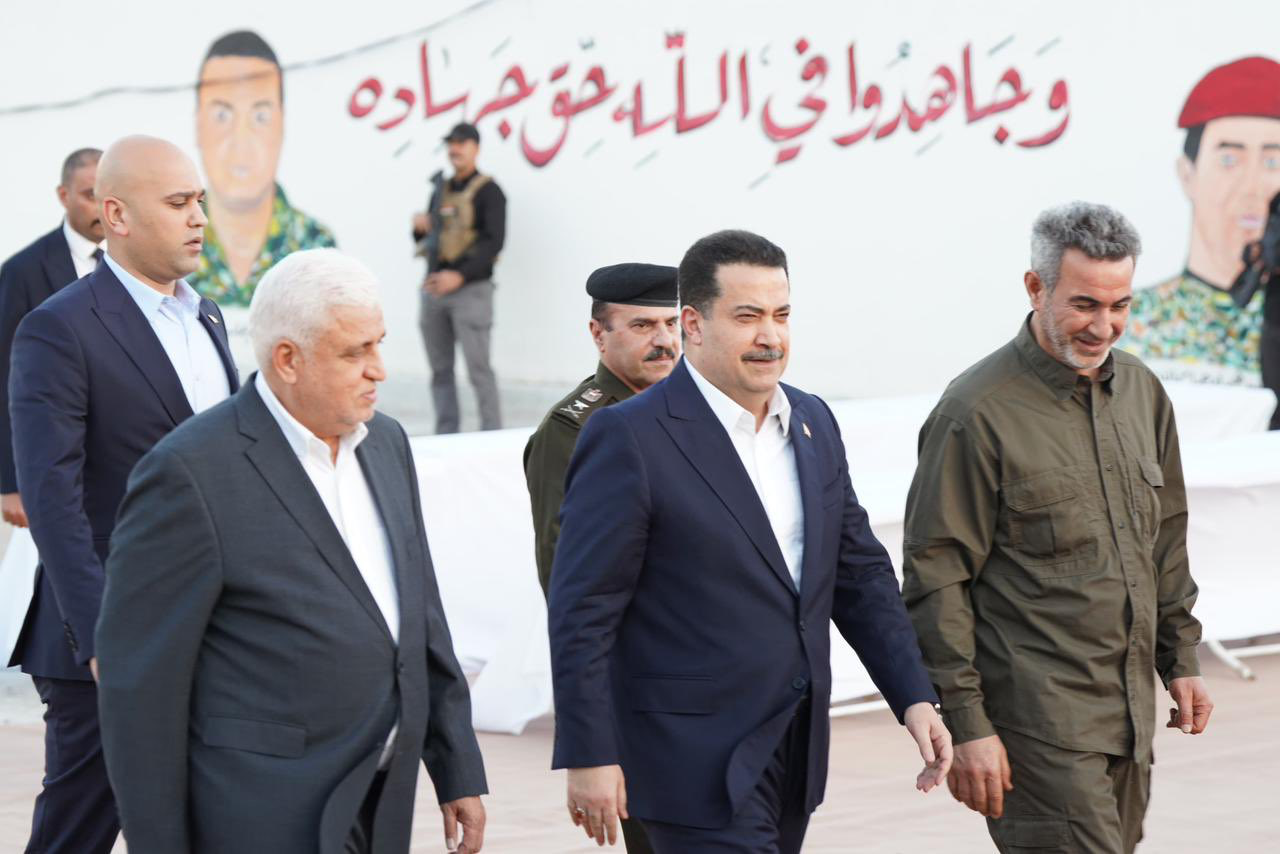
Al-Sudani mediates between the head of the Popular Mobilization Forces, Faleh Al-Fayyad, and his Chief of Staff, Abu Fadak (Government media)
Disarmament
For months, there has been ongoing discussion about the possibility of disarming factions, particularly those with significant weight inside the Coordination Framework, such as Asaib Ahl al-Haq and Kataib al-Imam Ali. This contrasts with repeated rejection from factions such as Harakat al-Nujaba and Kataib Hezbollah.
By end of March, the Services Alliance, which holds around six seats in parliament, announced it was severing ties with Kataib al-Imam Ali, despite Shibl al-Zaidi leading both the alliance and the armed faction. The alliance said it sought to present itself as a “comprehensive national political alliance based on the principle of national partnership, bringing together multiple political forces and currents that collectively bear responsibility for governing the state and serving society,” according to a statement at the time.
Amid the talk of weapons handovers, neither Asaib Ahl al-Haq nor Kataib al-Imam Ali has issued an official statement on the reports. The supposed mechanism of such a transfer is also surrounded by major questions, as it would effectively mean “moving what you hold in your right hand to your left,” according to sources close to the PMF and the factions.
Sources told Asharq Al-Awsat that Asaib Ahl al-Haq has three main brigades within the PMF (41, 42, and 43), deployed in northern Baghdad and Salah al-Din province, while Kataib al-Imam Ali has the 40th Brigade, led by Shibl al-Zaidi. If they were to hand over their weapons to the PMF, they would in practice be transferring them to their own brigades already embedded within the PMF structure.
A theoretical framework
The same sources said they were unaware of any serious move at this stage to disarm the factions or even to carry out the reported transfer to the PMF. Instead, they referred to what could be described as a “theoretical framework” that may later translate into a possible settlement addressing weapons held outside the state.
They suggested that circulating such reports may serve as an early test of the prime minister-designate’s intentions and his responsiveness to US pressure regarding factional arms. It could also be a way to secure ministerial positions in the next government.
The sources added that Asaib Ahl al-Haq, which holds 27 seats in parliament and secured the position of first deputy speaker in the current term, may be genuinely seeking to avoid potential US anger. It is attempting to shed its factional past and aims to obtain ministerial portfolios, as it did in the previous term, but appears unable to convince Washington.
For this reason, the sources believe that a vague announcement of this kind about handing over weapons is insufficient to persuade Washington that the factions are disarming. More substantive steps would likely be required, potentially involving restructuring the PMF and integrating it into the regular armed forces.
Many observers point to the need to restructure leadership within the PMF as a first step toward resolving the issue of factional weapons. They also highlight the need to change key positions within the organization by redeploying some brigades to distant sectors, integrating selected units into the army or federal police, and retiring or sidelining undisciplined commanders.
لم تشترك بعد
انشئ حساباً خاصاً بك لتحصل على أخبار مخصصة لك ولتتمتع بخاصية حفظ المقالات وتتلقى نشراتنا البريدية المتنوعة