Egypt Unveils Pharaonic ‘Rams Road’ at Karnak Temple
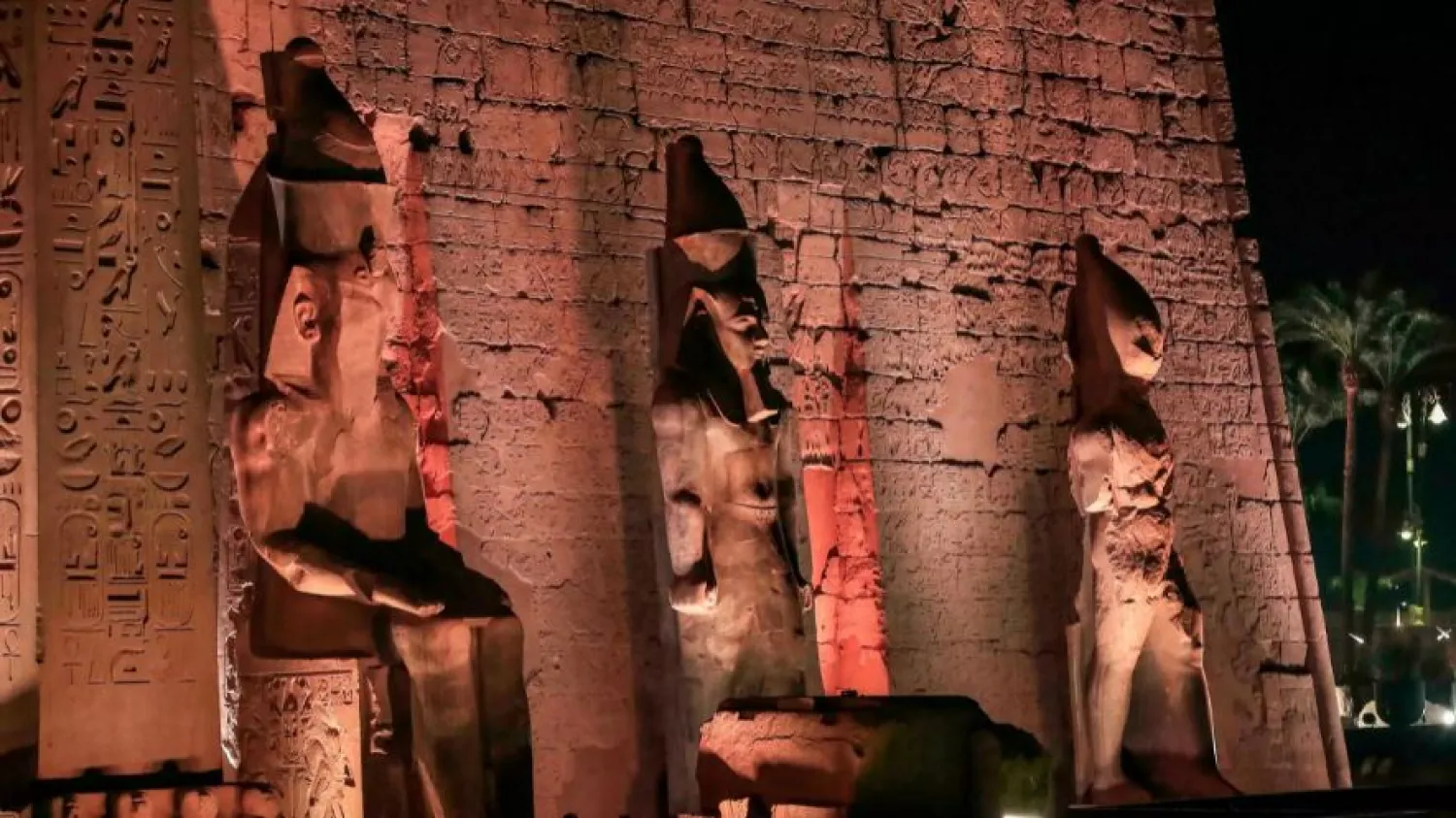
President Sisi walks with Tourism and Antiquities Minister Khaled el-Enany as they enter the pylon at the entrance of the Temple of Luxor Khaled DESOUKI AFP
Egypt Unveils Pharaonic ‘Rams Road’ at Karnak Temple
President Sisi walks with Tourism and Antiquities Minister Khaled el-Enany as they enter the pylon at the entrance of the Temple of Luxor Khaled DESOUKI AFP
Egypt unveiled on Thursday a road lined with hundreds of ram-headed sphinx statues dating back more than 3,000 years, in a grandiose night-time ceremony at Karnak Temple in archaeologically-rich Luxor.
Dubbed the "Rams Road", the sandstone-paved path connecting the temples of Karnak and Luxor in the center of the southern Nile city was officially opened by President Abdel Fattah el-Sisi and a host of senior officials in a spectacular night-time ceremony.
The road is nearly three kilometres (two miles) long and named "The Path of God" in ancient Egyptian mythology, AFP reported.
It is flanked on both sides by statues that were buried for centuries under desert sands before they were revived and restored for display by the country's Egyptologists in recent years.
The ram is an embodiment of the ancient Egyptian deity Amun.
Karnak Temple was built around 2,000 to 4,000 years ago and is dedicated to Amun-Ra, an ancient Sun god. It covers an area of over 100 hectares (250 acres).
Luxor Temple was constructed some 3,400 years ago by Amenhotep III and has been used as a site of continuous religious worship from the ancient Egyptians to Christian Copts and later Muslims.
Egypt's tourism and antiquities ministry has vowed to make the Arab world's most populous country a vaunted destination for tourists by boosting its reputation as "an open air museum".
The tourism sector in Egypt employs two million people and generates more than 10 percent of the country's gross domestic product.
But it has taken a hit in recent years from political turbulence following the 2011 revolution, multiple terror attacks, and more recently the coronavirus pandemic.
In April, a procession of floats carried the mummified remains of 22 pharaohs through Cairo's streets in a parade complete with a 21-cannon salute to the newly opened National Museum of Egyptian Civilisation.
In the coming months, the country is due to inaugurate another new showcase, the Grand Egyptian Museum, near the Giza pyramids in Cairo.
This year's ceremony reflected the accumulation of national expertise and the year-over-year development of operational efficiency. (SPA)
TT
TT
Kaaba Kiswa Changing Ceremony Completed in Three Hours
This year's ceremony reflected the accumulation of national expertise and the year-over-year development of operational efficiency. (SPA)
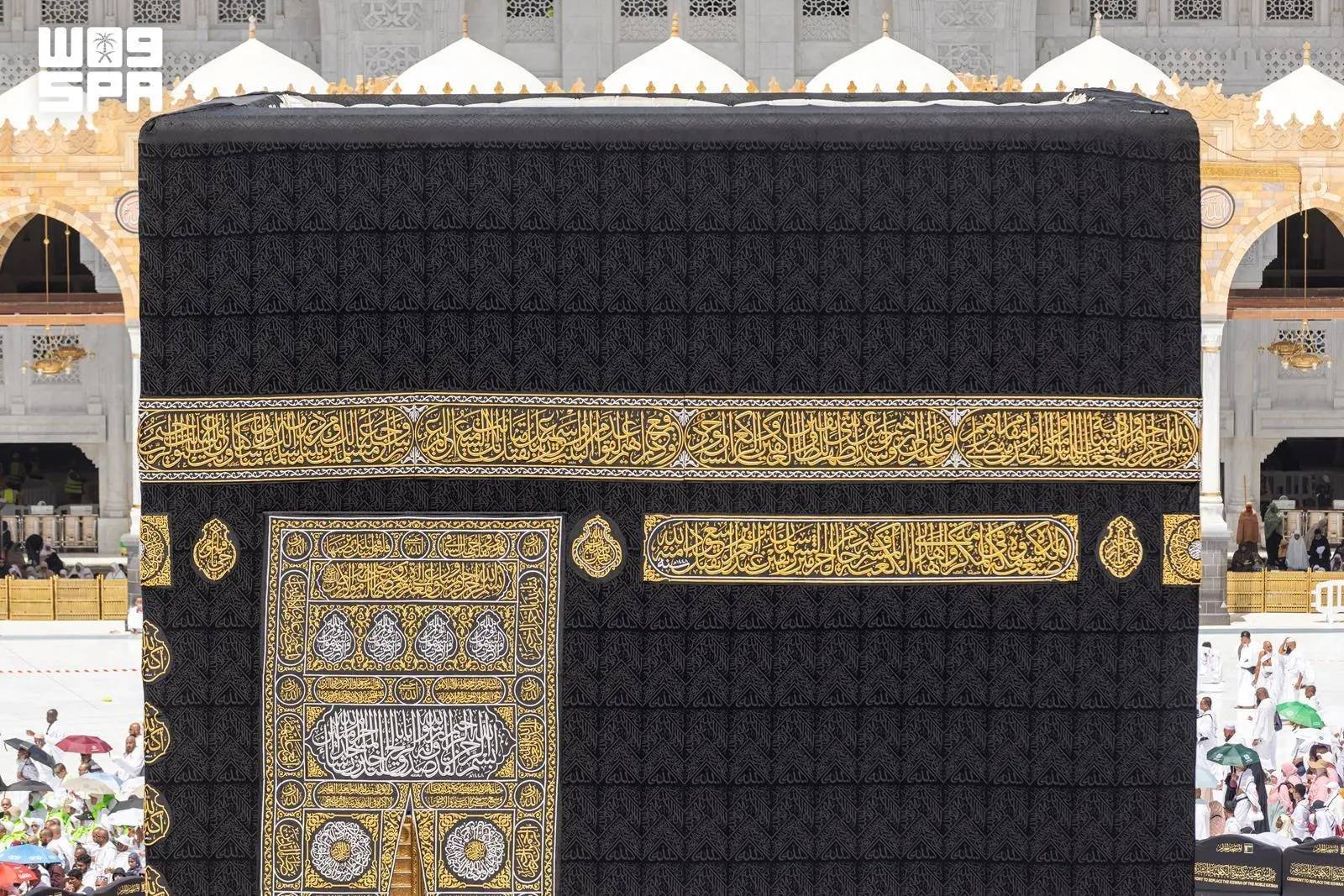
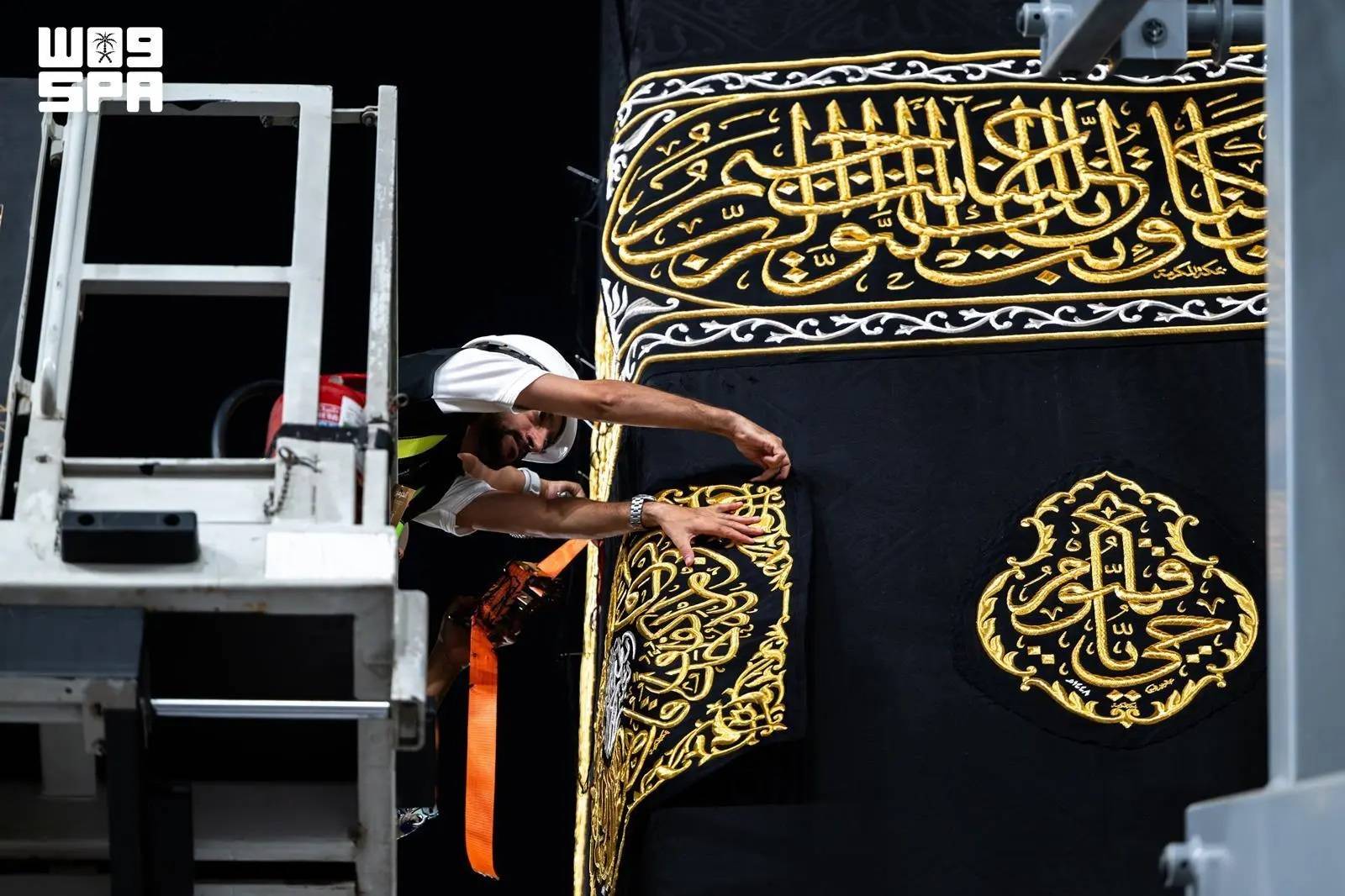
The General Authority for the Care of the Affairs of the Grand Mosque and the Prophet's Mosque completed on Wednesday the Kaaba Kiswa changing ceremony for the Hijri year 1448 in just three hours.
The operational achievement reflects high readiness and advanced national expertise in managing one of the most precise technical and organizational operations associated with the Holy Kaaba, reported the Saudi Press Agency.
The achievement underscores the professionalism and capability of Saudi expertise in managing precise specialized operations. (SPA)
This year's ceremony reflected the accumulation of national expertise and the year-over-year development of operational efficiency, with continuous improvement efforts shortening execution time while maintaining performance quality and procedural safety according to the highest technical and organizational standards.
The General Authority for the Care of the Affairs of the Grand Mosque and the Prophet's Mosque completed the Kaaba Kiswa changing ceremony in three hours. (SPA)
The achievement underscores the professionalism and capability of Saudi expertise in managing precise specialized operations, reflecting the wise leadership's care for the Two Holy Mosques and all matters related to their service.
Merlin the Duck: From Mexico City Streets to World Cup Stardomhttps://english.aawsat.com/varieties/5285165-merlin-duck-mexico-city-streets-world-cup-stardom
Merlin, a duck, wearing a Mexico national football team ('El Tri') jersey that shot to fame after a chance encounter on Reforma Avenue went viral following the FIFA 2026 match between Mexico and South Africa, walks in Alameda Central in Mexico City, Mexico, June 16, 2026. (Reuters)
TT
TT
Merlin the Duck: From Mexico City Streets to World Cup Stardom
Merlin, a duck, wearing a Mexico national football team ('El Tri') jersey that shot to fame after a chance encounter on Reforma Avenue went viral following the FIFA 2026 match between Mexico and South Africa, walks in Alameda Central in Mexico City, Mexico, June 16, 2026. (Reuters)
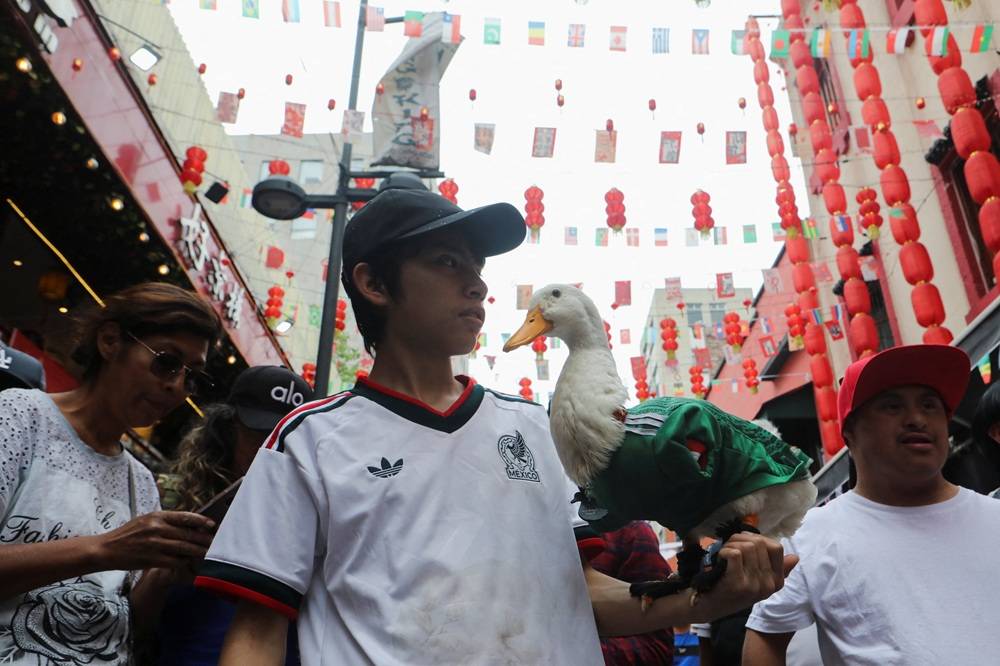
A domesticated duck named Merlin, sporting a miniature Mexico shirt and custom duck socks, has waddled his way into the hearts of football fans, becoming an unlikely unofficial mascot for the country's World Cup campaign.
Merlin's fame was ignited during street celebrations following the co-hosts' 2-0 victory over South Africa in last week's World Cup opening game.
As fans gathered to cheer Mexico's goals, the dressed-up duck wandered among the crowds on the capital's busy Reforma Avenue.
Onlookers recorded the surprising scene on their cell phones and the footage immediately went viral online, with fans demanding Merlin be the new official Mexican mascot during the World Cup.
"We are very respectful," said his owner, street merchant Karla Gomez. "We respect the (Mexico City mascot) axolotl as much as the (FIFA) jaguar. We don't like controversy, honestly."
Gomez, who usually sells beverages in Mexico City's streets with her son Christian and her duck, thought they had not been noticed.
Christian Gomez poses with Merlin, a duck, wearing a Mexico national football team ('El Tri') jersey, that shot to fame after a chance encounter on Reforma Avenue went viral following the FIFA 2026 match between Mexico and South Africa, at Chinatown in Mexico City, Mexico, June 16, 2026. (Reuters)
"It was a normal day for us," she said. "We thought we were passing by unnoticed, because obviously we never thought Merlin would have that boom."
Now, Gomez proudly embraces her role in the duck's newfound stardom. Fans frequently stop the family to take selfies with the feathered supporter, who can also be seen cooling off in public fountains.
"I'm Merlin's mum. I already consider myself as such," Gomez said. "For us it has been a surprise, truly. The fact that Merlin is the unofficial mascot of the World Cup ... we feel very pleased about such a situation and above all that people love my duck."
Channeling the spirit of Paul the Octopus, Merlin recently tried his beak at match predictions, choosing Mexico over South Korea when presented with both flags.
Mexico meet South Korea on Thursday in Group A before facing the Czech Republic on June 24.
Trap, Neuter, Release: Jakarta Battles Cat-Astrophic Stray Numbershttps://english.aawsat.com/varieties/5285151-trap-neuter-release-jakarta-battles-cat-astrophic-stray-numbers
This picture taken on May 14, 2026 shows a volunteer preparing carriers to transport stray cats from a park in Jakarta to be vaccinated and neutered. (AFP)
TT
TT
Trap, Neuter, Release: Jakarta Battles Cat-Astrophic Stray Numbers
This picture taken on May 14, 2026 shows a volunteer preparing carriers to transport stray cats from a park in Jakarta to be vaccinated and neutered. (AFP)
Three flea-riddled kittens frolic under the feet of a food vendor at a bustling train station in Jakarta, home to one of the biggest urban stray cat populations on Earth.
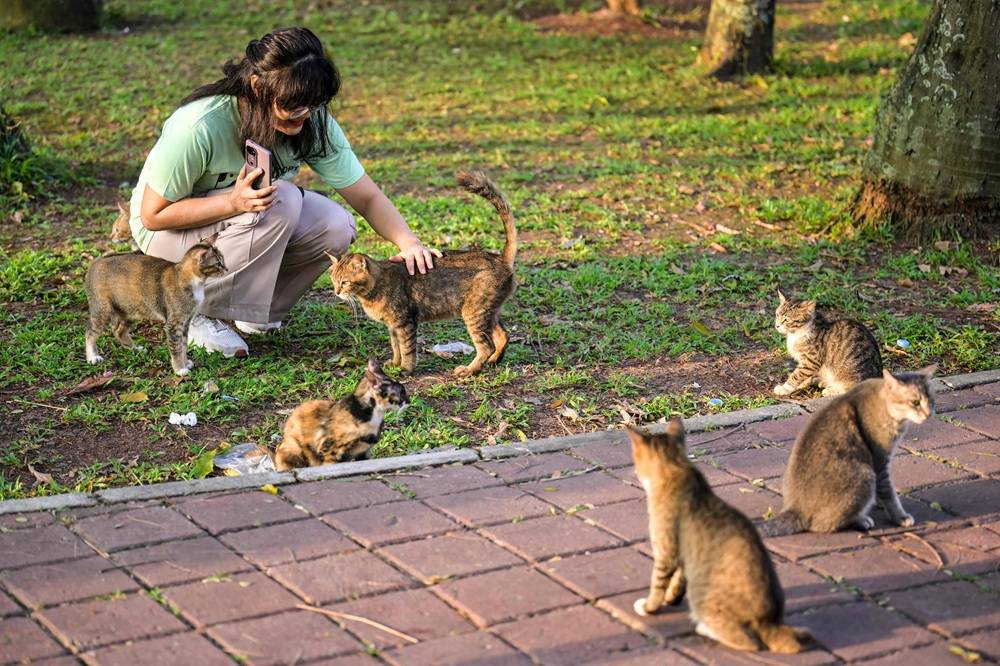
Numbering as many as 1.5 million by some counts -- about one for every ten human inhabitants of the sprawling Indonesian capital -- street cats are ubiquitous and, for the most part, doted on.
"Cats are there to neutralize negative auras and to cheer you up," 33-year-old vendor Saiful Faizin told AFP.
He gives the strays water and leftovers from his chicken porridge cart and plays tenderly with the little ones.
With no government department dedicated to domestic animal welfare, stray cat numbers in Jakarta have exploded over the years.
They live at the mercy of the elements, dodging Jakarta's notoriously chaotic traffic and depending on kind-hearted people for food and medical care.
"There are too many cats here... so they end up dying... (in) incidents involving motorbikes," said Hilwa Tasya Sholehah, 25, a vendor at a public park in Jakarta.
While they welcome the free rat control, some residents decry smelly cat urine, noisy territorial fights and property damage such as scratches to motorbike seats.
And though Jakarta has boasted rabies-free status since 2004 -- partly thanks to mass vaccination of strays -- cats can transfer other bugs or parasites to humans.
"Some people don't realize that giving food for the cats without spaying or neutering them can cause another problem, which is overpopulation," Carolina Fajar of the Let's Adopt Indonesia NGO told AFP at a sterilization drive in the park.
"They keep mating, they keep having babies, and the population is increasing... exponentially," she said as volunteers stuffed cats into baskets by the dozens.
This picture taken on May 14, 2026 shows a volunteer calling stray cats with food before checking if they have been neutered or not at a park in Jakarta, prior to taking them to a clinic. (AFP)
- Herding cats -
The morning's effort yielded 89 cats, spirited away to private and government-sponsored facilities to get the snip before being released where they were found.
Let's Adopt Indonesia, which spayed and neutered 2,274 cats in Jakarta last year, receives money from private donors and overseas foundations to cover the sterilization costs.
Estimates of the true number of strays in Jakarta vary wildly, from about 305,000, according to one city official, to five times that, according to another.
The municipality is conducting a census that will for the first time come up with a scientific estimate.
Last year, the city sterilized 21,000 cats under a new program for which it budgeted 3.5 billion rupiah ($198,000) for 2026.
"Funding is required far exceeding what is currently allocated" to reach the population control threshold of at least 70 percent of strays sterilized, Jakarta's top agriculture official, Hasudungan Sidabalok, told AFP.
He said the service did not have nearly enough official shelters, vets or paramedics to deal with cats in need.
This picture taken on May 21, 2026 shows a stray cat relaxing on a sidewalk in Jakarta. (AFP)
- 'Loved by the Prophet' -
It may seem like a drop in the ocean, but Jakarta politician Francine Widjojo has said every cat sterilized can prevent dozens of new cats from being born on the street.
"One female cat can give birth three to four times a year, and each time can produce four to eight kittens," she told AFP at her office, surrounded by feline paraphernalia and photos of Yakult, one of her 27 cats and the mascot for her 2024 election campaign.
"Besides the free sterilization program run by the government, many animal welfare actors and members of the public are now willing to pay for sterilizations themselves," she said of a growing awareness of the issue.
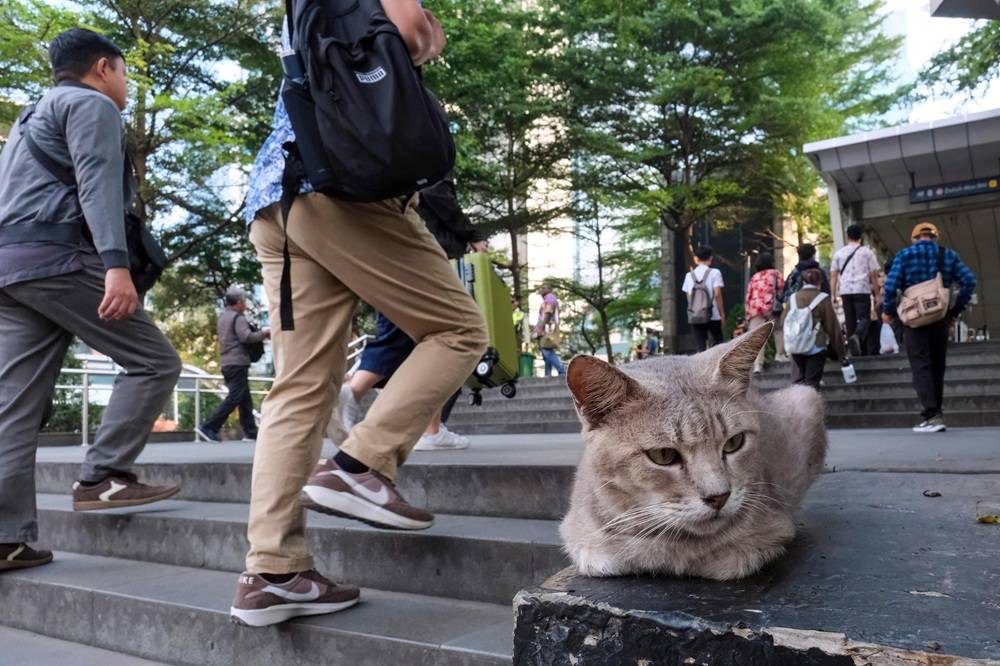
In the city center, strays gather in large numbers at Dukuh Atas station, flitting fearlessly between commuters and traffic.
A ragged older tabby catches the eye of a woman and meows. She stops obligingly, zips open her handbag and takes out a small plastic bag of kibble, placing a fistful on the pavement -- a common sight.
Taking care of cats is partly a religious imperative in the country with the world's largest Muslim population.
Cats "are among the animals loved by the Prophet Mohammed" and unlike dogs -- very rare in the city -- are not considered "impure", Islamic scholar Nur Achmad from Bogor, south of Jakarta, told AFP.
لم تشترك بعد
انشئ حساباً خاصاً بك لتحصل على أخبار مخصصة لك ولتتمتع بخاصية حفظ المقالات وتتلقى نشراتنا البريدية المتنوعة